
by Clair Mooney | 1 Sep, 2021 | Main News Feed
The Government has announced plans to introduce legislation which will enable CE marked goods to continue being placed on the Great British market until 1 January 2023. Although we are in a different legislative situation for the construction products sector, this new date for the end of recognition of the CE mark in Great Britain will also apply to construction products. MHCLG have updated guidance on GOV.UK (GB and NI) for construction products to reflect this.
The MHCLG recognised that as the pandemic continues to impact businesses, this has made adapting to the new regime more challenging and as a result the decision was made to provide an additional year for businesses to adapt to UKCA requirements.
All product sectors now have until 1 January 2023 to get ready to use the UKCA marking, with the exception of medical devices. The Government has stated that there will be no further extensions to this new date. The complete list of all the sectors covered by the UKCA marking can be found here.
Over the next 16 months, Government will continue to engage actively with industry and support their preparations for the new requirements. BEIS is hosting a webinar aimed at businesses on Thursday 2 September at 14:00. This is intended to help businesses understand changes and the actions they need to take. members can register to via this link.

by Clair Mooney | 1 Sep, 2021 | Skills
To ensure operable walls are regularly maintained, serviced and repaired, FIS has published a Best Practice Guide,
Servicing Operable Walls.
The guide was produced by members of the FIS Operable Wall Working Group which comprises representation from key suppliers of operable walls. This Best Practice Guide is intended to help facility managers and owners of operable walls understand the importance of regular servicing to ensure the correct operation of walls and ongoing safety of everyone. It will also help by identifying the type of wall that has been installed, its performance, sound, fire and robustness, servicing required, and enable users to identify competent service engineers.
Widely used in educational and leisure facilities, offices, exhibition halls and conference centres, moveable walls are often operated by a member of staff or a maintenance crew where damage and undue ware can be caused through not fully understanding the operating procedure or even through incorrect maintenance such as applying grease to moving parts. Furthermore, acoustic integrity can also be compromised due to damaged or poorly working peripheral seals and as a result of a lack of servicing. A good service and maintenance regime, underwritten by a service agreement is key to the wall’s serviceability and the welfare of those operating them.
Commenting on the launch of the guide, Julian Sargent, Chair of the FIS Operable Wall Working Group said:
“The importance of this guide to ensure the ongoing performance and safety of everyone using or working around these walls is paramount. The Best Practice Guide, Servicing Operable Walls will help to identify the competence expected of the engineers and allow facility managers and owners meet their legal obligations.”
With some operable wall panels exceeding heights of 6M and weighing 100kgs to 500kgs, training in working at height and the competence to work with specialist equipment such as chain lifts is important to check and address any health and safety legislation, where the facility team could become liable. Building managers or owners of the business have a responsibility under current health and safety laws to ensure that these systems are properly maintained and recorded as being serviced.
George Swann, FIS Skills and Training Lead added:
“The FIS Operable Wall Working Group employers have developed a National Occupational Standard from which formal qualifications for service, maintenance and repair of operable walls will be derived. To get involved in this work, express your support or to see the details please go to: Interior systems reviews.”
Established in 2015, FIS represents suppliers and contractors in the finishes and interiors sector. Its members are vetted when they join and then every three years. They abide by a code of conduct and agree to carry out work in accordance with the FIS best practice guides.
The free guide is available to download here

by Clair Mooney | 31 Aug, 2021 | Market data, Material Shortages
The latest CPA survey of the supply chain showed that the construction industry remained in expansion mode during the second quarter of 2021.
Construction product manufacturers reported the fourth consecutive quarterly rise in product sales, whilst SME building contractors and chartered surveyors saw workloads rise yet again in Q2. While growth in workloads remained broad-based across sectors, it was largely led by private housing and RM&I, where activity has been sustained by government housing policies and increased demand for larger properties with outdoor and office/study space in rural areas due to the homeworking trend. Infrastructure also remained a key driver due to works occurring on a number of large-scale projects and long-term regulatory frameworks, with civil engineering contractors reporting the third consecutive annual rise in workloads in Q2.
Forward-looking indicators point to further growth over the coming year, with the net balances for product sales and workload expectations, enquiries and orders all hitting multi-year highs in Q2. Despite this, the supply of materials and products remained the biggest issue for chartered surveyors and civil engineers and were viewed as the main risk to product manufacturers’ 12-month sales outlook due to ongoing global supply chain issues. Concerns with the recruitment of skilled labour were also echoed across the supply chain, most notably for carpenters and bricklayers relating to house building, as well as general on-site trades. Raw material costs also emerged as another potential constraint, but the proportion of civil engineers raising tender prices for both new work and R&M hit an all-time high, whilst chartered surveyors expect rising profit margins in the year ahead.
FIS members can access the full results of the Construction Trade Survey here.

by Clair Mooney | 31 Aug, 2021 | Main News Feed
Following the inaugural Virtual Interiors Event in February 2021, which saw approximately 4,000 industry professionals from 83 countries gather online, a new thought leadership festival will take place 20 – 24 September named VI:Insights.
FIS is excited to announce its partnership with both VI:Insights and the main Virtual Interiors Event in February 2022.
There are a very limited number of spaces left on the agenda for the forthcoming VI:Insights thought leadership festival. As partners, FIS members are able to claim a 20% discount for exhibiting or hosting a session. Get in touch with Beth Harrison on hello@thevievent.com if you are interested in taking part.
The new festival consists of daily, virtual thought leadership sessions such as accredited CPDs, research and white paper presentations and innovation discussions. The sessions take place over a week at convenient times, so as not to interrupt with the flow of the work day.
The festival is tailored for architects, designers, specifiers and design-conscious firms in the commercial interiors sector. Founded by Sally Rice and Beth Harrison, who both have years of sector-specific director-level experience, the event is built for the industry, by the industry.
VI:Insights will be an opportunity for industry leaders to deliver thought leadership content to a wider, international audience. Without travel and other costs, associated with the more traditional approach used in the industry, there is less environmental impact.
The festival consists of daily sessions at convenient times over the week of 20 – 24 September 2021. The speaker line up and agenda will be announced nearer the event. Participants already announced include Allsfär, BACHMANN, IVC, Orangebox and ROOM.
Register your interest at www.thevievent.com/insights.

by Clair Mooney | 27 Aug, 2021 | Skills
CITB deliver the Interior Installer Apprenticeship; there is availability for Autumn 2021 starts at the Bircham Newton campus, near King Lynn, and further courses are planned for 2022. Two different pathway options are available within this Apprenticeship – Drylining Systems or Suspended Ceiling & Partitioning Systems.
We’d like to invite you to attend an online webinar to find out more about this Apprenticeship. The session will cover the following:
- Content of the Apprenticeship – an opportunity to talk through the new Apprenticeship Standard*
- Employer requirements – clarification regarding what is expected of you as the Apprentice’s employer
- Grants – CITB grants for this Apprenticeship total £8500. We’ll ensure you are accessing these, along with any applicable Government financial incentives
- The Apprenticeship experience – including a named Apprenticeship Officer and onsite support, accommodation and food throughout the Apprentice’s block release stay and support with travel costs
- An opportunity to ask questions regarding any aspect of the Apprenticeship
* Apprenticeship Frameworks have ceased, all Apprenticeships now follow a Standard, so if you’ve had Apprentices previously through a Framework you may find it useful to attend to hear more about what is covered in the new Standard.
https://lnkd.in/eTHjZfGB
https://lnkd.in/ecQwhZGE
This online webinar will take place on Tuesday 7 September 2021, 11am – 12pm. If you’d like to attend please register through the link below:
https://lnkd.in/e3seyfir

by Clair Mooney | 27 Aug, 2021 | Main News Feed
The Home Office announced this week that the end date for adjusted digital right to work checks has been delayed again, to 5 April 2022.
The official guidance can be found here.
This follows extensive campaigning by the Recruitment and Employers Confederation and others, including yesterday’s letter from the REC to the Home Office urging them to extend the use of digital right to work checks until a permanent digital solution is in place, due to the current labour shortages.
In response to the announcement, Chief Executive of the REC Neil Carberry said:
“This is great news for recruiters and hiring businesses all over the country. Digital right to work checks have been a resounding success during the pandemic, allowing companies to hire quickly and safely as well as improving compliance. It makes complete sense to extend their use, especially considering the unprecedented labour shortages we are experiencing now. This move comes on the back of extensive campaigning from the REC with our last letter to the Home Office yesterday – linking the need for a delay to helping with worker shortages. We look forward to working with them further on a more permanent digital solution.”
FIS CEO, Iain McIlwee responded:
“It is great to see some pragmatism, but we need to get away from this last minute lurch, which creates uncertainty and confusion. We also need to look more holistically at the skilled worker and shortage occupation list, the economy is at risk from principles being too rapidly applied”.
Lookig for employment advice – access the FIS Employment Toolkit here

by Clair Mooney | 27 Aug, 2021 | Main News Feed
Tuesday this week saw FIS relationship with Barbour ABI take on a new level with #TakeoverTuesday, a social media event which saw the FIS take over the Barbour ABI social channels. The initiative enabled FIS to promote new Specifiers Guides, the Acoustic Verification Scheme, Annual Conference and showcase our core values and vetted membership to the Barbour ABI community of designers and specifiers.
FIS and Barbour ABI have developed a partnership approach based on knowledge sharing between the two communities with a particular emphasis on legislative compliance, best practice and innovation. Other aspects to this collaborative partnership have seen Barbour ABI develop a specialist Finishes and Interiors Hub on their website, sharing of Barbour ABI market data with the FIS Membership and discounts for FIS Members on core Barbour ABI services. Barbour ABI are also running a session on sustainability as part of the FIS Annual Conference this year – plans are to follow this up with a series of white papers exploring sustainability in the finishes and interiors sector.
Simon Mahoney, Group Director at Barbour ABI said
“Our work with FIS reflects the importance of this sector and our ethos of building bridges across the supply chain to join up the various actors and information streams to help deliver transformation. We appreciate the FIS is a dynamic community and a key source of knowledge. Helping to draw attention to this through our social channels is a great way to engage our network in this and emphasise the importance of collaboration and delivering transformation through a networked industry.”
Iain McIlwee FIS CEO said
“Core to our ethos as a community is collaboration. FIS exists to provide a voice, but also eyes and ears for the sector, scanning the horizon for challenges and opportunities and understanding. Barbour ABI are one of the key sources of authoritative information and have a great network and platform that supports all parts of construction – it is great to be working with them in such a proactive way to help share best practice and ensure the wider market are aware of what we as a community can do to support them and help deliver transformation.”
You can see the content from our #TakeoverTuesday here
Register for the FIS Virtual Conference – every Wednesday in September
Visit the FIS Interior Design Hub on the Barbour ABI platform here
Members receive 15% discount off any products within the Barbour ABI portfolio – access your discount here

by Clair Mooney | 26 Aug, 2021 | Skills
There are places available on the Interior Systems Installer Dryliner Fixer Boarder Apprenticeship training course starting Monday 27 September 2021 at Leeds College of Building North Street Campus.
This is a block release course. If you are interested contact the college for full details. Applicants must be over 16 years of age (there is no upper age limit), employed and have their employers permission. To apply, visit https://www.lcb.ac.uk/apply-apprenticeship/ and complete the form. If you need more information give the College Apprenticeship team a call on 0113 222 6041.

by Clair Mooney | 26 Aug, 2021 | CSCS
CSCS and Build UK have published a six-page guidance document on ‘How to be a Smart Site’ to help realise the benefits of using Smart Technology to check cards carrying the CSCS logo. It covers how to check cards that are already using Smart Technology, how to identify those which are not yet smart, and what to do in the event of finding a fraudulent card. There is also a handy poster for use on site.
The guidance follows the update to the CLC Industry Card Schemes Recommendation in December 2020 to include a requirement that all cards displaying the CSCS logo must use Smart Technology by 31 March 2022, in order to provide the industry with a consistent means of recognising that individuals working on construction sites have the required qualifications and training for their occupation.
George Swann FIS Skills and Training Lead said:
“The use of smart technology supports the governments demand for proof of competence at all levels. Don’t leave it to late get your workforce qualified and registered, we know a proportion of the sector are working without qualifications or card registration or are using the wrong cards. Times are changing it will be embarrassing to have operative turned away at site gates. FIS Approved Training Providers have a number of free of charge and discounted offers, take a look at: https://www.thefis.org/membership-hub/memberbenefits/member-benefits-training/ or give us a call on 0121 707 0077 or email info@thefis.org”.

by Clair Mooney | 26 Aug, 2021 | Labour
The Department for Transport and Cabinet Office are seeking input for an urgent review of the HGV driver shortage. DfT and Cabinet Office are asking all operators who employ HGV drivers to complete the following DfT haulier survey https://www.smartsurvey.co.uk/s/JW0TW8/ (A Word document with the questions is available here to allow you to review the questions in advance of answering them online).
The survey closes on Friday 27 August 2021.
This information will allow the government to analyse the scale of the problem in greater detail, as well as consider any mitigations that might be needed. If you have any questions, please email pamela.dennison@dft.gov.uk in the first instance.

by Clair Mooney | 26 Aug, 2021 | Technical
The Construction Products Association (CPA) has released the results of its industry-wide consultation on the new Code for Construction Product Information (CCPI). The 65 page report – downloadable at www.buildingsafely.co.uk – details feedback from 35 trade associations representing the views of many thousands of member firms across the supply chain, and 180 individual provider and user organisations of construction product information, including most of the largest companies in the industry.
The new Code was developed to prevent some of the issues raised in Dame Judith Hackitt’s report ‘Building A Safer Future’, following the tragedy of the Grenfell Tower fire. The CPA was tasked by Dame Judith Hackitt and the Government with tackling the shortcomings identified in Chapter 7 of the report relating to product information, specifically addressing the way information is presented and marketed by manufacturers.
The consultation opened on the 1 February 2021 with an official closing date of the 31 March 2021. This was extended to the end of May to urge everyone who had a view to submit them, and to encourage the widest representation from across the industry. The highly-publicised consultation was undertaken for the CPA by MRA Research. It invited trade associations and other organisations, manufacturers, distributors, specifiers and users of product information to comment on the proposed new CCPI and its 11 Clauses.
The CPA set up the Marketing Integrity Group (MIG) in 2018 to work on this particular area of building safety. The MIG’s work represents over two years of open debate and discussion, face-to-face interviews and focus groups across the construction supply chain. It includes detailed analysis from its Call For Evidence survey in 2019, which confirmed that for product and performance information to be trusted, it must be Clear, Accurate, Up-to-date, Accessible and Unambiguous – the five acid tests. The MIG collated this extensive input and developed the CCPI.
The Code was then put out to consultation for a final sense check. A key requirement was that respondents read the new Code before completing their respective questionnaire or providing feedback. A number of additional and insightful comments were also submitted to MRA Research by provider and user organisations alongside their completed questionnaires. Feedback from the trade associations was detailed, expert and extensive, providing in-depth comments and suggestions on behalf of their members.
The findings confirm that the industry welcomes and supports the Code, and considers it a crucial step in the right direction. The MIG spent a further two months analysing and working through the Code so it reflects the massive amount of expert feedback from the consultation.
While the Code is likely to impact differently on different types of business, it was clear that many companies have a keen interest, and strong opinions, on what should be done to address the availability, consistency, quality and reliability of construction product information.
Comments confirmed that more clarity was needed in some areas of the Code, particularly around the training and competence requirements, and on what exactly was required to comply with the different Clauses. More clarity was also sought on how the scheme will be assessed, audited and ‘policed’, as well as practical guidance on its implementation within organisations.
Adam Turk, Chair of the CPA’s Marketing Integrity Group and CEO of Siderise says:
“We are delighted with the breadth and depth of response received. The published results are slightly later than planned but given the importance of the Code, we wanted to make sure all responses were included in the analysis. Strenuous efforts were also made in reaching out to organisations directly to ensure everyone across the industry had the opportunity to comment.
“The overwhelming support and constructive feedback has reassured us that the Code is absolutely the right step forward for the industry while also giving us a lot of insightful input to enable the MIG to review the wording of the Clauses in line with these detailed responses,” continues Adam. “Whilst changes have been made around the clarity and detail within the Code, I can confirm that the eleven Clauses remain principally close to those presented in the report.”
Chief Executive of the CPA, Peter Caplehorn, adds:
“We are extremely pleased with the progress that has been made with the CCPI and the enormous efforts of the MIG in driving it through. I truly believe the Code will achieve meaningful and permanent change in our industry, providing users of construction products with accurate information they can trust.
“The CPA is incredibly focussed on improving building safety and driving cultural change in our industry. We are involved in a wide range of initiatives to ensure tragedies like Grenfell never happen again, and the CCPI is just one of those. An essential counterpart to the Code is the activity of the Working Group 12 (WG12) – a sub-group of the IRG’s Competence Steering Group (CSG), led by the CPA. WG12 focuses specifically on the competency of those interacting with products and accessing construction product information. The CSG recognises that good product information on its own is not enough; those that use it must be competent to do so, to understand what they are reading and to be able to apply the performance information appropriately.”
The Code has now been finalised, based on the extensive feedback from the Consultation, and is in the process of being handed to Construction Product Information Ltd (CPI Ltd) – a not-for-profit organisation with independent governance and management being set-up to administer the CCPI when it is launched later this year. Prior to the Code’s formal launch, the CPI Ltd will be carrying out pilot test cases and will also be recruiting a new Non-Executive Board of Directors to develop an independent governance structure. The industry can stay abreast of the Code and its launch at www.cpicode.org.uk.

by Clair Mooney | 24 Aug, 2021 | Building Safety Act, Technical
The Gypsum Products Development Association (GPDA) has been investigating the noise phenomena of cracking noises from residential timber floor structures constructed with engineered ‘I’ joists spanning between solid masonry walls lined with plasterboard on gypsum adhesive.
Guidance has now been updated with this version. GPDA-Guidance-cracking-noises-from-residential-timber-floor-structures.pdf
by Clair Mooney | 22 Aug, 2021 | Skills
From 26 August 2021, employers or their training providers must add a unique email address when adding an apprentice record to the apprenticeship service.
Without a unique apprentice email address, employers or their training providers will not be able to save or approve the apprentice record, so funding cannot be allocated. Once the email address is added to the account, the apprentice will receive an email invitation to create a ‘My apprenticeship’ account.
What is a ‘My apprenticeship’ account?
‘My apprenticeship’ accounts are a new service that will improve the onboarding process for apprentices. An account will allow apprentices to:
- confirm their apprenticeship details are correct as the apprenticeship starts
- access guidance on what is expected of them, their training provider and their employer
- access additional support
- access and review their apprenticeship details throughout the apprenticeship
It will not impact the apprentice’s start date or apprenticeship funding if the apprentice does not create an account or confirm their apprenticeship details. However, employers and their training providers should encourage their apprentices to complete these tasks to ensure a quality apprenticeship experience.
Key actions
Employers and their training providers need to collect a unique email address for each apprentice they will be adding to the apprenticeship service from 26 August 2021.
Access support
If employers require support using the apprenticeship service, they can watch the Education and Skills Funding Agency (ESFA) how-to videos, check the advice on apprenticeships.gov.uk or visit the ESFA help portal. From the help portal they can access help articles, webchat with an adviser, call (08000 150 600) or text (07588 690018) the helpline, or email the ESFA helpdesk.

by Clair Mooney | 19 Aug, 2021 | Skills
Talentview is a platform for talented people to find first jobs, apprenticeships and work experience in construction.
FIS members can now advertise all their opportunities for new entrants, including apprenticeships and work experience, on Talentview Construction, a new dedicated online platform for those looking to secure their first role in construction. Talentview sits alongside the Construction Talent Retention Scheme providing a ‘one stop shop’ for the recruitment and retention of skills across the industry. After calling for an apprentice matching service for a number of years FIS is delighted to welcome the launch of Talentview which should make it much easier for young people to join the industry. Members can register for Talentview now and upload all their ‘first job’ vacancies ready for its full and formal launch in September 2021. This service is free of charge.
Members can also use the FIS JobSpot https://www.thefis.org/jobspot/ to advertise vacancies free of charge.
by Clair Mooney | 19 Aug, 2021 | Labour, Skills
Being conscious of the ever-shrinking labour pool available to the finishes and interiors sector, there have been reports of up to 60% labour not being available by some FIS members. FIS is running two projects specifically designed to attract people into the finishes and interiors sector.
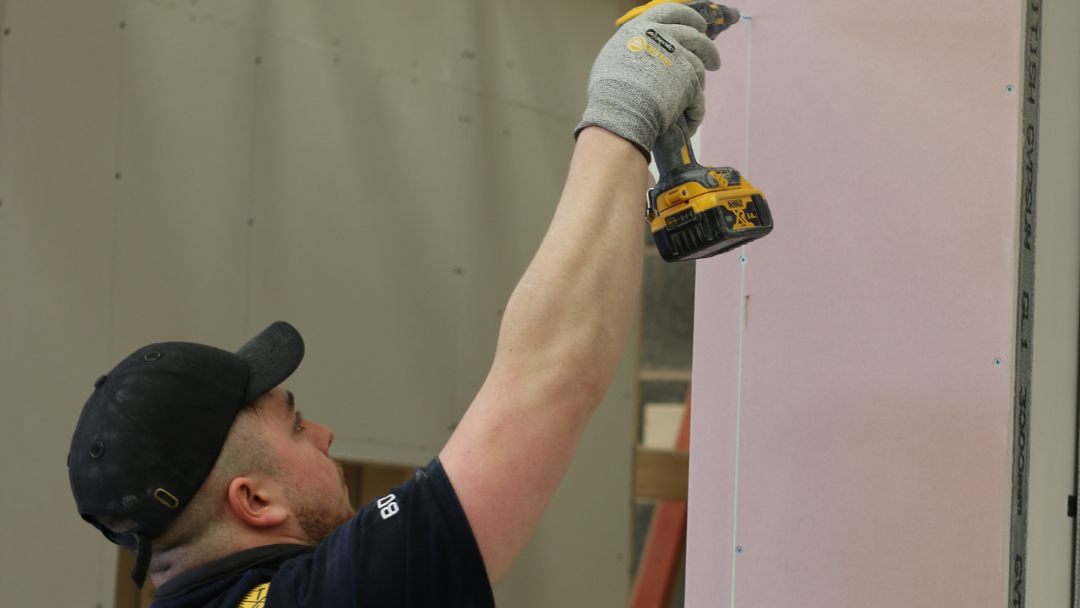
FIS BuildBack accepts individuals from a range of backgrounds including HM Forces Career Progression candidates and clients put forward by the Department for Work & Pensions (DWP). To help prepare the candidates for work, each learner receives training in Drylining Fixer, Boarder and are supplied with Personal Protective Equipment, a set of tools and a CSCS Provisional Card. The candidates just need an opportunity to show employers what they can do during a work placement. This may ultimately lead to a full-time work opportunity and will also add new talent to your workforce. All of this is free of charge to employers.
The sector now needs employers to provide a 2 week work placement for these BuildBack candidates. If the individual fits your organisation’s needs, and they are eligible (claiming universal credit) you could transfer them to the governments KickStart Scheme. The scheme provides a grant of £1500 to employers willing to take on individuals for a 6 month work placement and includes payment of the national minimum wage for 25 hours per week.
There are currently 140 people available for work placement including candidates from HM Force Career Progression and the YouthBuild charity. All have received introductory training as Dry Liner Fixer Boarder, a set of tools, PPE, a CSCS Provisional card. Please contact Marie on 07799 903103 or email marieflinter@thefis.org. or Catherine on 07900 083325 or email catherinebullough@thefis.org for details. If you employ any of these people FIS can help their advancement by providing further training as an apprentice or to the achievement of a vocational qualification, all free of charge to the employer.
To find out more about BuildBack click here.

by Clair Mooney | 19 Aug, 2021 | Skills
Employers in England who pay the apprenticeship levy (those with an annual pay bill of more than £3 million) will be able to pledge unspent levy funds (up to their 25% transfer allowance) to support apprenticeships in other businesses. All businesses will be able to see these pledges on a public website and apply for funding to pay for 100% of their apprenticeship training and assessment costs (up to the funding band maximum).
If you wish to re-appraise yourself on the existing arrangements for transfers please take a look here: Transferring unused apprenticeship funds to other employers – GOV.UK (www.gov.uk)
Transferred funds will be used to pay for the training and assessment cost of the apprenticeships agreed with the receiving employer.
Sending and receiving employers need to know that:
- funds are paid monthly for the duration of the apprenticeship
- only levy-paying employers can make a transfer
- any employer can receive, and use transferred funds
- sending and receiving employers have to be registered on the apprenticeship service: https://www.gov.uk/guidance/manage-apprenticeship-funds
- a transfer can only be used to pay for training and assessment for apprenticeship standards
- transfers can only be used for new starts, except where the apprentice is changing employer and an agreement to continue their apprenticeship with their new employer is through a transfer of levy funds
The latest document on Apprenticeship funding (not the funding rules) can be found here and on page 4 there is mention of the new pledge functionality Apprenticeship funding – GOV.UK (www.gov.uk)
You can catch up with Education and Skills Funding Agency apprenticeship related webinars you can find a recording here on the ‘you tube’ site in the apprenticeship service – webinar recordings playlist: esfagovuk – YouTube
George Swann FIS Skills and Training Lead said:
“This allows large apprenticeship levy paying organisations to give direct support to micro and small businesses and provides an opportunity to keep the apprenticeship funding in the finishes and interiors sector. As young people consider their future options now is a great time to investigate taking on an apprentice or pledge unspent apprenticeship levy funds for smaller organisations to utilise”.

by Clair Mooney | 19 Aug, 2021 | Skills
In order to show more young people the wide range of opportunities available in construction, the industry needs STEM Ambassadors STEM Construction and Built Environment Ambassadors play an essential role in inspiring young people to think about a career in construction through a range of activities, including school presentations, careers talks and mentoring.
The CLC’s Industry Skills Plan includes a commitment to recruit 7,000 Construction STEM Ambassadors, and with the new school year approaching it is the perfect time for FIS members to register by email as a STEM Employer and encourage your teams to sign up online to become STEM Ambassadors. Further information on how to get involved can be found in this short film. If you like to have a chat about what is involved before committing please call FIS on 0121 707 0077 or email info@thefis.org we will be happy to help.

by Clair Mooney | 19 Aug, 2021 | Skills
Recruiting the next generation is vital if we are to maintain the pipeline of talent coming into the industry and one of the best ways to show young people the fantastic work we do is through Open Doors!
This year’s event will run from Monday 4 ‐ Saturday 9 October and there will be a combination of site visits and ‘live’ virtual events on offer. Bookings open to the public on Monday 23 August.
Build UK Chief Executive Suzannah Nichol has highlighted the unique appeal of Open Doors in Building Magazine saying: “The words ‘Fancy a site visit?’ ‐ whether it is to a major infrastructure project or a local housing development covered in scaffolding ‐ almost always ignites a positive response.”
A huge thank you to those members that have already signed up. If the last 18 months have taught us anything, it is that we are so much more effective when we work together, and we would encourage all of you to upload as many events as possible to help us showcase the diverse range of opportunities that our sector has to offer.

by Clair Mooney | 19 Aug, 2021 | Main News Feed
All members are invited to consider nominating themselves to join the Board. By joining, you have the chance to use your knowledge and experience in the finishes and interiors sector to influence the direction of the Association and support our mission to improve safety and quality, minimise risk, enhance productivity and drive innovation in the sector, ultimately ensuring that membership and guidance are reflected in all relevant specifications.
The Board is key to ensuring FIS delivers for our community and ensuring our activity is aligned to your needs. I am particularly keen to use my last 12 months as President to encourage new applicants for the board from all sections of the membership, however big or small their companies.
We need the next generation to be coming through and I can promise you that the Board is an open, progressive and inclusive group – fresh views, challenging the status quo and your unique insight will be welcome and valued.
We know many are reticent to come forward as they are caught up in the ‘day to day’ particularly in the smaller businesses.
Like any commitment, joining the FIS Board it is not without challenge, but it is rewarding, allows your voice to be heard and, with modern methods of communication, it has never been easier to engage and support the leadership of our association.”
Operations Director, Tapper Interiors
The role of a Board Member offers the chance to influence the direction of the Association and share your knowledge and experience of the fit out sector.
The Board’s focus is on strategic issues, and ensuring the delivery of agreed targets.
If you would like to stand for election please complete the nomination form. Nominations must be received by 17 September 2021. Election results will be announced at our AGM in November.
Any questions about the process or the role, please don’t hesitate in contacting FIS CEO on 07792 959 481 or email iainmcilwee@thefis.org
To find out who is currently on the Board click here

by Clair Mooney | 18 Aug, 2021 | Main News Feed
The Health and Safety Executive (HSE) is continuing to carry out spot checks and inspections by calling, visiting and inspecting all types of businesses as Scotland moved beyond level 0 on 9 August.
The spot check programme provides expert advice during the calls and visits, on keeping workplaces safe and to help assess the risks and continue to reduce COVID-19 transmission. The guidance also provides advice on sensible precautions employers can take to manage risk and support their staff and customers. Health and safety legislation continues to apply and the legal duty for businesses to follow the advice to stop the spread of COVID-19 remains.
The following workplace controls remain unchanged:
Businesses must also take account of requirements that remain in public health regulations and guidance for Scotland and continue to consult their workforce on health and safety. Talking to workers and their representatives helps identify how to reduce risk.
Failure to follow current health and safety guidance could lead to enforcement action. So, if you receive a call from HSE, it is important to act upon it.
View further information on the spot check programme.