
by Clair Mooney | 6 Jul, 2021 | Building Safety Act, Main News Feed, Transformation
The Building Safety Bill will set out a clear pathway for the future on how residential buildings should be constructed and maintained.
The Bill, published on 5 July 2021, will create lasting generational change and set out a clear pathway for the future on how residential buildings should be constructed and maintained.
The Bill provides a framework for a seizmic overhaul to building safety legislation, giving residents more power to hold builders and developers to account and toughening sanctions against those who threaten their safety.
The new Building Safety Regulator will oversee the new regime and will be responsible for ensuring that any building safety risks in new and existing high rise residential buildings of 18m and above are effectively managed and resolved, taking cost into account.
This will include implementing specific gateway points at design, construction and completion phases to ensure that safety is considered at each and every stage of a building’s construction, and safety risks are considered at the earliest stage of the planning process.
These changes aim to simplify the existing system to ensure high standards are continuously met, with a ‘golden thread’ of information created, stored and updated throughout the building’s lifecycle, establishing clear obligations on owners and enabling swift action to be taken by the regulator, wherever necessary.
Under the proposals, the government is more than doubling the amount of time, from 6 to 15 years, that residents can seek compensation for substandard construction work.
The changes will apply retrospectively. This means that residents of a building completed in 2010 would be able to bring proceedings against the developer until 2025.
These reforms also include new measures which apply to those seeking compensation for refurbishments deemed to make the home unliveable.
New measures in the Building Safety Bill introduced today will:
- Ensure there are clearly identified people responsible for safety during the design, build and occupation of a high-rise residential building.
- Establish a Building Safety Regulator to hold to account those who break the rules and are not properly managing building safety risks, including taking enforcement action where needed.
- Give residents in these buildings more routes to raise concerns about safety, and mechanisms to ensure their concerns will be heard and taken seriously.
- Extend rights to compensation for substandard workmanship and unacceptable defects.
- Drive the culture change needed across the industry to enable the design and construction of high-quality, safe homes in the years to come.
Minister for Building and Fire Safety Lord Greenhalgh said: “The comprehensive steps we are taking today will ensure that industry and the regulatory system fully address the concerns raised in the ‘Building a Safer Future’ report by Dame Judith Hackitt.
“Though the overall risk of fire across all buildings remains low, we can’t be complacent – the more robust regime will take a proportionate and risk-based approach to remediation and other safety risks.
“And by increasing our measures of enforcement, we will make sure industry follows the rules – and is held to account when it doesn’t.”
The Bill will include powers to strengthen the regulatory framework for construction products, underpinned by a market surveillance and enforcement regime led nationally by the Office for Product Safety and Standards (OPSS).
The national regulator will be able to remove products from the market that present safety risks and prosecute or use civil penalties against any business that breaks the rules and compromises public safety.
The Bill also contains measures to protect leaseholders by providing a legal requirement for building owners to explore alternative ways to meet remediation costs before passing these onto leaseholders, along with evidence that this has been done.
This builds on the government’s commitment to fully fund the cost of replacing unsafe cladding for all leaseholders in residential buildings 18 metres and over in England, with an unprecedented £5 billion investment in building safety. This is alongside the introduction of a new levy and a tax to ensure that industry pays its fair share towards the costs of cladding remediation.
Developers will also be required to join and remain members of the New Homes Ombudsman scheme, which will require them to provide redress to a homebuyer, including through the awarding of compensation. Developers who breach the requirement to belong to the New Homes Ombudsman may receive additional sanctions.
Chair of the Independent Review of Building Regulations and Fire Safety Dame Judith Hackitt said: “I am delighted that we have reached this important milestone for the Building Safety Bill. It is vital that we focus on getting the system right for the future and set new standards for building safety.
“Residents and other stakeholders need to have their confidence in high rise buildings restored and those who undertake such projects must be held to account for delivering safe buildings.”
Building Safety Bill documents
FIS hosted an update and debate on the introduction of the Building Safety Bill in October 2020 – you can access a recording of the event here
View the FIS Statement on the Building Safety Bill changes that highlights a key concern related to changes to the Defective Premises Act – dated 9th July 2021

by Iain McIlwee | 5 Jul, 2021 | Main News Feed, Material Shortages
This month we have seen further announcements on price rises, whilst at the same time we can see in the latest tender price reports from MACE showing that current tender price inflation is running at just 1.5% at the moment and expected to rise to a meagre 2.0% next year. It doesn’t take mensa maths to work out what this is doing to margins. Whilst we try and get our heads round the fact that despite rising costs of labour and materials and a healthy pipeline emerging prices are being squeezed in this way, we have updated our headline and supporting guidance on managing your business in a time of shortage below.
Talk to your clients about the challenges in securing material and the importance of early appointment to give you time to prepare.
Be wary of design liability. It is also vital to consider the specification, switching elements because you can secure them as an alternative may not necessarily support full certification and warranties as a system, to fulfil programmes. Any change to materials and products installed should be EQUAL AND APPROVED or you may be absorbing risk and design liability. Beyond inadvertent design liability, we are also seeing (for a combination of reasons, not least cost and availability of insurance) pressure on subcontractors to take on design liability within their contract. Do you fully understand what is the liability and cost of this, does your insurance cover it? We strongly urge you to exercise caution.
Before accepting a contract, make sure you can fulfil it. It is vital to check you can secure the material and at what price, does your supply agreement guarantee a price?
Double check your estimates. With pricing erratic, double check your maths – estimations need to be on point and there is literally little margin for error. Make sure you state that the quotation is only valid for a short amount of time, and that it is dependent on material supply (do you need to update statements on estimates, quotes and to issue new advice to your team?). If you are trimming supervision to make the maths work, what could be the risk and cost in terms of quality and safety?
Consider the resilience of your supplier, how long have you worked with them, how well do you know them, how important are you to them, how confident are you they will deliver? There is some support and guidance on this in the FIS Project Risk Assessment Tool.
Consider the resilience of your customer, through FIS you can get free credit checks. This isn’t a panacea, but we have seen a number of failures in the construction sector and if margins continue to squeeze there will be more. In the wake of the burden of retentions and aggressive tendering meaning profits will be lost and won in variation and change – will you get paid, how much and just how contractual is this job likely to be at that price?
Be realistic. Before signing a contract with potentially onerous delay responsibilities ensure you have checked these carefully, are all these risks in your control to manage? If you are already locked into a contract and experiencing delays/inflation then look to your contracts and follow the process – remember it is likely that, regardless of blame and responsibility, you will be obliged to ensure that as soon as it becomes “reasonably apparent” that work is likely to be delayed, notice must be given to the relevant party. If prices are spiralling, talk to your customer, negotiate.
Check for damages. If you are yet to sign, it is well worth ensuring that supply related delays that will in many cases be beyond your control cannot be a factor in determining liquidated damages. Remember force majeure relies on events being unforseeable.
Dust off those fluctuation clauses. Before you sign a contract check the fluctuation clauses too (albeit they typically seem to be scratched out of the standard contracts). If you cannot negotiate a shared risk approach with your client (and we are getting reports that clients are starting to accept fluctuations), you need to seriously consider pricing in risk moving forwards – what could worse case scenario mean to your business if prices drifted?
FIS has updated advice in its Contractual and Legal Toolkit, including advice on fluctuations, managing delays and extensions of time within contracts. It also highlights the role that the RICS developed and CLC endorsed Conflict Avoidance Process and Conflict Avoidance Pledge can play in helping to ensure issues related to shortage and availability doesn’t flair up in unnecessary conflict and exacerbate a difficult situation to a crisis.

by Clair Mooney | 2 Jul, 2021 | Main News Feed
From 1 July employers will, for the first time since last year, have to contribute toward furlough payments – employer contributions now sit at 10% and will rise to 20% in August and September. This change marks the start of the wind down of the scheme, which is proposed to end on 30 September 2021.
With these changes in mind, are you confident you know what your options are when it comes to the end of furlough? Citation’s HR & Employment Law experts have put together a flow chart that outlines some of the possibilities. You can download a copy here.
If you’ve got questions about what to do when it comes to bringing people off furlough, FIS members have access to the Citation advice line 24/7 on 0345 844 4848.
by Clair Mooney | 2 Jul, 2021 | Main News Feed, Membership, Technical
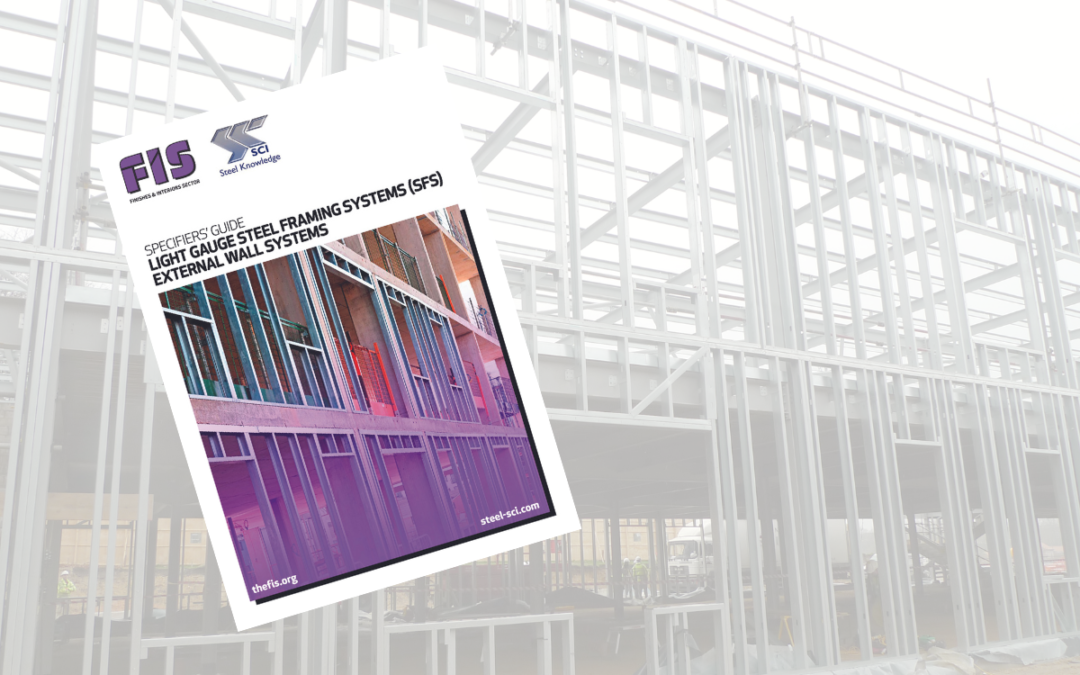
FIS in partnership with the Steel Construction Institute (SCI) has launched a Specifiers’ Guide to Light Gauge Steel Framing Systems (SFS) External Wall Systems to help specifiers understand the granular details involved in the design process and production of a specification.
The Specifiers’ Guide was produced by the FIS SFS working group made up of manufacturers and installers of SFS external wall systems in conjunction with the Steel Construction Institute (SCI), which provide an independent source of information and engineering expertise in steel construction. It is intended to guide architects, engineers, designers and installers through the stages in designing, selecting and specifying steel framed systems to form the external envelope for steel and concrete framed buildings.
FIS Chief Executive Iain McIlwee said: “This is the second specialist guide that FIS has produced in partnership with the Steel Construction Institute and demonstrates the strength in collaboration, producing guidance to ensure that accurate and detailed specifications can be written so that external walling systems can be procured and installed to meet the required specification.
Commenting on the guide, Colin Kennedy, Chair of the FIS SFS working group and Managing Director of FIS member Veitchi Interiors said: “Specifying SFS external wall systems requires considerable thought and design, even before a specification can be written. This is because the specification should be developed alongside the engineering design rather than a simple output from a list of attributes and parameters, to cover the three light steel external wall systems and the six current variants of SFS.”
Andrew Way, Associate Director at the Steel Construction Institute, added: “In order to achieve the correct specification, a considerable amount of information is required about the intended use of the product and the desired performance characteristics. This was the learning curve for me and the key lesson that this new guide addresses, in that the SFS should be fully engineered specifically for the building. Most importantly its location, proximity to other buildings and how that building is designed to accommodate movement is essential before it can be specified.”
Colin Kennedy continued by saying: “The construction industry is rightly under the microscope to ensure that the lessons from the terrible tragedy three years ago at Grenfell Tower are learned and that this starts with ensuring that the specification is clear, compliant and written by those who are competent and subsequently installed by those who can demonstrate they have the Skills, Knowledge, Experience and Behaviour (SKEB) to be considered competent.”
The guide includes 23 questions relating to ‘critical building information’, a further 15 questions to check that they are all addressed, a list of 10 questions on risk and how to avoid them and a further 10 questions on writing a smart specification to ensure a safe, compliant and complete specification can be written. All of which is crucial to ensure that the specification is not open to misinterpretation, and that any alternatives can be assessed and checked as equal, before approving them.
The guide sits alongside other FIS best practice guides that relate to SFS:
Design and Installation of Light Steel External Wall Systems
Recommendations for the Safe Ingress of Plasterboard
FIS Health and safety handbook
These guides work well when they are included in proposals and project plans to demonstrate how to best approach a project and are an excellent introduction to new members of the team and any trainees and apprentices.
You can download the Specifiers’ Guide to SFS External Wall Systems here https://www.thefis.org/membership-hub/publications/specifiers-guides/light-guage-external-wall-systems/
by Clair Mooney | 1 Jul, 2021 | Drylining, Labour, Skills
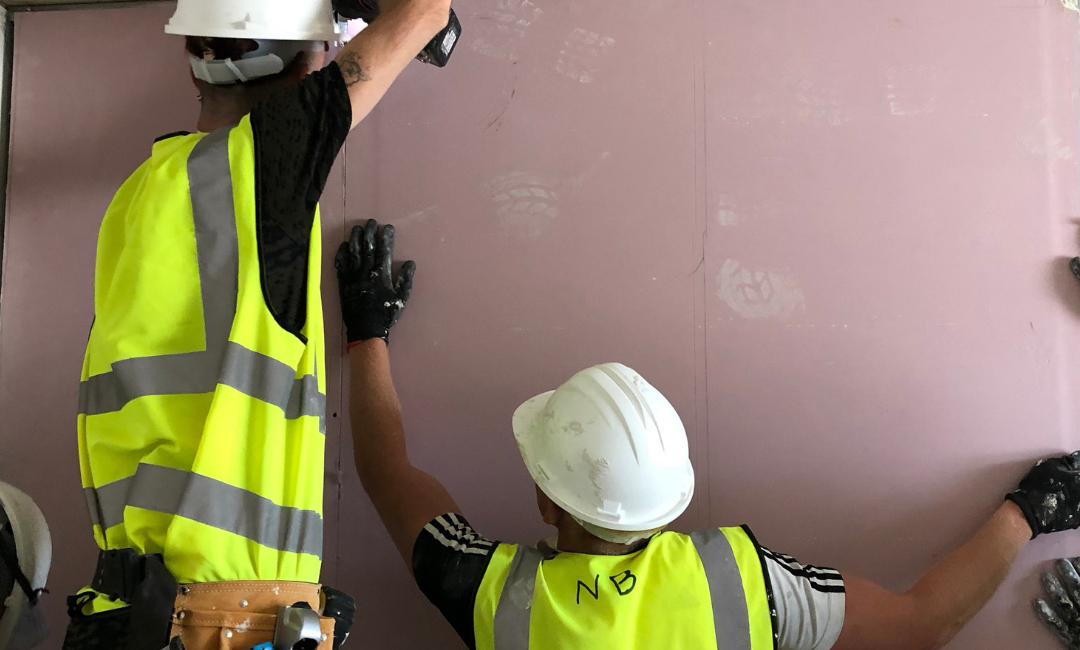
In light of severe shortages predicted in the drylining sector, FIS has been helping to train new talent serious about a career in drylining.
For every 5% of EU workers that leave the UK, we double our annual recruitment target for drylining. The Settlement Scheme is now officially closed.
Through the FIS BuildBack programme, we have scheduled a number of courses which will help to get candidates site-ready, have a grounding in the skills and competencies required for installing drylining and have undergone an assessment and robust training course and that includes mandatory HS&E training and the provision of a Provisional CSCS card, PPE and basic tools.
The next step is where we need YOU.
We are looking for employers to provide the candidates with two-weeks work experience. There is no cost involved, we make all the arrangements for you. You can meet and select the candidates you want to offer work experience in order to ensure they are the best fit for your business.
If you are interested in finding out more, or can offer a placement, email catherinebullough@thefis.org
by Clair Mooney | 1 Jul, 2021 | Building Safety Act, Technical
In response to the Department for Education’s consultation on document BB 100 Fire Safety Design for Schools (see below), CPA has produced a strawman for discussion.
A virtual meeting to discuss this will be held on Tuesday 10 August to finalise the CPA response.If you are interested in attending, full details are available here.
===================================================
Building Bulletin 100 (BB100) is non-statutory guidance on fire safety for schools. The guidance covers designing a school building so that pupils and staff will have early warning if a fire breaks out and can evacuate quickly and safely. BB100 advises how to minimise the spread of fire and how to ensure the building structure is adequately resistant to fire. It also includes requirements for access and facilities for the Fire and Rescue Services. BB100 requires updating and simplifying, to see if additional fire safety measures should be included and whether there is content that is no longer needed.
In May 2019 CPA responded to a Department for Education consultation on the Technical Review of Building Bulletin 100 – Design for Fire safety in Schools. On 27 May 2021, the Department for Education published a revised draft of BB 100 together with a new consultation seeking answers to 12 questions.
The revised draft of BB 100 can be viewed here.
As CPA will be responding with a consolidated member’s view, we would encourage FIS members to complete this short questionnaire with their initial thoughts and email this to FIS by 30 June. CPA will then draw up a strawman and circulate for a later meeting to discuss the final text.
Members can also respond directly via the online consultation questionnaire here. This deadline for response via this survey is 18 August 2021.

by Clair Mooney | 30 Jun, 2021 | Labour
by Clair Mooney | 29 Jun, 2021 | Labour, Skills
The West Midlands is set to benefit from a new scheme to assist residents looking for employment or change of career and fill a skills shortage in local construction.
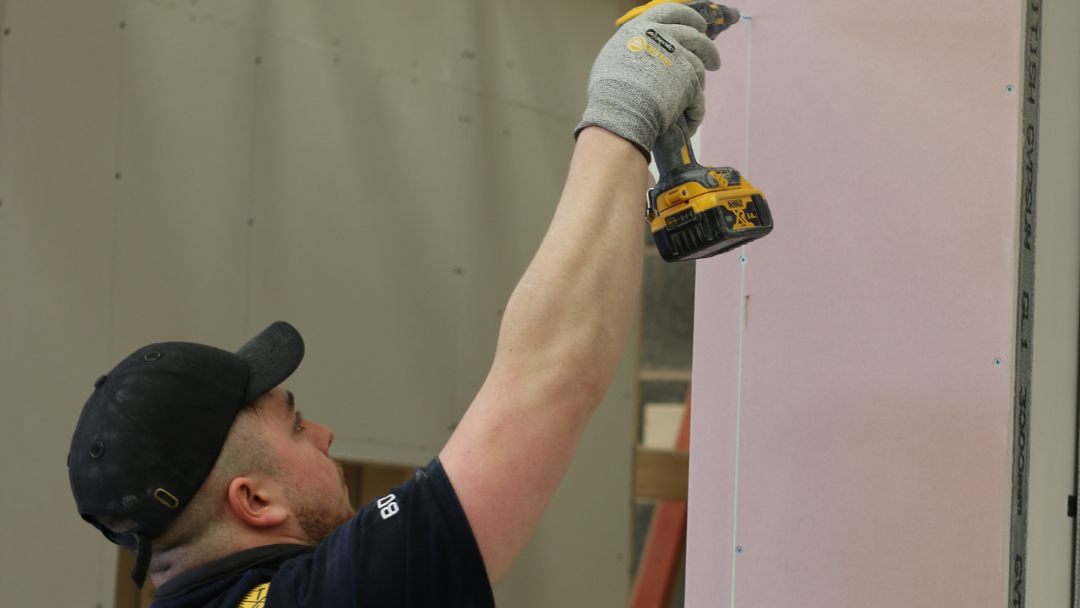
FIS BuildBack 2021 will see people from the region take on training at Sandwell College and work experience with local construction companies to enable them to begin apprenticeships and jobs.
FIS has set up the initiative with funding from the Construction Industry Training Board (CITB).
Courses in drylining will start from June at the college, initially involving up to 28 places, with a view to progressing to an apprenticeship and ongoing NVQ professional development funded by the West Midlands Combined Authority (WMCA).
CITB-funded research for the WMCA showed that in the West Midlands the construction workers in highest demand are in the interior fit-out and wood trades, with more than 15,000 needed across the Black Country, Greater Birmingham and Solihull, and Coventry and Warwickshire Local Enterprise Partnership (LEP) areas.
The West Midlands region is also forecast to have the highest construction growth rate of anywhere in the country in the coming years, at 4.8%.
BuildBack 2021 is aimed at recruiting from local people who are out of work, or looking for a change of career, or underrepresented groups in construction such as women or those from diverse backgrounds.
Lorraine Gregory, CITB Senior Customer Engagement Manager for the Midlands, said:
“We know there’s a skills shortage in the West Midlands for interior fit-out, and with the construction sector playing such a key role in the recovery BuildBack 2021 will help people enter a varied and exciting new career path.”
Catherine Bullough, FIS Skills and Training Coordinator, said:
“There’s real demand for finishes and interiors professionals in the West Midlands, and a strong pipeline of work including the Commonwealth Games in Birmingham next year makes this an exciting time to train up in a new trade.”
Andy Street, the Mayor of the West Midlands, said:
“Retraining and upskilling hold the key to getting people back into work following the impact of the Covid pandemic, and that is why they are a cornerstone of my ambitious but practical plan to create 100,000 jobs in just two years.
“By controlling the region’s training agenda, we can ensure local people are getting access to the skills they need to match employers’ needs. We know construction for example is going to continue to be a huge employer in the coming years, creating tens of thousands of new jobs in the West Midlands. So through schemes like BuildBack 2021 we can use our adult education budget to get people trained in the construction techniques that we know will get them into work.”
Further partners include and the Department for Work and Pensions. BuildBack 2021 in the West Midlands is part of a national scheme by FIS to attract hundreds more people into the trade.
Find out more about BuildBack 2021

by Clair Mooney | 28 Jun, 2021 | Main News Feed
On 6 July, CPA will be hosting a webinar to update the sector on the outstanding issues of concern following the UK-EU trade and cooperation agreement particularly around CA marking, new border controls and logistics for construction product manufacturers, as well as the impact of all this on product availability.
The webinar will be hosted by CPA Chief Executive, Peter Caplehorn with input from CPA Senior Technical Manager, Duncan King. There will be an opportunity for Q&A towards the end of the webinar. Join this CPA webinar on Tuesday 6 July 2021 at 3pm to find out. This webinar is open to both CPA members and non-members alike. Please register here.