by Iain McIlwee | 16 Mar, 2023 | Labour
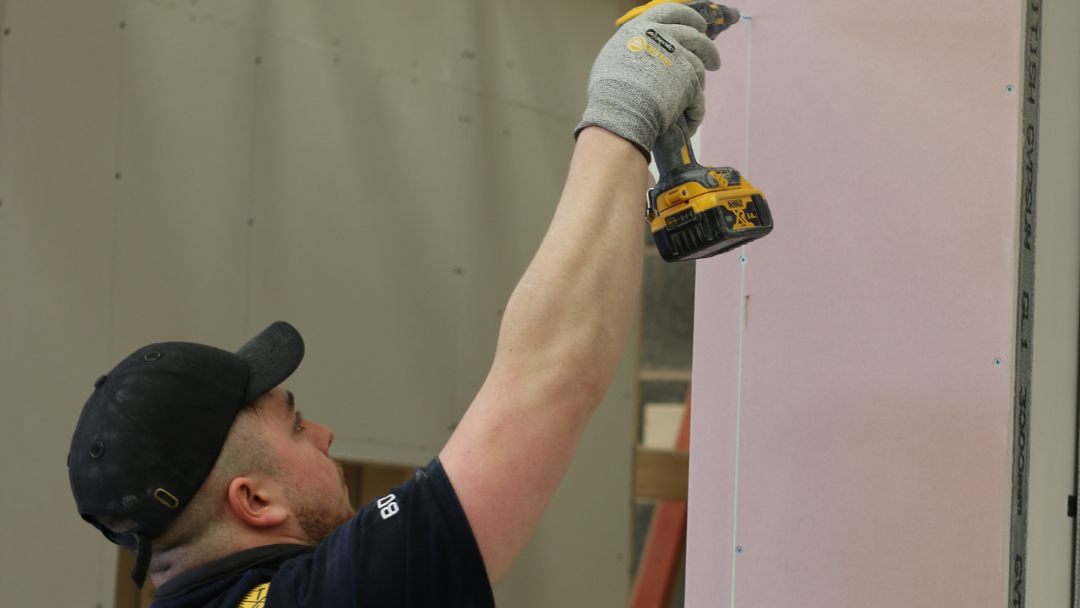
FIS welcomes the announcement in the Budget that the MAC has added a number of new construction trades to the Shortage Occupation List and opted to add Dry Lining to the list of occupations in the Skilled Worker List. This is significant as it potentially provides access to a controlled immigration process that will support the sector in managing any existing or upcoming shortages in our workforce. Other trades most relevant to the finishes and interiors sector now included on the Shortage Occupation List are plastering and carpentry and joinery (both of which were already on the Skilled Worker List).
In advance of starting the full SOL review, MAC were, in advance of the Budget expedited review of occupations in the construction and hospitality sectors, recommending the addition of eligible occupations to the SOL and RQF 1-2 occupations to the Skilled Worker (SW) route where appropriate.
To be eligible for the SOL, an occupation must fulfil the eligibility requirements of the SW route. A job must be classified into a Regulated Qualifications Framework (RQF) level 3-5 skill group or above and meet a minimum annual salary threshold. The Government has uprated these thresholds as part of the routine Spring package of Immigration Rules that were laid on 9 March 2023, following which (subject to Parliamentary approval) this minimum threshold will be £26,200. For this review, the Government have asked that we also consider currently ineligible RQF 1-2 occupations for possible inclusion on the SOL. However, the Government have made clear that such inclusion should be rare, and so the bar is high for such occupations to be added.
Table 5.3: Recommendations for occupations in construction
|
SOC |
Description |
Decision |
|
5311 |
Steel erectors |
Do not recommend for addition to the SOL |
|
5312 |
Bricklayers and masons |
Recommend for addition to the SOL |
|
5313 |
Roofers, roof tilers and slaters |
Recommend for addition to the SOL |
|
5315 |
Carpenters and joiners |
Recommend for addition to the SOL |
|
5319 |
Construction and building trades n.e.c. |
Recommend for addition to the SOL |
|
5321 |
Plasterers |
Recommend for addition to the SOL and recommend that ‘Dryliners’ but not ‘Ceiling fixers’ are moved to this SOC code |
|
8141 |
Scaffolders, stagers and riggers |
Do not recommend for addition to the SOL |
|
8142 |
Road construction operatives |
Do not recommend for addition to the SOL |
|
8149 |
Construction operatives n.e.c. |
Do not recommend for addition to the SOL Recommend that ‘Dryliners’ but not ‘Ceiling fixers’ are moved from this SOC code to SOC code 5321 (Plasterers) |
|
8229 |
Mobile machine drivers and operatives n.e.c. |
Do not recommend for addition to the SOL |
|
9120 |
Elementary construction occupations |
Do not recommend for addition to the SOL |
By moving Dry Lining into the Standard Occupation Classification area 5321 (as per FIS recommendation and lobbying work on the SOC), Dry Lining is now also shares skilled worker status with Plastering for the purposes of being a Skilled Worker.
Commenting on the changes, FIS CEO Iain McIlwee stated:
“It is a relief to finally see Dry Lining recognised as both a skilled occupation and also the shortages that we face as a sector. This is something FIS have been campaigning on for a number of years and I am grateful to colleagues from across the Construction Leadership Council for their efforts in helping to effect this exceptional change and thankful that we now have some movement. We now need to respond to the detailed review taking place to identify other areas of concern and revisit the sponsor and visa process to better understand any further blockers and issues”.

by Iain McIlwee | 14 Mar, 2023 | Labour, Main News Feed
The Construction Leadership Council has published its report of shortage occupations in construction and its updated guidance to help construction businesses access the Points Based Immigration System.
In February 2023, the CLC submitted stakeholder evidence to the Migration Advisory Committee (MAC), detailing shortage occupations that could be considered for inclusion on the Shortage Occupation List of the UK’s Points Based Immigration System, as well as potential roles to be added to the Skilled Worker route.
The CLC’s Movement of People Working Group compiled a comprehensive report, detailing its recommendations, an evidence base, the actions industry is taking to increase the domestic workforce as well as other ideas to help tackle skills shortages.
The CLC recommended the following occupations for inclusion on the Shortage Occupation List:
- Plasterers, Dry Liners and Ceiling Fixers
- Carpenters and Joiners
- General Labourers
- Bricklayers and Masons
- Ground Workers
- Piling Rig Operatives
- Plant Operatives
- Retrofit Co-ordinators
- Road Construction Operatives
- Roofers, Roof Tilers and Slaters
- Scaffolders, Stagers and Riggers
- Steel Erectors
- Thermal Insulators
The MAC is expected to report on construction shortages in due course.
Commenting, Co-Chair of the CLC and Group Chairman and CEO of MACE, Mark Reynolds said:
“The CLC is committed to building our domestic construction workforce and championing construction as one of the best career choices for new entrants but the fact is we are still currently facing chronic shortages. A dynamic immigration system allows us to bridge gaps in workforce need and meet the people requirement for the sector’s pipeline of work. That’s why we are calling for the inclusion of these occupations in the shortage occupation list, to help make it a little easier to access the right people, at the right time’.
FIS CEO, Iain McIlwee added:
“Data from our recent Skills Pulse Survey underpins that 40% of businesses are still experiencing shortages in skilled labour and this is likely to worsen as volumes pick up constraining potential growth. The training sector is rapidly scaling up, but doesn’t provide a quick fix. We are grateful to colleagues from across the construction sector for pulling together and pooling our resources to help make this detailed submission to Government and the MAC and focussing on how we can add a bit of flexibility to the system”.
Access the full report here.
Access the CLC’s revised 2023 Immigration Guidance ‘Movement of People – What you should know’ here.

by Iain McIlwee | 23 Feb, 2023 | Labour
Whilst the future of Government Immigration Policy remains somewhat unclear, through the CLC, FIS was asked to respond to the Migration Advisory Committee’s interim review of the construction occupations in the Shortage Occupations List (SOL).
We have responded directly focussing specifically on the status of shortages in the finishes and interiors sector and supported the response from CLC which has called for 17 new occupations to be added to the SOL carpenters, painters and decorators, piling rig operatives, dry liners, ceiling fixers, plasterers, roofers, and scaffolders. The outcome of this interim review is expected in March, with a full review of the SOL due to be undertaken later this year.
To view the FIS response which includes our underlying data click here this drew on data collected throughout the year including our Skills Pulse Survey, this is survey is still open and if you have a few minutes to complete the more data the better.

by Iain McIlwee | 18 Jan, 2023 | Labour, Main News Feed
FIS is working with No Going Back (NGB), an innovative programme of training, support, employment, and housing funded and driven by 35 Livery Companies working collaboratively to reduce re-offending.
With Employment being such a major part of changing people’s lives when people leave prison, helping to dramatically reduce the likelihood of reoffending, between 23 January – 3 of February 2023, New Futures Network are hosting ‘Unlocking Construction’ employment events in prisons across England & Wales. and NGB are delighted to be a part of this in HMP Onley, Brixton, Wandsworth, and Thamesmead.
HMP Wandsworth and HMP Onley would like to invite Employers from the Construction Industry inside to be part of a special employment event on Wed 25 January (Wandsworth) and Wed 1 February (Onley) to support men into sustainable jobs in the construction sector upon release. This could be men with experience or those who are looking to pursue a new career in the sector. As more than 80% of men released from HMP Onley return to London and the Home Counties, many fantastic potential candidates are keen to find out about jobs on release.
For those attending, the events will follow the format:
HMP Wandsworth – Wednesday 25th January at 1:30 pm (likely finish time 4pm)
An interactive session in the Bounce Back Dry Lining workshop for serving prisoners who are interested in working in Dry Lining – some are currently doing the dry lining training course, and others have completed it.
This event is to improve their awareness of, and access to information on further training and employment opportunities available by introducing them directly to specialists and employers in the sector. It would give the men a chance to raise any questions to address challenges or concerns relating to employment or training within the sector. The prison will also pre-select a couple of men who are work-ready and approaching release for employers to speak with individually.
HMP Onley – Wednesday 1st February at 8:30 am (likely finish time is 4pm) POSTPONED DUE TO RAIL STRIKE, BUT IF YOU WANT TO BE KEPT UP-TO-DATE ON THE REVISED DATE, USE THE CONTACT LINKS BELOW
HMP Onley are hosting a Construction Fair on the day, with a cross-section of employers from the industry to support men into sustainable employment upon release. This could be men with experience or those who are new and looking to pursue a career in construction.
They are running a morning and afternoon session to allow more prisoners to take part and fit around the prison regime. More than 80% of men released from HMP Onley return to London and the Home Counties, there are many fantastic potential candidates who are keen to find out about jobs on release. For employers attending, there would also be an opportunity to have a prison tour to visit the Industry Workshops and recently launched Employment Hub. Training programmes running in this facility include Dry Lining, Carpentry and Joinery and Flooring.
NGB are also happy to facilitate visits in other prisons.
If you are interested in attendng one of these prison visits or finding out more about opportunities to engage in a programme in your local area (or arranging a seperate arrangement for these two facilities), please email jokeane@bouncebackproject.com asap (copy beenanana@thefis.org) or call the FIS on 0121 707 0077.

by Iain McIlwee | 19 Aug, 2022 | Labour, Skills
Employing Ukranian and Afghan Workers
Minister for Refugees Lord Harrington has written to businesses confirming that Ukrainian and Afghan nationals have a right to work in the UK where they have resettled under the Ukraine Family Scheme, Homes for Ukraine Scheme, Afghan Relocations and Assistance Policy or Afghan Citizens Resettlement Scheme. Although the exact process will be determined by how the individual arrived in the UK, employers should conduct right to work checks in the usual manner and contact the Home Office Employer Checking Service (ECS) if further verification if required.
In his letter the Minister re-iterates that all employers in the UK have a responsibility to conduct simple right to work checks before employing someone. These checks are required regardless of nationality – even British citizens are caught by the measures.
Afghan nationals who have resettled in the UK under the Afghan Relocations and Assistance Policy or the Afghan Citizens Resettlement Scheme, and Ukraine nationals who have resettled in the UK under the Ukraine Family and Homes for Ukraine Schemes have a right to work. To evidence that right, employers should conduct right to work checks in the usual way.
For Ukraine nationals, the exact process required of the employer is shaped by how the individual arrived in the UK and the documentation held. But, broadly speaking, at the time of writing:
- Where an individual has a stamp in their passport which provides a time-limited right to work, the employer will need to manually check the passport as set out in published guidance, and perform a follow-up check to ensure the required documentation to evidence the right to work for a longer period (i.e. a Biometric Residence Permit) has been obtained;
- Where an individual has an eVisa (digital evidence of their immigration status, accessible online), the employer should use the online right to work checking service on GOV.UK in the same way as they would for others in possession of a biometric card; and
- Where an individual does not have a passport but instead has an Entry Clearance vignette attached to a ‘Form for Affixing the Visa’ (FAV), where necessary this document can be used as proof of right to work in conjunction with confirmation from the Home Office Employer Checking Service (ECS) in the form of a PositiveVerification Notice (PVN). However, in most cases, shortly after arrival a BiometricResidence Permit is available for collection, and this should be used to access the online checking service.
Where necessary, employers may contact the Home Office Employer Checking Service(ECS) verify right to work:
End of COVID-19 Temporary Changes
The temporary changes to right to work checks introduced in response to COVID‐19, which allow employers to undertake checks via video calls and use scanned copies rather than original documents, are due to end on 30 September 2022. After this date, employers are recommended to verify an individual’s right to work using a certified digital identity service provider (IDSP).
The relevant guidance on Right to Work Checks can be accessed here.
You can visit the FIS Employment Toolkit Here

by Clair Mooney | 6 Jun, 2022 | Labour, Main News Feed, Material Shortages
Statement from John Newcomb, CEO of the Builders Merchants Federation and Peter Caplehorn, CEO of the Construction Products Association, co-chairs of the Construction Leadership Council’s Product Availability working group
Price inflation and a diminishing labour supply are now of greater concern than product availability in most construction sectors.
In terms of availability, little has changed since our last report, with a good supply of most products and materials. Ongoing challenges continue to affect bricks, aircrete blocks, roof tiles, chipboard flooring, gas boilers and other products requiring semi-conductors within sub-components, all of which will be subject to longer lead times throughout the year.
The market is becoming more adept at managing supply of these critical products, and the long-term nature of some of the underlying issues. Although there are reports of delays in supply of boilers leading to extended completion times in new housing, new semi-conductor capacity is coming on stream in late 2023/2024, and expansion in existing capacity will feed into the market over the same timescale.
Demand remains strong in all areas, and this is set to continue into the autumn, although some product forecasts now anticipate a slight slowdown in housing starts towards the end of the year, stemming from rising prices and concerns about affordability. Home improvement work will depend on levels of consumer confidence as costs of living rise.
Members of the group raised concerns regarding the threatened rail strike. This will affect aggregate and concrete deliveries to major infrastructure products, highlighting the need for government to prioritise transport of construction materials should the strike go ahead.
There is, however, some good news from parts of China. With Shanghai gradually removing covid restrictions, production should normalise in that major industrial region by mid-June. Shipping analysts warn, however, that this may exacerbate the current bottlenecks in deliveries to the West.
Across the board, managing price volatility and labour are now the biggest issues.
Although labour shortages are affecting manufacturers, the greatest concern is expressed by housebuilders and SME builders, as it takes at least three years to train a skilled tradesperson.
The cost of energy and fuel are major drivers for price volatility. Initial results of the Group’s horizon scanning exercise suggest energy hedges are short term and very significant increases are expected to come through quite quickly. This will particularly affect energy-intensive products including steel, glass, plasterboard, cement, ceramics and porcelain.
Although steel prices have come down slightly, since initial disruption following the outbreak of war in Ukraine, energy prices remain a major issue and price volatility will continue. Market prices will also be affected by the Indian Government’s unexpected increase to export duties on iron ore and steel, effective from 22 May.
The CLC group will continue to actively engage with energy intensive manufacturers over the coming months, and closely monitor market conditions and the impact of any further price increases and volatility.
Page 4 of 9« First«...23456...>Last