by Clair Mooney | 19 Aug, 2021 | Labour, Skills
Being conscious of the ever-shrinking labour pool available to the finishes and interiors sector, there have been reports of up to 60% labour not being available by some FIS members. FIS is running two projects specifically designed to attract people into the finishes and interiors sector.
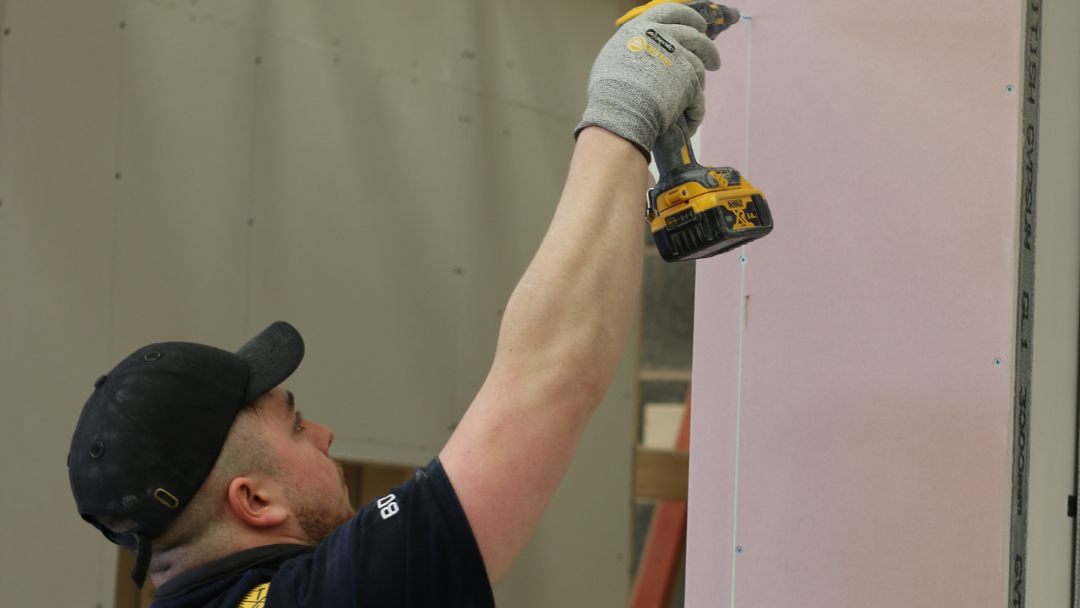
FIS BuildBack accepts individuals from a range of backgrounds including HM Forces Career Progression candidates and clients put forward by the Department for Work & Pensions (DWP). To help prepare the candidates for work, each learner receives training in Drylining Fixer, Boarder and are supplied with Personal Protective Equipment, a set of tools and a CSCS Provisional Card. The candidates just need an opportunity to show employers what they can do during a work placement. This may ultimately lead to a full-time work opportunity and will also add new talent to your workforce. All of this is free of charge to employers.
The sector now needs employers to provide a 2 week work placement for these BuildBack candidates. If the individual fits your organisation’s needs, and they are eligible (claiming universal credit) you could transfer them to the governments KickStart Scheme. The scheme provides a grant of £1500 to employers willing to take on individuals for a 6 month work placement and includes payment of the national minimum wage for 25 hours per week.
There are currently 140 people available for work placement including candidates from HM Force Career Progression and the YouthBuild charity. All have received introductory training as Dry Liner Fixer Boarder, a set of tools, PPE, a CSCS Provisional card. Please contact Marie on 07799 903103 or email marieflinter@thefis.org. or Catherine on 07900 083325 or email catherinebullough@thefis.org for details. If you employ any of these people FIS can help their advancement by providing further training as an apprentice or to the achievement of a vocational qualification, all free of charge to the employer.
To find out more about BuildBack click here.

by Clair Mooney | 13 Jul, 2021 | Labour, Material Shortages
The construction industry is currently facing challenges on the availability and pricing volatility of labour and materials. This volatility could have a significant impact on the timeframes and delivery costs of many projects.
Most forms of construction contract have standard provisions for managing volatility, without the need to make contract amendments. These provisions, such as fluctuations provisions in JCT and NEC 4 Secondary X1, provide a means of collaboratively sharing the risks associated with this volatility.
In an open letter to the industry Andy Mitchell, Chair of the Construction Leadership Council (CLC) is strongly urge those responsible for developing, agreeing and managing contracts, existing and new, to consider adopting these provisions in their contracts.
The contractual challenges created by lack of product availability and inability to access approved products are likely to mean design changes are necessary. Therefore, again, the CLC would encourage a collaborative approach to be taken to managing these risks.
Commenting on the statement FIS CEO Iain McIlwee stated:
“This is a welcome intervention from the Construction Leadership Council and I would personally like to thank Andy for picking up the mantel here. We have been vocal and remain concerned that clients and main contractors are still focussed on squeezing risks through the supply chain and we are getting to the point where fixed price contracts may not be tenable on certain works. We continue to urge members, before you sign a contract check the delay clauses and look at the fluctuation clauses too, if you cannot negotiate a shared risk approach with your client, you need to seriously consider pricing in risk moving forwards and ask yourself what could worse case scenario mean to your business if prices drifted or sourcing issues beyond your control delay the programme.”
Read the letter here.

by Clair Mooney | 7 Jul, 2021 | Labour, Skills
The Construction Leadership Council has added its voice to other industry representatives including the CBI and the Road Haulage Association calling for a review of the occupations eligible for a visa and an immediate update to the shortage occupations list to include specialist piling rig operators, HGV drivers and others.
Along with other industry sectors, construction is feeling the impact of the new Points Based Immigration System and it is not just core construction skills that are affected. The availability of HGV drivers has been a growing cause of concern and complaints within the CLC’s Product Availability Group, and has clearly worsened to the point that it is now delaying deliveries and inflating costs across the UK.
Parliament’s Transport committee recently heard that the industry faces “a huge challenge of shortages, both in craft and particular skills” and that this shortage will have a greater impact as more major infrastructure programmes get under way. Employers of all sizes are now reporting challenges in employing suitably skilled workers and are calling for the new visa system to accommodate specialist construction workers to help alleviate the shortage in the short term whilst education policies are aligned to support UK workers gain appropriate qualifications and training including apprenticeships.
Whilst exploring the changes required to boost the construction sector workforce the CLC is supporting the Road Haulage Association’s calls to add HGV drivers to the Government’s Skilled Worker Shortage Occupation List and offering a seasonal visa scheme for qualified HGV drivers.
The recent upturn in the economy since the lockdown is increasing demand across supply chains, and the reopening of non-essential retail outlets and parts of the hospitality sector is making the situation more acute. According to the RHA, the UK has lost 15,000 European drivers this year due to Brexit, and 30,000 UK driver tests due to Covid, exacerbating the existing 60,000 driver shortage.
The construction industry is one of the largest users of the UK road network. With Government intervention and support, the sector was amongst the first to return to work during the pandemic; but the resulting sharp increase in activity has made clear an imbalance in supply and demand, including labour shortages.
Construction Leadership Council co-chair Andy Mitchell, said:
“We now have a situation where we believe the Government needs to intervene. Manufacturers, merchants and builders large and small are having products and materials delayed or not delivered, and warn that it is having a knock-on effect on construction schedules and leading to higher build costs. Industry can only take this so far, and as Government is also the largest client of construction services, we trust it will listen to the calls from all sectors to enable timely and appropriate reviews of the new immigration system.”
Suzannah Nichol MBE, CEO of Build UK, said:
“We do not have all of the specialist skills we need for the volume of construction projects underway and those in the pipeline across the UK. The new immigration system is proving difficult to navigate, is costly and actually prevents many of the people with the skills construction needs from coming here to work. By reviewing the eligible skilled occupations and the shortage occupation list we can ease the current pressures, support businesses to grow the economy and keep building faster, better and greener”
Brian Berry, Chief Executive of the Federation of Master Builders, added:
“The construction industry cannot be expected to ‘build back better’ when the industry is struggling to access key inputs – be that labour or materials. Small builders are already struggling to hire bricklayers and carpenters. Shortages of HGV drivers to get goods to merchants are now adding to the troubles they face. Clearly what SME builders are experiencing is part of a larger problem, and we hope the Government addresses it with the big picture in mind. The Road Haulage Association’s recommendations are sensible, achievable, and work for both the short term and long term.”
Richard Burnett, Chief Executive at the Road Haulage Association, said:
“We welcome the support of the Construction Leadership Council and the industry it represents. It is our view that there has never been a more challenging time for road haulage. We have strongly urged Government to take these decisive steps to ensure that we can continue to maintain the UK’s integrated and finely balanced supply chains. We certainly encourage the construction industry to ask Government and their local MPs for swift action.”
by Clair Mooney | 1 Jul, 2021 | Drylining, Labour, Skills
In light of severe shortages predicted in the drylining sector, FIS has been helping to train new talent serious about a career in drylining.
For every 5% of EU workers that leave the UK, we double our annual recruitment target for drylining. The Settlement Scheme is now officially closed.
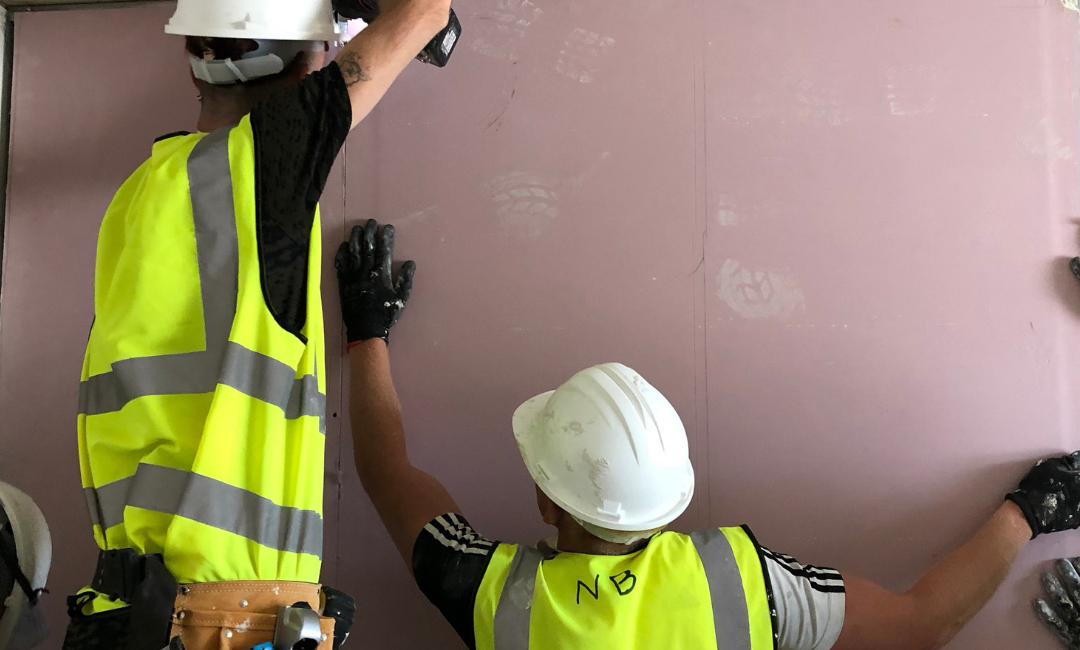
Through the FIS BuildBack programme, we have scheduled a number of courses which will help to get candidates site-ready, have a grounding in the skills and competencies required for installing drylining and have undergone an assessment and robust training course and that includes mandatory HS&E training and the provision of a Provisional CSCS card, PPE and basic tools.
The next step is where we need YOU.
We are looking for employers to provide the candidates with two-weeks work experience. There is no cost involved, we make all the arrangements for you. You can meet and select the candidates you want to offer work experience in order to ensure they are the best fit for your business.
If you are interested in finding out more, or can offer a placement, email catherinebullough@thefis.org

by Clair Mooney | 30 Jun, 2021 | Labour
by Clair Mooney | 29 Jun, 2021 | Labour, Skills
The West Midlands is set to benefit from a new scheme to assist residents looking for employment or change of career and fill a skills shortage in local construction.
FIS BuildBack 2021 will see people from the region take on training at Sandwell College and work experience with local construction companies to enable them to begin apprenticeships and jobs.
FIS has set up the initiative with funding from the Construction Industry Training Board (CITB).
Courses in drylining will start from June at the college, initially involving up to 28 places, with a view to progressing to an apprenticeship and ongoing NVQ professional development funded by the West Midlands Combined Authority (WMCA).
CITB-funded research for the WMCA showed that in the West Midlands the construction workers in highest demand are in the interior fit-out and wood trades, with more than 15,000 needed across the Black Country, Greater Birmingham and Solihull, and Coventry and Warwickshire Local Enterprise Partnership (LEP) areas.
The West Midlands region is also forecast to have the highest construction growth rate of anywhere in the country in the coming years, at 4.8%.
BuildBack 2021 is aimed at recruiting from local people who are out of work, or looking for a change of career, or underrepresented groups in construction such as women or those from diverse backgrounds.
Lorraine Gregory, CITB Senior Customer Engagement Manager for the Midlands, said:
“We know there’s a skills shortage in the West Midlands for interior fit-out, and with the construction sector playing such a key role in the recovery BuildBack 2021 will help people enter a varied and exciting new career path.”
Catherine Bullough, FIS Skills and Training Coordinator, said:
“There’s real demand for finishes and interiors professionals in the West Midlands, and a strong pipeline of work including the Commonwealth Games in Birmingham next year makes this an exciting time to train up in a new trade.”
Andy Street, the Mayor of the West Midlands, said:
“Retraining and upskilling hold the key to getting people back into work following the impact of the Covid pandemic, and that is why they are a cornerstone of my ambitious but practical plan to create 100,000 jobs in just two years.
“By controlling the region’s training agenda, we can ensure local people are getting access to the skills they need to match employers’ needs. We know construction for example is going to continue to be a huge employer in the coming years, creating tens of thousands of new jobs in the West Midlands. So through schemes like BuildBack 2021 we can use our adult education budget to get people trained in the construction techniques that we know will get them into work.”
Further partners include and the Department for Work and Pensions. BuildBack 2021 in the West Midlands is part of a national scheme by FIS to attract hundreds more people into the trade.
Find out more about BuildBack 2021
