
by Clair Mooney | 15 Jun, 2022 | Skills
The Department for Education are introducing a number of changes to apprenticeships through the 2022 to 2023 funding rules:
- DfE are making it simpler for individuals to accelerate their apprenticeship. By improving how providers assess prior learning and experience at the start of the programme and funding providers to deliver a robust assessment apprentices will be able to cut out training they do not require and complete their apprenticeship more quickly.
- DfE are introducing a new minimum number of off-the-job training hours. From 01 August, the minimum time spent on off-the-job-training will no longer be linked to the apprentice’s working hours. Instead, DfE will have a consistent figure, irrespective of the hours worked by the apprentice. This will be 6 hours per week. This change will simplify the reporting for providers and create a level-playing field among apprentices who are on the same standard but working different hours.
- DfE are changing English and maths requirements for those Level 2 apprentices who start with the lowest level of prior attainment in English and maths. People who start a L2 apprenticeship without L1 English and maths will no longer need to automatically attempt L2 English and Maths tests to complete their apprenticeship.
The apprenticeship funding rules are published in draft on gov.uk to give providers and employers an opportunity to provide feedback on how we can make them better understood. Please email any suggestions to fundingrules.comments@education.gov.uk by 24 June 2022.
by Clair Mooney | 14 Jun, 2022 | Building Safety Act
The Department of Levelling Up, Housing and Communities has published a consultation on the Higher-Risk Building (Descriptions and Supplementary Provisions) Regulations.
This consultation is the first in a series of consultations on regulations which sit under the Building Safety Act 2022. It covers regulations which will complete the definition of higher-risk building for the purpose of the new more stringent regime.
The Building Safety Act 2022 sets the height threshold for buildings included in the new regime as at least 18 metres in height or at least 7 storeys. .The Act means that buildings meeting this height threshold with at least two residential units will be within the scope of the new regime when they are occupied. Government have previously consulted on the height-threshold and this is now set in primary legislation, they are not seeking further comments on this through this consultation.
This consultation is seeking views on:
1. The overall definition of a building for the purposes of
a: the design and construction and
b: occupation parts
of the new more stringent building safety regime being brought forward by the Building Safety Act;
2. Which buildings are included and excluded in relation to the design and construction part of the new regime and the definitions of these buildings;
3. Which buildings are excluded in relation to the occupation part of the new regime and the definitions of these buildings; and
4. The method for measuring height and number of storeys.
A key point to highlight for members is that the Act covers any construction work in a building at least 18m or at least 7 stories that includes two residential units.
Currently FIS does not see any major concerns in the proposals, which are consistent with the information published with the Building Safety Act and in keeping with the original proposals set down in Building A Safer Future. FIS is, however, seeking views of our membership should you wish us to raise any points through the consultation. You can play these in directly too via the consultation website.
If you have any questions, or want discuss any aspect of the consultation, please contact Iain McIlwee iainmcilwee@thefis.org
Key points from the consultation:
Part one: definition of a building
The proposal is that the regulations will define what is meant by ‘building’ under both the design and construction and in-occupation parts of the new regime.
The consultation proposes that the regulations define ‘building’ as including any structure or erection, and any part of a building, as so defined, but does not include plant or machinery comprised in a building as defined in the Building Act 1984.
This echoes the language found in The Building Act 1984 and is an established definition recognised in the sector and currently used for building work.
Part two: including and excluding buildings from the design and construction part of the new regime
The consultation also sets down which buildings are considered higher-risk during the design and construction phase of the building life-cycle and are therefore subject to the new building control regime, mandatory occurrence reporting, dutyholder and golden thread requirements of the new regime.
The proposal is to define higher-risk buildings under section 120D of the Building Act 1984 as including:
- buildings which contains at least two residential units (the Building Safety Act defines residential unit as a dwelling or any other unit of living accommodation, for example a flat or rooms in a university hall of residence where amenities are shared);
- care homes; and
- hospitals.
The proposal is to exclude from the definition of higher-risk buildings under section 120D of the Building Act 1984:
- secure residential institutions (e.g. prisons).
- temporary leisure establishments (e.g. hotels); and
- military premises (e.g. military barracks).
Part three: excluding buildings from the in-occupation part of the new regime
The Building Safety Act 2022 already defines higher-risk buildings under section 65 as including any building which contains at least two residential units and meets the height threshold of 18 meters or 7 storeys.
The consultation proposes that that the regulations exclude some buildings from the definition of higher-risk buildings under section 65 of the Building Safety Act. The regulations will therefore establish in law which buildings are excluded from the in-occupation phase of the new regime. Without explicitly excluding types of buildings which are likely to have two residential units from the definition of higher-risk building through these regulations, where these buildings meet the height threshold they would otherwise be considered in scope.
The current focus of the in-occupation regime, set out in part four of the Act, is on domestic buildings. The proposal is therefore to exclude, through these regulations, other types of buildings that are wholly subject to The Regulatory Reform (Fire Safety) Order 2005 (the Fire Safety Order) when they are in use.
The buildings it is proposed to exclude are:
- care homes;
- hospitals;
- secure residential institutions (e.g. prisons);
- temporary leisure establishments (e.g. hotels); and
- military premises (e.g. military barracks).
Further definitions of these building types are included in the consultation.
The consultation can be seen in full here. The consultation will be open until 21 July 2022.
For more details of the Building Safety Act click here
by Clair Mooney | 13 Jun, 2022 | Skills
Grants provide financial support for employers who supply construction-specific training for their workforce. CITB grants help ensure workers are safe, skilled and have opportunities to grow.
From 1 April 2022, the following grants are available through the CITB Grants Scheme:
Drylining – The apprenticeship attendance grant for all new dry lining apprentices has been increased by £2,000:
- An additional £1,000 paid with the first attendance grant (after 13 weeks)
- An additional £1,000 paid with the final attendance grant (towards the end of the apprenticeship).
Enhanced Grant for Rainscreen Cladding VQ Achievements
An additional £400 will be paid on top of the existing £600 Achievement grant for Rainscreen Cladding VQs completed.
Almost 14,000 businesses have been supported with grants, with over £77m paid out in the last year. Members are encouraged to apply for grants to support training within their businesses, including apprenticeships, short courses, and short/long qualifications. More information is available at citb.co.uk/levy-grants-and-funding

by Clair Mooney | 13 Jun, 2022 | Main News Feed
FIS and NBS, the leading specification platform for the construction industry, announced this week that NBS has now formally recognised the FIS Acoustic Verification Scheme within their product selection tool NBS Source. This change means that specifiers can search for partition and operable wall systems that have been verified through the FIS Acoustic Verification Scheme (AVS), and make verified acoustic claims part of the chosen product specification.
This update to the NBS system builds on the partnership NBS and FIS announced in August 2020 that is aimed at driving up standards and compliance through information sharing and best practice amongst construction professionals.
The FIS Acoustic Verification Scheme was established to introduce standard methodology and support honest and consistent declaration of acoustic performance for partitions and operable walls. The FIS partnership with NBS means that specifiers will also clearly be able to see which products on NBS Source have AVS certification and which do not.
The FIS Acoustic Verification Scheme was created to enable manufacturers to verify acoustic airborne sound tests against an agreed criterion and a methodology to present these to market in a consistent and transparent manner. The scheme enables best practice and prevents inaccurate or misleading information from undermining the market and responsible manufacturers and suppliers.
Commenting on the latest update, Iain McIlwee, Chief Executive of FIS said:
“It is vital that we make it easy to get it right. Specifiers have a difficult role in bringing together a huge amount of information and it is easy to get it wrong. This is compounded by the use of misleading, or in some cases falsified data, that can mean clients end up paying for acoustic performance that is not achieved. By being able to bring NBS users as much information as possible at specification point is crucial in making the right building choices.”
Phil Simpson, Technical Content Manager, NBS added:
“It is initiatives like this that drew us to working with FIS, who are a real driving force within the industry and use their technical knowledge and work with their community to help drive up standards and support effective specification. Simply put the Acoustic Verification Scheme helps bring rigour and supports the specifier. In working with FIS and organisations like them we are ensuring we are including industry best practice in our content and delivering this efficiently and effectively for our specification customers, who in turn can benefit from having the right information at their fingertips.”
Details of the scheme have also been built into the NBS Chorus cloud-based specification writing platform.

by Clair Mooney | 9 Jun, 2022 | Main News Feed
FIS today celebrated the finishes and interiors sector with the announcement of the winners of the FIS 2022 Contractors Awards.
Members and their guests packed out the Nine Kings Suite at the Royal Lancaster Hotel in London to watch the winners in the nine categories receive their prestigious awards.
Indepedent Awards Judges Tony Pieri and Clive Perry, who visited all project entered said:
“We don’t just judge these projects on their overall finished appearance. Other factors – including sustainability, design input, problem solving, logistics, value added initiatives and integration – are all factored into our in-depth assessment of the work involved. Members have excelled themselves in presenting to us a myriad of high quality, stunning projects. They remain a real credit to FIS and to themselves”.
A final award was given for the Project of the Year, which was judged by guest architect Robert Fry, International and
Executive Director of Aukett Swanke Group plc. Robert selected the overall Project of the Year from the winning contracts across all categories.
Robert said:
“The very high quality of the award category winners made the selection of a single project for the ‘Best of the Best’ award a very challenging proposition given the excellence demonstrated by so many varied trades and skillsets brought to bear for clients in such a collaborative endeavour”.
About the FIS Contractors Awards
The FIS Contractors Awards are held annually to encourage and promote high levels of craftsmanship and design. Not only does the FIS member who installed the contract win an award, but so does the architect or interior designer of an award-winning project.
by Clair Mooney | 9 Jun, 2022 | Skills
With the requirement to demonstrate competency in your workforce being carried into law with the new Building Safety Act, FIS has teamed with MyProPass (MPP) to provide a platform for businesses to manage the competency of their workforce and for individuals to demonstrate their training history.
The benefit of the MyProPass platform to individuals is that it allows them to store all of their certificates in one place and to share their training history with their employer or anyone else they grant access to their account. They can also browse and sign up to hundreds of training, CPD or industry events in the events directory. Employers can link to individuals accounts, with their permission, to view and download their training history. They can also manage any training activity which requires a certificate through the platform, issuing a digital certificate directly to an individual’s account. At a time when the industry is facing intense scrutiny, this new platform will enable companies and individuals to provide evidence of competency.
FIS Chief Executive Iain McIlwee said:
“This is an exciting next step and builds out from core tools like CSCS. It is clear that better consistency is key to competence management, especially in a fast-moving sector like ours with an uber flexible workforce – only around 30% of our trade workforce are in employment.
“MPP provides the ideal platform for us to start building digital competence passports. This is about more than the core qualifications, as it’s also about encouraging and recognising wider training activities and will offer more of a formal approach to developing and hopefully retaining people in our sector. This platform and the work we are doing around it gives us an opportunity to reset and focus not just on how we recruit, train and develop our workforce, but ultimately how we reward and encourage individuals, investing in the future of the people who are building our future.”
MPP CEO and co-founder Pia Osseforth said:
“We are truly delighted to be partnering with FIS who are leading this space of digitisation and unpicking the challenges of the industry. MyProPass is passionate about digitising competency within the construction industry. The power of data has a big role to play, and this can only be truly realised when skills gained through learning and work experience are detailed and captured digitally. As highlighted within the recent Building Safety Act, this is also becoming paramount for regulators in terms of assessing the competency of individuals working on projects. Talent management that focuses on the needs of individuals and enhances their employability can increase employee motivation and productivity and improve the attractiveness of companies as employers – issues that are particularly significant in the digital age for recruiting and retaining staff. Provision of further training, retraining and skills management are all important aspects of Continuous Professional Development. Employees will have to engage in lifelong learning through further training if they are to be capable of responding as rapidly as possible to changes in skills requirements triggered by automation and digitalisation. Working collaboratively with FIS, we look to provide value to both employers and employees and look forward to creating positive change and impact.”
To support FIS members to meet the need to prove competence, FIS has negotiated a discount for organisations wishing to engage with MyProPass. Absolutely everything and anything can be stored digitally by individuals and organisations.
For further information about MyProPass visit www.thefis.org/skills-hub/competency-passport/ or call FIS on 0121 707 0077 or email info@thefis.org
by Clair Mooney | 6 Jun, 2022 | Labour, Main News Feed, Material Shortages
Statement from John Newcomb, CEO of the Builders Merchants Federation and Peter Caplehorn, CEO of the Construction Products Association, co-chairs of the Construction Leadership Council’s Product Availability working group
Price inflation and a diminishing labour supply are now of greater concern than product availability in most construction sectors.
In terms of availability, little has changed since our last report, with a good supply of most products and materials. Ongoing challenges continue to affect bricks, aircrete blocks, roof tiles, chipboard flooring, gas boilers and other products requiring semi-conductors within sub-components, all of which will be subject to longer lead times throughout the year.
The market is becoming more adept at managing supply of these critical products, and the long-term nature of some of the underlying issues. Although there are reports of delays in supply of boilers leading to extended completion times in new housing, new semi-conductor capacity is coming on stream in late 2023/2024, and expansion in existing capacity will feed into the market over the same timescale.
Demand remains strong in all areas, and this is set to continue into the autumn, although some product forecasts now anticipate a slight slowdown in housing starts towards the end of the year, stemming from rising prices and concerns about affordability. Home improvement work will depend on levels of consumer confidence as costs of living rise.
Members of the group raised concerns regarding the threatened rail strike. This will affect aggregate and concrete deliveries to major infrastructure products, highlighting the need for government to prioritise transport of construction materials should the strike go ahead.
There is, however, some good news from parts of China. With Shanghai gradually removing covid restrictions, production should normalise in that major industrial region by mid-June. Shipping analysts warn, however, that this may exacerbate the current bottlenecks in deliveries to the West.
Across the board, managing price volatility and labour are now the biggest issues.
Although labour shortages are affecting manufacturers, the greatest concern is expressed by housebuilders and SME builders, as it takes at least three years to train a skilled tradesperson.
The cost of energy and fuel are major drivers for price volatility. Initial results of the Group’s horizon scanning exercise suggest energy hedges are short term and very significant increases are expected to come through quite quickly. This will particularly affect energy-intensive products including steel, glass, plasterboard, cement, ceramics and porcelain.
Although steel prices have come down slightly, since initial disruption following the outbreak of war in Ukraine, energy prices remain a major issue and price volatility will continue. Market prices will also be affected by the Indian Government’s unexpected increase to export duties on iron ore and steel, effective from 22 May.
The CLC group will continue to actively engage with energy intensive manufacturers over the coming months, and closely monitor market conditions and the impact of any further price increases and volatility.

by Clair Mooney | 6 Jun, 2022 | Building Safety Act
There have been further changes to fire safety requirements in the Building Regulations and the use of non-combustible materials in and on the external walls of new flats, hospitals, student, school accommodation and dormitory buildings (originally introduced in 2018).
The announced changes take into account responses to the consultation process in 2020 and extend the scope of the requirements for non-combustible materials to cover hotels, hostels and boarding houses. Other updates to the regulations include the following recommendations:
- include elements of solar shading devices within the scope of the ban
- amend the list of materials exempt from the ban to include fibre optic cables and insulation materials 300mm from ground level
- update the requirement of the ban to refer to the latest version of the British Standard classification for materials used on high-rise residential buildings
- temporarily exempt cavity trays
- amend the requirements for material change of use in buildings
The cavity tray exemption is significant in the SFS sector as the exemption previously applied to:
(a) cavity trays when used between two leaves of masonry;
Whilst this statement remains unamended in the Approved Documents the changes announced in June 2022 include the following recommendation:
Exemptions – The legislation will amend the list of materials exempted from the combustible materials ban to include fibre optic cables and insulation up to 300mm from ground level. We will also provide an 18-month temporary relaxation for cavity trays in all forms of construction.
To support this Government has issued a dispensation notice that allows use of cavity trays that do not achieve the strict performance requirements of the ban – this exemption therefore comes into effect from the 1st June 2022. FIS continues to work with officials and colleagues at the Construction Products Association to try to understand the rationale behind the temporary relaxation and what this means longer term.
The announcement also carries a number of recommended changes including allowing for new statutory guidance to restrict the combustibility of materials used in and on the external walls of residential buildings, between 11-18m in height. This will mean that lower risk developments between 11-18m “must meet necessary safety standards – while allowing designers and developers flexibility to use environmentally friendly materials.” Further consultation is anticipated on this aspect in the coming months.
A complete ban is to be introduced on the use of metal composite material with un-modified polyethylene core in all buildings of any height.
Unless specified, changes to the Building Regulations will come into force on 1 December 2022 (in line with the full publication of the revised Approved Document B).
We will continue to keep you updated, but if you have any comments you would like to feed in at this stage to our ongoing discussions with officials at DCHLUC, please don’t hesitate to play them in via joecilia@thefis.org
Full details available here.
Note this move will (for the period of the exemption) align more closely with the Scottish Building Standards that were extended on the 1 June to cover Buildings 11-18m. These also exempt Cavity Trays from the combustible material list: Changing legislation in Scotland – FIS (thefis.org)
This announcement coincides with the publication of a booklet containing ammendments to Approved Document B that will come into force from the 1st December 2022.
Cavity Tray Exemption – Further Details
Extract from the consultation response related to the Temporary Exemption of Cavity Trays:
In our consultation we proposed several changes to the list of exemptions in Regulation 7(3) including the temporary exemption of cavity trays in all forms of construction and the extension of the exemption of waterproofing and insulation materials.
Cavity trays are an essential wall component, installed in wall cavities to capture moisture that penetrates the outer face of the wall, preventing damp. Cavity trays are currently exempt only when used between walls constructed of two leaves of masonry. This type of construction is not common in modern high-rise buildings and industry has adapted by using stainless steel to produce cavity trays. However, industry has highlighted that this incurs excessive cost and there are issues with supply, installation and durability. Stainless steel is considered less durable than a plastic cavity tray and does not effectively prevent damp. There is increased potential for health and safety issues to arise if these products fail to adequately prevent moisture ingress and damp in buildings.
We are aware of some compliant non-combustible product on the market, however some industry stakeholders have expressed concerns over the installation of this product that may result in poor performance and issues of damp in buildings. We are aware that some developers have been unable to get a new homes warranty, making the homes unsaleable, due to concerns over the performance of non-combustible cavity trays.
The consultation proposed a temporary 18-month relaxation of the ban as it relates to cavity trays pursuant to Section 11 of the Building Act 1984. This would enable this matter to be resolved temporarily while maintaining industry momentum to develop adequate non-combustible alternatives. 68% of consultation respondents agreed with the proposal.
In the interest of health and safety, we will issue a type relaxation to allow industry to use cavity trays that do not achieve the strict performance requirements of the ban. We do not believe it is appropriate to permanently exempt cavity trays as it would hinder innovation in development of additional compliant products. It remains the clear intention of this government to ensure that non-combustible cavity trays are used in the external walls of building where they are already readily available and after the temporary exemption lapses.
by Clair Mooney | 31 May, 2022 | Main News Feed
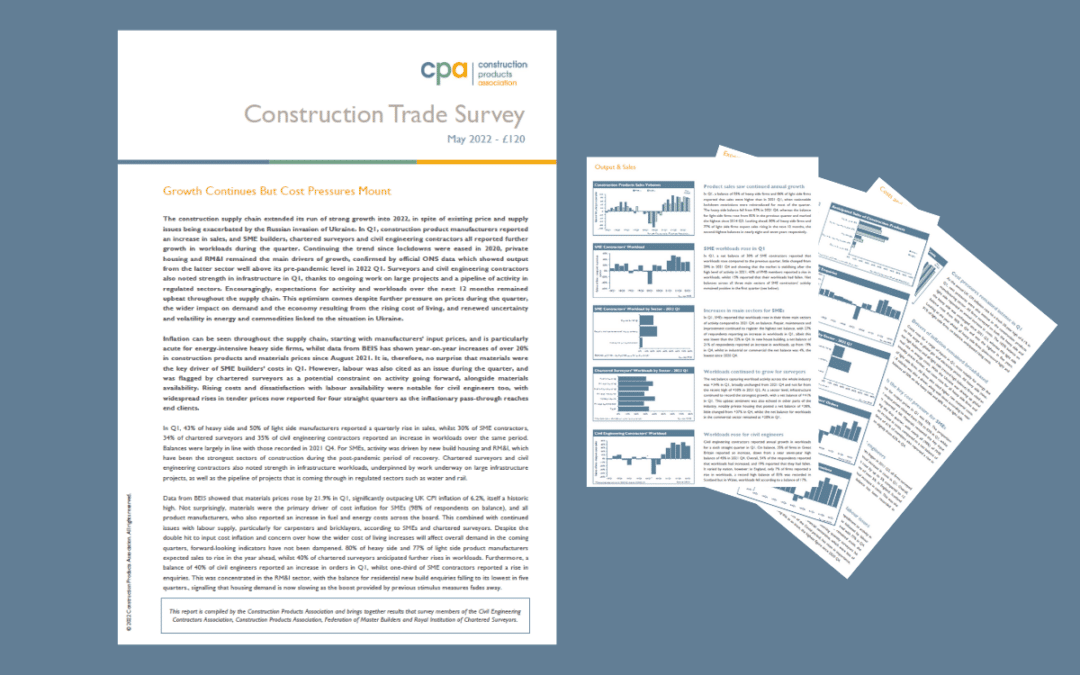
The construction supply chain extended its run of strong growth into 2022, in spite of existing price and supply issues being exacerbated by the Russian invasion of Ukraine. In Q1, construction product manufacturers reported an increase in sales, and SME builders, chartered surveyors and civil engineering contractors all reported further growth in workloads during the quarter. Continuing the trend since lockdowns were eased in 2020, private housing and RM&I remained the main drivers of growth, confirmed by official ONS data which showed output from the latter sector well above its pre-pandemic level in 2022 Q1.
Encouragingly, expectations for activity and workloads over the next 12 months remained upbeat throughout the supply chain. This optimism comes despite further pressure on prices during the quarter, the wider impact on demand and the economy resulting from the rising cost of living, and renewed uncertainty and volatility in energy and commodities linked to the situation in Ukraine
The CPA’s Construction Trade Survey brings together results from surveys of building contractors, specialist contractors, civil contractors and product manufacturers. It provides a pan-industry assessment of current and expected conditions.

by Clair Mooney | 31 May, 2022 | Skills
A number of improvements and simplifications to apprenticeships will come into force from August 2022.
Over the past five years apprenticeships have been transformed into a high-quality skills programme for learners and employers. Employers have created more than 640 standards to meet their skills needs, training is delivered by registered providers which are regularly inspected, and apprentices complete rigorous end-point assessment, so employers know that they are fully competent in their role.
Having reformed the apprenticeships programme, the Department for Education now want to make it simpler to use for employers, training providers and apprentices themselves. To this end, apprenticeships will be further improved from August 2022.
Minister for Skills Alex Burghart said: “We have transformed apprenticeships so they offer a high-quality route into professions as diverse as engineering, healthcare, and digital for young people starting their careers, or adults hoping to retrain and upskill. We now want to focus on making the system as simple and user-friendly as possible, reducing bureaucratic burdens on employers and providers and giving apprentices the best possible experience.”
These improvements include:
- Making it simpler for individuals to accelerate their apprenticeship by placing a greater focus on provider assessment of prior learning and experience. By improving how providers take account of this at the start of their apprenticeship and funding them to do a robust upfront assessment, apprentices will be able to cut out training they do not require and complete their apprenticeship more quickly. This means that they can spend more time in the workplace and will become fully competent sooner, boosting employer productivity and their own earnings potential.
- Introduce a consistent baseline for off-the-job training, specifying the minimum number of hours that a full-time apprentice must spend in training. This will simplify the reporting for providers and create a level-playing field among apprentices who are on the same standard but working different hours. This means that apprentices who work more than 30 hours a week will be able to spend more time on the job delivering for employers, while still getting the vital training they need to complete their apprenticeships.
- Changing English and maths requirements for those Level 2 apprentices who start with the lowest level of prior attainment in English and maths. People who start a L2 apprenticeship without L1 English and maths will no longer need to automatically attempt L2 English and Maths tests to complete their apprenticeship. It will mean that thousands of L2 apprentices can focus on securing a L1 English and Maths qualification with only those who are really ready to take the Level 2 tests attempting them.
- Provide a more efficient payment service for providers by reducing the data needed to make payments and improving Apprenticeship Service financial reports, helping providers understand what they are being paid for each apprenticeship and why. DfE will start testing these improvements towards the end of the year. They will also do more to ensure that all employers promptly receive their £1,000 additional support payment if they take on an eligible young apprentice. Having engaged employers and providers on changing payment profiles, DfE received a clear message that system simplicity is the priority for them, so they are not making changes to our payment profiles.
More details on forthcoming changes
The changes to recognition of prior learning, off-the-job training and English and maths are due to come into effect in August 2022 and are outlined in the draft apprenticeship funding rules for main providers (August 2022 to July 2023), the draft Apprenticeship funding rules for employer-providers (August 2022 to July 2023) and the draft Apprenticeship funding rules and guidance for employers (August 2022 to July 2023) All three documents are available on GOV.UK.
The rules are issued in draft to give providers and employers an opportunity to provide feedback on how we can make them clearer or better understood. Please email any suggestions to fundingrules.comments@education.gov.uk by 24 June 2022. Following a review of feedback, we will then issue a final version of the rules in July.
George Swann FIS Skills and Training Lead says, “Any improvement to simplify the system of qualifying people through apprenticeships is most welcome. FIS are here to help employer members navigate the process from recruiting apprentices to celebrating achievement. Take a look at the FIS Apprentice – Guidance for Employers. Most employers will be eligible for financial support including an extra £2000 grant from CITB. If you would like to chat through the various options give us a call on 0121 707 0077 or email info@thefis.org”.

by Clair Mooney | 27 May, 2022 | Technical
Recent changes to Part L Conservation of fuel and power come into effect on 15 June 2022 where you are working in residential buildings.
From Wednesday 15 June a requirement to provide photographic evidence of junction of internal walls to external envelope of a building come into force. FIS has produced a technical note to provide members with information and advice on how to meet this requirement.

by Clair Mooney | 27 May, 2022 | Technical, Transformation
The conclusion of LEXiCON’s first phase is a major step toward creating trustworthy and reliable, digital structured product information in a standardised way across the industry.
Developed by the Construction Innovation Hub (the Hub), in partnership with the Construction Products Association (CPA), the LEXiCON project is seeking to standardise construction product information and support manufacturers in sharing product information freely across the industry.
Detailed in a report published today, the first phase of LEXiCON sets out a methodology for the creation and ongoing management of ‘Product Data Templates’. By creating a consistent approach across the building industry, LEXiCON will make it easier for people to upload, categorise and compare data between products. You can find out more information about this latest step from LEXiCON here.
by Clair Mooney | 27 May, 2022 | Health and Safety
Every week, workers in the construction industry develop serious lung diseases that can have a devastating impact on them and their families. During June, HSE will be carrying out a health inspection initiative focusing on the respiratory risks to construction workers from exposure to dust. The initiative aims to support industry by
raising awareness of health issues in relation to dust exposure to improve the long-term health of those working in construction. It is part of HSE’s wider-phased, strategic plan developed to improve health within the construction industry.
Rights and responsibilities when working on a construction site
Employers: Regardless of the size of your business, you have a legal responsibility to protect workers’ health.
Plan jobs to eliminate the risks from dust where you can. Otherwise, use measures to control dust and minimise the risk.
Construction workers: Don’t gamble with your future health by taking unnecessary risks today. Talk to your employer about the risks from dust and how to avoid them.

by Clair Mooney | 26 May, 2022 | Skills
The Levy Order 2022 has now been approved by Government, which means the CITB Levy returns to its pre‐pandemic rates of 0.35% for PAYE and 1.25% for Net CIS. CITB has confirmed it will be issuing Levy Assessment Notices in June and the last date for employers to submit their completed 2021 Levy Return is Sunday 22 May.

by Clair Mooney | 26 May, 2022 | Skills
CITB has published its Business Plan 2022/23 setting out how it will invest over £233 million to support the industry to address its skills challenges. The plan is focussed on three key areas: responding to the skills demand, developing the capacity and capability of training provision, and addressing future skills needs.
This comes at the same time as the CITB Levy rates are announced to be returning to pre-pandemic levels. The Levy Order 2022 has been approved by Government, which means the CITB Levy rates will revert to 0.35% for PAYE and 1.25% for Net CIS.
FIS Chief Executive Iain McIlwee said:
“Whilst the FIS membership voted against concensus, the wider vote didn’t follow and the organisation now has the statutory support it needs to continue to collect the levy. It is important from here that we work with CITB to ensure, not that we all get our money back, but that our investment in levy is returned in spades to help us to address the profound skills and labour shortages that we have and that we address the challenges that are making recruitment a struggle. The three core pillars in here around attracting and retaining people, focussing on the capacity and capability of training provision and looking at the wider areas of construction management are all fundamental to success for the sector and so FIS will be working with CITB to translate these for our sector and ensure our members are aware of and able to access all the support available in an efficient and that it is better targeted to support the needs of the flexible workforce that is construction. One thing we learned from our recent recruitment interventions is that there is a lot of support out there, some of it excellent, but that we are not consistently using it as a community.”
This plan heralds a new era for CITB, not only through its simplified look and feel, but for how they will approach their role in supporting the construction industry to address the skills challenges it faces. First it addresses the skills demand at a local level by putting training infrastructure in place to meet the changing needs of industry. Second, it explores where the greatest value for the Construction Industry Levy will be placed. And third, it examines where CITB can pull the levers to transformation, so that training is directed at meeting short and long-term industry challenges.
by Clair Mooney | 26 May, 2022 | Main News Feed
ISG is the latest FIS member to adopt the Common Assessment Standard for its pre‐qualification (PQ) requirements.
ISG’s Head of Supply Chain Rob Scriven commented that “removing the burden of administration and eliminating inefficient practices is a win for us all”. ISG joins a growing list of organisations using the Common Assessment Standard, and members of the supply chain can now obtain just one certification from any of the four Recognised Assessment Bodies ‐ Achilles, CHAS, Constructionline and CQMS ‐ in order to tender for work with them.
The Common Assessment Standard has two levels of certification ‐ desktop and site‐based ‐ and companies should apply for the appropriate level depending on their trade, size and the requirements of their clients.
FIS CEO Iain McIlwee stated: “It is encouraging to see members getting behind the CAS. We talk about waste in construction all the time, but at the heart of our industry there is a pointless duplication of effort built around competing PQQ processes. Pre-qualification in principle should save us time and efforts to standardise and adopt a common approach are to be applauded”.
What this means for FIS Specialist Sub contractors:
When working for ISG they will not be specifying a specific PQQ process you will be able to use any of the four recognised CAS assessment tools in order to qualify for work.
FIS ran a webinar on the benefits of the Common Assessment Standard in February 2022
Linked news: May 2022
Common Assessment Standard updated to reflect UK sanctions list

by Clair Mooney | 25 May, 2022 | Main News Feed
The CICV is calling on the Scottish Government to intervene and help address concerns raised by Scottish construction businesses over the introduction of the new UK Conformity Assessed (UKCA) mark.
The unique alliance’s Post-Brexit and Trade Group has written to Business Minister Ivan McKee (pictured above) requesting assistance as CICV businesses grapple with new UKCA conformity assessment and certification arrangements that replace CE Marking after 31 December this year.
The UK Government is introducing a new “UK Conformity Assessed” mark for goods placed on the market in Great Britain from 1 January 2023. Ministers seek new powers to end the recognition of CE Marking in favour of UKCA Marking in the recently passed Building Safety Act.
CICV has highlighted the deep frustration among manufacturers and importers that there is at present no route to accept historic test data and reports from EU Notified Bodies for use in complying with UKCA Marking.
This poses a particular problem, it says, for goods in relation to the Assessment and Verification of Performance (AVCP) System 3. If manufacturers and distributors want to continue selling their goods in Great Britain, they have to be re-tested and certified by an accredited UK Approved Body.
The CICV is concerned at the lack of progress between the UK Government and individual companies, trade associations and certification and testing bodies to prepare properly.
It argues that there is insufficient testing capacity and capability for manufacturers to have their goods assessed and certified for the British market, using UK-based Approved Bodies, by the end of this calendar year.
The letter says: “There are simply not enough approved companies or qualified people to conduct the huge number of assessments and certifications required to gain UKCA Marking in time.
“For example: there are no UK Approved Bodies able to test:
- insulation: most types of pipe insulation and duct insulation;
- trench heating: most types for residential, commercial & municipal buildings;
- renders: several types of synthetic renders and render-based brick slips;
- glass: several types of coated and laminated glass inc. mirrors;
- plastic pipes: several types of thermoplastic pipes for underground drainage.
“For other goods, there are scant few UK Approved Bodies available:
- radiators: only one approved company whose entire annual capacity is fully booked;
- fire doors: only two approved companies for smoke leakage tests;
- sealants: only one approved company – most tests take up to 3 months to allow for curing.”
The CICV says that with continued uncertainty about as-yet-unknown future regulations, large capital costs for SMEs to invest in more or new equipment and facilities and next-to-no time available to find and train specialist staff, there is little appetite for businesses to take the plunge.
The letter says: “Whitehall has told businesses to prepare for the end of CE Marking on 31 December 2022. Legislation is required but the Department for Levelling Up, Housing and Communities (DLUHC) cannot give a firm date for this.
“The risk is that faced with ongoing difficulties – like higher raw material, energy, labour and transport costs and other inflationary pressures – businesses do not bother, hoping somebody will come up with answers in time.”
It continues: “CICV says the situation is fast becoming serious for British manufacturers who are already spending hundreds of thousands of pounds on testing to both UK and EU standards. With eight months to go, there are too many unresolved questions about post-2023 arrangements.
“The preferred solution is for ministers to pause now that the Building Safety Act is on the statute book and take heed of what industry is telling them. The CICV view is that deferring the 31 December 2022 date is obvious and necessary and UK ministers should move quickly to say so and dispel uncertainty.
“Drafting the statutory instruments to bring in new provisions is critical and must be done correctly to avoid unintended consequences that harm British businesses. It is sensible and pragmatic to delay the secondary legislation to allow business to prepare properly.
“If the situation described is not resolved (and soon), the logical conclusion is that goods cannot be sold after 1 January – and construction, housebuilding and property RMI will slow down or stop.”
The letter concludes with the CICV asking the Scottish Government to recognise the concerns expressed and to see if there is scope within devolved powers to assist. “Any representations you can make to the UK Government on our behalf would be gratefully appreciated”, it adds.
Alan Wilson, MD of SELECT, the representative trade body of Scotland’s electro-mechanical sector, and who chairs the CICV, said: “With this submission to Mr McKee we are hopeful that that the Scottish Government can bring its influence to bear on this matter and allay the well-founded fears of CICV members.”

by Clair Mooney | 23 May, 2022 | Main News Feed
In this landmark marketing report, NBS and Glenigan deliver the results of their first joint marketing survey, the ‘Construction Manufacturers’ Marketing Index’.
The report covers:
- Trends for using particular channels or tools
- Differences in approach within the industry and how it compares with other industries
- Experiences and methods used by different companies
- Marketing budgets – and how they are being applied across marketing channels
It also contains people’s perceptions of marketing in construction, and what the future marketing landscape could look like for the industry.
FIS Chief Executive Iain McIlwee said:
“It is ever more interesting to compare how communication is developing. Design and specification continues to evolve almost as fast as the channels and methods open to reach them – it isn’t getting any easier to target information in the right format in order to win and protect specifications. It is great to be collaborating with Glennigans, NBS and other leading trade bodies to deepen our understanding and help better target resources of our members”.
This report is incredibly valuable to those supplying products to the construction industry: a way of benchmarking your marketing against others and, perhaps, learning something new that you can apply in the year ahead.
by Clair Mooney | 20 May, 2022 | Membership
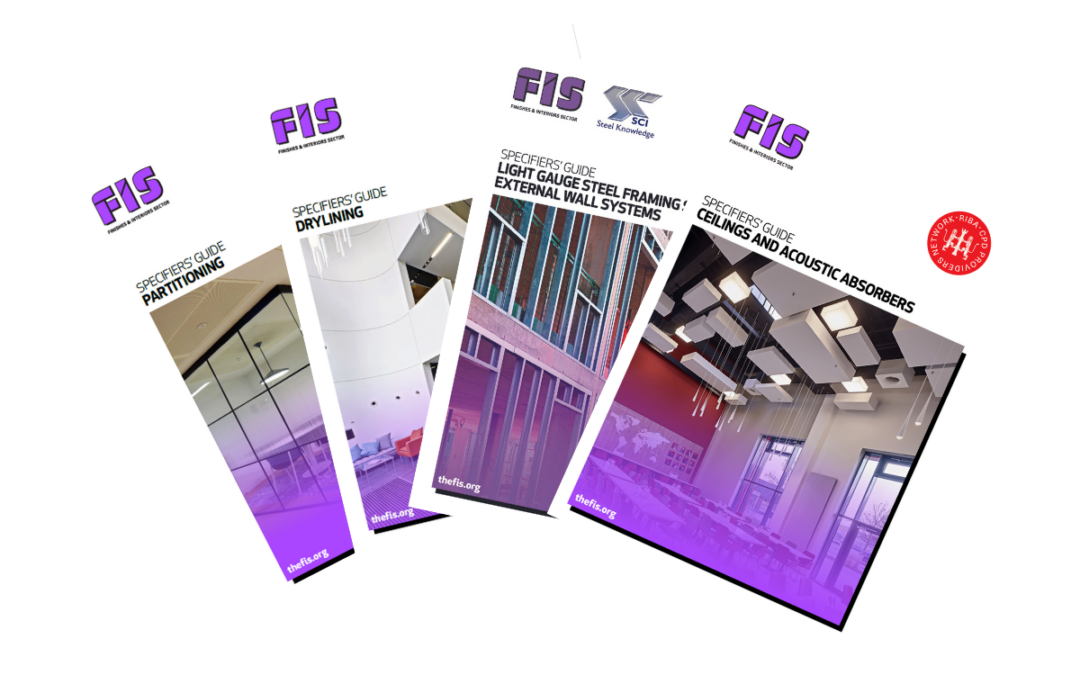
FIS has a suite of Specifiers Guide, and earlier this month we published the fourth in our series focussing on Partitioning. You can access this guide, along with others covering Ceilings and Absorbers, Drylining and SFS here. Two of these guides have now gained RIBA CPD accreditation, and we will be putting the others forward for accreditation in the coming months.
These guides work well when they are included in proposals and project plans to demonstrate how to best approach a project. They are also good differentiators when in competition with a non-member, and are an excellent introduction to new members of the team and any trainees and apprentices.
But our offering doesn’t stop there. We also have a dedicated Knowledge Hub packed full of resources for our sector. Our easy-to-use online library contains a wide variety of material, covering contractual and legal, technical guidance and quality standards, drawn from a broad range of sources. The Knowledge Hub is constantly expanding, with up-to-date and topical material added on a regular basis.
In addition a member of our in-house technical team is only a phone call away to offer support to help you navigate the complexity of contracting and supplying products to the sector.
by Clair Mooney | 20 May, 2022 | Building Safety Act
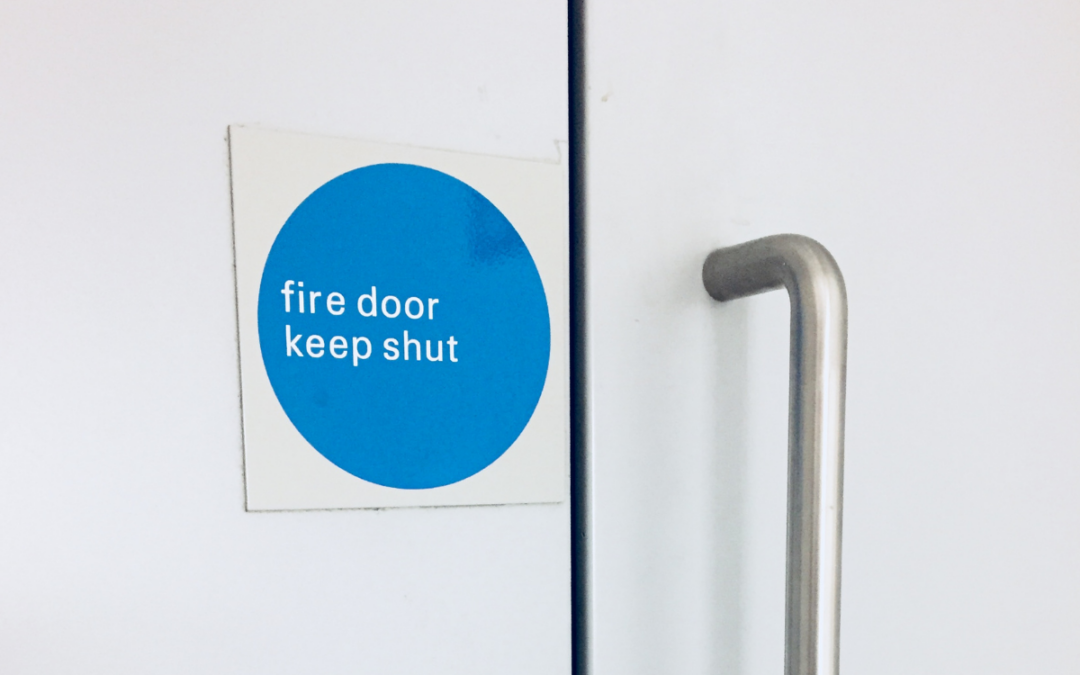
The Grenfell Tower Inquiry in the Phase 1 report noted that “Fire doors play an essential role in preventing or inhibiting the spread of smoke and toxic gases and in preserving the effective compartmentation of buildings.” The Inquiry noted that the fire doors in Grenfell Tower did not, through damage and/or disrepair, act in the way that they should so that they prevent smoke and gases from spreading. The Inquiry recommended (Recommendations 33.29 (a) and (b)) that the owner and manager of every residential building containing separate dwellings carry out an urgent inspection of all fire doors to ensure compliance with current legislative standards and that regular (no less than every three months) checks be carried out to ensure all fire doors are fitted with an effective self-closing device which is in working order. In addition, the Inquiry recommended (Recommendation 33.30) that all those who have responsibility for the condition of the entrance doors to individual flats in high-rise residential buildings (with unsafe cladding) be required by law to ensure these doors comply with current standards.
Prior to the Fire Safety Act 2021, flat entrance doors in multi-occupied residential buildings may not have been routinely considered as part of the fire risk assessment process. The Fire Safety Act 2021 has removed the legal ambiguity and confirms that flat entrance doors are in scope of the Fire Safety Order.
The Fire Safety (England) Regulations 2022 will make it a legal requirement from 23 January 2023 for responsible persons for all multi-occupied residential buildings in England with storeys over 11 metres in height to:
- Undertake quarterly checks of all fire doors (including self-closing devices) in the common parts; and,
- Undertake – on a best endeavour basis – annual checks of all flat entrance doors (including self-closing devices) that lead onto a building’s common parts.
The regulations will also require responsible persons to provide to residents of all multi-occupied residential buildings with two or more sets of domestic premises (that have common parts) information on the importance of fire doors to a building’s fire safety.