
0121 707 0077

FIS updates Risk Register to support compliance and business improvement

FIS updates Risk Register to support compliance and business improvement

As the full implication of the Building Safety Act and it’s impact on the wider Building Regulatory environment and commercial behaviours, FIS has updated its Product Process People Risk Register.  The aim is to provide members with a comprehensive Risk Register to support compliance and business improvement.

The FIS PPP Risk Register gives people a structured framework to interrogate project risk based on a assessment of severity and probability of a risk occurring.  The standard scoring system helps members to identify any unacceptable high risks and ensure management strategies are put in place to address.  The tool also helps a management team to assign risk correctly and contains a range of links to additional tools and information that will help support specific risk management.

FIS CEO Iain McIlwee said:

“Risk is inescapable in any construction project, but at times we can feel so beset by risk that we become indifferent to it.  It is vital that as an industry we get better at measuring, managing and mitigating.

A large part of our work centres on identifying, interrogating and helping members to manage day to day problems they may encounter.  Our understanding and exposure to risk is constantly moving and evolving and it is critical we adopt a consistent approach to risk management.

This simple tool is built on collective wisdom, lessons learned and understanding gained through our wider work that ensures members are alert to where problems may appear.  It aims to help people to score and priorise risks and to start the necessary focus on mitigation, linking the user to the vast array of tools available to our members, directly through the FIS and our wider network.  The underlying principle is that the school of hard knocks is fine, but it is better to learn together and avoid learning the hard way wherever possible.”

Richard Brackstone Chief Executive of RB Management and Consulting Ltd who supported FIS in this update added:

“This is a really useful tool and one I would urge all members to work through, it is comprehensive and accessible.  Construction is fast and furious and risk is all around us, and it is tempting to bury our heads in the sand and hope for the best.  But, ultimately, success in construction is entirely dependent on how well we manage that inherent risk.  This list provides a focal point to conduct a review and at the very least serves as a helpful reminder”.

The FIS PPP Risk Register is available for members to download here

RB Management and Consulting Limited provide specialist Risk Management Support for FIS Members

Less than one week to go until the Workspace Design Show opens its doors

Less than one week to go until the Workspace Design Show opens its doors

In just a few days the eagerly-awaited Workspace Design Show, a leading trade show that brings together the UK workplace interiors community, will open its doors. Held at London’s Business Design Centre, handily placed in the heart of Islington, from 27-28 February 2024, the event offers attendees the chance to explore the latest industry trends, see the latest products, and find inspiration in the thought-provoking talks programmes.

This year’s extensive speaker programme has over 120 speakers across four key elements of discourse. The Workspace Design Talks programme, will feature inspiring sessions from leading industry professionals over the event’s two days. Speakers include Alan Bainbridge, Director of Workplace, BBC; Yasmin Al-Ani Spence, Director, WilkinsonEyre; Mary-Louise Gray, VP Workplace, Real Estate and Facilities, GSK; and Naomi Sakamoto, Principal Studio Director, Gensler. Topics covered include designing a workspace that meets cross generational needs, the hotelification of the office, using AI in workplace design and the evolution of workplace design through the eyes of next gen architects.

The FIS Conference, taking place on 27-28 February, will explore productivity, quality, compliance and sustainability issues in the fit-out sector, with leading speakers from among others tp bennett, MCM, Claremont, ISG, British Land and Turner & Townsend.

Sustainability Works, curated by Mick Jordan, Editor of Works magazine, returns for 2024 and is held on 27 February, once again bringing together a selection of key figures from firms such as Perkins&Will, Scott Brownrigg, BDG architecture and design and M Moser Associates, who are behind the workplace market’s leading sustainable initiatives and projects. The Occupiers Forum, held on 28 February, offers the complete ‘The View from HQ’. Located in the Insights Lounge, it will provide unique insights from occupiers such as BT Group, HSBC, Clifford Chance, Salesforce and Barclays into what employers are doing to create an engaging workplace experience.

2024’s features represent an incredible spectacle for attendees of the Show, all seeking inspiration from the overarching show theme ‘Bloom – Exploring the Thriving Ecosystem of Work Life’. There will be an array of captivating features such as the Design Talks Lounge by Gensler, the Entrance by tp bennett, the Insights Lounge by BDP, a Living Workplace lighting installation by Jason Bruges Studio, and the Recharge Lounge M Moser Associates,

Once again, FIS will host its awards at the Workspace Design Show. These will celebrate the creativity, craftsmanship, and cutting-edge innovations that define the finishes and interiors sector. With a spotlight on revolutionary materials, exceptional design techniques, and sustainability breakthroughs, the FIS Innovation Awards serve as a showcase of the industry’s finest achievements.

As the sun sets on the first day of the show, the Workspace Design Show invites attendees to party and socialise into the rest of the evening. This exclusive event is the perfect opportunity to unwind, network, and celebrate. The party kicks off immediately after the day’s activities from 5:30pm to 8:00pm, completely transforming the venue into a vibrant hub of creativity and connection.

This year will bring the exciting mood board contest area designed by MF Design Studio. The unique scheme runs parallel with a blooming tree; MF Design Studio have created an environment for the mood board contest to engage participants, to experience the world of workplace design through a personal exploration of materials, textures and colours. Their use of colour represents our diversity and how they approach design in an individual yet collaborative way, bold lines bloom into curves that define the different palettes. Using all sustainable materials to inspire designers to create a more sustainable future.  The contest allows attendees to create their own stunning mood boards, which they can then submit as their entry to the contest.

Exhibitors from over 20 countries will be showcasing innovative and transformational workplace interiors products during the event. The workplace world descends on London for the two days of Workplace Design Show from Pedrali and Lapalma from Italy, Spain’s Kettal and Actiu, Modulyss from Belgium and Woven image all the way from Australia, plus many more.

Workspace Design Show will be the place in London for architects, designers, occupiers, developers, consultants, coworking companies and fit-out companies to explore the latest industry trends, see the latest products, and find inspiration in the thought-provoking talks programmes.

Register now for a complimentary pass and attend the Workspace Design Show

Lens Blog: Learn to say, No

Lens Blog: Learn to say, No

FIS Consultant Len Bunton shares his thoughts on why businesses should learn to say, No.

Len’s message is that businesses should not accept onerous contract clauses that increase risk, extended payment periods, or contra charges to name a few.

In this blog, Len has set down a list of things that businesses in thge sector should be saying no to.

Adopting some of the statements should help you to manage the commercial aspects of projects much more efficiently and profitably. In my experience there are plenty of good employers and contractors out there who will look after you and who have long-term building programmes, and who will value your input, and who will want you to help them build successful projects on cost, on time and to a high quality.

Be selective of who you work for, and find out which organisations have long-term building programmmes, with whom you can build a successful relationship.

Len Bunton, Bunton Consulting


Members can see the full blog

These monthly Blogs are designed to help FIS Members avoid common traps and build on our focus on collective experience.  They share ideas about improving the commercial management of your contracts. In other words, instilling best practice into the way FIS members run and manage their business. What I have endeavored to suggest is ways to ensure you get paid on time, and what you are due.

Boosting routes into industry

Boosting routes into industry

The Construction Leadership Council (CLC) has published a report from NOCN’s and CCATF (both education and skills bodies) setting out recommendations to improve the flow of skilled and competent talent into the construction sector.

The report highlights the challenges of ensuring competency of the workforce to comply with the new Building Safety Act, the overall decline in skills funding over the past 10 years and the need to upskill the workforce to embrace the green, digital jobs of the future. It suggests developing the CSCS scheme to support verification with competency under the Building Safety Act, improving diversity, and developing a more agile and consistent UK skills system for construction.

Find out more here.

Careers in construction: Go behind the scenes with Open Doors 2024!

Careers in construction: Go behind the scenes with Open Doors 2024!

There is just a month to go until Open Doors 2024 when construction companies across Great Britain will take visitors behind the scenes to showcase the diverse range of career opportunities available in the industry.

Open Doors 2024, delivered by Build UK, will see more than 210 events take place from Monday 18 to Saturday 23 March, giving young people and those looking for a change of career a unique opportunity to see construction in action.

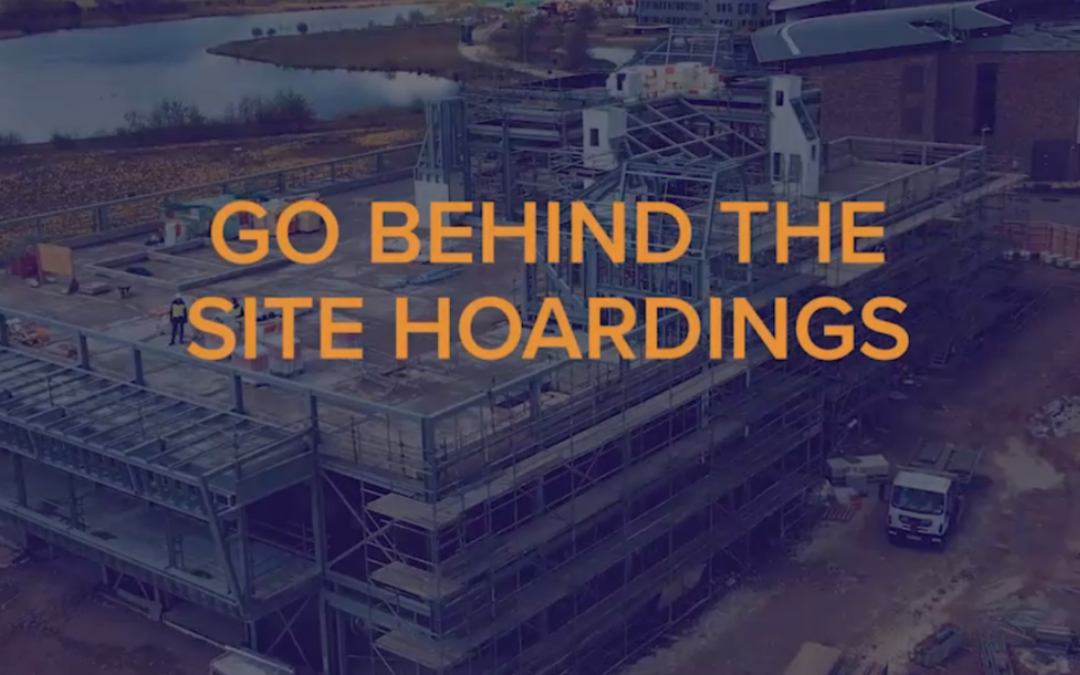
Visitors are encouraged to go to the Open Doors website and see what’s happening in their local area, with a wide variety of construction projects offering the chance to go behind the hoardings. Sites include HS2 stations, skyscrapers, hospitals, schools, leisure centres, prisons and more, whilst factories, offices and training centres will also be opening their doors to demonstrate the off-site roles on offer across the sector.

An Open Doors visit gives a real insight into the opportunities within construction, dispelling many of the myths that surround the industry. For example, the average annual salary in construction is higher than many people think at almost £45,000. Build UK research also shows that the average completion rate for apprenticeships delivered by members is 85%, compared to the Government target of 67%, whilst 90% of other new entrants who come via college or university remain with their company after completing their training or probationary period.

With construction traditionally seen as outdoor physical work, Open Doors visitors will also see the huge range of office-based roles along with a significant increase in the use of technology and demand for digital skills.

With more than 180 careers available and currently 36,000 vacancies in construction, the industry has something to offer everyone, whatever their age, background or skills. There is so much more to construction than just building – from design and engineering through to project planning and sustainability initiatives – and more companies are embracing flexible working to help make it a positive career choice for everyone.

Find out more and book your place on the Open Doors website.

Government publishes national infrastructure and construction pipeline

Government publishes national infrastructure and construction pipeline

The Government has published its long awaited National Infrastructure and Construction Pipeline 2023, which sets out planned and projected investment in major economic and social infrastructure over the next 10 years, the workforce requirement to deliver it, as well as a list of near term planned procurements.  The aim is to help manufacturers and the wider industry make informed business planning decisions, and support investment in skills and construction productivity.

For more information click here

Government confirms plans to permanently remove RAAC from all schools and colleges in England

Government confirms plans to permanently remove RAAC from all schools and colleges in England

Measures to permanently remove Reinforced Autoclaved Aerated Concrete (RAAC) from all affected schools and colleges, have been confirmed this week by the government. A final list of schools and colleges with confirmed cases of RAAC in schools and colleges in England has also been published. There are 234 education settings, out of 22,000, with confirmed RAAC in some areas of their buildings – around 1%. Click here to read more.
Falling demand hits construction product manufacturers’ sales

Falling demand hits construction product manufacturers’ sales

The Construction Products Association’s latest State of Trade Survey for 2023 Q4 showed that manufacturers ended last year with a further fall in construction product sales on both the heavy side and light side – the sixth consecutive quarter of decline for heavy side manufacturers and the second fall for those on the light side. Manufacturers anticipate sales will decline over the next 12 months, citing a clear concern over the weak demand expected in 2024.

In 2023 Q4, a balance of 63% of heavy side manufacturers reported that sales of construction products decreased, marking the sixth consecutive quarter of decline and the weakest performance since 2020 Q2, at the height of the pandemic. Alongside this, 40% of light side manufacturers also reported a fall in product sales. This was the second quarterly decline but, equally, the lowest balance recorded since activity was paused during the early pandemic restrictions.

Looking to the next 12 months, demand was cited by 71% of heavy side manufacturers and 80% of light side manufacturers as the factor most likely to constrain growth during 2024. Consequently, 11% of heavy side manufacturers and 15% of light side manufacturers anticipated a fall in sales over this year.

The backdrop for costs was shown to be more favourable, however, with manufacturers reporting a continued easing in cost inflation. Price pressures were lower for raw materials, fuel and energy, which had all been major contributors to inflation over the last couple of years. Nevertheless, manufacturers reported continued upward pressure from wages & salaries.

Rebecca Larkin, CPA Head of Construction Research said: “Manufacturers had a challenging end to 2023 and there appears little to rally expectations for growth this year. Falls in new construction orders since the end of 2022 have now begun to filter through into lower construction activity, particularly in housing, commercial offices and warehouses and factories in the industrial sector. With flatlining GDP growth, a step-change in interest rates and build costs, and emerging risks around delays and cost rises related to the Red Sea shipping disruptions, it should come as no surprise that demand was flagged as the key concern for construction product manufacturing activity in 2024.”

Key survey findings include:

  • A balance of 63% of heavy side firms and 40% of light side firms reported that construction products sales fell in 2023 Q4 compared with Q3
  • This was the sixth straight quarter of decline for the heavy side and second for the light side
  • 11% of heavy side manufacturers and 15% of light side manufacturers anticipated a fall in sales over the next 12 months
  • 71% heavy side manufacturers and 80% of light side manufacturers cited ‘demand’ as the key concern for sales over the next 12 months
  • Cost balances continued to moderate but wages & salaries were the strongest cost pressures for both heavy side and light side manufacturers
Understanding the barriers and challenges when recruiting

Understanding the barriers and challenges when recruiting

The FIS Skills Team are working on setting direction to support the skills strategy for the year. To help suport this, we want to understand the barriers and challenges members have with recruiting.

Your support in completing the Skills Pulse Survey will help ensure FIS provides the right support.

We would like to understand:

  • What the challenges are with training
  • What is being done to recruit and engage with potential apprentices/trainees and how can we share best practice wider
  • Is there sufficient provision for training?

This data will help FIS to build evidence and focus our priorities to ensure we are responding to the needs of our members and the wider sector.

The survey can be completed here and the closing date for responses is Friday 9 February.

FIS State of Trade Survey Q1 2024: Inflation continues, contractual battles persist but hope on the horizon

FIS State of Trade Survey Q1 2024: Inflation continues, contractual battles persist but hope on the horizon

FIS Q1 2024 State of Trade Survey

FIS State of Trade Survey Q1 2024 highlights that inflation has slowed, but prices continue to rise due to raw materials and wages.  

Workloads reported by FIS members in the final quarter of 2023 were mixed.   Whilst a balance of 9% experienced growth, close to a quarter reported no changes quarter-on-quarter and the difference between those growing by over 5% and declining by over 5% was marginal.  

Looking to the next quarter (Q1 2024) the expectation for most is more positive with 30% anticipating growth of over 5%, but this is balanced by 34% expecting their market to level out and 23% expecting the market to tighten and a further. 

Members can dowload a full copy of the FIS State of Trade Survey Q1 2024 here

Alignment with wider industry forecasts

FIS data is gathered with the support of the COnstruction Products Association, who this week published the Construction Products Association’s Winter Forecasts..  Construction output is forecast to fall by 2.1% this year due to falls in private housing new build and repair, maintenance and improvement (rm&i) – the two largest construction sectors. The CPA forecasts that construction output will rise by 2.0% in 2025 in line with falling interest rates and a general economic recovery, which, in turn, could ease challenges in the housing and rm&i sectors. Recent disruptions in the Red Sea, however, have been identified as a key risk to the forecasts, potentially leading to supply issues such as delays and accelerating cost inflation.

Private housing – the largest construction sector – suffered a double-digit fall last year after a spike in mortgage rates hit housing market demand. Consequently, many house builders have reported a fall of around 25-35% in demand, in addition to the regulatory issues that smaller house builders continue to face in particular around planning, as well as water and nutrient neutrality. The lagged effect of higher mortgage rates is likely to continue to weigh upon property transactions this year with private housing output expected to fall by a further 4.0%. Looking to next year, a gradual fall in interest rates should boost demand with private housing output expected to rise by 4.0%. This doesn’t imply a speedy recovery however, as interest and mortgage rates are not expected to return to the record lows seen as recently as 2021 anytime soon. The lack of a government policy stimulus to help overcome high deposit and mortgage payment requirements, also means the recent peaks in housebuilding from 2022 are unlikely to be seen again until at least the end of the decade.

Private housing rm&i is the second-largest construction sector and activity continues to be on a general downward trend. The rising cost of living has hit discretionary household improvements spending. In addition, fewer property transactions last year led to a decline in refurbishment activity from new homeowners who typically make cosmetic improvements within the first 6-9 months of moving in. Smaller project work is likely to continue to remain flat in the first half of this year as household spending remains tight, whilst the continued fall in property transactions in the first half of this year is likely to hit larger project work for the remainder of 2024. This is likely to be partially offset though by strong activity on energy-efficiency retrofit such as insulation and solar photovoltaic work. Overall, private housing rm&i output is expected to fall by 4.0% in 2024 before growth of 3.0% in 2025.

In infrastructure, which is the third-largest construction sector, activity remains strong down on the ground. Work continues apace on HS2 Phase One despite the most recent cost increases, as well as on Hinkley Point C and the Thames Tideway Tunnel. Frameworks activity in the regulated sectors of roads, rail, water and electricity provides sustained levels of activity in the infrastructure sector too. Concerns remain, however, over pauses and delays to National Highways projects, as well as increasing uncertainty on the deliverability of plans in the water sector to deal with water quality issues through increased capital expenditure. Furthermore, at a local level, councils continue to face financial constraints and despite government announcing £8.3 billion of funding for potholes, resurfacing and roads projects to 2034, there is little evidence to suggest that this will lead to any uplift over the forecast period. As a result, overall, infrastructure output is expected to fall by 0.5% in 2024, a third successive marginal fall in output, before rising by 1.2% in 2025.

Commenting on the Winter Forecasts, CPA Economics Director, Noble Francis said: “The bad weather at the start of January has already affected the construction industry but there is still lots of time for a catch up in activity when the weather improves. The bigger problems for the industry are the hits to activity last year in its two largest sectors – private housing and private housing rm&i. These are likely to continue into 2024. Even with expected falls in interest and mortgage rates in the second half of this year, rates are likely to remain relatively high and so demand in the housing market, house building sector and rm&i sector is likely to remain subdued overall.

“Given the importance of housing to the UK economy, it was disappointing that the Chancellor’s Autumn Statement last year had little to help the beleaguered sector. It is critical that we see measures to help boost house building and homeownership from government in the upcoming Spring Budget. Furthermore, government should do more on infrastructure delivery given that the sector is set for its third consecutive fall in output. This is despite announcements from government on new projects to compensate for the cancelling of the Northern leg of HS2.”

FIS announces Innovation Awards Shortlist

FIS announces Innovation Awards Shortlist

FIS has announced the shortlist for its 2024 Innovation Awards. The awards aim to shine a light on innovation, debunking the myth that our sector is not innovative. The Awards comprise four categories, Digital, Sustainability, Product-Fit Out and Product – FF&E. A judging panel was set up for each category, who indpenedetly assesed all entries.

Digital

  • PlanRadar
  • Zentia for Sonify 3D Studio
  • Etex for MySiniat

Sustainability

  • IOBAC UK for its contamination-free flooring installation tabs
  • Optima for its Glass Partitions manufactured with Hydro CIRCAL aluminium
  • Selo for TEMPUS – temporary fire doors

Product – Fit Out

  • Fire Stop Products for Speed Cutter
  • Global Ceilings Services for Teg Clip
  • Seamless Abutment Solutions for Cross Stud

Product – FF&E

  • Box Strap
  • Mute for OmniRoom
  • Eyevolution for Shadowline

Congratulations to those who made the shortlist, and thank you to everyone who entered. We will be announcing the winners at the FIS Awards Ceremony on 27 February in London. Reserve your place here.

Careers in construction: Go behind the scenes with Open Doors 2024!

Discover careers in construction with Open Doors 2024

FIS is encouraging its members to get involved in this year’s Open Doors event which allows young people and career changers to visit construction sites and workplaces across Great Britain from Monday 18 – Saturday 23 March. This is our chance to showcase the range of career opportunities available in our sector.

Open Doors, delivered by Build UK of which FIS is a member, offers a unique insight into what it is like to work in construction by taking visitors behind the scenes to showcase the diverse range of opportunities available in the industry.

Construction needs to recruit almost 45,000 new entrants each year, and Open Doors aims to show that the industry offers exciting and rewarding careers for everyone – whatever their age, background or skills.

Schools and colleges can book group visits for their students to discover first-hand what the industry has to offer, including a wide range of apprenticeships. New events will continue to be added over the coming weeks, so keep an eye on the Open Doors website for events taking place in your local area.

Visitors can book their place now at more than 150 events already registered across England, Scotland and Wales. From high profile projects – including One Leadenhall in London, the new Aquatics Centre in Manchester, and the Paisley Museum in Scotland – to manufacturing facilities, offices and training centres, Open Doors enables visitors to see the industry in action and learn more about the 180 careers available.

Julie White, Chair of Build UK, said:

“I am passionate about making the world of construction open and accessible to as many young people as possible, so they can see all the different career opportunities there are in our industry. Open Doors is a fantastic way to find out more about the amazing things we build and what the industry has to offer, so book your visit today to see where a career in construction could take you.”

Michael Oppong, Management Trainee Quantity Surveyor at Willmott Dixon who attended an Open Doors visit in 2015, added:

“Open Doors definitely sparked my interest in a career in the construction industry. I have since taken the degree-level apprenticeship route, combining on-the-job training with university studies. I would encourage everyone to attend an Open Doors visit and consider a career in the industry – just like me!”

Help prison leavers to break free and begin a sustainable career in construction

Help prison leavers to break free and begin a sustainable career in construction

FIS is continuing its work with No Going Back, an initiative to support prison leavers, and an opportunity has come up to visit HMP Brixton.

The visit will take place on Thursday 25 January from 9am and we are looking for members to join us to explain the pathways into the sector and how they can build a lasting career.

The individuals attending this event are within their release window and have an interest in drylining and construction, as well as those actively enrolled in the drylining workshop.

Instructors at HMP Brixton will provide details on the training individuals have undertaken during their sentence. Additionally, No Going Back and Employers can deliver an overall presentation (a talk on the company and pathways to roles in the industry) and men could showcase different drylining tasks.

There will then be dedicated time for one-on-one sessions between employers and the prison leavers.

If you can support this event, email beenanana@thefis.org by Tuesday 16 January as the prison will then be able to promote the event.

FIS responds to Welsh Government consultation regarding changes to Approved Document B

FIS responds to Welsh Government consultation regarding changes to Approved Document B

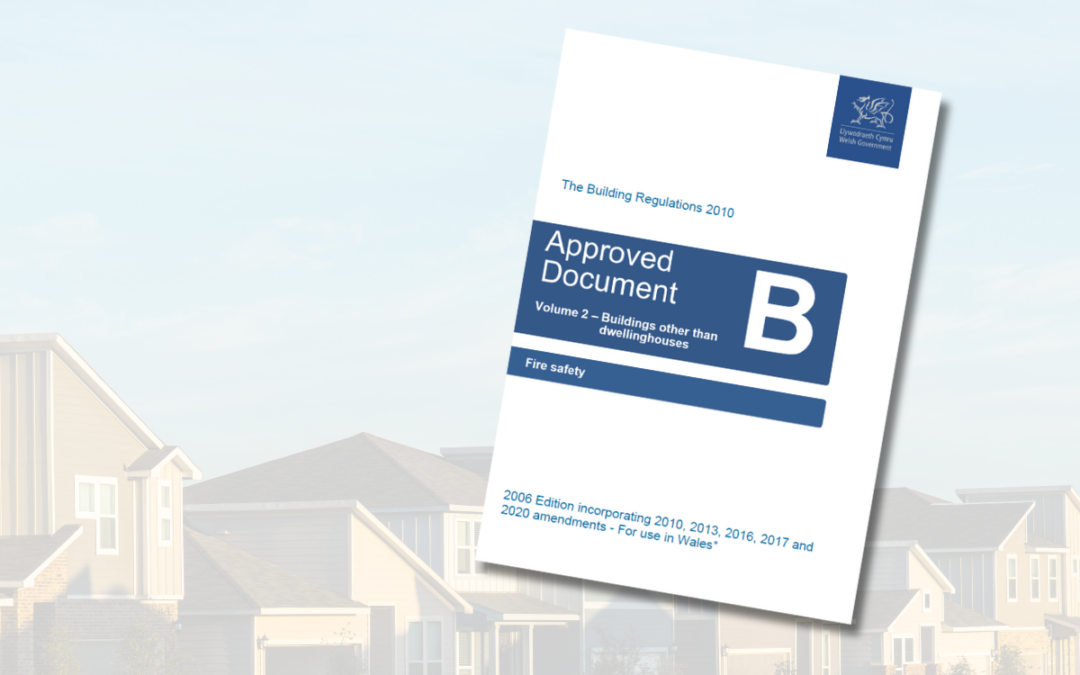
FIS has responded on behalf of, and in conjunction with the views of it’s members to a consultation from the Welsh Government regarding changes to Approved Document B this week. The proposed changes were broadly similar to the changes that we saw to ADB in England at the end of 2022, but also encapsulated the consultation on the removal of National classifications for Fire Resistance and Reaction to Fire from ADB.

We re-asserted our position strongly highlighting the downsides of removing national classifications for fire resistance without provisions around the gaps that exist in the EN testing regime and a sensible timeframe, that is consistent with our previous position paper from the English consultation last year (https://www.thefis.org/wp-content/uploads/2023/03/FIS-Position-paper-on-Omitting-National-standards-from-ADB-March-2023.pdf). Our response to other issues such as the ban on use of combustible materials in and on external walls of buildings and other areas where more clarity is required were consistent with the English changes seen at the end of 2022 and the views of our colleagues at the Construction Products Association.

If you would like to see the full text of our response, please contact jamesparlour@thefis.org

Holiday pay and entitlement reforms from 1 January 2024

Holiday pay and entitlement reforms from 1 January 2024

The government has published guidance setting out how holiday pay should be calculated for part-year and irregular hours works, as well as other 2024 holiday pay changes.  The guidance advises how employers should apply the recent changes to the holiday pay provisions of the Working Time Regulations.

It sets out:

  • changes relating to the amount of leave that can be carried over, removing the regulations that allowed workers to carry over leave that could not have been taken because of the Covid-19 pandemic.
  • how statutory holiday entitlement is accrued and calculated
  • what calculations an employer should do if an employee leaves a job part-way through a leave year, to check they have received the statutory minimum or if a payment in lieu is necessary
  • definitions for an irregular hours worker and part-year worker and provides examples for each
  • how statutory entitlement is accrued by part-year or irregular hours workers while they are on maternity or other family-related leave, or off sick
  • how employers should calculate rolled-up holiday pay

FIS Associate Service Provider Member Citation has produced a simple free guide to everything you need to know about managing annual leave, updated with the latest rules which can be downloaded here.

What’s inside?

  • The latest employment law changes
  • Holiday entitlement and pay
  • Carrying over and accruing holiday
  • Rolled-up holiday pay
FIS and GIRI collaborate to help reduce error and increase productivity in the sector

FIS and GIRI collaborate to help reduce error and increase productivity in the sector

FIS and The Get It Right Initiative (GIRI) have announced an exciting new collaboration to help reduce error and increase productivity in the finishes and interiors sector.

FIS and GIRI have worked closely together in recent years. This new agreement formalises this arrangement and will support both organisations to develop their work through the supply chains, share best practice ideas between different parts of the construction sector and ultimately drive transformational improvement in tackling errors and increasing productivity.

The core objectives of this reciprocal membership deal are:

  • Improving knowledge exchange and highlighting best practice guidance to help inspire and inform change
  • Supporting training that underpins competence and improves productivity
  • Collaborating to understand and eliminate mechanisms for error
  • Informing design and encouraging better process management

FIS CEO Iain McIlwee said:

“Collaboration, breaking out of silos and challenging the status quo are essential to delivering the change.  Giri have always provided a platform to do this, from the initial research into the cost of error through to the amazing training that they have developed.  The work they are doing around error and retention is potentially groundbreaking and we are keen to throw our weight in and support this work, share and test our key resources and learnings with Giri and to plug our members draw in to this amazing network.”

Cliff Smith, GIRI’s Executive Director said:

“Collaboration is key to change. FIS are a leading sector body with a wealth of deep sector-based knowledge and some excellent guidance available.  The potential is huge.  FIS share our values about the need for collective research and better collaboration to support data-led change.  This combined with their ability to draw together companies from across the supply chain will link well with the systemic and wider sector focus that GIRI brings to help deliver our shared ambition for positive transformation.”

Areas of focus will include supporting the work that GIRI is leading with Cranfield University and the Construction Leadership Council around establishing an Error Frequency Rate that can be used in efforts to eliminate the need for retentions. Critical to success is gathering anonymous data to tackle the root causes of our defects ‘culture’.  This is something FIS will be following up through Working Groups, but members keen to get involved at the early stages should contact cliff.smith@getitright.uk.com.

An early opportunity for FIS members to learn more about the work of GIRI is the GIRI Members’ Meeting due to take place at the Institute of Civil Engineers in London on the morning of 14 February.  FIS has a number of guest tickets to distribute to FIS members for this meeting.  Members interested in attending should email greggreves@thefis.org

For further information or for any questions please contact the FIS at info@thefis.org or call 0121 707 0077.

Card checking platform Go Smart to be withdrawn

Card checking platform Go Smart to be withdrawn

Following the successful rollout of CSCS Smart Check, which enables cards across all 38 card schemes carrying the CSCS logo to be verified using the same platform, CSCS has announced that its previous app ‐ ‘Go Smart’ ‐ will be turned off on 31 March 2024. CSCS Smart Check incorporates API technology allowing it to be installed directly into site access systems, which can help to improve site safety and tackle card fraud. Any members still using Go Smart should put in place plans now to move across to CSCS Smart Check as soon as possible, as cards will not be able to be checked using Go Smart after 31 March.

Build UK’s How to be a Smart Site guide explains how to check cards using CSCS Smart Check and make sure everyone has the right card for the job they are doing on site. Members are reminded that CSCS does not issue cards for non‐construction related occupations, and it is the responsibility of the site manager to induct and escort non‐construction workers arriving on site without a card so that they can carry out their work safely.

Workshops and webinars available through the Supply Chain Sustainability School and FIS

Workshops and webinars available through the Supply Chain Sustainability School and FIS

The Supply Chain Sustainability School and FIS have collaborated to bring you a range of workshops and webinars specific to the finishes and interiors sector. We’ve highlighted below all the upcoming sessions and relevant resources.

Introduction to Modern Slavery with Willmott Dixon
Tuesday 16 January 2024, 10 – 11am
This webinar will introduce you to the topic of modern slavery featuring insights from Willmott Dixon.
REGISTER HERE

Using Lean for Continuous Improvement and Problem Solving
Tuesday 23 January, 10am – 12pm
REGISTER HERE

Net Zero, SBTs and Carbon Offsetting
Thursday 1 February, 10 – 11am
REGISTER HERE

Introduction to Circular Economy
Thursday 15 February, 12 – 1pm
REGISTER HERE

Embedding Sustainable Procurement
Wednesday 21 February, 9:30 – 11:30am
REGISTER HERE

Len takes a look back at 2023

Len takes a look back at 2023

As we get to the end of 2023 there is no doubt it has been a tumultuous year for the industry in the United Kingdom. We have experienced some significant business failures which regrettably have left a mountain of debt due to a wide range of subcontractors across the industry. Fortunately, so far at any rate in Scotland, we appear to have avoided the impact of businesses stalling and going into administration and fingers crossed during 2024 that we do not experience any casualties.

The results of the recent CICV Payment and Cash Flow Survey made grim reading, but the responses really were not surprising as many of us who advise contractors and subcontractors, felt that recently reflected what the supply chain was experiencing across Scotland this being a general slowdown in payment periods, and a reduction in the amounts that the supply chain were due. Anecdotally, some clients say that they are currently experiencing a downturn in work opportunities, coupled with a tightening of margins and there are now definite concerns emerging regarding pipeline of work in 2024.

I have set out some positives with the hope that we will see some of these issues been delivered to see a general improvement in the construction industry in Scotland. In 2024 the process of educating the industry on the Best Practice Guide which sets out some of quite simple recommendations to contractors and subcontractors to improve the way in which they manage the commercial aspects of the construction projects. Getting contractors to buy into this is especially important and in embedding these recommendations into their businesses, and already there are several pilot workshops been planned and the feedback will hopefully be positive that lessons are being learned from the solid advice that has been provided. In addition, several contractors are seeking to have internal workshops to bring their commercial and contract management teams up to speed on the SBCC Forms of Contract.

The Quality Initiative is also a great idea and I know that CICV will be supporting this and again this initiative needs to be brought in at site level to ensure that less and less projects have issues concerning non-compliant workmanship which inevitably results in the costs associated with rework and contra charges, from the contractor and the clients. It really is up to everyone reading this article who runs a construction business, to make sure that their focus is on quality, and to end the criticisms experienced by the industry because of non-compliant workmanship and defects.

There is no doubt that there is a surge towards more collaboration in the industry and as to what form that takes remains to be seen, but it strikes me from sitting on the fence that the industry does want to collaborate more closely with the employers, contractors, and the supply chain to improve performance on construction projects. This is going to be a never-ending and a long term process and needs energy and dedication to drive these changes through.

Much work is happening behind-the-scenes on the Construction Accord and in my personal opinion it is essential that the Scottish Government and the construction organisations work very closely together to achieve the objectives of the Accord, and there is no doubt that this is going to take a number of years to come to fruition, but the positive side of this is that discussions are underway and some very positive ideas and objectives are emerging.

Again, on a positive note the Conflict Avoidance Process and the Conflict Avoidance Pledge are gaining traction and we are now seeing a number of major projects having CAP incorporated into the building and engineering projects from the outset. In addition, the level of approaches to the RICS are increasing, to have 1/3 party brought in to try to resolve issues at the initial stages and avoid issues escalating into expensive and time-consuming disputes. The Conflict Avoidance Coalition will come forward in 2024 with a new structure which will focus on promotion and growth, and developing guidelines and processes, and a major conference will be held in 2025 which hopefully will attract major clients users of the construction industry and consultants, contractors, and subcontractors.

I have also been encouraged by the work of the Finishes and Interiors Sector who have appointed experienced individuals to provide Contract Reviews to FIS members. This means that when a tender enquiry comes in a tenderer can have the conditions of contract reviewed to identify any high risk clauses that might require financial recognition but hopefully the parties can negotiate out some of the unacceptable risk transfer amendments and thus start the project with a balanced and fair set of conditions of contract. It is beyond my comprehension why public and private sector clients continue to have pages of amendments to the Standard Forms and the industry needs to stand up to this type of conduct.

One question I was asked recently was – are attitudes changing and so the answer to that is yes. In my own work with a number of clients I have noted that they are walking away from employers who are only interested in lowest price, they are walking away from employers who as I say produce ridiculous amendments to the Standard Forms and there are walking away from both public and private sector clients who are either late payers, or who continually reduce the amounts due to contractors and the supply chain. I find that approach to be refreshing and hopefully it will spread throughout the industry.

So, let us take a positive view moving into 2024 and let us hope that the industry can take on some of the many recommendations coming forward, to make the industry in the United Kingdom a positive and profitable sector to be in.

Read all of Len’s blogs and get more information about all the Business and Legal Support available through the FIS here.