
by Iain McIlwee | 22 Jul, 2022 | Technical
With the heatwave this week resulting in record temperatures melting runways and sending the train network into chaos, we were confronted with the stark fact that, at times, we are expected to work in atypical temperatures and we need to consider the full implications of this and what it means, not just to the way we work, but the materials we work with.
FIS reminds all members to check material data sheets for guidance around continuous working temperatures.
To protect members and support contractual issues that may arise, FIS has developed a factsheet focussed particularly on the performance of plasters and compounds in hot conditions and how this can affect the finish and performance of plaster specifically over 25oC.
The factsheet FIS knowledge Materials Performance of plasters and compounds in extreme heat can be downloaded by FIS Members here
The HSE provides a wealth of information to support businesses having to manage hot weather working, this is all linked from our H&S Toolkit here.

by Iain McIlwee | 22 Jul, 2022 | Building Safety Act
In the week that the Grenfell Inquiry came to an end (the inquiring but anyway, it will be a while before the conclusions are made) we were greeted with a barrage of updates as Rt Hon Greg Clark picks up the mantle as Secretary of State for Levelling Up, Housing and Communities from Michael Gove. The announcements included that 48 Developers have pledged to remediate fire safety defects in buildings over 11 metres that they have played a role in developing over the past 30 years.
This has been followed by a raft of new guidance around how government is going to honour their commitment “to protecting innocent leaseholders from the unfair burden of remediation costs to make their home safe”. Their focus is now the buildings with 2 or more residential dwellings and at least 11 metres in height or has at least five storeys (whichever is reached first). Whilst a lot of attention is on the cladding, the guidance makes it clear that the scope of this new regulatory framework is now far broader too.
Through the Building Safety Act Courts have been granted new powers to extend liability to associated companies . The aim is to ensure that civil cases for claims against defective buildings can be brought against companies associated with a developer, preventing the use of complex corporate structures to avoid liability. The government is clear that developers must pay to fix buildings they had a role in developing or refurbishing, even where they no longer own the building. The Act ensures that building owners who are – or are associated with – the developer must pay for the remediation of historical safety defects.
The guidance published this week starts to look at the definition of “relevant defect” and what buildings (and leaseholders) are in scope of the protections. There is plenty of information published on cladding where cladding remediation is regarded as the removal of or replacement of any part of a cladding system that meets both of the following conditions:
- it forms the outer wall of an external wall system
- it is unsafe
But the wider relevant defect approach which identifies that non-cladding remediation is work is undertaken to fix a relevant defect, which is not an unsafe cladding system defect.
Examples of non-cladding remediation include:
- replacing inappropriate fire doors
- fixing missing compartmentation, which limits how easily fire can spread through a building
- replacing combustible walkways or balconies
- reinforcing low-strength concrete beams to improve structural integrity
- fixing any other defect in scope of the relevant defect definition that is not a defect of the cladding system
Whilst the developer is in the cross-fire there it feels inevitable that the disputes will not have gone away and the battle ground has shifted. The likelihood is that the developers will be seeking redress through the supply chain and we got more than an inkling of this in the judgment recently handed down in the case Mulalley bs Martley Homes. Here contractor Mulalley was engaged on a design and build JCT 1998 Standard Form of Building Contract in 2005 to re-clad the exterior of the five tower blocks for Martley Homes. Full details of the case are available here (and well worth reading), but the headline is that that contractor is now required to pay £8 million in compensation. Commenting on the case FIS CEO, Iain McIlwee stated:
“This case is the first of many that will start to set precedent on historic claims and now that the Defective Premises Act has been updated and extended, it is likely that this will spread beyond the realms of cladding. We remain committed to ensuring that the mechanisms to manage disputes advance at the same speed as the Polluter Pays agenda so that the judgments are fair, but that huge time and resources is not wasted on legal fees and that we can focus our energies as an industry on getting to grips with the unacceptable legacy that the systemic failure created”
Detailed guidance from the FIS on the Building Safety Act via our Quality Hub here.
You can access the full range of guidance published this week here. We have included links to some of the most relevant sections below:
by Clair Mooney | 21 Jul, 2022 | Skills
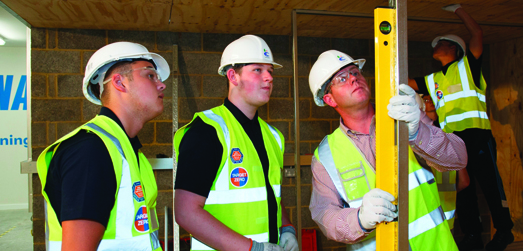
National Construction College in Bircham Newton (NCC East) are delivering training for Dryliner and Ceiling and Partition apprentices and plan to continue this with registration now open for apprentices on courses starting:
- Monday 12 September 2022
- Monday 28 November 2022
For full details please contact Andrew Voase, andrew.voase@citb.co.uk 07798 628902 or Trudie Blackshaw, trudie.blackshaw@citb.co.uk telephone 07770 841816.
You can view the apprenticeship standard: https://www.instituteforapprenticeships.org/apprenticeship-standards/interior-systems-installer-v1-0 this provides the criteria on which the training programmes are based.
For organisations that are CITB registered enhanced grants are available for apprentice travel and subsistence covering up to 80% of the costs, please see: Apprenticeship travel and accommodation funding ‘Travel to Train’ – CITB
On the FIS website there is a downloadable document, Apprentice – Guidance for Employers, that is worth a read at https://www.thefis.org/skills-hub/apprenticeships-and-qualifications/apprenticeships-employers/, the document contains links to all the details you’ll need. In addition, FIS will be happy to provide further information, advice and guidance for taking on an apprentice, contact georgeswann@thefis.org or telephone 07553 874838 or Marie Flinter marieflinter@thefis.org or telephone 07799 903103.

by Clair Mooney | 18 Jul, 2022 | Market data
Construction product manufacturers reported an eighth straight quarter of sales growth in Q2, according to the Construction Products Association’s State of Trade Survey. Combined with another quarter of broad and accelerating cost inflation, expectations have been dampened for the year ahead, however.
In Q2, 30% of heavy side manufacturers and 17% of light side manufacturers reported that product sales increased compared to 2022 Q1. Alongside this, all heavy side firms and 94% of those on the light side reported an annual rise in costs. For the heavy side, this was the fourth consecutive quarter of universal cost increases that span across inputs such as fuel, energy, raw materials and labour.
Against a broader economic backdrop of rising inflation, manufacturers cited that demand is likely to be the key constraint on activity going forward, leading to the first negative balance for expected sales since mid-lockdown in 2020. On balance, 30% of heavy side firms, whose products tend to feed into the earlier stages of construction, anticipate a decrease in sales in Q3 and one-third anticipate a fall in 12 months. As a result, 11% also envisage a decrease in their labour force in the year ahead.
Rebecca Larkin, CPA Senior Economist said:
“In recent quarters, construction product manufacturers have reported escalating inflationary pressures across fuel, energy, raw materials and wages. Added to this, there are early reports that higher costs further down the supply chain for transport, insurance, reverse charge VAT, and the removal of the red diesel rebate are starting to be reflected in lower confidence and delayed decision-making for new construction projects.”
She also adds: “Demand currently remains strong, particularly in the housing, RM&I, industrial and infrastructure sectors, but the headwinds related to costs are intensifying. Consumer price inflation is yet to peak too, which poses a downside risk if households and businesses rein in spending as disposable incomes and margins are eroded.”
Key survey findings include:
- A balance of 30% of heavy side firms and 17% of light side firms reported that construction products sales rose in Q2 compared with the previous quarter, the eighth consecutive quarter of growth
- Sales balances weakened from 43% (heavy side) and 50% (light side) in Q1
- 30% of heavy side manufacturers anticipate a fall in sales in Q3, whilst 17% of light side firms expect an increase, the lowest balance since the first national lockdown in 2020 Q2
- Costs for fuel, energy, raw materials and wages & salaries rose for all heavy side manufacturers
- Costs are expected to increase over the next year according to balances of 78% on the heavy side and 94% on the light side
- Weaker hiring intentions were reported by both heavy side and light side manufacturers
Overall, the Q2 survey results provide the first indication that the inflationary backdrop is now starting to impact on confidence around the near-term outlook for construction.

by Clair Mooney | 14 Jul, 2022 | CSCS, Skills
CSCS is aware of concerns raised by many within the construction industry regarding the decision to withdraw cards issued under Industry Accreditation (IA). They have published an article setting out some of the common areas of concern and information on how they can be resolved: Construction Skills Certification Scheme | Official CSCS Website – Industry Accreditation: Common queries answered
Here are some extracts that should be useful to FIS members:
What is Industry Accreditation?
Industry Accreditation (IA) was a mechanism by which workers could obtain CSCS cards on the strength of an employers’ recommendation rather than the achievement of a recognised qualification. CSCS stopped issuing new cards under IA back in 2010, but if you previously held a card under IA the scheme rules allowed you to continue to renew.
Why is Industry Accreditation being withdrawn?
CSCS, together with their 37 partner card schemes, are bound by the Construction Leadership Council’s (CLC) requirement that all construction industry card schemes must operate with nationally recognised qualifications in place for all occupations. This requirement is particularly important when addressing the IA issue. To satisfy the Construction Leadership Council’s requirements CSCS announced plans to withdraw cards issued under IA, which include:
- IA cards issued from 1 Jan 2020 will expire on 31 Dec 2024 and will not be renewed
- CSCS will cease renewing IA cards from 30 June 2024.
What options are there to move off Industry Accreditation?
- Vocational qualifications already achieved: cardholders who have achieved the qualifications for their occupation can renew their card for the full five-year term as normal.
- Academically Qualified person card: This card is available to people who have completed certain construction related degrees, HNDs, HNCs, CIOB Certificates and NEBOSH diplomas. Further details can be viewed here.
- Professionally Qualified person: This card is available to competence assessed members of CSCS approved Professional Bodies of which CIOB is one. Further details can be viewed here.
- Not everyone needs a card: There will be IA card holders who no longer require their CSCS cards. For example, you may have moved into a management role, become a director, or rarely visit site. In these scenarios, you do not require a CSCS card.
Those unable to fit into these four scenarios will be required to register for the appropriate qualification for their occupation before their cards expire in 2024.
If you or your workforce need a qualification to show proof of competence contact FIS, we have negotiated offers and discounts in training and qualifications specifically for members. Call 0121 707 0077 or email info@thefis.org or take a look at the FIS website: Member Benefits Training and Qualifications

by Clair Mooney | 14 Jul, 2022 | Main News Feed, Material Shortages
A statement from Build UK Chair Paul Cossell
As an industry, we are currently facing inflationary pressures not seen in the UK for 40 years. The latest update from the CLC Product Availability Group confirmed that average inflation for products and materials this year has been around 23%, with further increases expected, particularly for energy intensive products.
We know that cost escalation, closely followed by a lack of skilled labour and material shortages, is now the key issue for businesses across the supply chain. As we did during COVID‐19, Build UK is bringing its members together to coordinate a collective response. With the support of Wedlake Bell LLP, we have published comprehensive guidance on Managing Price Inflation, which includes advice on fluctuations clauses, negotiating new and existing contracts to take inflation into account, and how to mitigate its impact on projects. Most forms of contract have standard provisions for sharing the risks associated with price volatility, which should be used appropriately and fairly and in a spirit of collaboration.
With businesses across the industry under pressure, we all need to play our part. We often talk about the better industry we want to see, where risk is allocated fairly and projects are delivered more efficiently. How each of us responds to the current challenges will determine how quickly we can realise this vision.
An enduring commitment to prompt payment must remain a priority, and a number of Build UK Client and Contractor members are reducing their payment terms to support the cash flow of their suppliers. The Welsh Government has provided advice to its public sector bodies on how to manage the unprecedented pressures on materials, and Build UK will be meeting with key Government departments to discuss a collaborative approach to managing inflation to the benefit of all parties.
We learned the value of collaboration during the pandemic and showed that we perform better as an industry when we work together. Where businesses, programmes or projects are struggling due to materials shortages and price inflation, we need to discuss the issues openly and find creative and innovative ways to mitigate these risks in the interests of our clients and the supply chain.
I firmly believe that by doing the right thing over the coming weeks and months, we can achieve our shared ambition of being a productive and profitable sector.
by Clair Mooney | 14 Jul, 2022 | Building Safety Act
With the Building Safety Act in force and the Regulator starting to build the infrastructure necessary to manage and monitor and to develop guidance, FIS has developed initial guidance to help members consider what the impact of new Gateways will be on the construction process.
Commenting on the guidance FIS Technical Director, Joe Cilia said:
“It is important to remember that the Building Safety Act is designed to change the process and culture of construction. It is vital that we start to work together to understand the impact and how our processes and working practice will need to evolve. We have been working with a number of groups and felt it important to share our early thinking and start to explore changes with our members.”
FIS is setting up a working group to look at Building Safety Act compliance that will start to meet in the Autumn – if you are interested in getting involved, please email joecilia@thefis.org

by Clair Mooney | 13 Jul, 2022 | CSCS, Skills
Employers and the wider industry are being reminded of the importance of ensuring those on, or about to enter, apprenticeships are using the appropriate Construction Skills Certification Scheme (CSCS) card – specifically the Apprentice card.
Feedback from the industry confirms many employers are either not aware of the Apprentice card or are put off applying for it by lengthy apprenticeship registration processes. This leads to many opting for the Labourer card instead.
In recognition of this issue, in advance of the new academic year, CSCS is simplifying the application process and removing the cost of Apprentice cards. From today, all Apprentice cards will be issued free of charge.
At the same time CSCS will be introducing a new process for anyone experiencing difficulties with their apprenticeship registration. In this scenario, the new entrant can apply for the Provisional Card (at £36), before moving onto the Apprentice card, free of charge.
This means employers and apprentices will apply for a Provisional card prior to completing the apprenticeship enrolment process.
George Swann Skills and Training Lead says
This is great news. Our own FIS BuildBack programme provides individuals who successfully complete the assessment day and two week introductory training with a CSCS provisional card free of charge to the supporting employer. This allows the employer six months to decide if the individual is capable of completing an apprenticeship. For details of the apprenticeships available to the sector please see:
If you would like to find out more please contact FIS on 0121 707 0077 or email info@thefis.org.

by Clair Mooney | 12 Jul, 2022 | Sustainability
FIS has thrown its support behind the upcoming Green Home Festival, which will be officially opened on Monday 8 August 2022 by Patrick Harvie as part of the Edinburgh Festival Fringe.
The Minister for Zero Carbon Buildings, Active Travel and Tenants’ Rights will be keynote speaker at the launch of the week-long renewables jamboree, which will deliver practical assistance and advice to help Scotland become a net zero nation.
Organised by the Construction Industry Collective Voice (CICV) – of which FIS is a key member – the five-day event will see 12 in-person and virtual presentations on green topics, targeting homeowners, professionals, housing associations and local authorities.
Iain McIlwee, FIS Chief Executive said:
“As a member of the CICV, we are delighted to support this inaugural festival, which will see industry experts share their knowledge and expertise with delegates to help inform about renewable technology.”
Live Green Home Festival sessions will take place at the Royal Institution of Chartered Surveyors (RICS) at 10 Charlotte Square in central Edinburgh. Each will offer demonstrations and hands-on guidance to help people reduce their carbon footprint and become more energy efficient.
With contributions from fellow CICV members including SELECT, SNIPEF and the National Federation of Roofing Contractors, the range of topics covered will include:
- Demystifying heat pumps
- Improving energy efficiency
- Building green neighbourhoods
- Protecting against floods
- Using sustainable materials
- Living safely in the future
- Hitting the road with EVs.
Online events include a webinar entitled Retrofitting a tenement, in which experts will explain how to reduce heating costs and cut carbon emissions in traditional buildings, including a Q&A and virtual tour of a renovation in Glasgow.
In another online session, Taking the Swedish View, award-winning Swedish construction company, Botkyrkabyggen, will reveal how they use solar panels, wind turbines, artificial intelligence and district heating to improve energy
Mr Harvie, who will kick off events at Charlotte Square before the first event, said:
“This inaugural Green Home Festival is greatly to be welcomed and its organisers, the members of the CICV, warmly congratulated on the initiative.
“The climate emergency is already upon us, and if we’re to stand a chance of preventing its worst consequences we need both government and industry to support a transformation of our homes and buildings. Many of the actions and new ideas needed are being advocated by the expert speakers and presenters over the week-long Green Home Festival programme.”
Members of the CICV are now aiming to build the week-long green jamboree into an annual event.
One of the organisers, Gordon Nelson, Scotland Director of the Federation of Master Builders, said:
“This event will highlight the important role that construction will play for Scotland to achieve its net zero target in the years ahead, and also help householders understand the new technology and ways of doing things.
“Delivered via collaboration across the Scottish construction industry through CICV, we are aiming to make this inaugural event an annual occasion that will help to build a long-term legacy and demonstrate our commitment to greener, low-carbon solutions.”
Full details, including how to book tickets for each event, are available on the Festival’s website at greenhomefestival.co.uk.
The festival is the latest in a string of practical and constructive initiatives launched by the CICV since its creation at the start of the pandemic in March 2020.
Made up of 29 trade associations, professional services bodies and companies, including FIS, it has maintained a steady supply of information and practical advice to the sector as well as carrying out surveys, producing animations and posters, hosting webinars and maintaining close dialogue with Scottish Government ministers.