0121 707 0077

Introducing the Value Toolkit – changing the way construction measures value

Introducing the Value Toolkit – changing the way construction measures value

The Construction Innovation Hub is celebrating the completion of the Value Toolkit, following a successful development programme with over 200 industry partners. The announcements include the launch of a new BSI flex standard to underpin value-based decisions making in the sector.

Bringing together those who have contributed to its journey, including government, clients and industry partners, the Hub is now sharing the transition phase to adoption.

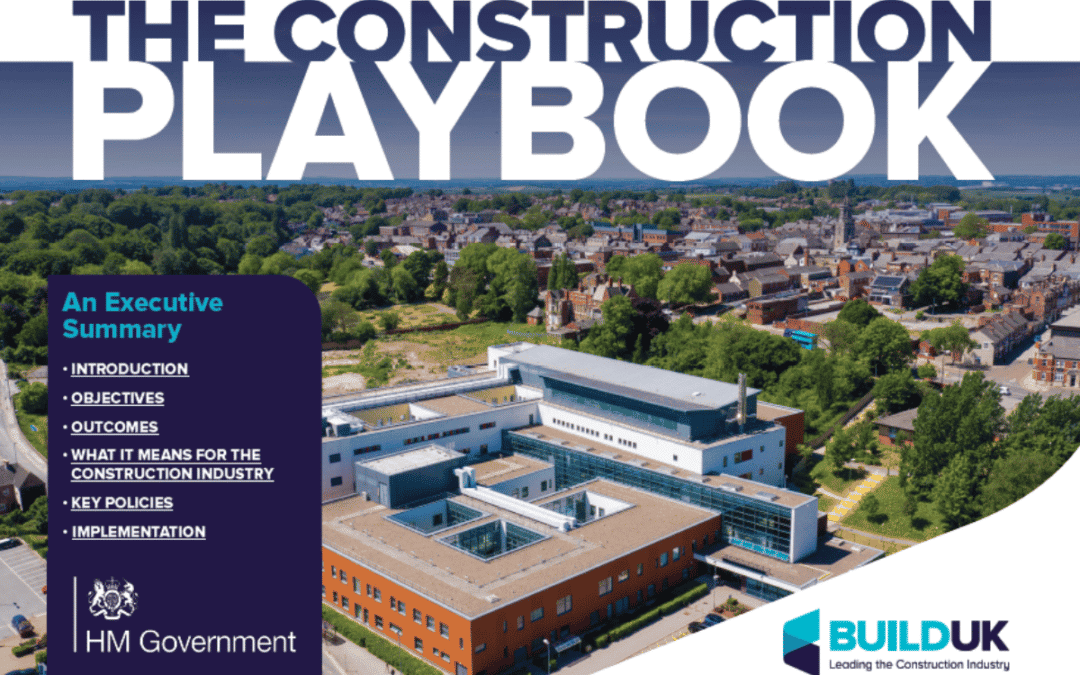
The Value Toolkit is a pioneering suite of tools that will be used by industry to embed value-based decision making in the built environment sector. It is a government funded industry-led initiative – with roots in the Construction Leadership Council’s Procuring for Value report and set to deliver on the ambitions of the Construction Playbook and the IPA’s Transforming Infrastructure Performance Roadmap.

The Toolkit has been developed to reframe the definition of value, and how it can be evaluated and measured, capturing wider, whole-life considerations around net-zero, user experience, productivity and social impact.

Working with partners and collaborating has been critical to the success and there are few corners of the sector that the Value Toolkit has not touched – from local authorities to central government departments, consultancies, contractors and specialist SMEs. The ambition is now for widespread adoption, driven by government and underpinned by industry.

Keith Waller, Programme Director at the Construction Innovation Hub, said:

This is a landmark moment for the Hub and our industry partners, and a gamechanger for construction and the built environment.

Decision making in construction has been historically driven by how much something cost, or how long it took to build. The Toolkit delivers a laser-like focus on project outcomes that delivers value beyond the bottom line, and positively affect communities and those who live in them for decades to come. It will ensure a more collaborative relationship between clients and suppliers throughout the whole life of a project”.

Construction Minister Lee Rowley MP said:

It’s good to see this new initiative come to fruition after a successful pilot. The Toolkit reflects the Government’s desire to ensure we embrace a construction procurement process that has clean, green innovation at its heart.

It complements our commitment to boost the productivity of this vital industry as part of our plans to grow the economy and create good quality jobs. I look forward to continuing to work with the Construction Leadership Council to realise this ambition.”

Rory Kennedy, Value Toolkit Strategy Board Chair and Director of Capital, Department for Education said:

This is a proud day for the many individuals, businesses and organisations who have worked tirelessly through huge collaborative effort to develop, evolve and shape the Value Toolkit.

The Value Toolkit is a powerful initiative that enables value-based decision-making – that best reflect the full range of commonly desired benefits, including better social, environmental and economic outcomes. Government, clients, and the industry all agree that a different approach to value is needed. An approach that reflects a shared ambition for a built environment that delivers more – one that provides a springboard for economic growth, enhances communities, and sustains the environment. The Value Toolkit is this new approach.

I look forward to seeing the Value Toolkit go from strength to strength as Government and industry drive wider adoption”.

Andy Mitchell, Co-Chair of the Construction Leadership Council (CLC) commented:

 For far too long now we have talked cost with little or no reference to value; we have talked outputs not outcomes.  The Value Toolkit seeks to see an end to this by providing a comprehensive suite of tools that will help clients and suppliers alike develop a real understanding of what is actually important as we specify, design and deliver infrastructure for people and society.

I would like to thank everyone involved in getting us to this point, and encourage everyone else to understand, use and help develop this Toolkit going forward”

More information about the Value Toolkit and how to get involved is available here.

Managing price inflation

Managing price inflation

With the industry facing inflationary pressures not seen in the UK for 40 years, cost escalation is a key issue for members across the supply chain. Last week, the Bank of England raised interest rates for the fourth time this year to 1.25% and reported that “construction output growth weakened modestly as rising materials costs and labour shortages caused projects to be delayed or cancelled”.

Against this backdrop, companies need to find ways to manage the risk of cost inflation during a project and Build UK has worked with Wedlake Bell LLP to publish guidance, which is available to FIS members. Managing Price Inflation includes practical advice on fluctuations clauses, negotiating new and existing contracts to take inflation into account, and how to mitigate its impact on projects. As with COVID‐19, all parties are advised to collaborate in finding solutions, as more time spent planning ahead and thinking strategically about procurement is likely to be the first step towards successful cost management.

For further information on prices and inflation and work FIS is doing to support members in this area, click here. 

Zero emission HGVs

Zero emission HGVs

In line with plans to ensure all new HGVs are zero emission by 2040 at the latest, the Government has published a call for evidence on a potential limited range of exemptions for vehicles weighing 26 tonnes or under. The deadline for submitting views on the proposals is Friday 22 July.

FIS Acoustic Verification Scheme recognised on NBS Source

FIS Acoustic Verification Scheme recognised on NBS Source

FIS and NBS, the leading specification platform for the construction industry, announced this week that NBS has now formally recognised the FIS Acoustic Verification Scheme within their product selection tool NBS Source.  This change means that specifiers can search for partition and operable wall systems that have been verified through the FIS Acoustic Verification Scheme (AVS), and make verified acoustic claims part of the chosen product specification. 

This update to the NBS system builds on the partnership NBS and FIS announced in August 2020 that is aimed at driving up standards and compliance through information sharing and best practice amongst construction professionals.

The FIS Acoustic Verification Scheme was established to introduce standard methodology and support honest and consistent declaration of acoustic performance for partitions and operable walls. The FIS partnership with NBS means that specifiers will also clearly be able to see which products on NBS Source have AVS certification and which do not.

The FIS Acoustic Verification Scheme was created to enable manufacturers to verify acoustic airborne sound tests against an agreed criterion and a methodology to present these to market in a consistent and transparent manner. The scheme enables best practice and prevents inaccurate or misleading information from undermining the market and responsible manufacturers and suppliers.

Commenting on the latest update, Iain McIlwee, Chief Executive of FIS said:

“It is vital that we make it easy to get it right.  Specifiers have a difficult role in bringing together a huge amount of information and it is easy to get it wrong.  This is compounded by the use of misleading, or in some cases falsified data, that can mean clients end up paying for acoustic performance that is not achieved.  By being able to bring NBS users as much information as possible at specification point is crucial in making the right building choices.”

Phil Simpson, Technical Content Manager, NBS added:

“It is initiatives like this that drew us to working with FIS, who are a real driving force within the industry and use their technical knowledge and work with their community to help drive up standards and support effective specification.  Simply put the Acoustic Verification Scheme helps bring rigour and supports the specifier.  In working with FIS and organisations like them we are ensuring we are including industry best practice in our content and delivering this efficiently and effectively for our specification customers, who in turn can benefit from having the right information at their fingertips.”

Details of the scheme have also been built into the NBS Chorus cloud-based specification writing platform.

FIS awards industry’s best!

FIS awards industry’s best!

FIS today celebrated the finishes and interiors sector with the announcement of the winners of the FIS 2022 Contractors Awards.

Members and their guests packed out the Nine Kings Suite at the Royal Lancaster Hotel in London to watch the winners in the nine categories receive their prestigious awards.

Indepedent Awards Judges Tony Pieri and Clive Perry, who visited all project entered said:

“We don’t just judge these projects on their overall finished appearance. Other factors – including sustainability, design input, problem solving, logistics, value added initiatives and integration – are all factored into our in-depth assessment of the work involved. Members have excelled themselves in presenting to us a myriad of high quality, stunning projects. They remain a real credit to FIS and to themselves”.

A final award was given for the Project of the Year, which was judged by guest architect Robert Fry, International and
Executive Director of Aukett Swanke Group plc. Robert selected the overall Project of the Year from the winning contracts across all categories.

Robert said:

“The very high quality of the award category winners made the selection of a single project for the ‘Best of the Best’ award a very challenging proposition given the excellence demonstrated by so many varied trades and skillsets brought to bear for clients in such a collaborative endeavour”.

Find out who won here

See the winners across all nine categories.

About the FIS Contractors Awards

The FIS Contractors Awards are held annually to encourage and promote high levels of craftsmanship and design.  Not only does the FIS member who installed the contract win an award, but so does the architect or interior designer of an award-winning project.

Are you one of next year's Award winners?

Only one way to find out!

Entry into the 2023 Awards will open on 1 July!
We’re looking for projects completed between 1 November 2021 – 31 October 2022 – our judges look forward to visiting the spectacular projects that our members complete, and meet the teams that make it happen!

Not a member, but interested in entering? Contact us today to discuss membership on 0121 707 0077 or email info@thefis.org

Price inflation and a diminishing labour supply are now of greater concern than product availability

Price inflation and a diminishing labour supply are now of greater concern than product availability

Statement from John Newcomb, CEO of the Builders Merchants Federation and Peter Caplehorn, CEO of the Construction Products Association, co-chairs of the Construction Leadership Council’s Product Availability working group

Price inflation and a diminishing labour supply are now of greater concern than product availability in most construction sectors.

In terms of availability, little has changed since our last report, with a good supply of most products and materials. Ongoing challenges continue to affect bricks, aircrete blocks, roof tiles, chipboard flooring, gas boilers and other products requiring semi-conductors within sub-components, all of which will be subject to longer lead times throughout the year.

The market is becoming more adept at managing supply of these critical products, and the long-term nature of some of the underlying issues. Although there are reports of delays in supply of boilers leading to extended completion times in new housing, new semi-conductor capacity is coming on stream in late 2023/2024, and expansion in existing capacity will feed into the market over the same timescale.

Demand remains strong in all areas, and this is set to continue into the autumn, although some product forecasts now anticipate a slight slowdown in housing starts towards the end of the year, stemming from rising prices and concerns about affordability. Home improvement work will depend on levels of consumer confidence as costs of living rise.

Members of the group raised concerns regarding the threatened rail strike. This will affect aggregate and concrete deliveries to major infrastructure products, highlighting the need for government to prioritise transport of construction materials should the strike go ahead.

There is, however, some good news from parts of China. With Shanghai gradually removing covid restrictions, production should normalise in that major industrial region by mid-June. Shipping analysts warn, however, that this may exacerbate the current bottlenecks in deliveries to the West.

Across the board, managing price volatility and labour are now the biggest issues.

Although labour shortages are affecting manufacturers, the greatest concern is expressed by housebuilders and SME builders, as it takes at least three years to train a skilled tradesperson.

The cost of energy and fuel are major drivers for price volatility. Initial results of the Group’s horizon scanning exercise suggest energy hedges are short term and very significant increases are expected to come through quite quickly. This will particularly affect energy-intensive products including steel, glass, plasterboard, cement, ceramics and porcelain.

Although steel prices have come down slightly, since initial disruption following the outbreak of war in Ukraine, energy prices remain a major issue and price volatility will continue. Market prices will also be affected by the Indian Government’s unexpected increase to export duties on iron ore and steel, effective from 22 May.

The CLC group will continue to actively engage with energy intensive manufacturers over the coming months, and closely monitor market conditions and the impact of any further price increases and volatility.