0121 707 0077

Changes to Working Time Regulations: guidance for employers

Changes to Working Time Regulations: guidance for employers

On January 1, 2024, the UK government implemented amendments to the Working Time Regulations, which are outlined in this document. Please note that this guidance cannot provide definitive answers to all individual queries or be used in place of personalised legal advice. Employers must negotiate the changes in terms and conditions with their workers or representatives.

The main focus of this guidance is on the minimum entitlement of 5.6 weeks’ paid holiday. However, workers may have contractual entitlements to additional paid leave beyond this statutory minimum. Therefore, employers should first review individual contracts and consult independent legal advice if necessary.

It is important to note that all illustrative holiday pay calculations in this guidance are based on gross pay data (before any taxes or deductions).

Additionally, this guidance refers to ‘workers’ as individuals whose employment status is either as a ‘worker’ or an ’employee’, entitling them to paid leave.

See the guidance here


Join Citation on Wednesday, January 10th at 11am for an informative webinar on changes in employment law. Our discussion will focus on a range of topics including new regulations around carers’ leave, flexible working, and holiday entitlement and pay for irregular hours/part-year workers.

Be one step ahead this year by attending this webinar.

FIS Digital Construction Working Group Report

FIS Digital Construction Working Group Report

The meeting was chaired by Diane Tocco, Director of Diane Butterworth Limited, a longstanding FIS Member that specialises in digital solutions, initial office planning, visualisation and Revit Families.

Diane opened by reminding the attendees of the whole group objectives –

  • Establish best practices and encourage the sharing of knowledge.
  • Help appraise membership and support digital tools as they emerge in the sector.
  • Support the implementation of digitisation within organisations by influencing and educating key decision-makers and providers.
  • Simplify the understanding of emerging tools and interoperability between them.
  • Ensure engagement is active within the sector to the wider conversation of digital construction.

And the specific focussed Objectives of the day:

  • Support compliance with the more onerous Information Management requirements in the revised Building Regulations (the Golden Thread)
  • Integration of digital tools and the impact on the Golden Thread.
  • Evaluate the application of BIM to drive improvements in the delivery of training and safeguarding health.

To set the scene for the meeting Iain McIlwee revisited the progress of the Group from BIM4Fit-out to the Digital Construction Working Group and the tools and support that has been developed including:

  • BIM Toolkit
  • Key Product Data Templates
  • FIS guidance on Pre-Qualification BIM Questions
  • And the Digital Spine

This year the substantive piece of work was the development of the FIS White Paper:  Introduction to the Golden Thread and Digital Information Plans published in October.

Legislation: What is the Golden Thread?
George Stevenson, Chairman www.bim4housing.com  and Managing Director at ActivePlan Consulting Ltd

George Stevenson of ActivePlan Limited and Chair of the BIM4Housing Group update on work that FIS has supported in developing Asset Modelling that is aligned to and supporting the delivery of the Golden Thread.

Overview new FIS Guide:  Introduction to the Golden Thread and Digital Information Plans
Iain McIlwee, CEO, Finishes and Interiors  Sector

Iain then ran through the key sections and learnings from producing  the White Paper and into details of the research that FIS has conducted in 2023 to understand digital readiness within the sector.

Key findings from FIS research are that 28% of Suppliers and 72% of contractors do not currently have a Digital Information Plan in place.  Concerns we raised about information available, particularly time taken to hunt down evidence of performance, missing interface and fixing details and confusion in terms of performance scope.  Again in tender packs the lack of critical details related to product and performance were highlighted.

Open Discussion on Key trends:  Digitalisation and challenges in the finishes and interiors sector.

The discussion moved to real life examples of how the Golden Thread needs to be more clearly established at the start and more work needs to be done to define requirements upstream to ensure FIS Members are not being overloaded, overwhelmed and set up to fail.  Linking this to wider technical work (and considering digital implications of technical work) was emphasised as the biggest priority for the group.

The scale of the challenge was discussed.  Fundamentally Golden Thread is information that we have, simplistically it needs to be structured better to share it.  Concerns remain that clients don’t know what they want so aren’t providing proportionate and structured requests for information.

It was noted that every building will have its own golden thread. The contents of it will depend on and is the responsibility of the dutyholders for that project: principal designer, principal contractor and client.

The question was posed, “What defines the piece of unambiguous information used to define the beginning of the Golden Thread?”.  This is difficult to define and comes back to questions.   Simplistically this was identified as a requirement, that needs to move from performance to a prescriptive requirement, which is then satisfied by a product (and supporting evidence).  Then the Golden Thread is a digital connection between that and what was installed (check the right product was installed correctly).

The importance of System based thinking was discussed, because the next level is the context of a product within a system and ultimately the building.

Looking at the complexity of the current situation is frightening and debilitating, so it is important to remember the fundamentals. Manufacturers must start from where they are. All the data required already exists in their systems. The challenge is to put it into structured form, so that it can be mapped against the information requirements of their clients. They won’t provide it until it is asked for – it requires a client request. That client request needs to be proportionate to their requirements for data. The data requirement should be provided in a structured form too!”

To search for the simple answer it was proposed that The Golden Thread starts with reasonable questions.  Alignment and talking in the same language is a challenge, this is about clarification.  One of the problems is we have all been dumping unstructured information on each other that can’t be used.  Needs to be a client pull.   The client has to structure requests to support structured response – legislation should start to help.  Noted clients need to confirm that they have received adequate information, which encourages better interrogation and ultimately articulation of requirements.

Key questions that need to be answered clearly through the process were clarity around:

  • What was specified?
  • What was installed?
  • What was its performance?
  • Who installed it?
  • Who inspected it?
  • Who maintained it?
  • What replaced it?
  • What risks do we anticipate?

A tender, considered to be a full NBS spec, which pushed all of the design work onto the specialist contractor, all complex performance requirements (judged on pre-installation testing) and no detail.  This makes a mockery of the Golden Thread as sufficient time is not allowed and information is still being dumped.  Upgrading the way tenders are coming out, 300 drawings showing sections, but not the finite detail.  BIM is not forcing out the detail, it is still being avoided.

Noted that it is very unusual for the partition to be modelled because there is too much detail and the problem is that who is going to do it.  Partition walls are typically modelled by the architect using generic models .  If using Revit there are tools to support the make-up, normally get the model and then work with the manufacturer and detail not added til stage 4, which is too late when overlapping  with Stage 5 means contractors are being put in difficult predicaments and seen as the “bad guys” asking questions too late.  M&E Programming was also discussed as adding to the complexity.

Cut and paste specifications with several different elements being badly and inconsistently presented was highlighted as another common problem that means effective output is difficult when the right information is not received in the first place.

Ultimately the conclusion was that the Golden Thread will fail in intent unless vital design and procurement details are managed. The Golden Thread is not a plaster and  in wake of increased complexity, misaligned and badly managed tolerances, we need to emphasise the importance of the “Responsible No” and “Early Supply Chain Involvement” and standardised information requirements.

Levers for change, Golden Thread, Building Safety Act, Insurance all need to be used to accelerate the change and limit the pain in implementation of new regulations.

Swe now that we need to provide information in a more structured and efficient way.  Who is responsible is still a concern and we need to look at better understanding.  Key action to return to Product Data Templates and ensure we are capturing all the information that we need at the start and identifying scenarios where our information requirements are not being met.

As in all aspects of our activity the FIS focus of this group is observation (understanding the challenges and opportunities), standardisation (encouraging consistency), normalisation (collective action) and representation (ensuring external barriers are understood and removed).

Copies of presentations given at the meeting are available below.

FIS Guide to the Golden Thread and State of Play for Digitalisation 2023

FIS ActivePlan – Building Safety Act and Digitalisation 12-12-23

FIS BIM4H Case Study Doorsets Dec 2023

The FIS is hosting a session on Digitalisation of Fit-out:  Transformation through information at the Workspace Design Show in February and also hosting the Digital Innovation Award at the exhibition.  More details here.

To access the FIS Digital Toolkit Click here

FIS is actively seeking case studies of positive Digital Information Management to form the basis of webinars, case studies and articles in 2024.  To nominate a case study, email iainmcilwee@thefis.org.

Expanding England’s tree coverage and encouraging the safe usage of timber in construction

Expanding England’s tree coverage and encouraging the safe usage of timber in construction

The government is committed to increasing England’s tree canopy and woodland cover to 16.5% by 2050, as per the statutory tree and woodland cover target. However, planting trees alone is not enough. To make the most out of the materials they provide, the government has also pledged to enhance the safe use of timber in construction (TiC) as part of the Net Zero Strategy, the England Trees Action Plan, and the 2023 Environmental Improvement Plan. This will help reduce embodied carbon in the built environment, promote tree planting and forest management, create new green jobs and industries, and build domestic supply chains.

It’s important to prioritize safe, high-performing, and best-practice timber construction to achieve the net-zero pathway. Alongside resource efficiency measures and other low-carbon products, the use of timber will provide the most significant benefits.

See the roadmap here

Re-use, net zero, sustainability and FIS efforts

Re-use, net zero, sustainability and FIS efforts

Wednesday marked the last formal FIS Working Group meeting for 2023 with the FIS Sustainability Leadership Group descending on Clerkenwell, kindly hosted by Troldtekt in their showroom.  As host Steve Mansell kindly acted as Guest Chair (this Chair for this group rotates between the members).   

Action:  If you are interested are a contractor and interested in sustainability and haven’t could you please complete our survey here (it is helping to inform our work). 

The meeting was a chance to reflect on key work programmes associated with supporting sustainable transformation and a net zero approach within the finishes and interiors sector.   

As in all aspects of our activity the FIS focus of this group is observation (understanding the challenges and opportunities), standardisation (encouraging consistency), normalisation (collective action) and representation (ensuring external barriers are understood and removed).   

Led ably by FIS Sustainability Champion Flavie Lowres, the Leadership Group reviewed progress against the plan.  This is an important area of focus and it is becoming increasingly so as clients start to interrogate in more detail the impact work.   

The meeting zoned in on the area of re-use with the first live demo of the pre-refurbishment audit tool that FIS has been working to develop with the University of Hertfordshire (built around the standard Audit protocols FIS has developed and is currently working with NBS to turn into a specification standard).   We also discussed the re-use initiative, our plans to set up a pilot collective re-use hub on the outskirts of London.   

At the heart of all FIS does is collaboration and we have and are doubling down on our partnership with the Supply Chain Sustainability School in 2024 with a number of targeted training interventions: 

Upcoming sessions   Dates 
Introduction to Modern Slavery webinar     16th January at 10 – 11am  
Using Lean for Continuous Improvement and Problem Solving workshop     23rd January at 10am – 12pm 
Net Zero , SBTs & Carbon Offsetting webinar    1st February at 10 – 11am  
Introduction to Circular Economy webinar    15th February at 12 – 1pm 
Embedding Sustainable Procurement workshop    21st February at 9:30 – 11:30am 
Business Case for FIR workshop     12th March at 10am – 1pm 
Building Level Assessments webinar   21st March at 12 – 1pm 
EPD webinar  Date TBC 

The plan is also to work with the School to help benchmark activity within the sector based on a framework that has been developed (in consultation with FIS).  More on this in the New Year. 

We had brief updates on the ongoing work around establishing a more consistent approach to information exchange and how we can better embrace social value in the work (the fourth discussion this week about the failure of Section 106 clauses to deliver positive outcomes and something we do intend to take on in 2024 – initially with the work we are doing with the City of London and the Skills for a Sustainable Skyline Taskforce).  

We also had an update from Iain McIlwee, FIS CEO on why FIS is supporting Ska Rating as a mechanism to support the measurement of project impact within the sector.  Iain has recently joined the Ska Board to help encourage uptake of and support investment in the next stage of development for what is already a fantastic process for measuring impact of refurbishment projects in retail, office and higher education.  

We’d like to thank all members who have supported the Sustainability Leadership Group and provided inspiration, imagination, expertise and time to help shift the dial and we look forward to working with you all to deliver on your ambition in 2024. 

The FIS sustainability group has grown since I started at FIS 2 years ago. It is very interesting forum where participants can share and collaborate on the topic of sustainability. The strength of the group is that it includes all the stakeholders from the fitout industry and all different levels of knowledge of sustainability.  

If you are interested in getting involved in the FIS Sustainability Leadership Group in 2024 or just want to find out more about our activities, email flavielowres@thefis.org.   

Action:  If you are interested are a contractor and interested in sustainability and haven’t could you please complete our survey here (it is helping to inform our work). 

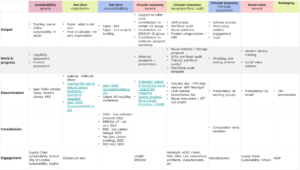
Activity Map and update 2023 – FIS Sustainability Leadership Group. 

Visit the FIS Sustainability Hub here 

The 12 pays of Christmas

The 12 pays of Christmas

With cashflow continuing to be a thorny issue across the industry, it’s never been more important to ensure your payment preparations are in good health. Here, our expert elf delivers a dozen festive financial pointers to help prepare your business balance sheet for the New Year and beyond…

Unfortunately we’re still seeing significant contractor and sub-contractor business failures across the UK, resulting in a trail of devastation for the supply chain.

I’ve recently dealt with payment and cashflow issues for a number of SMEs and the level of difficulties currently being experienced is extraordinary.

After 40 years in the industry I don’t think I’ve ever seen so much chaos and it’s desperately sad to see so many businesses going into administration and good people being made redundant.

It’s essential that FIS Members minimise risk in 2024, so with apologies to the classic tune <<The 12 Days of Christmas>>, I’ve wrapped up a dozen of my own top payment tips to ensure you don’t lose sleep over payments and can enjoy a silent night…

1. Use Mr (or Mrs) Clause – use an experienced professional to analyse any contracts you’re bidding for and highlight any high-risk clauses. This will allow you to discuss the issue in advance and request that the clauses are removed or mitigated. There’s no use doing this after your tender has been accepted!

2. Make a list and check it twice – ensure you have a payment schedule in your contract, setting out the dates when you’ll make an application for payment, what you need to provide, the due and final dates for payment and when a pay less notice will be issued. Stick religiously to these dates – your commercial manager should have them in their calendar.

3. Stay another day – beware your payment schedule running out. If a job runs past the last date in the schedule, make sure it’s extended until you reach practical completion.

4. Talk turkey – payment applications are often rejected or reduced because you haven’t provided the relevant information. Too much detail is better than not enough, so ensure your commercial manager follows up each application with a call to the contractor to establish they have everything they need. There’s nothing worse than getting to the end of the month, only to find your application has been shredded!

5. Follow the star – make sure you do what the contract says about submitting notices. So if it says they must be sent by email and registered post, do that. If it says they have to go to individuals and an organisation, do that instead.

6. Wrap it up – a sub-contractor told me recently that if his money isn’t received by the final date for payment, he issues a notice to suspend the performance of his obligations on site the next day. You’re perfectly entitled to do this and I find it’s a good wake-up call to both contractors and employers.

7. Do you hear what I hear? – you’ll often get an early indicator if there are trading difficulties, so keep your eyes and ears open. If the contractor or employer isn’t paying on time or reducing payments, share intelligence and compare notes with other sub-contractors.

8. Avoid a ding-dong – if you’re delayed, tell the contractor or employer why ASAP and give early notification of an extension of time. Some clients say they don’t want to ruffle feathers, but your priority is your <<OWN>> business. A standard contract allows extensions of time and payment of loss and expense, so take advantage.

9. Head for quality street – quality is still a major issue in the industry, with clients being charged for failing to rectify defective workmanship, remove rubbish and comply with health and safety regulations. The Construction Quality Improvement Collaborative is a major step forward – it’s worth signing up at www.cqic.org.uk to demonstrate your credentials and commitment to doing things right.

10. Jingle all the way – I recently issued a notice of adjudication to a defaulting party who quickly paid up. The Low Value Dispute Adjudication offers a fixed fee for an adjudicator to run such a dispute so you should take advantage – find out more at www.rics.org

11. Goodwill to all men – SELECT is among the many bodies to sign up to the Conflict Avoidance Process (CAP), which you can use as an early intervention to prevent issues escalating and allow you to keep working (and earning). Check it out at www.rics.org/capledge

12. Stuff those turkeys – finally, if you’re working with an organisation that’s repeatedly giving you the runaround, have the courage to tell them their goose is cooked and give them the boot.

In addition to these pointers, please read the CICV’s Best Practice Guide – available to download for free from www.cicvforum.co.uk – to improve your commercial management.

There’s no doubt we’re in for another tough 12 months across the industry but those firms that prepare properly will manage to weather the snowstorms to come.

Changes to Skilled Worker Visas

Changes to Skilled Worker Visas

The Government has announced a number of changes to the Points‐Based Immigration System (PBIS) designed to reduce overall net migration. From next spring, the Government will increase the earning threshold for the Skilled Worker visa from £26,200 to £38,700, as well as raise the Immigration Health Surcharge from £624 to £1,035. The Shortage Occupations List will also be replaced with a new ‘Immigration Salary List’, which will retain a general salary discount but include fewer occupations.

Under the PBIS, most workers from outside the UK in construction are ‘skilled workers’ and require a Skilled Worker visa to work in an eligible occupation. Build UK’s flowchart provides an overview of the process of employing a worker from outside the UK, with detailed guidance on How to Get a Sponsor Licence and How to Get a Skilled Worker Visa.

Building Safety Regulator Strategic Plan

Building Safety Regulator Strategic Plan

The Building Safety Regulator (BSR) has published its first strategic plan, setting out how it will carry out its building safety functions through to March 2026. With a vision to “create a built environment where everyone is competent and takes responsibility to ensure buildings are of high quality and are safe”, the plan includes an ambitious roadmap outlining a wide‐ranging programme of activity for the next three years:

  • Year one (April 2023 ‐ March 2024) ‐ Implementation of the new regime, including ensuring dutyholders are aware of their responsibilities and publishing a register of Higher‐Risk Buildings (HRBs)
  • Year two (April 2024 ‐ March 2025) ‐ Consolidation of the regime, including establishing the regulated building control profession and assessing 20% of occupied HRBs, prioritising those with un‐remediated ACM cladding
  • Year three (April 2025 ‐ March 2026) ‐ Operation of the regime on a ‘steady state’ basis, whilst reviewing the effectiveness of the BSR and setting its strategy for the next three years.

The BSR has also published its Enforcement Policy setting out where it will take action in the event of non‐compliance. Philip White, the HSE’s Director of Building Safety, has been appointed to lead the BSR on a permanent basis, which will include performing the duties of the Chief Inspector of Buildings.

Revisions to GAI DHF Code of Practice for Hardware for Fire and Escape Doors

Revisions to GAI DHF Code of Practice for Hardware for Fire and Escape Doors

The GAI DHF Code of Practice is a significant document that is often cited in Approved Documents and equivalent regulations throughout the UK and Ireland.

Recently, the code underwent a revision process, and it is now open for public comment by industry experts. If you’re interested in providing feedback, please use the commenting template provided via the link below.

Please send your completed forms to technical@gai.org.uk by Friday 15 December.

FIS CEO joins new SKARating Board

FIS CEO joins new SKARating Board

Getting ready for Net Zero: SKA announces new Board and governance

  • SKArating is announcing an exciting change in leadership and new plans to scale up to support the growing need to reshape sustainability in the fit-out world.
  • SKArating has, over the last 15 years, helped over 12,000 fit-out projects improve sustainability and provided a framework for countless more to make better, responsible, sustainable decisions.

This month SKArating is announcing an exciting change in its leadership and governance, as well as new plans to scale up to support the growing need to reshape sustainability in the fit-out world.

Developed in 2008 to help landlords and tenants systemise sustainability and assess fit-out projects against a practical sustainability rating system, SKA is unique in that it is driven exclusively to make a positive impact.  At the heart of SKA is a toolkit and assessment criteria that is free to use – costs are covered via training and certification.  The scheme has now supported more than 12,000 fit-out projects to make responsible decisions.

SKArating was initially developed by a group of industry professionals led by Skansen and supported by RICS and AECOM to focus on sustainability in fit-out, primarily in the commercial office, higher education and retail space.  The underlying philosophy of SKArating has always been to encourage all in the supply chain to make small changes in a practical way today.

To establish SKArating in the market, RICS provided a platform to incubate the scheme, host information and support the rating and certification process.  The changes announced this week will see SkArating trade as an independent “not-for-profit” business.

The new board is formed from people with a long-standing association with the scheme.  Elina Grigoriou has chaired the SKArating Technical Committee since the scheme was first launched in 2008, and served on the SKArating Development Board as well as delivering the training of SKArating assessors.  She is joined by Joe Croft, Charlie Law and Dave Wakelin who have been members of the Technical Committee for many years, and Iain McIlwee who has joined the board, cementing the Finishes and Interiors Sector’s strong association with the scheme.  The Board has supported SKArating through its incubation with RICS and provides continuity as the scheme takes its next steps.

SKA provides:

  • A framework to help understand good practice in fit-out and how to implement it.
  • An informal self-assessment tool for analysing environmental performance of a fit-out project
  • An opportunity to benchmark the performance of fit-outs
  • Quality-assured assessments from an accredited SKA assessor
  • A measure to help landlords and owners to demonstrate the sustainable credentials of commercial space

The way SKArating operates will not be affected.  Assessments will continue to be certified as they were under RICS’s stewardship.  Assessors will continue to receive the same technical support that they have previously enjoyed through RICS, with updated processes for assessor accreditation and CPD.

However, the board has plans to update the SKArating schemes to respond to an increasingly climate-aware fit-out industry, and to expand the sectors that SKArating can be used in.  The board will be reaching out to industry experts, SKArating users, assessors and clients to help develop the next iteration of the tool and the various schemes.

Chairperson of the new SKA Board Elina Grigoriou stated:

“This is an exciting time in the evolution of SKA. After 15 years developing the product and building awareness, we are now ready to step out on our own and work with our amazing community to take this scheme to the next level. With SKA now firmly established, it is time to take the next step and RICS has supported the leadership group to establish SKA as an independent social value business.

“All of us on the new Board and our Technical advisors are passionate and committed to remaining true to the SKA values for its future direction. SKA will remain owned by the industry and run as a “not-for-profit” ensuring it is always acting in the best interest of the market.”

Commenting on the changes, Janine Cole, Sustainability & Social Impact Director at Great Portland Estates plc stated:

“GPE have used SKArating for several years and has supported the business in improving the sustainability performance of our smaller refurbishment projects. The flexible nature of the scheme makes it ideal for this type of project, as a result, it was recently included within “Our Brief for Creating Sustainable Spaces” as a requirement for our on floor fit out schemes. We look forward to working with the SKArating Board as they develop the scheme.”

Ben Stubbs, Head of Sustainability (Built Environment) at UCL added:

“At UCL, all our project teams are accountable for their impacts across a broad range of sustainability indicators. We recognise Ska’s potential to help us further reduce our impacts as we continue to update our institutional targets.”

More details on the SKArating is available here: www.skarating.org

Construction Sector Facing Weakness Across the Supply Chain

Construction Sector Facing Weakness Across the Supply Chain

According to surveys conducted throughout the construction supply chain, the sector experienced a decline in activity during Q3 of 2023. Heavy side and light side manufacturers experienced sales declines, while chartered surveyors saw their workloads decrease. Small and medium-sized contractors, as well as civil engineering contractors, also saw their net workload balances weaken. The surveys revealed that forward-looking questions all pointed to a deteriorating backdrop for the next year. Concerns over demand strength, tighter financial constraints due to raised interest rates, and a decrease in new enquiries – including in sectors that had previously driven construction activity – were all noted. Additionally, construction costs continued to rise, outpacing increases in tender prices and reducing profit margins.

The CPA’s Construction Trade Survey brings together results from surveys of building contractors, specialist contractors, civil contractors and product manufacturers. It provides a pan-industry assessment of current and expected conditions.

Members can access the Trade Survey here

Prioritise the Safety of Your Team with Our Free Online Fire Safety Training Course

Prioritise the Safety of Your Team with Our Free Online Fire Safety Training Course

Sign up for our free online fire safety training course and start learning today! Gain the knowledge and skills necessary to identify and mitigate potential fire hazards, all from the comfort of your own home. This course is specifically designed for those working in the construction industry but it is open to everyone who is interested in improving their awareness of fire safety in the workplace.

Importance of Fire Safety Awareness

Fire safety awareness is crucial for everyone. Being responsible and aware of potential fire hazards can reduce the risk of a fire taking place, improve evacuation procedures, and minimise harm to people.

Course Benefits

By enrolling in our course, you’ll have access to a range of benefits, including:

  • 12-month access to interactive online course materials
  • Certification upon passing the end-of-course exam
  • Learn at your own pace – complete the course in as little as 2 hours or take your time to explore the content fully
  • Study with flexibility – you’ll have 12 months of unlimited access to the eLearning portal
  • You decide when to learn – fit your learning around your lifestyle, whether that’s in the morning, afternoon, or evening
  • 100% online learning, no tutor involvement – get started right away, no need to travel or take time off work
  • Become safer on site – upon completing the course, you’ll gain a five-year fire safety awareness qualification

Is This the Right Course for You?

If you work in construction, live in the UK, want to improve your knowledge of fire safety awareness, or want to demonstrate to your employer that you are committed to a positive health and safety culture, then this is the course for you!

Access the course here

FIS Calls for Protection as Payment Times Lengthen

FIS Calls for Protection as Payment Times Lengthen

Late payment continues to be a major issue for the construction industry, and the impact of the recent economic backdrop and the looming holiday season is making it worse.  According to industry insiders, current measures to address the problem, including the Prompt Payment Code and Duty to Report, are insufficient. Many in the industry view Project Bank Accounts (PBAs) as a positive step, as they ensure payment is kept separate.

However, concerns remain regarding who will take responsibility for them. Other potential solutions include direct payment from clients and a digital alternative. The government already advocates for the use of PBAs in public sector contracts, but more transparency is required regarding what constitutes “compelling reasons” not to use them.

According to Iain McIlwee, the CEO of Finishes & Interiors Sector, the voluntary Prompt Payment Code and mandatory Duty to Report are insufficient to address the payment issue in the construction industry. In fact, the situation is worsening. Contractors tend to “fatten the books” and delay payments during the Christmas season, exacerbating the problem. McIlwee warns that this is the worst time of year for the issue, making it critical to address the problem with more effective measures.

See full Construction News article

Update on Building Regulations and Resources

Update on Building Regulations and Resources

The Higher-Risk Buildings (Keeping and Provision of Information etc.) (England) Regulations 2023, which outline the requirements for the Golden Thread of information and Mandatory Occurrence Reporting, have been presented to Parliament for approval. 

The government has released remediation data for all programs supporting residential buildings over 11 meters in England with hazardous cladding. This is the first time such information has been made public and is intended to demonstrate the progress achieved.

The Building Safety Regulator’s webinar series is now available on-demand and aimed at assisting duty holders in understanding the new system, including the building control system and Planning Gateway One. If they have not already done so, members must register to view the videos.

CITB Levy Return

CITB Levy Return

Submitting the Levy Return by the deadline is not only important for your company’s eligibility for grant claims, but it’s also a legal requirement. The Levy Return is an annual submission that outlines the amount of money your company owes for the Construction Industry Training Board (CITB) Levy.

The levy is a small percentage of your company’s total payroll, and it’s used to fund training and qualifications for the construction industry.

If you’re unsure about how to complete the Levy Return, CITB has a range of resources available to help. You can access online guides, attend webinars, or even book a one-to-one appointment with a CITB advisor. It’s important to note that if you miss the deadline, you won’t be able to submit the Levy Return until the next year, and you’ll be liable to a penalty fee.

So, don’t wait until the last minute to submit your Levy Return. Take advantage of the resources provided by CITB, and ensure that your company remains eligible for grant claims for the upcoming year.

Participate in the Review of Apprenticeship Standards

Participate in the Review of Apprenticeship Standards

This is an exciting opportunity for those passionate about the plastering trade to have their say in shaping the apprenticeship standard.

The level 3 Plasterer Apprenticeship Standard is designed to provide apprentices with the necessary skills and knowledge to become competent plasterers. Contributing to the development of this standard will ensure that it meets the needs of the industry and apprentices alike.

If you have experience in the plastering trade or have insights on what should be included in the standard, do not hesitate to contact beenanana@thefis.org and share your input. Your contribution could make a significant impact on the future of the plastering trade in the UK.

Your details will be passed onto the IfATE Standards development team.

Training Awards Shortlist Announced

Training Awards Shortlist Announced

The shortlist for the 2023 Training Awards has been determined by a panel of judges.

Celebrating excellence and achievement in plastering and interior trade, the Training Awards are a collaboration between FIS and the Worshipful Company of Plaisterers. The winners are announced during the Training Awards Lunch, which is being held on 21 November at Plaisterers’ Hall in London. The event allows us to celebrate the best of training as we recognise the apprentices, students and organisations that are building the next generation of talent and provides a great networking opportunity with like-minded organisations from the fit-out and plastering sector.

These awards acknowledge the accomplishments of apprentices, students who have exceeded expectations, training delivery by colleges and training providers, mentors and others who have supported sector training, and lifetime contribution to sector training.

Apprentice of  the Year Shortlist

  • Ryan Stanford
  • Bella Romain
  • Deniss Fridenbergs
  • Zara Dupont
  • Michael Aarons
  • Ben Comerford.

Training Provider / College of the Year shortlist

  • NPTC Group of Colleges
  • College of North West London
  • DMR Training and Consultancy
  • Carlisle College.

Student of the Year Shortlist

  • Kathryn Doyland from GRWP
  • Caroline Moor from Vision West Notts College
  • Edward Celmins from Carlisle College
  • Dan Titley from V&D
  • Julius Debrah from Now Get Qualified

Congratulations to all the nominees for their hard work and dedication in pursuing their academic goals!

If you’re interested in attending the ceremony and joining us in celebrating the winners, book your place here.

FIS Scottish Awards 2023 – Recognising excellence whilst supporting compliance.

FIS Scottish Awards 2023 – Recognising excellence whilst supporting compliance.

The FIS Scottish Awards are a celebration of the exceptional work and diverse range of projects carried out in Scotland. On 15  September, the awards ceremony was held at the impressive voco Grand Central Glasgow. The event was hosted by broadcaster, writer, Herald columnist and former BBC Political Editor Brian Taylor and was well-attended, with attendees eagerly anticipating the announcement of this year’s winners.

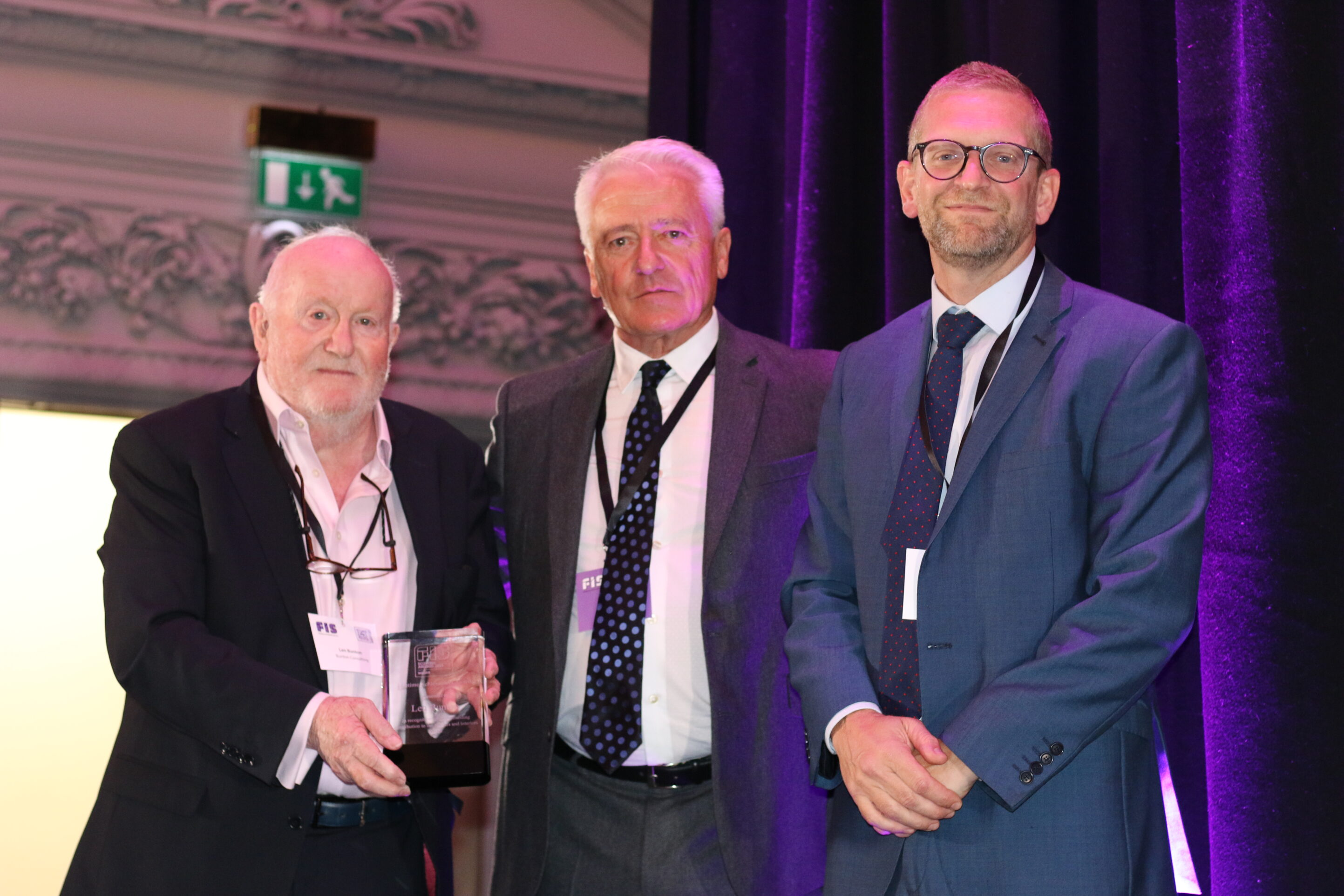
 The ceremony began with a welcome address from FIS President Philip Brown, who highlighted the organisation’s activities in 2023 and plans for the future. FIS CEO Iain McIlwee then gave a short speech before presenting the Lifetime Achievement Award to Len Bunton.


Len has spent his career advocating for fairness in the construction industry. He has been an inspiration to many and has tirelessly fought for a fairer supply chain, calling out unacceptable behaviour along the way. Len has been a powerful advocate for small and medium-sized enterprises (SMEs) and has been a solid rock that they can rely on. His efforts have made a significant impact and his dedication has been recognised with this well-deserved award.

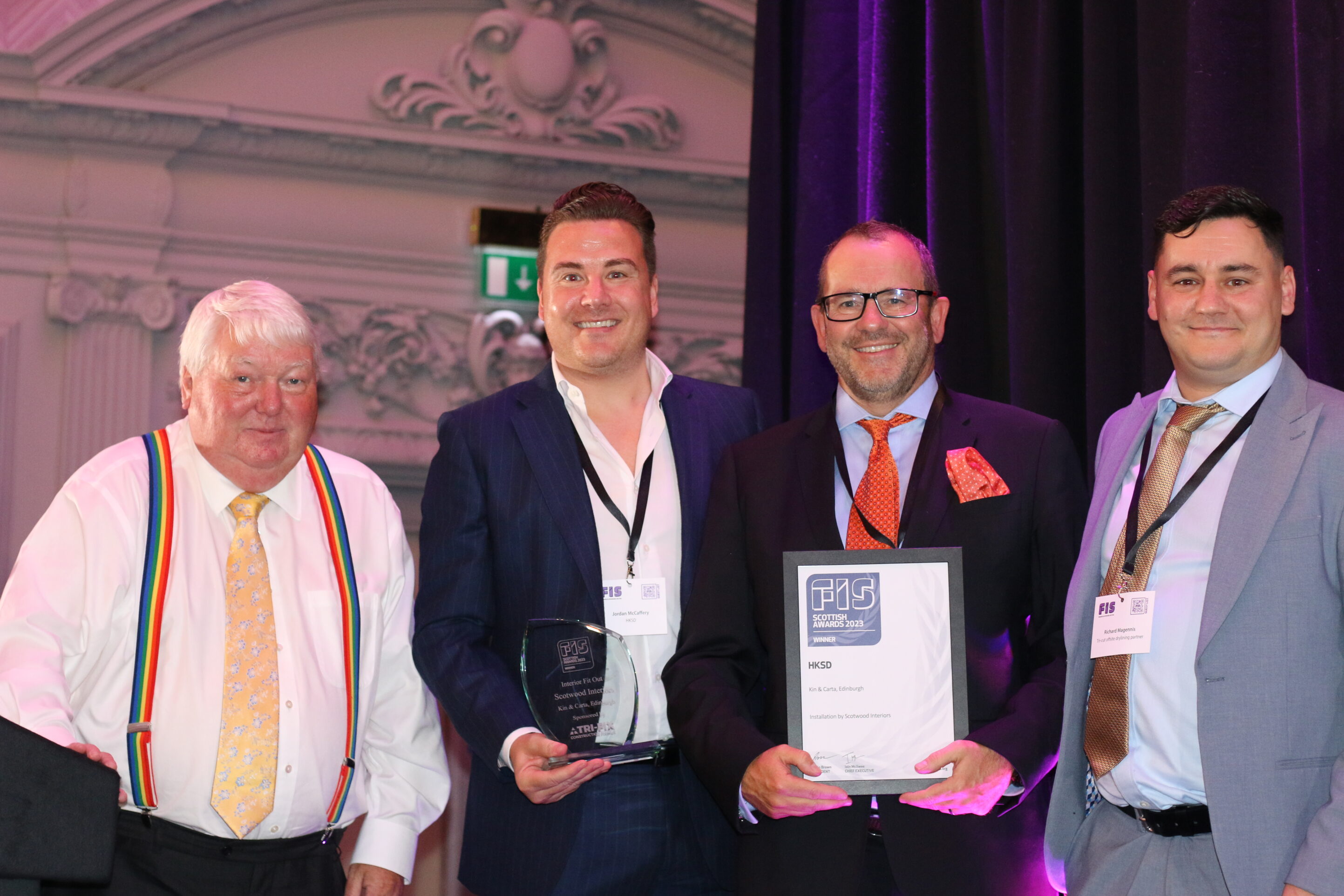
After a fantastic three-course lunch, the presentation of the awards began. The winners were as follows:


Specialist Installation – Under £1M: D V McColl, for the National Robotarium Building constructed within the grounds of the Heriot Watt University Campus.


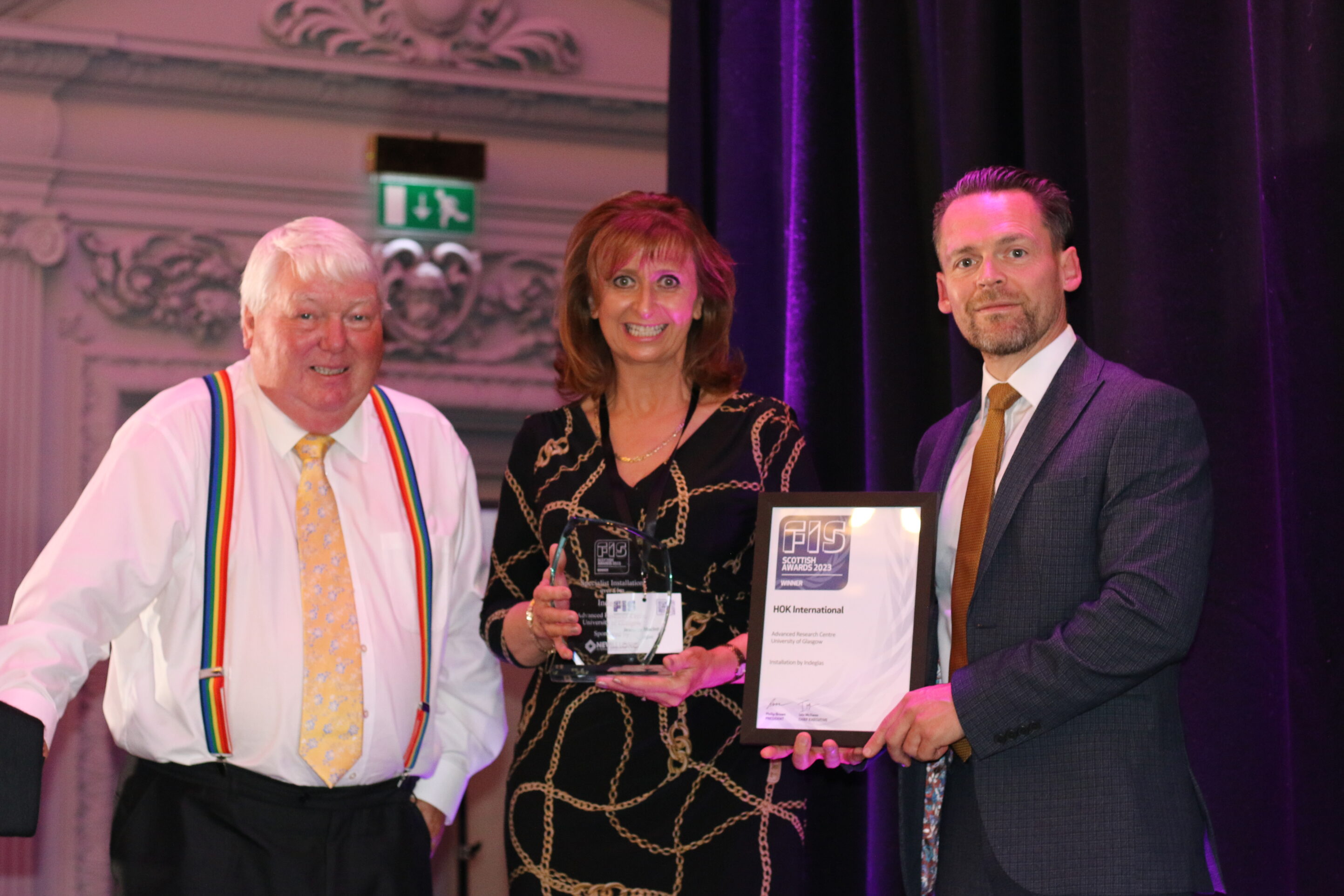
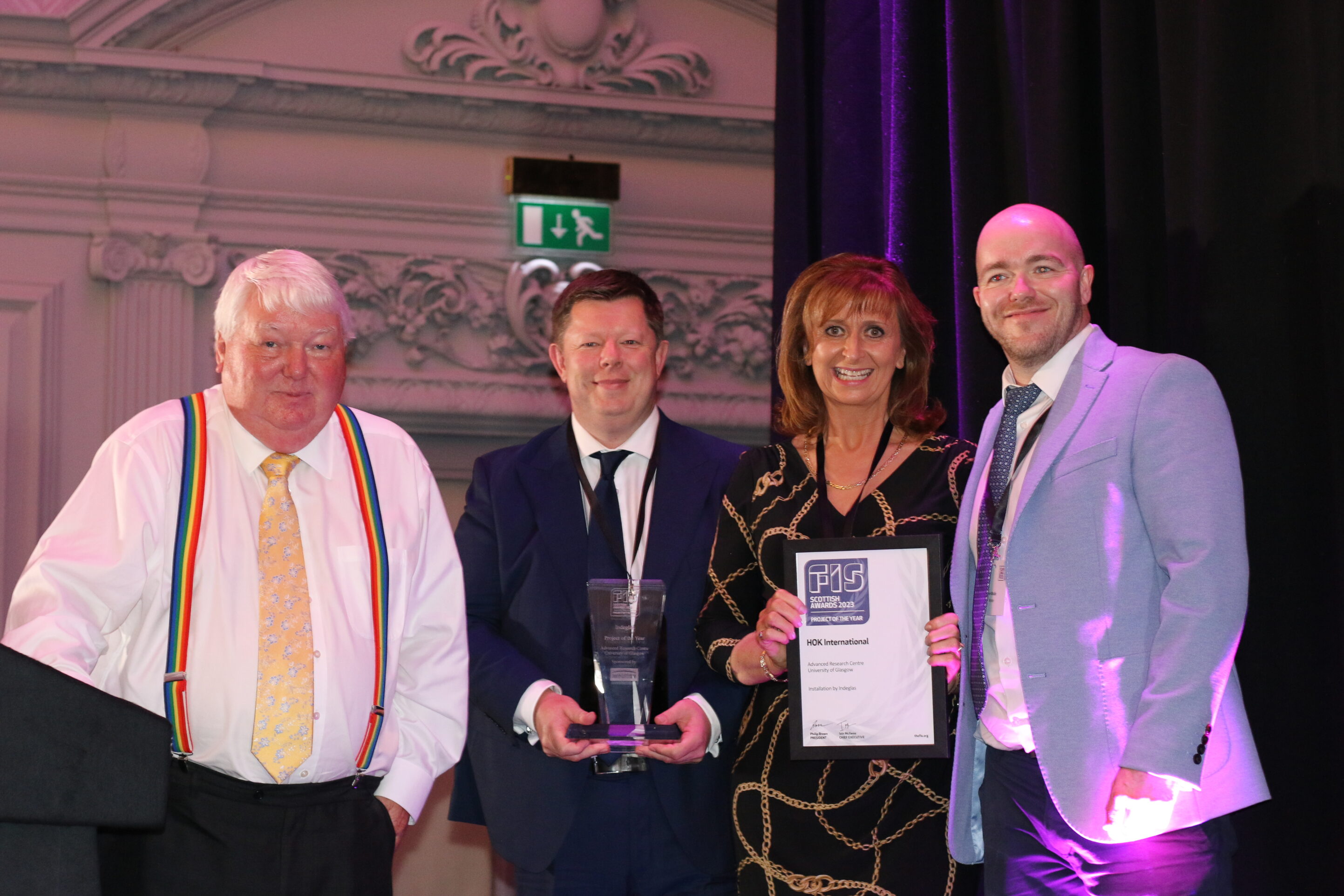
Specialist Installation – Over £1M: Indeglås, for designing and constructing an internal glazed atrium and high-performance rooms in the university’s Advanced Research Centre (ARC) building.


Interior Fit-Out: Scotwood Interiors, for their work on the office at 132 Princes Street in Edinburgh, designed to exude character and promote socialisation and collaboration for global digital transformation consultancy, Kin & Carta.


Project of the Year: Indeglås, for their visually stunning atrium and innovative design and delivery of exceptional quality, meeting the architects and client’s needs.


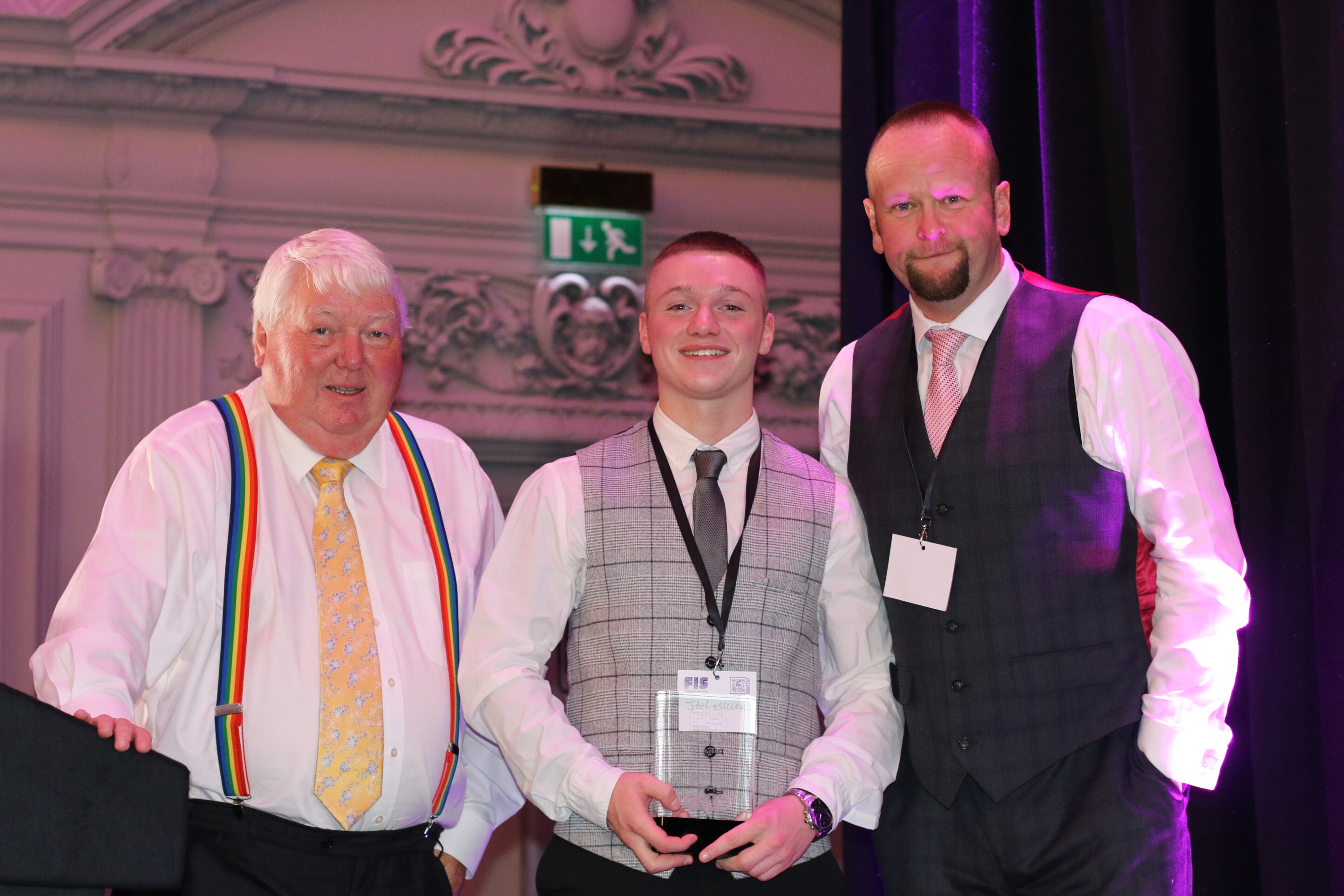
Apprentice of the Year: Jay Miller, Ceiling Installation Apprentice at D V McColl. With consistent high standards and enthusiasm for learning, Jay completed his NVQ Level 5 in Ceiling Fixing in August 2023, excelling in all elements of his training.


Congratulations to all the shortlisted individuals and companies, as well as the winners on their well-deserved success!

Progressing Sustainable Procurement: Driving Sustainable Supply Chains and Businesses’ Virtual Conference’

Progressing Sustainable Procurement: Driving Sustainable Supply Chains and Businesses’ Virtual Conference’

Register for the Supply Chain Sustainability ‘Progressing Sustainable Procurement: Driving Sustainable Supply Chains and Businesses’ Virtual Conference.

This event will take place in just one week, on Thursday 7th September at 10:00-12:00 via Zoom.

By attending this session, you will have the chance to gain valuable insights into sustainable procurement strategies and processes. You will receive a first look at Action Sustainability’s ‘Sustainable Procurement Progression Report 2023’ and learn from cross-industry leaders in sustainable procurement about their experiences, the challenges they have faced and how they have overcome them. Additionally, you will have the opportunity to deep dive into three specific sectors – construction, utilities, and train operating companies – to benchmark against and learn from ISO 20400 evaluation insights.

Their Q&A session will give you the chance to have your questions answered by industry experts. This is a unique opportunity to learn from the best in the industry, so we encourage you to register now. Places are limited, with less than 100 spaces left, so don’t delay and register for free using the link provided. We also invite you to share the registration link with your colleagues and supply chain.

Learn more about the event and register here

Concepts, Principles, and Innovation in IFE Fire Testing

Concepts, Principles, and Innovation in IFE Fire Testing

Are you interested in the latest developments in the fire testing industry? The IFE Fire Testing webinar may hold the answers to some of the challenges faced in this field. During this webinar, experts will analyse the latest research and suggest how digital innovation could provide solutions. Participants will also learn about fire testing procedures in accordance with key BS and EN standards and discuss the potential impacts of removing BS 476 from Approved Doc B.

If you are a client organisation, housing provider, architect, design/multi-disciplinary firm, fire engineering firm, fire test house, testing, inspection and accreditation body, or a regulator, this webinar is for you. You will gain insights into the latest market research, an overview of current fire test types and relevant standards, and information on future solutions that can enhance capacity, competence, and capability. The event will conclude with a post-event copy of the presentations and a recording of the webinar for future reference. Join us to learn more about the exciting developments in the fire testing industry.

Keep on top of your cash flow, chase every payment, and don’t sit back and do nothing

Keep on top of your cash flow, chase every payment, and don’t sit back and do nothing

The last few months have been hectic working for several construction organisations who are members of the various bodies that make up CICV.

I have seen an alarming increase in the number of organisations that are suffering from payment and cash flow issues, and these are probably putting a strain on the finances of the business and more strain on the mental health of those who run the businesses. What appears to be a regular feature is that organisations don’t respond to payment applications, don’t respond to emails requesting information and just put up a wall of silence, and then they start to reduce payment applications with some spurious excuses, and contracting organisations go round and round not knowing where they are going.

By inventing all sorts of excuses one can keep a subcontractor at arm’s length for weeks if not months, providing prevaricating excuses for not paying.

 Members can see the full blog by clicking the button below