
by Clair Mooney | 3 Apr, 2019 | Main News Feed
ISG’s turnover jumped from £1.71bn to £2.24 in 2018, a significant jump of more than £500m in one year.
The main factors behind the increase were more work from the public sector; expanding in the small to medium fit-out market and increased work in continental Europe.
Chief executive Paul Cossell welcomed the growth but told Construction News it was not his company’s main focus. “We try not to talk about turnover growth, which has been the sector’s norm. We’re really interested in margin and cash growth”.
“There is no pressure to chase volume or to do anything that brings cash flow in,” he added.
Pre-tax profit for ISG tripled from £9.1m in 2017 to £27.4m for the year ending 31 December 2018, according to its accounts, with the corresponding margin increasing from 0.5 per cent to 1.2 per cent.
Mr Cossell said the margin for 2018 was “okay” and the company expected to do better in 2019. “We will be disappointed if we don’t break the 2 per cent barrier in 2019,” he said.
The company has a margin target of 4 per cent by 2024.
All five of ISG’s operating areas reported increases in revenue for 2018 with four of them also reporting increases in underlying pre-tax profit.
UK construction, the second largest division after UK fit-out, was the only operation to falter. Profit slipped from £6.8m to £5.7m while revenue increased from £480m to £520.2m.
Mr Cossell said 2018 was a transitional year for the UK construction business, which was the last division in ISG to be “modernised”.
Management has been overhauled, with Interserve’s former construction managing director Gordon Kew taking over as chief operating officer and Steven McGee coming in as new MD for the South.
The business has also started to win projects larger than the sub-£100m jobs that ISG was known for, Mr Cossell said.
Over the past year the firm secured four jobs in £200m-£400m range and another £300m-plus job in London is in the pipeline for 2019.
“It’s all for selected clients in targeted sectors,” Mr Cossell added. “It’s not growth for growth’s sake.”
Aside from public sector work won mainly through frameworks, ISG construction is focused on the higher education, hospitality and leisure, office, residential build-to-rent and the industrial market, especially distribution centres and warehouses.
Mr Cossell said the construction business’s order book was “pretty full” and that “2019 will be okay, but 2020 is going to be very good” for the business.
With the construction business overhauled, the ISG group was now capable of delivering up to £3bn of work a year, but Mr Cossell said it would ideally be less than that.
“£2.5bn [annual revenue] feels like the natural level, but that can flex down or up,” he added.
“We would like to think [for 2019] it’ll be around £2.5bn with a 2 per cent margin.”
To manage the growth the company is on a hiring spree and expects to recruit somewhere in the region of 600 to 700 new people this year.
“From a talent acquisition point of view we’ve certainly seen more good people in the marketplace that we think helps us, so we’re receptive to talent that wants to come to a different business,” Mr Cossell said.
Source: Construction News

by Clair Mooney | 29 Mar, 2019 | Main News Feed
FIS is a proud partner of the Inspiring Change Conference and members are encouraged to enter the Inspiring Change Awards which highlight and reward organisations within the sector that have created more inclusive cultures in their workplaces, education, and the community.
The Conference itself will bring together a range of inspirational industry-wide speakers, including politicians, industry stakeholders and representatives from a wide range of sectors.
The conference will take place on Tuesday 21 May 2019 from 10.00-16.30 at No 11 Cavendish Square, London, W1G 0AN.
The event is free to attend and will share client expectations and good practice from within the construction industry and beyond to advance the understanding of the business and societal benefits of developing a culture of fairness, inclusion and respect within the workplace. Attendees will be able to network with 300 like-minded professionals.
For more information about the conference, how to enter the awards and take advantage of award sponsorship opportunities visit the website at: www.inspiringchangeawards.com or email Brionywickenden@ceca.co.uk

by Clair Mooney | 29 Mar, 2019 | Main News Feed
The controversial new plan forms part of its new Working as One initiative. This has been designed to overhaul and promote better supply chain relationships across the group.
Kier says it is revamping its supply chain approach to encourage greater collaboration and alignment with subcontractors.
But some subcontractors claim it is the latest twist in a developing pay to get paid culture as main contractors seek to strengthen balance sheets as clients shy away from large upfront payments on jobs.
Kier has called meetings with large groups of subcontractors at its London office to explain the new banded structure before the system is piloted in the south east.
Subcontractors were told to keep the plan under wraps although the Enquirer has been told the new deal for highest ranked strategic subcontractors will involve the new 1.5% ‘management fee’ alongside the promise of more repeat work.
A subcontractor said: “We saw this sort of thing with Carillion – main contractor discounts, rebates. Now we are being asked for 1.5% just to work with them.
“The danger is what Kier is doing becomes contagious and other main contractors sit up and say we need to do this.”
Over 14,000 suppliers and contractors ranging from Tier 1 to micro SMEs work with Kier, with subcontractors alone accounting for £2.4bn of spending each year.
Under the new arrangement, subcontractors and suppliers will be split into four relationship bands. The lowest is a new entrant level where the onus is on communicating expected standards.
Firms at the “approved” level will be pre-qualified to Kier standards, be involved in training and upskilling with tender opportunities highlighted across the group.
Preferred contractors will have proven track records on projects and use the Kier Early Payment System, which allows payment days to be reduced to 21 days for a fee.
While the system is a voluntary one, it has grown steadily in use and ran at an average debt level of £196m in last six months of last year.
Firms moving to the highest strategic band will be expected to come into greater alignment.
Kier hopes this will involve greater innovation sharing, early work pipeline discussions and agreed standards terms and conditions.
A Kier spokesperson said “We are continuously developing new ways of working with our supply chain. Following feedback from our supply chain partners, we are investing in smarter solutions on a collaborative, voluntary basis.
“Working with larger strategic subcontractors, we are looking to reduce overall project delivery costs within our buildings businesses. This early project engagement with our subcontractors offers them preferred trading terms and the opportunity to develop project improvements.
“We anticipate this will improve the overall value of project delivery for our clients.”
Source: Construction Enquirer

by Clair Mooney | 29 Mar, 2019 | Main News Feed
When construction companies and clients get it right – through project selection based on their ability to deliver, responsible tendering, diligent monitoring, and a proactive attitude to deal with issues such as cost and timetable overruns – they create contracts that are more profitable and provide more enduring value to society.
The challenge facing the construction sector is that, regardless of the economic climate, contracting can be precarious. The lethal cocktail of low margins and high risks means even the largest firms can find themselves just a few contracts away from slipping into the red. This pressure is further compounded by the longest decline in bank lending for construction companies since 2011 – because of fears of a downturn in the economy and the impact of Brexit – at a time when firms need to manage their debt.
Against this difficult background, our Audit insights report examines four key areas that need to be addressed by construction firms if they are to run sound, well-managed businesses:
- bidding for lasting value;
- delivering for success;
- rebuilding confidence through increased transparency; and
- getting fit for the future.
This report brings together the expert insights of auditors with many years’ experience of independently examining and auditing construction firms from: BDO, Deloitte, EY, Grant Thornton, KPMG, Mazars, The Orange Partnership, PwC and RSM

by Clair Mooney | 26 Mar, 2019 | Main News Feed

by Clair Mooney | 25 Mar, 2019 | Main News Feed
FIS and the Steel Construction Institute (SCI) will launch the much-awaited Technical Report ED017 – Design and Installation of Light Steel External Wall Systems guide with a consortium of industry partners on Thursday 16 May.
SFS is the lightweight steel frame used to create the inner leaf of an external wall, it’s been around for over 20 years but its benefits are just being realised, which is why so many projects are using it, but there are problems being created because of a lack of planning and knowledge. It’s the first thing you see, but often the last thing that’s designed in a building, and that’s the issue.
SFS is seen as non-load bearing, not holding the structure up but it is supporting cladding, internal linings, insulation and perhaps even services. There are significant implications should it fail, which could lead to the external cladding falling off.
Who is the guide aimed at and why should they use it?
- The guide is for anyone who designs and installs SFS infill walls
- Anyone checking that the products are being correctly installed, such as a ‘Clerk of Works’.
- It will help to raise standards
- Show clients what SFS is and how it works
- It will get people thinking about what is expected of them, the design and the final installation
- It will give installers the confidence to question designs and provide guidance to ensure the installation is as good as it can be
- The document includes checklists as well as guidance that makes people stop and check that all the information that should be provided, is provided.
As the landscape post-Grenfell develops, we envisage that it will be very different from the way in which buildings are being designed and constructed now, this guide will become the go to reference for all involved.
Book your place at the SFS guide launch now, it will allow you engage with industry experts in this specialised area and network with other professionals.

by Clair Mooney | 21 Mar, 2019 | Main News Feed
The National Minimum Wage and National Living Wage rates will increase on 1 April 2019
The rates will increase as follows:
| Age bracket |
Current rate |
April 2019 rate |
| Over 25’s |
£7.83 |
£8.21 |
| 21 to 24-year-olds |
£7.38 |
£7.70 |
| 18 to 20-year-olds |
£5.90 |
£6.15 |
| 16 to 17 year-olds |
£4.20 |
£4.35 |
| Apprentices* |
£3.70 |
£3.90 |
*Apprentices under age 19, or age 19 and over but in the first year of apprenticeship.
Accommodation offset
The accommodation offset also increases from £7.00 to £7.55 a day for each day when accommodation is provided during the pay period.
The future
All these increases are above both inflation and rises in average earnings.
However, the rise in the National Living Wage to £8.21 represents a particularly significant increase of 4.9%, with the Treasury confirming that the annual earnings of a full-time minimum wage worker (aged 25 or over) will have increased by over £2,750 since the introduction of the NLW in April 2016.
The Low Pay Commission has stated that its recommendation is to keep increasing the NLW each year. This is to achieve its aim of an NLW rate of 60 per cent of median earnings by 2020, with the Commission predicting that the NLW will reach £8.62 in April 2020.
However, this is a lower rate than was predicted in the Government’s original plans. In his 2015 budget speech, former Chancellor George Osborne announced plans to bring the NLW to £9 an hour by 2020.

by Clair Mooney | 21 Mar, 2019 | Main News Feed
Following announcements from the Chancellor last week that funding for apprenticeship training would be increased to cover 95% of costs for non-Apprenticeship Levy payers, CITB has announced a significant increase in grants available to support the additional costs to the business from running an apprenticeship programme (remember the training is funded by the Sector Skills Council and CITB support is in addition).
CITB Apprenticeship Funding
CITB has outlined that from 1 April the following grants will be available:
- £2,500 attendance grant per year for every new eligible apprentice
- £3,500 achievement grant for every eligible apprentice
This is an overall funding increase from £10,250 to £14,500 for each apprentice an employer takes on – an increase of over 40% on existing rates.
Previously, a typical two-year apprenticeship package would have attracted grants of £6,000 and a typical three-year apprenticeship package would have attracted £10,250.
CITB Skills and Training Fund
In addition CITB has also extended the Skills and Training Fund, which provides an extra incentive to small employers to deliver construction training which align with CITB’s grant scheme. This funding also supports training interventions in management and leadership.
CITB-registered employers can apply for funding related to how many direct employees they have:
- Employers with 1 to 49 PAYE staff can receive up to £5,000.
- Employers with 50 to 74 PAYE staff can receive up to £7,500.
- Employers with 75 to 99 PAYE staff can receive up to £10,000.
This is a very flexible funding pot and CITB has confirmed that more than £100,000 of funding has been awarded to FIS members through its new and easy to apply for funding solution, with FIS members having a 90 per cent success rate when applying, based on prior applications.
To apply for skills and training funds, please read the guidance notes provided in the application form (PDF 226KB).
To complete and submit the form, you should:
- Download the application form and save it to your computer
- Complete all fields
- Ensure that you regularly save this application to your desktop to prevent loss of data
Save and send the completed form to skills.training@citb.co.uk
If you are thinking about taking on an apprentice or have any questions about training or grant support, the FIS are only too happy to help, you can speak to our skills engagement team on 0121 707 0077 or email info@thefis.org
More on FIS Skills Activity:
- FIS BuildBack – recruit new workers in this dedicated programme to train and bring unemployed individuals into the drylining trade
- FIS BuildME – open your sites and offices for work experience opportunities (aimed at those doing FE courses associated with construction)
- FIS Apprenticeships – modern apprentices without the pain
- CSCS Card Support – working towards a fully competent and qualified workforce
Did you know (as a member) you can advertise any vacancies for free on FIS Jobspot

by Clair Mooney | 21 Mar, 2019 | Main News Feed
JCT has released more of its 2016 Edition of contracts online via its JCT On Demand digital service.
The contract families included are the JCT Standard Building Contract (Standard Building Contract With Quantities (SBC/Q), Standard Building Contract Without Quantities (SBC/XQ), and Standard Building Contract With Approximate Quantities (SBC/AQ)), and the JCT Intermediate Building Contract (Intermediate Building Contract (IC), and Intermediate Building Contract with contractor’s design (ICD)).
Digital versions of the guides corresponding with each family, namely the Standard Building Contract Guide (SBC/G) and Intermediate Building Contract Guide (IC/G) are also available to purchase via the service.
These products join the other JCT contracts available via JCT On Demand, including the Minor Works Building Contracts and Design and Build Contract.
The JCT On Demand contracts can be purchased via JCT’s online store, by visiting the relevant product page and selecting the ‘JCT On Demand’ option from the format box.
JCT On Demand provides users with a digital equivalent of the JCT hardcopy contract. By purchasing via the JCT online store, users can get instant online access. The secure and intuitive interface enables users to fill in their contract using a comprehensive Q&A process, save their drafts, and print out ready for signing.
The service is aimed at those who want instant access to their JCT contract, guidance in filling out the contract comprehensively, and the ability to print out a professional black-and-white copy and a comparison document showing their customised contract against the original JCT text.
More information about the service is available at jctltd.co.uk/jct-on-demand.

by Clair Mooney | 21 Mar, 2019 | CSCS, Main News Feed
Following consultation with industry, CSCS has agreed a plan that will pave the way for the eventual withdrawal of cards issued under Industry Accreditation.
For several years the strategic direction of the Construction Skills Certification Scheme (CSCS) has focused on ensuring that all applicants can demonstrate the achievement of a nationally recognised construction related qualification.
With the introduction of the Labourer card, the withdrawal of the Construction Related Occupation card and the planned removal of the Site Visitor card the next step is the withdrawal of cards issued under Industry Accreditation.
Industry Accreditation, also known as Grandfather Rights, allowed workers to obtain CSCS cards on the strength of an employers’ recommendation rather than the achievement of a recognised qualification. CSCS closed Industry Accreditation to new applicants in 2010 but those already holding a card are currently able to renew on the same basis.
CSCS has consulted with the industry and agreed a plan that will pave the way for the eventual withdrawal of cards issued under Industry Accreditation.
From 1 January 2020, all cards renewed under Industry Accreditation will expire on 31 December 2024 and CSCS will stop issuing the card from 30 June 2024. CSCS has also announced a new online service to speed-up the card application process – find out more here.
FIS is working with members and the wider sector to support the transition to blue skilled cards. To find out more click here
More on FIS Skills Activity:
- FIS BuildBack – recruit new workers in this dedicated programme to train and bring unemployed individuals into the drylining trade
- FIS BuildME – open your sites and offices for work experience opportunities (aimed at those doing FE courses associated with construction)
- FIS Apprenticeships – modern apprentices without the pain

by Clair Mooney | 21 Mar, 2019 | Main News Feed
FIS, representative body for the £10 billion finishes and interiors sector in the UK, has extended its hand to help the 75 staff being made redundant at Paragon Interiors.
Iain McIlwee, FIS CEO said “Paragon Interiors Group is a time served Gold award winning member of FIS and it’s tragic to learn the deal with Red 7 Property has collapsed. We care deeply about our membership base and recognise that staff are the most valuable asset of any organisation. We have worked with our colleagues at Paragon Interiors Group for a long time and for this reason we would like to help them secure employment in other organisations through our contacts and networks.”
FIS has reached out to their colleagues at Paragon Interiors Group, their MP, local employment groups and its membership base to see if they can find new employment opportunities for those impacted. Staff at Paragon Interiors Group can email FIS their details to info@thefis.org and we will endeavour to help them through discussions with our industry networks and on social media.

by Clair Mooney | 14 Mar, 2019 | Main News Feed
The CPA Technical Report 19 (02) covered the government’s newly published Resource and Waste Strategy which aimed to make businesses and manufacturers pay the full cost for recycling and disposing of packaging waste by placing obligations on those responsible for producing waste to be more accountable.
Following this, DEFRA, in conjunction with the three devolved governments, has issued a Consultation on reforming the UK packaging producer responsibility system in which they are seeking views on introducing extended producer responsibility to reduce the amount of unnecessary and difficult to recycle packaging and to increase the amount of packaging that can be recycled. The consultation documentation can be viewed here.
The proposals being consulted on are:
- The definition of full net cost recovery and approaches to recovering full net costs from producers
- Incentives to encourage producers to design and use packaging that can be recycled
- The businesses that would be obliged under a packaging extended producer responsibility system
- Producer funding is used to pay local authorities for the collection and management of household packaging waste and to support the collection for recycling of household-like packaging ARISING IN THE COMMERCIAL WASTE
- Mandatory labelling on all packaging to indicate if it is recyclable or not
- New packaging waste recycling targets for 2025 and 2030 and interim targets for 2021 and 2022
- Alternative models for the organisation and governance of a packaging extended producer responsibility system.
The consultation is split into three parts and 12 sub-sections. Not all sections may be relevant to all stakeholder so not all questions are mandatory.
The proposals will impact:
- Manufacturers that use recycled materials
- Businesses that produce and sell packaging products
- Local authorities
- Waste management companies that collect and manage packaging waste
- Businesses that recycle or export for recycling packaging waste
The consultation closes on 13 May 2019

by Clair Mooney | 13 Mar, 2019 | Main News Feed
Before Brexit day, most non-harmonised construction products circulate on the EU market under the mutual recognition principle. This principle prevents EU countries from prohibiting the sale of products that have already been legally sold in another EU country, even where countries have different national requirements covering the same products. The only exception to this principle is where an EU country has restrictions based on public safety, public policy or public morality.
You can read the government’s information on “Trading under the mutual recognition principle if there’s no Brexit deal”, here.
However in the event of the UK leaving the EU, the UK will no longer fall within the scope of the mutual recognition principle because we have become a ‘third country’. UK companies exporting non-harmonised products will need to consider the national requirements of the first EU country they export to. They will not need to consider the national requirements of any EU countries the products travel through before reaching their intended market.
UK companies which have already exported non-harmonised products to an EU country by meeting the relevant national requirements will still be able to make use of the mutual recognition principle and market their products in other EU countries.
UK companies importing non-harmonised products into the UK will need to ensure they meet UK national requirements, even if their products were previously lawfully marketed in another EU country. Non-UK companies exporting non-harmonised products to the UK will need to ensure that the products meet UK national requirements, regardless of whether they were previously lawfully marketed in another EU country or in the UK.
For further information about national regulations for non-harmonised products for different EU countries is available from the country’s Product Contact Point. A list of these national product contact points is available here.
With regards to cross-border trade between the Republic of Ireland and Northern Ireland, the Irish government has indicated that they would need to discuss arrangements with the European Commission and other EU countries in the event of a no deal Brexit. In this instance the UK government is ready to engage in these talks.

by Clair Mooney | 13 Mar, 2019 | Main News Feed
Since the publication of the Hackitt Review in spring 2018, the construction industry has been working hard to meet the various challenges set for it.
The CPA has established its own Marketing Integrity Group (MIG) to specifically address Chapter 7 of the report, which challenges how product information is made available to the wider supply chain. In order to inform its work further, the group is issuing a Call For Evidence. FIS will be providing a direct response to the MIG. If members have any key points that they would like included, please email details to iainmcilwee@thefis.org
Areas of interest covered are:
- Ease of finding information
- Product substitution
- Completeness and correctness of information
- Products as part of a system, or use in a variety of applications
If members also wish to respond directly, the Call For Evidence survey is available online. It should take approximately 15 minutes to complete. The survey will close on Friday 5 April.
by Clair Mooney | 12 Mar, 2019 | Main News Feed
The Department for Education (DfE) is launching a Call for Evidence on Building Bulletin 100: Design for Fire Safety in Schools, (BB100).
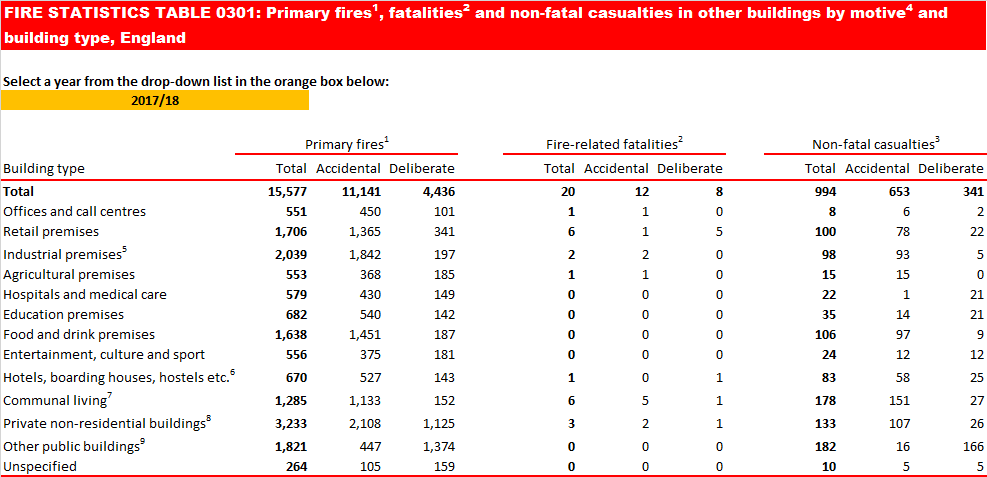
The aim of the consultation is to ensure the Department for Education’s guidance to those who build schools is fit for purpose and aligns with the Ministry of Housing Communities and Local Government’s (MHCLG) wider review of fire safety, we are launching a call for evidence on BB100 ahead of a consultation and thorough review. Fire in schools remains a concern in the UK with 682 instances recorded in educational premises in 2017/2018. Whilst there have been no fatalities in school fires since the 1940’s, the cost to the local community can be significant. Please send any information or views that you feel you would like to see included in the FIS response to joecilia@thefis.org by 24 May, so that we can include in our final submission by 31 May 2019.
https://www.gov.uk/government/consultations/review-of-building-bulletin-100-design-for-fire-safety-in-schools

by Clair Mooney | 12 Mar, 2019 | Main News Feed
Osborne chief executive Andy Steele has said the industry “can’t afford” to tackle late payment under the current market climate.
In an interview with Construction News, Mr Steele said a “perfect storm” had formed for many contractors due to the current financial squeeze and pressure from government to improve payment practices. Mr Steele stated that the financial sector has had a “change in appetite” towards construction, pulling away from its exposure to the sector, making access to finance tougher for contractors.
Amid this financial squeeze, government has cracked down on late payment practices. All companies with turnover greater than £36m and 250 employees or more are required to submit their payment practice data to government.
But Mr Steele says that the industry “can’t afford” to improve its payment practices while banks are pulling away from financing construction companies. This is because in order to pay your supply chain earlier would require companies to take out loans to fund this, as historically, contractors have “held the cash to get their business models to work”, he said. This has created an “impossible situation” for a lot of the industry: “Those two dynamics do not work together,” he said.
Although the Osborne boss doesn’t doubt that companies want to pay their supply chain quicker – “and quite rightly, they should be paid quicker” he said – it is not possible to do so at present.
“You can’t just dictate down to companies that you have to suddenly comply with these changes in your payment practices, because the industry can’t afford it,” he said. “It can’t do it in one go.”
Mr Steele said the business model “can’t change overnight” and that there must be “a realistic understanding from government over the state of the construction industry today”.
He added both public and private sector clients need to start paying main contractors earlier.
“If best payment practice is 30 days, then money from the customer has to come earlier than 30 days,” the Osborne chief said. He added large tier ones with big borrowing requirements who have historic poor payment performance are under a “huge amount of pressure” and could face difficulties. He added it is in “nobody’s benefit” if these big companies “get into trouble”.
FIS CEO Iain McIlwee responded: “Whilst I don’t like the message, I am glad that Andy put his position out there. If we break down problems and draw issues out in the open, we can start to make genuine changes – we need more transparency in our supply chain. We have wrongly used payment as a blunt instrument to manage quality. Whilst we are now accepting that this cannot and does not work we find ourselves in a position that we are addicted to this extra line of credit and in an uncertain climate finding it difficult to raise alternative funding. I agree with Andy that it is “nobody’s benefit” if these big companies “get into trouble”, but is also unacceptable for them to limp along on the backs of hardworking subbies – it is also “nobody’s benefit” if these companies fail. He also makes a good point in that, if payment to the supply chain is to be enacted 30 days, then there needs to be some fat built into this to enable money to flow and be available to pay – i.e. clients need to pay earlier, this warrants more attention. I am also convinced more can and should be done to underwrite construction, it remains the third largest sector in the UK economy – we could do with more support from the biggest (the finance and banking sector) to manage change and support investment in innovation – this is surely in the national interest!”
Source: CN News

by Clair Mooney | 11 Mar, 2019 | Main News Feed
The Department for Business, Energy and Industrial Strategy (BEIS) is putting on a series of Preparing for Brexit webinars which are designed to help businesses to ready themselves in the event of the UK leaving the EU on Friday 29 March 2019 without a deal. They will cover many of the most important changes that you should be aware of and actions that you can take now, where appropriate. Each of them will be an hour long, including Q&A at the end.
Tue 12 Mar 2019, 10:00 – 11:00: Regulations and Standards, covering using the CE and UK Mark, labelling and notified bodies
https://www.bl.uk/events/webinar-preparing-for-brexit-regulations-and-standards-mar19
Mon 18 Mar 2019, 13:00 – 14:00: Importing and Exporting, covering customs procedures, VAT and excise
https://www.bl.uk/events/webinar-preparing-for-brexit-importing-and-exporting-mar19
Tue 19 Mar 2019, 12:00 – 13:00: Business Legal Requirements, covering operating legally in the EU, cross-border mergers and accounting/auditing requirements
https://www.bl.uk/events/webinar-preparing-for-brexit-business-legal-requirements-mar19
Wed 20 Mar 2019, 11:00 – 12:00: Intellectual Property, covering registered and unregistered design rights, trade marks, copyrights, patents and exhaustion
https://www.bl.uk/events/webinar-preparing-for-brexit-intellectual-property-mar19
by Clair Mooney | 8 Mar, 2019 | Main News Feed
FIS is proud to be a part of the Inspiring Change Awards Conference 2019 which will bring together a range of inspirational industry-wide speakers from diverse backgrounds, including politicians, industry stakeholders, and representatives from a wide range of sectors. The Inspiring Change Awards, highlight and reward organisations within the construction and infrastructure sector that have created more inclusive cultures in their workplaces, education, and the community.
The conference will take place on Tuesday 21 May 2019 from 10.00-16.30 at No 11 Cavendish Square, London, W1G 0AN.
The event is free to attend and will share client expectations and good practice from within the construction industry and beyond to advance the understanding of the business and societal benefits of developing a culture of Fairness, Inclusion and Respect within the workplace. Attendees will be able to network with 300 like-minded professionals.
For more information about the conference, how to enter the awards and take advantage of award sponsorship opportunities visit the website at: www.inspiringchangeawards.com or email Brionywickenden@ceca.co.uk

by Clair Mooney | 8 Mar, 2019 | Main News Feed
IP and Brexit
Since issuing a circular on this subject on 28 February 2019, another update issued on 1 March has appeared on the GOV.UK/EUEXIT website. Please click here to view.
In addition to the above information on Intellectual Property, more specific information concerning Traded Marks was issued on 1 March 2019. Please click here to view.
• Once the UK leave the EU without a deal, EU Trade Marks (EUTMs) will no longer provide protection in the UK
• UK protection will be preserved by the government revising UK law to provide holders of existing EUTMs with a comparable UK trade mark on exit day
• From exit day, all existing registered EUTMs will be treated as if they had been applied for and registered under UK law
• For all registered EUTMs a comparable UK trade mark will be created which will be recorded on the UK register
• These UK rights will retain the filing dates recorded against the corresponding EUTMs and will also inherit any priority and/or seniority dates.
• They will be fully independent UK trade marks which can be challenged, assigned. Licensed or renewed separately from the original EUTM.
• These comparable rights will be created at no cost to the original holder of the EUTM.

by Clair Mooney | 8 Mar, 2019 | Main News Feed
MHCLG has extended the deadline for responses to the Call for Evidence for Approved Document B (Fire safety) to 15 March 2019 due to some respondents being unable to submit their reply due to technical reasons. We would encourage individual members to also respond directly with your views and evidence using the attached form to ADBconsultation@communities.gsi.gov.uk
We have submitted the attached response which has been sent to The Ministry of Housing, Communities and Local Government (MHCLG).
If you have any additional points that we should consider as part of our ongoing work on this subject, please do feed them in. Also we-d be grateful if people send us any direct responses you have submitted.
Please call Joe Cilia on 07795 958 780 if you have any questions.