FIS Technical Director Joe Cilia was delighted to be asked to join the Specifi 100 Voices speaker series at the Specifi London Interiors Roadshow event on Wednesday 5 February 2020. The event brings together 100 thought leaders and activists across the construction sector to explore how this climate and biodiversity emergency declaration can be turned into practical action, the obstacles that must be overcome, and the tools available to specifiers to move towards the net-zero future.
Joe presented on how office partitioning has developed over the years to meet the changing requirements and functions of people within offices, how technology has allowed new ways of working and enabled flexibility within the work force and manufacturers have reacted to this demand for flexible layouts by developing relocatable and not just demountable partitions, that can be reused and are designed for deconstruction.
The event was a great opportunity for us to update specifiers present about the best practice advice available from the FIS including the amazing vetted membership.
Following the launch of the CSCS’s new online application service on 9 December, the site has experienced some technical issues resulting in increased card processing times for some applicants.
Alan O’Neile, Head of Communications at CSCS said: “In most cases cardholders can apply online for their own CSCS card without any issues. These cards are generally processed and delivered within 3-5 working days.
“However, employers applying online for cards on behalf of their employees may be experiencing problems. CSCS is working hard to fix these issues and we apologise for any inconvenience caused.”
In the meantime, CSCS has issued some advice to assist with card applications:
Employer applications: There are several issues with the employer application process. These include:
Applications not saving
Missing applications
Cards not processed/delivered
Our team is working to resolve these issues. In the meantime, please apply as normal and your applications will be processed, and cards delivered within 10 days
Non urgent employer applications: If you are an employer and your applications are not urgent, CSCS request that you wait until the issues with the employer application system have been resolved. Your assistance here would be greatly appreciated.
Renewals: Several issues have been reported with the renewal of existing CSCS cards. CSCS recently confirmed the renewals issue is now resolved. Individual applicants wishing to renew an existing card can now proceed with their applications. Please note that there are some cards which cannot be renewed. For further information visit the New Not Renew webpage.
Photographs: All applications currently require a passport style photo to be submitted. This is a temporary measure that will be resolved soon.
When fixed, applicants will not be required to submit a photo. The photo taken during the CITB Health, Safety and Environment test will automatically be uploaded during the application process. CSCS will continue to keep the industry updated via their website and Twitter account.
Following the Scottish Government’s consultation – Practical fire safety for existing specialist housing and other supported domestic accommodation which closed in October 2019, they have now published new guidance – Practical Fire safety Guidance for existing Specialist Housing and other similar premises.
The Government had previously announced its intention to introduce a Fire Safety Bill which will put beyond doubt that the Fire Safety Order requires building owners and managers of multi-occupied residential premises of any height to fully consider and mitigate the risks of any external wall system and front doors to individual flats.
There are a number of risk factors which may impact the level of risk and the consequent priority for inspection and/or remediation. MHCLG is seeking a means to make these assessments and decisions based on them using a risk informed methodology.
To better understand risks in existing buildings MHCLG is starting a wide ranging research project to develop an evidence base on how to characterise and prioritise the risk within buildings and how best to prioritise action based on a broader understanding of risk.
This call for evidence seeks your views and supporting evidence to help define the scope of this research by providing in advance stakeholder evidence to help define the scope of this research by providing in advance stakeholder and industry views on approaches, tools and methodology that should be considered.
The winners of the 2020 FIS Fit-Out Futures Awards were announced on 4 February at Plaisterers Hall in London. The event, which was attended by some 300 FIS members and guests, is held annually to celebrate the outstanding contributions and achievements of individuals, who have demonstrated excellence, dedication and commitment to their personal development, organisation and the finishes and interiors community. There are four categories – Apprentice of the Year, Outstanding Employee, Future Leader and the President’s Lifetime Achievement Award.
The judges said: ‘Kennya is showing great determination to succeed in a male dominated profession. The effort she applies to learning, coupled with her skill level and enthusiasm, is truly exceeding expectations. It was interesting to read how, not only is she inspiring other apprentices and peers, but inspiring her mentors to enjoy delivering training and up their game.’
Runner up: Lewis Round – Plastering Apprentice, Roseville Contracts
The judges said: ‘Lewis’ ability is a credit and he shows real determination to do a good job and further his own successful career – something that cannot be trained. His ‘can do’ attitude shines through and his speed, efficiency and willingness to learn is apparent. He also comes across as an incredibly pleasant young man.’
Outstanding Employee
Winner: Tony Waistell – Site Supervisor, Thomas Interiors Kindly sponsored by: SpecFinish
The judges commented: ‘ Tony’s loyalty, dedication and tenacity in a totally selfless capacity are to be commended. And the support shown to his colleagues is outstanding.
He appears to really care about his team and also appears to show the utmost dedication. We were particularly impressed on how he clearly takes his employees welfare seriously, an issue we know is incredibly important these days.’
Runner up: Lee Jones – Assistant Surveyor, Manorcraft Interiors
The judges said: ‘Lee has shown reliability, adaptability and attention to detail. He shows commitment to personal development and respect for his colleagues.
His commitment to the company, his role and ongoing training shines through, in terms of the quality outcomes achieved in his management of major profile projects.’
The judges commented: ‘Robbie is someone who is clearly very adaptable and shows great initiative in his own professional development. He communicates well and has gained respect within the team he already leads.’
Runner up: Lee Moore – Site Manager, Stortford Interiors (UK)
The judges said: ‘Lee has his eye on his own professional development and at the same time leads by example and has respect from his fellow workers.’
Julie has been heavily involved in the community and raising awareness of the sector to encourage young people to get into construction for many years.
Described as a natural leader and outstanding communicator, she is always on hand to offer advice and support to colleagues.
She is a well-known figure in the Kent Construction Community through their involvement with the Kent Construction Focus Group and the Kent Invicta Chamber of Commerce.
She works tirelessly for many local charities and encourages young people to join our sector through local careers fairs, where she provides mock job interviews to boost confidence and encourage participation.
She has encouraged many to consider a career in construction and is an outstanding role model not just for these young people but for her own team, who recognise that her energy and commitment have contributed to the success of the company.
To see the photographs of the event head over to our Facebook page
The Migration Advisory Committee (MAC) has today published its long-awaited report on salary thresholds for non-UK workers and a future points-based immigration system.
Industry was concerned that the future migration system would leave many ‘medium-skilled’ construction roles not eligible for skilled visas. Also, that the salary threshold of £30,000 for people to work in the UK under this visa was higher than what employers would typically pay. This at a time when Government is asking the construction industry to deliver ambitious housing and infrastructure targets.
FIS, CITB, BuildUK and a number of other trade groups including the FIS and the Construction Leadership have been engaging with government and the MAC on these issues over the past three years, including submitting a joint industry response to the review in November. Today, the MAC has recommended that the salary threshold be reduced to £25,600, with a range of new medium-skilled construction roles (more than any other sector) now recommended to be made eligible for the ‘skilled-visa’. These include:
carpenters and joiners
glaziers
window fabricators and fitters
plasterers
floorers
wall tilers
painters and decorators
construction and building trades supervisors
CITB Policy and Strategy Director Steve Radley said: ‘This is an important first-step for our industry and now we will wait to see the Government’s response to the report. It shows what we can achieve by working together and with good evidence. Interestingly, the MAC has also recommend that specific sector-based schemes should be re-examined for sectors with lower-skilled workers such as construction.
‘As a group we will continue to work together with government to ensure the future immigration system provides the breathing space to industry to grow the domestic workforce.’
BSI has issued the following statement concerning its continued membership of CEN & CENELEC who provide platforms for the development of European Standards and other technical specifications.
As the adoption of harmonised European Norms is agreed by the European commission, the UK Government are planning to adopt the use of a (UK Conformity Assessed) marking UKCA mark if there’s a no-deal Brexit. The UKCA is a new UK product marking that will be used for certain goods being placed on the UK market.
The UK is leaving the EU on 31 January 2020 and a transition period to negotiate a new relationship between the UK and EU will run from this date to the end of the year. BSI continues as a member of CEN and CENELEC and committee members will continue to participate as normal. The transition period will give the members of CEN and CENELEC time to update their statutes to reflect the UK’s departure from the EU. It is due to run until the end of December 2020 and the CEN and CENELEC Boards have proposed to extend it until the end of 2021. We confidently expect that BSI’s membership of CEN and CENELEC will continue following the update to the statutes.
Our Brexit page will be kept up-to-date and can be found using the link below.
CITB’s spring round of roadshows are planned between late March and May to allow communication with employers and also give insight into proposed levy rates following on from consensus this year.
CITB will also be launching its Future Made careers campaign as well as its new Mid-size Skills and Training fund (for companies up to 250 FTE). Support will be on hand for changes to Training Group Funding as well as its CTD system.
Total construction output in Great Britain is forecast to experience a slight decline of 0.3% in 2020, before a rise of 1.2% in 2021 according to the CPA Construction Forecasts January 2020. Political uncertainty and bad weather led to a slowdown in construction activity towards the end of last year, but the forecasts show little evidence to suggest that the General Election result will benefit the construction industry for the year ahead.
Whilst last year’s general election cleared up Brexit uncertainty for the near-term, certainty beyond the end of the implementation period from January 2021 continues to make large, up-front investments difficult to justify in areas such as prime residential, commercial offices and industrial factories. These high value sectors have seen falls in new orders since the 2016 referendum result, which has now started hitting activity on the ground. With the pipeline of work diminishing, there’s little in the form of new orders to replace projects completing in 2020.
The lack of clarity on the UK’s long term trading relationship with Europe explains why commercial offices and factories output is forecast to fall 4.0% and 10.0% respectively, following two years of decline in both sub-sectors. In addition, falling house prices in the south and softer growth in the north is affecting private house builder appetite to start new developments. Changes to the Help to Buy scheme from April 2021, which include restricting the scheme to first-time buyers and introducing regional price caps, are also expected to shift new builds away from higher value houses towards flats.
Despite an overall decline for construction output, the CPA’s Forecasts also show continued growth rates for the infrastructure sector, with major projects such as Crossrail, HS2, Hinkley Point C and Thames Tideway driving activity. Despite the review into HS2, work is already underway on initial contracts and the forecasts assume it will not stop. Although significant cost savings are likely to be needed on the project, the political importance of infrastructure in the North since the election result should not be underestimated. The construction of higher-value, automated warehouses continues to grow as well largely due to the wider structural shift towards e-commerce. With the associated decline of the high street, mixed-use developments led by a hotel or leisure facility with flats, shops and offices are emerging as a focus for future developments in town centres.
Commenting on the Winter Forecasts, CPA’s Economics Director, Noble Francis, said: “Construction activity has tailed off since last Summer with persistent rain affecting external construction. The main issue, however, was uncertainty, which hindered decision making, the signing of new contracts and new project starts on site.
“Looking at the year ahead, growth prospects for construction are fragile. Whilst the short-term certainty provided by a majority in the General Election does mean that day-to-day consumer spending will continue and a few more projects are likely to go ahead, further political and economic uncertainty beyond 31 December remains problematic for investment and activity. This is a particular issue in high value sectors such prime residential, office towers and factories, which require certainty to justify investment and where new contracts often take 12-18 months to feed into activity down on the ground.
“Prospects remain bright in areas such as warehouses and infrastructure. As ever though, government delivery of major infrastructure projects will be key to the fortunes of both the sector and the industry. Without this certainty, infrastructure activity is expected to remain flat and total construction output would be expected to fall by 0.9% this year.”
It has come to our attention that there is a potential issue where fire stopping is being installed around cPVC pipes.
Some fire stopping mastics have been found to react with the cPVC pipes leading to costly remedial work and disputes.
Our recommendation is where two or more systems come into direct contact, ensure that the system owners have been informed and that written evidence is supplied confirming their compatibility and long-term suitability.
Please contact FIS Technical Director Joe Cilia if you have any questions at joecilia@thefis.org
FIS maintains a technical team who work with the industry to set standards and to support members, specifiers and clients and works to raise quality in the sector. Full details and content can be found at www.thefis.org/knowledge-hub/technical/
Since the introduction of the Government Apprenticeship Levy in England, FIS has been listening to those affected and measuring the impact on a large part of its membership who are not required to pay the levy. It will come as no surprise to some of you, that access to local apprenticeship training provision was one of the major issues faced by a large proportion of members.
Part of the problem – sector training providers who would have normally educated your apprentices were put into two categories, levy paying and non-levy paying funded. The balance was heavily weighted towards levy paying access and it left many of our membership unable to access local provision.
As an intermediary organisation we have been reporting our sector finding to the National Apprenticeship Service and change is coming.
The Education Skills and Funding Agency (ESFA) is expanding access to the apprenticeship service to employers who are not one of the existing 22,000 apprenticeship levy-payers using the service. This will be of enormous benefit to 80% of the FIS membership.
FIS Skills Engagement Manager Amanda Scott said: “What this means to our members is non-levy payers will now have greater ownership, visibility and involvement with apprenticeships funding and access to a wider range of high-quality training providers. Funds will be open allowing for three apprentices per company during the testing phase. This will mean that SMEs will be in greater control of the apprenticeships that they engage with and will be of enormous benefit to 80% of the FIS membership in England.”
We will continue to update you regularly but here is the latest from the National Apprenticeship Service.
The early transition – from now until March – will be an initial test phase, during which time we will undertake large scale testing, seeking feedback from smaller employers and training providers. During the transition in 2020 we will continue to run contracts with training providers so smaller employers have a choice around how they access apprenticeship funding, joining the apprenticeship service when they feel they are ready.
During the test phase, additional funding will be made available for up to 15,000 new starts through the service.
As we enable smaller employers to use the apprenticeship service, we are introducing the ability for them to reserve funds for training. This will allow us to forecast, monitor and manage apprenticeships funding within the overall budget for apprenticeships. To manage a gradual transition from contracted training provision to employers arranging their own apprenticeships through the apprenticeship service, employers will initially be able to reserve funding for up to three apprenticeships.
The Government’s response to the Grenfell Tower Inquiry Phase 1 Report sets out the steps it is taking to implement the report’s recommendations as well as the wider work it is doing to make building safer.
Key areas covered in this document relevant to FIS Members are an update on Fire Doors and the use of composite doors, a brief update on progress on the review of Building Regulations and the Fire Safety Order and, further highlighting of the need for tested and certificated options. It is also interesting to note that sprinkler systems have been highlighted and that work is already underway to establish a new immediate work will begin to establish the new Building Safety Regulator. Overall it is a useful summary of where and how policy is and is likely to progress in the sector although there does not appear to be anything new in the report which has not already been actioned by Government.
This week a review of the impact of the ban on combustible cladding was also initiated. You can find out more about this here. FIS will be represented at a Round Table on this subject hosted by MHCLG next week looking at the impact on cavity trays in SFS systems.
Under the Government’s Building Safety Programme, MHCLG have issued a consolidating note bringing together all previously published Advice Notes No. 1 – 22 issued by The Expert Panel. This note is directed at building owners of multi-storey, multi-occupied residential buildings, but is likely to resonate across the wider market.
Much of the focus is on the external structure (including Advice Note 14 – assessment of non-ACM external wall systems, which has implications on SFS systems and has now been superseded by this revised advice). This note also covers smoke control and carrying out of fire risk assessments for residential buildings below 18m. Another important element to draw out for members of the FIS is that the Guidance has an annex especially dedicated to fire doors that consolidates a range of best practice advice and looks at what to do when confronted with a nominal fire door in an existing building.
FIS Technical Director, Joe Cilia added “Since Grenfell there has been somewhat of piecemeal approach to guidance and advice and so pulling together in one place is helpful and will help. Whilst this is a welcome body of work, there remains confusion, that is leading at times to conflict, and delays to projects and even examples where completed work is not being signed off. Our advisory service continues to be on hand to help members and where we can feedback these pinch points and areas of clarity back to MHCLG through our involvement with the Working Groups.
At FIS we recognise absolutely that this is the number one issue in construction and continue to support the dedicated Working Groups looking at competence in the supply chain. We are also focussed on developing specialist best practice guidance wherever possible (including our soon to be published Service Penetrations Guide that we are developing with industry) because we work in a community where the need to raise standards based on shared values is understood. We are keen, however, to see work on updating the Building Regulations themselves accelerated to ensure that risk is managed in all cases, not merely contractualised. Until Regulation catches us up we are in danger of seeing the good getting better, but may not be addressing that part of the market that where clients and contractors look at cost first and are willing to cut corners at the expense of quality and safety”.
A full copy of the guidance document and relevant annexes is available here
This week a review of the impact of the ban on combustible cladding was also initiated. You can find out more about this here. FIS will be represented at a Round Table on this subject hosted by MHCLG next week looking at the impact on cavity trays in SFS systems.
It’s easy to make comparisons between a ceiling collapse in a historic building especially when they both occur in a theatre during a performance, but the collapse at the Piccadilly Theatre in November and the Apollo theatre in 2013 are markedly different.
The failure of the fibrous ceiling at the Apollo Theatre galvanised the theatre owners and managers to look again the condition of all the ceilings and worked with the FIS Heritage and Fibrous Plastering Working Group to develop methodologies to carry out structured inspections and reports following robust competency checks.
It appears that ‘The Piccadilly Theatre incident was caused by a sudden very large influx of water from ventilation contractors working on the exterior roof in the morning’, according to Mark White, Communications and Publication Committee Chairman of the Association of British Theatre Technicians. He added ‘This water flooded the inside of the building, running down the stairs etc and the staff embarked on a massive cleanup operation to get the theatre more or less dry to admit the public that evening to a very popular show. They did not realise that some of the water had escaped into the ceiling void as none was visible during the day. Audience members reported the drips starting just before the show and the plasterboard came in about 40 minutes after curtain up.’
Theatre managers and owners wishing to have an inspection carried out are encouraged to use a vetted FIS member and commission the report in accordance with these process notes.
A £1.9m support package for apprenticeships has been introduced in the Greater Manchester Combined Authority. 186 small businesses have received grants of £3,000 to help create new apprenticeship opportunities via Greater Manchester’s #SeeDifferent Small-to-Medium Enterprise Apprentice Support package, offering additional incentives to smaller employers and helping to remove barriers that may prevent them from creating apprenticeship opportunities.
Mayor of Greater Manchester Andy Burnham said: “This support package has already created a substantial number of opportunities for residents in the city-region and we hope to create even more as we move forward.
“Apprenticeships are crucial in bridging the skills gap and creating good quality employment opportunities which boost productivity. It’s vital that we continue to remove the barriers and make job opportunities in the city-region feel accessible to Greater Manchester residents, both young and old.”
Greater Manchester Combined Authority (GMCA) commissioned the Growth Company to develop and deliver an online apprenticeship Levy Matchmaking Service that ensures as many levy payers as possible transfer unspent funds to non-levy payers – negating the need for them to pay 5% co-investment costs. Since the launch, in August 2019, over £2 million has been committed by Greater Manchester’s apprenticeship levy payers which could support over 300 apprenticeships.
Large businesses are encouraged to pledge their unspent levy to the matchmaking service and can do so by visiting the Levy Matchmaking Service website.
Councillor Sean Fielding, Leader of Oldham Council and GMCA lead for Education and Skills said: “These results show just how important apprenticeships are to the city-region and that we are doing everything we can to help businesses make the most of them.”
“Improving the quality and growth of apprenticeships is a fantastic way to get people into work, allowing them to have the support they need to enter and sustain employment and with the chance to up-skill and progress in their careers. Apprenticeships are an excellent route for anyone looking to start, change or develop their careers.”
Work has been carried out to deliver the Stimulating Employer Demand for Apprenticeships (SEDA) project which has provided 515 workforce development plans that have been implemented across the city-region. The plans aim to highlight any skills gaps or need for upskilling across businesses, then decide how to access training for existing staff or recruit new staff using the apprenticeship model and taking advantage to the funding available to them.
GMCA is continuously working to improve the quality and grow the numbers of apprenticeships in Greater Manchester with approximately 22,250 apprenticeships started in 2018/19.
Guidance and links that you need to ensure that you are complying with the building regulations.
Regulation 38 is a requirement under Building Regulations to provide critical fire safety information to the ‘responsible person’ at the point of first occupation or completion of the project in buildings other than dwelling houses yet is often forgotten. It applies where building work consists of a building where the Regulatory Reform (Fire Safety) Order 2005 applies, which covers most if not all the work in the fit-out sector.
This technical note will provide you with the guidance and links that you need to ensure that you are complying with the building regulations.
Please email FIS Technical Director joecilia@thefis.org if you have any questions.
To address the largest number of questions we receive about the quality finish of plastering and drylining, we have produced the a technical note titled: How to improve the quality of internal finishes.
The key points to remember are
Start with the specification
Produce an achievable benchmark that is agreed by everyone and kept available for the duration of the project.
Ensure that the task lighting replicates the lighting including natural lighting that will be apparent in the finished work
Inspect the work from the centre of a room or minimum of 2mm from the wall without washing the wall with lights.
Please email FIS Technical Director JoeCilia@thefis.org if you have any questions.
‘Look Beyond’ has been announced as the theme for the 13th annual National Apprenticeship Week 2020 (the Week, NAW2020), taking place from 3 to 7 February 2020. The week is run by the National Apprenticeship Service. The ‘Look Beyond’ themed week will celebrate the diversity and value that apprenticeships bring to employers, apprentices and communities across England today. From highlighting the breadth of industries and roles available to the talent and energy apprentices bring into the workplace.
We urge all FIS Members and Approved Training Providers to let us know about any plans they have for the week and refer any stories/case studies that could help to promote the sector to the FIS team via info@thefis.org or call us on 0121 707 0077 so that we can incorporate into our activities.
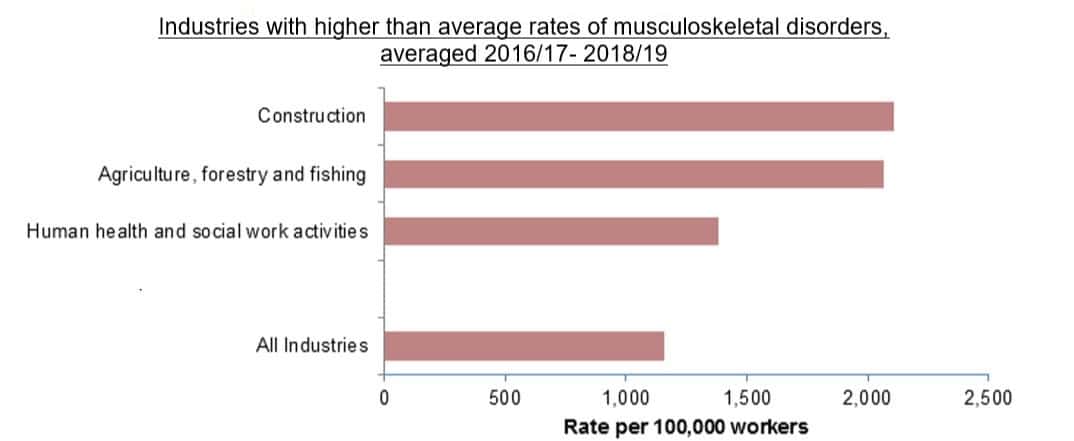
Approaching seven million workdays are lost in the UK due to Musculoskeletal Disorders every year with construction topping the naughty list. To combat this, The Health in Construction Leadership Group has set out its stall for 2020 with a plan to reduce musculoskeletal disorder in the sector. A specialist taskforce has been set up to look specifically at plasterboard ingress and this is to be chaired by FIS Technical Director Joe Cilia.
The Health in Construction Leadership Group (HCLG) was formed in 2014 after a challenge from the Health and Safety Executive’s (HSE) Construction Industry Advisory Committee (ConIAC) for the industry to do more to ‘Think Health’ and responding to the influence of ‘Construction 2025’, the Industry Strategy for Construction. The group is comprised of contractors, clients, HSE, professional bodies, trade associations and trade unions.
The taskforce is building on existing best practice guidance, but vitally also looking at the health and economic case for improvements in occupational health and how the supply chain can collaborate more effectively to understand the long term implications of poor sequencing and site lay-out and how designers can factor this thinking into their CDM responsibilities.
Work is being broken down into sections on Planning, Supply and Distribution, Delivery and Offloading, Storage, Vertical Movement, Horizontal Movement, Storage at Point of Installation, the Installation Operation itself, Storage of Off-cuts and Removal and Egress of Waste.
Joe Cilia stated “our aim is to develop a seminal report that will give us a roadmap to improve safety at each stage in the construction process, from procurement through to waste removal. In so doing we will reduce the risk of injury and improve productivity and working conditions for operatives on site. To achieve this we have brought together the supply chain and delivery teams to share best and good practice and make recommendations with health and economic outputs. Within this work it is vital that we consider not just the manual operations, but risks our decisions can create for others, ultimately how the wider construction operation and better sequencing and planning can reduce risk.”
Balfour Beatty, Chair HCLG MSD Task Group Occupational Health and Hygiene Specialist, Health team |HSES| Ian Strudley said ‘’more working days are lost in construction as a result of musculoskeletal disorders than any other single cause of ill-health. There is so much more that we could and should be doing to make sure that we keep people healthy in work and we better manage the consequence of any musculoskeletal ill-health that has been caused in and indeed out of the workplace. I am pleased to say that the Plasterboard Group has already done much to improve productivity and reduce ill-health from the movement and handling of plasterboard materials. These next steps looking at each stage of the construction process will help consolidate this effort to achieve further improvements in musculoskeletal health, and therein achieve additional risk reduction and greater productivity.”
Senior Policy Advisor, Health and Safety Executive Construction Health Team, Sue Brandrick said ‘’tackling work-related ill health is one of HSE’s priorities. There is particular focus on musculoskeletal disorders in sectors, like construction, where they are amongst the most common cause of sickness absence. This has a serious impact on the lives of sufferers, their families and the industry overall.
Working collaboratively and tackling the problem holistically is welcomed by HSE. This is a more effective approach compared to focusing on individual aspects in isolation. I am pleased to be working with HCLG in this area to reduce the health risks to construction workers from lifting, moving and handling large amounts of plasterboard”
FIS is calling for volunteers to support this group please email Joe Cilia to register your interest and find out more about the project (joecilia@thefis.org).
A proposed offer to industry stating what priorities CITB have identified in order to train and qualify the construction industry and how CITB levy will be collected for the next three years, 2021 to 2023, will be distributed in April 2020. This is not a vote to retain or close CITB, that decision is a lot more complicated and involves the Minister of State and Parliament. To ensure FIS members get a say in how much Levy CITB can collect from the construction industry you must ensure:
You complete your CITB Levy return on time.
You ensure you state you are a member of the Finishes and Interiors Sector at section 1A of the return.
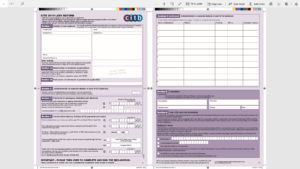
Here is an image of the 2019 Levy Return. The 2020 Levy Return will have the same details but, will be a different colour:
Further guidance will be available from mid-March 2020 when the CITB proposed offer (the priorities for construction and levy collection) will be distributed via multiple means e.g. roadshows, online, websites and news media. CITB will confirm to FIS the number of Levy paying employers and the value of their CITB Levy contribution. The final amount of levy to be collected will be confirmed in CITB’s final offer during June or early July 2020, once the proposed plans are approved.
In order to provide information so that members can make an informed decision, FIS will produce a position statement in June 2020. We will also be dealing directly with our Levy paying employer members and will have already been in regular contact with their Levy contact. When issuing the survey, we will send this directly to our Levy contacts and the CEO, as we will expect the CEO to be responding to the question on behalf of the company. We do however expect the Levy contact to ensure the CEO has all the relevant information to allow them and their Board to decide on how the organisation should respond to the question.
Although it is yet to be confirmed, FIS will distribute the CITB consensus survey when it is available. Your responses will be presented to the FIS Board in early to mid-September 2020. The final response must be sent to CITB before the end of September 2020. The Consensus Survey window will close on Wednesday 30 September 2020.
The two measures used to demonstrate consensus has been achieved using reasonable steps to consult will be:
More than 50% of levy payers.
PLUS
More than 50% of levy payable by employers that support the proposals (the value of what is to be collected)
Data from the 2017 Levy Consensus Results for Build UK:
Trade Associations
Levy Payable
FINAL TRADE ASSOCIATION TOTAL
26
£25,513,143
Yes
21
91%
£20,911,130
98.21%
No
2
9%
£381,218
1.79%
Abstains
2
N/A
£4,075,216
N/A
No Response
1
N/A
£145,580
N/A
Please remember to ensure you have an opportunity to vote:
You complete your CITB Levy return on time.
You ensure you state you are a member of the Finishes and Interiors Sector at section 1A of the return.