by Clair Mooney | 28 Apr, 2023 | Market data
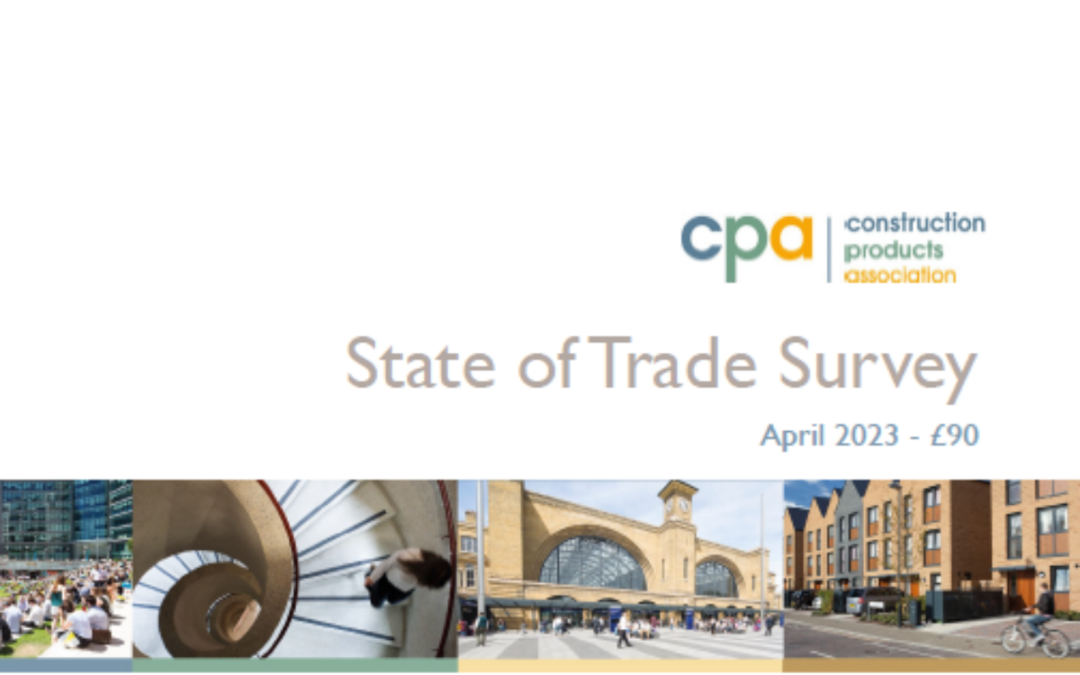
The Construction Products Association’s latest State of Trade Survey for 2023 Q1 highlighted the continued mix of fortunes in the construction product manufacturing industry. For a third consecutive quarter a fall in sales for heavy side producers contrasted with continued growth for manufacturers on the light side. Forward-looking sales expectations improved, however, but the strength of demand in construction remains the key concern for sales over the next 12 months.
The CPA State of Trade Survey reports the results of the Association’s quarterly survey of construction products manufacturers, providing a timely assessment of current and expected conditions in the sector.

by Clair Mooney | 28 Apr, 2023 | Skills
FIS approved training provider The Skills Centre is offering 40 free fully funded NVQs L2 Passive Fire Protection (OSAT).
To be eligible, the employees (trainee) residential address and CIS must be within non-devolved Council areas in England. If unsure we are happy to advise.
Funding will be offered on a first come, first served basis and priority will be given to FIS members. The employee must register before 31 May 2023.
If you are CITB registered and up to date with your levy you can also claim £600 on completion of the NVQ.
For more information, contact Marie Flinter on marieflinter@thefis.org or call 07799 903 103.

by Clair Mooney | 27 Apr, 2023 | Building Safety Act
Building Safety Act FAQ: Are Hotels, Hospitals and Student Accommodation regarded as Higher Risk Buildings according to the New Building Safety Act?
According to the Building Safety Act the definition of Higher Risk Building is:
“At least 18 metres in height or at least seven storeys and contains at least two residential units or is a hospital or care home.”
Care Homes, Hospitals and Student Accommodation are definitely within the scope. A recent consultation on definitions and scope described a residential unit as “a dwelling or any other unit of living accommodation” and gives the example of “a flat or rooms in a university hall of residence where amenities are shared”. It is clear therefore that student accommodation, meeting the height requirement, will be classed as a Higher Risk Building.
It is important to remember that for mixed use buildings the criteria covers ALL work in an in scope building, not just that in the residential parts of the building.
With respect to Hotels, the same consultation asked the question whether they should be drawn into scope and whilst the consultation response notes:
“Hotels and aparthotels were a particular concern with some respondents feeling they should be included within the scope of the new regime as people sleep overnight within hotels and may be unfamiliar with their surroundings in the event of a fire. There were concerns about the boundary between hotels and aparthotels and how and where this would be defined. A small number of respondents felt that apartment style hotels specifically should be included within scope on the reasoning that they are similar to residential buildings”
Government have used the following rationale to keep them out of scope of the definition of Higher Risk Buildings:
“We have, therefore, excluded hotels and other temporary leisure establishments, as well as secure residential institutions like prisons. In occupation these buildings are also already regulated by the Fire Safety Order, and generally, these buildings are staffed 24/7, have multiple routes of escape, signage and emergency lighting to assist evacuation and have a higher level of detection and alarm systems than residential buildings.”
This does not mean that the lanscape for hotels and other commercial buildings is not changing. The consultation response from Government (reaffirmed at the recent Building Safety Regulator’s Conferenece) states:
“All building work must meet building regulations requirements. Some elements of the new design and construction regime will also apply to all buildings. There will be dutyholder requirements on all those involved in the procurement, design and construction of buildings intended to proportionately address risks for all building work in the design and construction phase.”
So whilst this means Hotels may not need to go through the High Risker Building Gateways and be signed off directly by the Building Safety Regulator, the compliance environment will be more exacting moving forwards.
The Secretary of State can introduce new regulations in the future to define any other structure as a Higher-Risk Building if deemed appropriate.
For more information on the Higher Risk Building Process and an overview of the Building Safety Act, click here

by Clair Mooney | 27 Apr, 2023 | Health and Safety
Build UK’s Drug and Alcohol Policy can be adopted by the whole construction supply chain to provide a consistent approach to the use of drugs and alcohol. Recognising that there are different legal limits across the nations and workplace environments, along with various ways of testing, the Build UK template policy has been developed with Eurofins Workplace Drug Testing to provide a consistent framework for drug and alcohol testing as well as dealing with instances of misuse, eliminating unnecessary duplication and waste across the industry.
The policy is currently available to FIS Members through our membership of Build UK. Download your copy of the Drugs and Alcohol Policy here.

by Clair Mooney | 26 Apr, 2023 | Main News Feed
CITB is seeking views from the industry to help shape its future priorities and the support provided. This is your opportunity to voice what matters to you and the support you need. Submit your response by 18 May via the link below.
https://www.citb.co.uk/about-citb/what-we-do/plans-and-performance/strategic-plan/

by Clair Mooney | 26 Apr, 2023 | Membership
The FIS Contractors Awards showcase the very best of our industry and after months of project visits, we are excited to announce that our judges have determined their shortlist.
The FIS Contractors Awards aim to promote and encourage high levels of craftsmanship in the finishes and interiors sector. The standard of entries into this year’s Contractors Awards was extremely high, so congratulations to all companies that entered.
To see who made the shortlist click here
The winners in each category, along with the architect or interior designer of the winning project, will be announced in front of a packed audience at the FIS Awards Lunch on 8 June at the Royal Lancaster Hotel in London. The event is now sold out. If you would like to be added to the waiting list for tickets, email clairmooney@thefis.org

by Clair Mooney | 20 Apr, 2023 | Skills
A plan to support the net zero challenge and get young people into high-skilled, well-paid jobs has been launched today (20 April) by the Construction Leadership Council (CLC).
In its new Skills Plan, CLC highlights how much the construction and built environment industry has to offer society, while providing solutions to short and long-term challenges in England.
Construction is a major engine of the UK economy, employing 2.7million people and contributing 8% output to the economy.
But it also faces a major skills shortage, with the Construction Industry Training Board (CITB) estimating an extra 225,000 workers will be required across the UK from 2023 – 2027.
To tackle this shortage, while supporting net zero goals, CLC’s Skills Plan focuses on four main priorities: culture change, routes into construction and built environment, competence and future skills.
This includes meeting employers’ demand for skilled workers, training and retaining people, ensuring competency, expanding the career appeal of construction and built environment, while also training experienced workers to become teachers.
As part of the Skills Plan, CLC has developed a range of projects for 2023-24, including:
- The launch of a new competence approach to ensure there is an accepted, accredited definition of competence for all construction and built environment occupations.
- Expansion of the new entrant apprenticeship brokerage service and introducing a new apprenticeship mentoring standard to increase apprenticeship starts, continuation and completions.
- The launch of Phase 1 of the Career Pathway Hub, an online portal aimed at defining high value career pathways for net zero, digitalisation, smart construction and repair maintenance and improvement.
- A pilot scheme to give schoolchildren a chance to learn about a career in construction
Adrian Beckingham, CITB Strategy and Policy Director and Co-Chair of CLC People and Skills Network, said: “Construction will be at the forefront of arguably the biggest challenge – supporting the transition to net zero – which makes our industry a career of meaning and value.
At the same time, we have a pressing need to attract and support new entrants into the industry.
This new Skills Plan by CLC will tackle these challenges by creating opportunities to get young people into high-skilled, well-paid jobs, while encouraging workers to adopt modern, green skills across the globe.”
Nick Roberts, Chief Executive of Travis Perkins plc and Industry Sponsor of CLC People and Skills Network, said: “I’m looking forward to helping the whole of our industry support the CLC in the delivery of this plan.
“Partnering for skills is paramount. This means employers of all sizes investing in people, improving industry’s working culture and attracting new talent for future skills demand.”
To read the Skills Plan in full, click here.

by Clair Mooney | 20 Apr, 2023 | Main News Feed, Sustainability
In March 2023, RICS consultated on the revision of the RICS professional statement on whole life carbon. The deadline for the submission of comments was 18 April and FIS provided some feedback on the document on behalf of its members. The feedback was mainly focused around the need to provide further clarifications on technical aspects of the document, but also included a slight revision to the definition of fit-out projects. The feedback also included the request to amend the study period for a fit-out project and to clearly define the scope of the project as fit out projects – in line with the document that FIS published for its members in 2022 – here: https://www.thefis.org/knowledge-hub/sustainablility/sustainability-related-to-your-activities/net-zero/
The aim of the document is to provide a methodology to calculate the whole life carbon impact of buildings, projects and infrastructure. It is part of a wide range of industry initiatives around the need to measure the carbon emissions associated with not just the operation of buildings, but also the impact of their construction – related to the manufacturing, transport, installation and end of life of products.
The revised document includes more specific information related to a fit-out project, which makes it more relevant to FIS members.
by Clair Mooney | 11 Apr, 2023 | Health and Safety
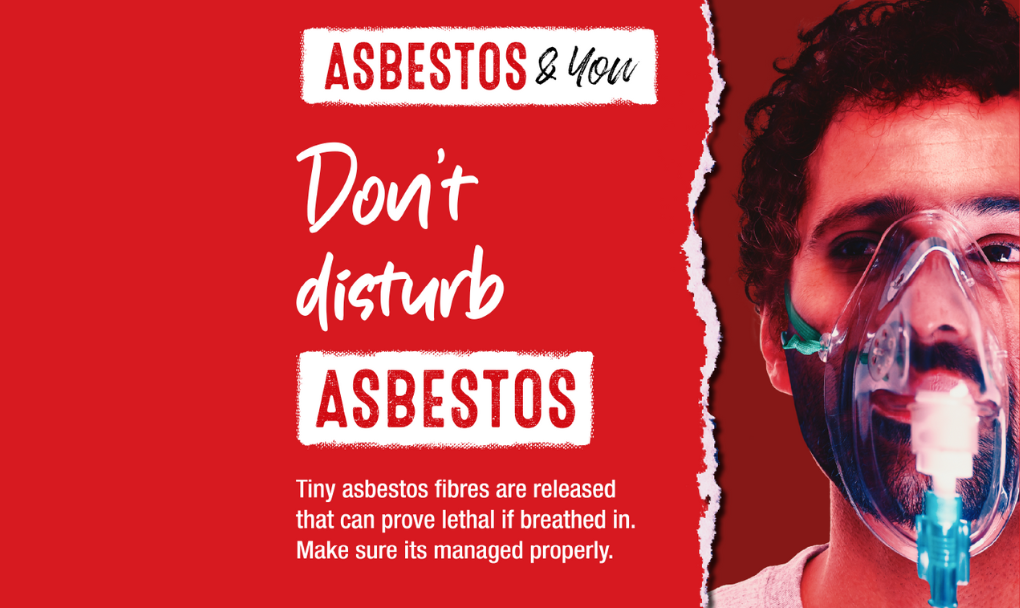
The warning comes as part of the Health and Safety Executive’s (HSE) Asbestos and You campaign targeting tradespeople about the personal risks from asbestos that still exist in properties across the country today.
Around five thousand people a year die from asbestos related illnesses and asbestos can still be found in buildings built or refurbished before the year 2000. But HSE is warning despite the ban on its use, many buildings still contain asbestos, and it is still a serious risk to anyone exposed to it at any age.
Tim Beaumont, HSE’s acting head of construction policy sector, said:
“Asbestos can be found in things like Artex, cement boards under eaves, garage roofs, old bath panels, boiler houses and fires and even mortar between bricks can contain asbestos.
“There is no known safe level of asbestos exposure but that’s not to say it can’t be managed safely.
“All tradespeople should make sure they know the basics about identifying asbestos. Before carrying out any construction work, there’s a legal requirement to identify whether asbestos is present and could be disturbed.
“Younger tradespeople need to know the dangers behind asbestos as it could affect them in later life like it is affecting older tradespeople now.”
Asbestos is only dangerous if not maintained in a safe condition or if physically disturbed without the right measures in place to control exposure to fibres.
Iain McIlwee, FIS chief executive, said:
“Providing information about managing asbestos for plasterers, dryliners, ceiling fixers and all other trades working on the interior system of a building, is as important today than it ever was.
“We welcome and support HSE’s campaign ‘Asbestos & You’ to highlight that despite being banned in the UK, asbestos has not gone away. For example, removing old plaster, spray coatings on walls and beams, partition walls, loose fill insulation, textured walls, and ceilings (Artex) are still commonly found in buildings today, often when dealing with refurbishment projects.”
From the 1950s until 1999, asbestos containing materials were used extensively in the construction and maintenance of buildings in Great Britain.
When materials that contain asbestos are disturbed or damaged, fibres are released into the air. If these fibres are inhaled, they can cause serious diseases such as mesothelioma, asbestos related lung cancer, asbestosis, and pleural thickening. These diseases will not affect you immediately as they often take a long time to develop, but once diagnosed, it is often too late to do anything.
It can take 20 to 30 years before symptoms appear. Symptoms include shortness of breath, persistent cough, wheezing, extreme tiredness, pain in your chest or shoulder and in more advanced cases, swollen fingertips.
If asbestos cannot be safely managed, it should be removed by a licensed asbestos contractor. Where present, asbestos should be closely managed by those responsible for the building.
Find out more about the Asbestos and You campaign, and visit HSE’s website for further guidance on asbestos.
by Clair Mooney | 6 Apr, 2023 | Material Shortages
Statement from John Newcomb, CEO of the Builders Merchants Federation and Peter Caplehorn, CEO of the Construction Products Association, co-chairs of the Construction Leadership Council’s Product Availability working group
A fairly upbeat picture emerged from this month’s meeting, helped by a better than expected forecast from the Office of Budget Responsibility with the UK predicted to avoid recession and inflation predicted to fall from 10% to 3% over the course of the year.
In line with this, construction activity in the first quarter has been higher than predicted in Q4 2022. While housebuilders do not anticipate 2023 sales will reach 2022 levels, consumer confidence is holding, aided by an easing of interest rates for 5 year fixed rate mortgages, and new build reservations and sales have improved against Q4 2022.
Despite higher than expected demand, there is good availability for the vast majority of building products. The one exception is plasterboard which is currently on allocation but with measures in place to increase capacity this is unlikely to be a long term issue.
Longer standing issues with bricks, blocks and boilers appear to be resolved. UK brickmakers have made significant investments in increased production, with the first new line coming on stream later this year adding over 185 million more bricks a year. Boiler volumes have also returned to normal levels, backlogs have been cleared and no further problems are foreseen.
The electro-technical sector continues to experience delays in the delivery of solar PV equipment and LED lighting which remain affected by the supply of semi-conductors.
Although wholesale gas prices are now falling, the price of energy intensive products such as bricks is unlikely to reflect this for some time as manufacturers hedged their gas prices last autumn. Manufacturers are also subject to other inflationary pressures including staffing and materials.
Timber prices, however, have now returned to around pre-Covid levels. We have also seen reductions for structural steel and rebar during the first quarter of 2023.
That said, price inflation remains the number one issue. While prices are not rising as quickly as they have been, they are still substantially higher than 18 months ago and profit margins are being squeezed. This is particularly concerning for SME builders and regional house-builders. There are also isolated reports of credit risk insurance being withdrawn, which we will continue to monitor.

by Clair Mooney | 5 Apr, 2023 | Membership
FIS and The Worshipful Company of Plaisterers have once again joined forces and are delighted to announce that entries are now open for the annual Training Awards, an award event which recognises excellence and achievement in the recruitment, training and development of people in the plastering and interior trades.
Following the huge success of the inaugural Training Awards in 2022, the second annual awards will once again showcase the very best of the sector’s occupations and the achievements of students and apprentices, supportive employers and mentors, colleges and training providers. Last year saw 11 award winners including Plastering Student of the Year Natasha Williams, Apprentice of the Year (Interior Trades) George Batchelor and training provider winners NPTC College and Craven College all recognised for their outstanding contributions to the sector.
The 2023 awards categories will acknowledge the students, mentors and training providers who have made an exceptional contribution to learning and development in the sector.
The 2023 award categories are:
- Student of the Year – Plaisterers’ Award for Plastering Trades
- Student of the Year – FIS Award for Interior Trades
- Apprentice of the Year – Plaisterers’ Award for Plastering Trades
- Apprentice of the Year – FIS Award for Interior Trades
- Colleges and Independent Training Providers (large)
- Colleges and Independent Training Providers (small)
- FIS Member Training Programme
- Mentors Award
- Lifetime Achievement Award
Trade-specific sponsored awards include the British Gypsum Trophy – which recognises the highest achievement in drylining skills education – and the Formula Trophy, for contributions to the development of skills and long-term future of Fibrous and GRG plasterwork.
Master Plaisterer Stephen Gilbert said: “The Plaisterers’ Company is really pleased to be continuing its partnership with FIS in recognising those within the industry who are going above and beyond their remit either as students, mentors or training providers; it bodes well for the industry.”
FIS President Philip Brown added: “We are delighted to once again recognise and reward the outstanding talent, both in students themselves but also training providers and the mentors that work so hard to help the students forge hugely successful and rewarding careers.”
Entry into the awards is now open and closes on 7 July. The winners will be announced at a gala ceremony at Plaisterers’ Hall on 21 November.
For more details on entering these awards visit www.thefis.org/training-awards-home/
For further information or for any questions please contact FIS at info@thefis.org or call 0121 707 0077 or The Worshipful Company of Plaisterers on clerk@plaistererslivery.co.uk or call 0207 7964333.
by Clair Mooney | 30 Mar, 2023 | Building Safety Act, Main News Feed
With colleagues from across the sector, FIS Chief Executive Iain McIlwee attended the first Building Safety Conference hosted last week by the Building Safety Regulator (and shared his reflections here).
This week we hear from colleagues at Build UK (of whom FIS is an active member) who have provided a summary of 10 lessons learnt which answers a number of the queries raised during Build UK member meetings.
Building Safety Conference – 10 Things We Learnt
- The Building Safety Regulator becomes operational on 1 April 2023.
- The new Building Safety Regime will apply to all buildings – “from Shed to Shard” in the words of the Building Safety Regulator.
- The terms ‘High-Rise Building’ and ‘High-Rise Residential Building’ are being used interchangeably with ‘Higher-Risk Building’, and the Building Safety Regulator has committed to work with Build UK to ensure consistent terminology is used across the industry.
- Existing Higher-Risk Buildings (with the exception of hospitals and care homes unless they have at least two permanent residential units) must be registered with the Building Safety Regulator by 1 October 2023. This includes those that will be occupied for the first time during the transition period between 6 April and 1 October 2023. From 1 October 2023, new Higher-Risk Buildings must be registered before they can be occupied.
- The building registration process will be a multiple-choice tick box format and require a completion certification for each building. The fee for registering each building will be £251.
- It is anticipated that those who fulfil the roles of Principal Designer and Principal Contractor under CDM will also fulfil these dutyholder roles under the Building Safety Act.
- The Building Safety Regulator will become the Building Control Authority for all Higher-Risk Buildings from 1 October 2023. Work can continue under an existing Building Control Body where a building/initial notice has been submitted or plans deposited by 1 October 2023 and work has commenced by 1 April 2024.
- Gateway Two, which requires Building Control Approval by the Building Safety Regulator before construction work can begin, and Gateway Three, which is when a completion certificate is issued by the Building Safety Regulator, are expected to come into force on 1 October 2023.
- The Building Safety Regulator will not be specifying the format for the Golden Thread of information, which is the digital record of what has been built to enable those responsible for Higher-Risk Buildings to manage and maintain them safely.
- The Industry Safety Steering Group (ISSG), chaired by Dame Judith Hackitt, will shortly be issuing its fourth report with an update on progress made by the industry.
BuildUK have developed an excellent simple introduction to the Building Safety Act which FIS Members can download for free here.

by Clair Mooney | 30 Mar, 2023 | Skills
Having interrogated the CITB Construction Skills Network data it’s estimated 266,000 people are employed in the construction occupations of the finishes and interiors sector. To sustain this there’s an Annual Recruitment Requirement of approximately 6052 people per year to 2027. As there are approximately 10,000 organisations working in the sector that’s 1.65 people per organisation, or if every FIS member took on one new entrant per year that would meet one tenth of the estimated requirement. The recent FIS Skills Pulse Survey shows 45.5% of respondents are currently experiencing labour shortages and do not feel there will be any improvement in recruitment for the next 12 months.
It’s certainly no longer feasible to think other bigger organisations with more resource will train enough people to go round. People poaching, the act of tempting or accepting newly qualified individuals away from the organisation that supported the training for a pound or so more, is rife within the finishes and interiors sector. Evidence shows people poaching contributes to a decline in the quality of workmanship as these individuals although qualified often do have the full range of experience needed by the sector and without the ‘safety net’ of the people who trained, coached and mentored them mistakes are inevitable.
Apprenticeships are the employers preferred training and qualification option for new entrants. As an indication here are the figures for two occupations in the sector 2022 to 2023, due to the duration of the training programmes successful achievements are not shown:
| Nation |
Route |
Registration Numbers |
| England |
Interior Systems Installer |
220 |
| Plasterer |
900 |
| Scotland |
Interior Systems |
81 |
| Plastering |
65 |
| Wales |
Interior Systems |
28 |
| Plastering |
121 |
| |
Total |
1415 |
This is approximately 80% of the estimated Annual Recruitment Rate for these two occupations reinforcing the drive needed by employers to ensure there will be enough competent people to complete work coming up through to 2027. If you have never taken on a apprentice there is a raft of free support available from recruitment to funding and the rewards for an organisation can be unlimited. To help decision making have a read of the FIS Apprentice – Guidance for Employers available to download here You will likely be surprised at the options and what is there, free of charge, to help employers.
The current business environment is making it more challenging to invest in the training and qualifications needed to ensure a future workforce for the sector, but if organisations don’t step up now what is it going to be like in the years ahead. Everyone knows investing in training can bring competitive advantages, helping businesses to retain and attract more workers and to ensure they have an upskilled workforce to win new work is a focus for FIS. With increased legislative demands for proof of competence at every occupational level the FIS Sector Guide to Competency Management Plans: https://www.thefis.org/skills-hub/competency/ can help organisations avoid falling foul of the law.
If you are still undecided and would like to talk through taking on a new entrant, general recruitment or upskilling your workforce give FIS a call on 0121 707 0077.

by Clair Mooney | 30 Mar, 2023 | Health and Safety, Skills
To help improve standards, CITB in consultation with the industry, has been developing two new online fire safety courses to help improve awareness of fire safety in the workplace. Specifically developed for people working in the construction industry the course aim to provide detailed information on how to keep safe at work.
Fire Safety Awareness in Construction and the Built Environment – is available now as a FREE eCourse:
- Suitable for workers of all levels and occupations
- Basic fire safety awareness in construction and the built environment
You can find out more here.
Fire Safety in Buildings – available in the summer:
- Course created in collaboration with Working Group 2 and Build UK and FIS
- Higher level than first course, providing industry a greater level of knowledge of fire safety in buildings, following the construction stage
- Focuses on key topics such as how legislation and regulations have changed since the Grenfell tragedy
by Clair Mooney | 29 Mar, 2023 | Main News Feed
The
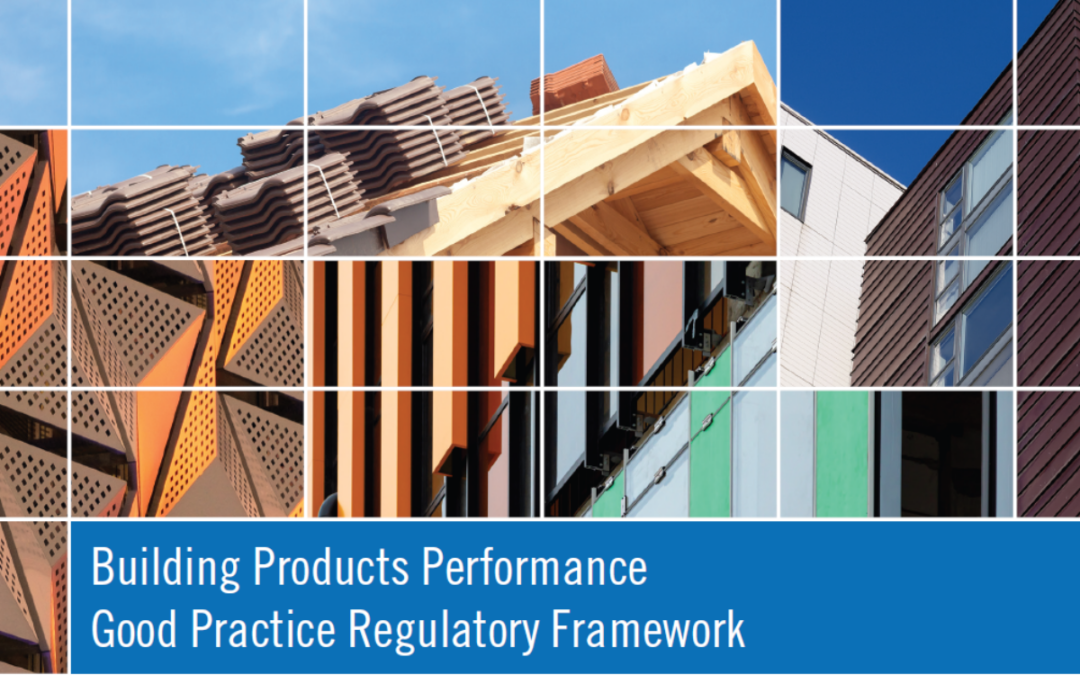
Building Product Performance Part 2 – Good Practice Regulatory Framework paper is now available. Developed by an International Building Quality Centre (IBQC) working group, this report incorporates elements from the
Building Product Performance Part 1 – Discussion Paper as well as the
Feedback Paper that summarised the comments and feedback on the Discussion Paper.

by Clair Mooney | 29 Mar, 2023 | Main News Feed
At the heart of our industry’s efforts to demonstrate a change in culture and practices is the Code for Construction Product Information. The Code was developed by the CPA and its members to help make product information clear, accurate, up-to-date, accessible and unambiguous. It will mark a step change for the industry by driving higher standards in construction product information management systems and assessing ethical leadership and culture standards. It also makes strong business sense as well, providing third-party verification and increased assurance to clients, customers, and insurers. Information about the Code – including FAQs, Practical Tips to Prepare, and the business case for your organisation – can be found on the CPA website here. Webinars are planned on the following dates:
If you have any questions prior to the webinar, please see the FAQs on the Code website: FAQ – Code for Construction Product Information or contact Rachel Philpott on enquiries@cpicode.org.uk

by Clair Mooney | 23 Mar, 2023 | Main News Feed, Skills
CITB’s latest Construction Skills Network report highlights that 224,900 workers will be required over the next five years to meet the demands of the construction industry. To help employers tackle the skills shortage of workers across the industry, and to address rising costs, CITB has made changes to its grants from April 2023.
The CITB Grants Scheme is available to all CITB-registered employers and provides financial support for employers who offer construction-specific training to their workforce. Below is an overview of the changes:
- Grant rates doubled for short courses. Employers can now receive up to £240 grant when an individual successfully completes a short course from 1st April 2023.
- Grant rates have been increased to support individuals impacted by the withdrawal of the Industry Accreditation card. Grant rates for specific supervision and management qualifications have increased to £1,250 and £1,500 for achievements from 1st April 2023.
- The grant application deadline has been extended to 52 weeks for all grant types.
You can find out more information on the CITB website at www.citb.co.uk/levy-grants-and-funding/grants-and-funding/what-s-new-in-the-grants-scheme

by Clair Mooney | 17 Mar, 2023 | Skills
This week Awarding body NOCN has confirmed that the Installation of Fire Resistant Walls and Linings Qualification will now be available as a Vocational Qualification within the Interior Systems Installers family of qualifications.
This qualification was previously included in the Passive Fire Protection vocational qualification and following a review involving discussions with FIS members and the FIS Skills Board, the organisation has worked with the Association of Specialist Fire Protection and CITB (who are responsible for Occupational Standards in the Construction Industry) to instigate this restructure. The qualification is now an option within the interior system family of qualifications and can be endorsed on the CSCS card, thus helping those working in Dry Lining prove competence in the Installation of fire resistant walls and linings.
The Awarding organisation NOCN has committed to administering the qualification which will be available via NOCN accredited centres: https://trainingcentre-search.nocn.org/ later this year. When the qualification is fully available FIS Approved Training Providers will be advised and members should be able to acquire this qualification with an FIS member discount. In addition CITB will pay the vocational qualification achievement grant of £600 to organisations in scope for the construction industry levy.
Speaking about the these changes, FIS Skills and Training Lead, George Swann stated:
“We appreciate that the qualification landscape can be quite confusing and it is vital that we apply the logic of the way people work to the way that the qualifications are structured. As new competency requirements come in to force aligned to the Building Safety Act, this qualification option will support FIS Members in demonstrating competence in a more onerous compliance environment.”
For information on new competency requirements in the Building Regulations and implementing a Competency Management Plan, click here

by Clair Mooney | 16 Mar, 2023 | Main News Feed
With his 4 E’s and a Growth Agenda, there was some welcome news in the Budget, not least that the UK is unlikely to enter recession this year. It is also great to finally see key trades in our sector, such as Plastering, Drylining and Carpentry and Joinery finally getting recognised as Shortage Occupations (we have been round the houses on this for the best part of three years now!). The support for investment, ongoing energy support and fuel duty announcements are also welcome, but the hard landing of Help to Buy is, perhaps, a little short sighted as it will almost certainly keep the brakes on for much needed building of homes. It will be interesting to see how much activity the investment zones generate and support investment in property across the UK.
As ever, Prof Noble Francis of the CPA has done an amazing job in summarising the key points for FIS Members. Members can access this here.

by Clair Mooney | 16 Mar, 2023 | Main News Feed
FIS has launched a revised Client Guide to Office Fit-Out and Refurbishment to promote best practice in the fit-out process and to take account of new working practices post-pandemic, the Building Safety Act and advances in sustainability.
First published in 2017, this updated guide is aimed at clients, contractors and architects involved in fit-out projects in a changing world. For clients, creating or adapting an office fit-out that can suit businesses in an environment where hybrid working has become the norm can prove daunting. The publication will guide them through the process from the initial decision as to whether to refurbiush an existing office or relocate and fit-out new premises, through to post-occupancy evaluation. It explains step-by-step the process, along with outlining the professional help available to help ensure a successful outcome.
The revised guide reflects the driving forces behind changes to office space design. In the first instance, it considers the responsibilities of a client and other implications of the Building Safety Act such as the interaction with ‘higher risk buildings’ (as defined in the legislation), and how to consider the impact in the early stages of planning a fit-out. It also reflects the evolution and rapid maturation of best practices and methods of measurement relating to sustainability.
Furthermore, the guide will take account of the digitisation of construction information combined with the increasing adoption of video conferencing technology and other post pandemic implications to ways of working that can mean significant changes to the way offices are designed.
Commenting on the launch of the this updated guide, FIS CEO Iain McIlwee said:
“The guide to office fit-out and refurbishment was developed in 2017 by FIS but since then we have seen many changes in the market including the passing of the Building Safety Act which places new emphasis on safety and digitisation of construction data to fulfil the golden thread of information.
“The updated and revised guide will consider these significant changes whilst at the same time assist clients with the task of fitting out or refurbishing their offices and to promote best practice in the fit-out process.”
The guide is freely available from the FIS website at https://www.thefis.org/membership-hub/publications/client-guide-to-fit-out/