The Government has introduced the Employment Rights Bill to Parliament, describing it as the “biggest upgrade to rights at work for a generation”. It contains 28 reforms which increase protection for workers, including:
‘Day one’ protections ‐ The existing two‐year qualifying period for protection against unfair dismissal will be removed and workers will be entitled to paternity, parental and bereavement leave from their first day on the job
Probation ‐ There will be a new statutory probation period for new hires
Flexible working ‐ Flexible working will become the default for all employees, unless an employer can prove it is unreasonable
Sick pay ‐ There will be a universal entitlement to Statutory Sick Pay from the first day of illness
Pregnancy protections ‐ Women will be protected from dismissal whilst pregnant, on maternity leave and within six months of returning to work
Zero‐hour contracts ‐ Workers will have the right to a guaranteed hours contract if they work regular hours over a defined period.
The Government has confirmed that further detail on many of the policies in the Bill will be provided through regulations, and in some cases codes of practice, after the Bill has received Royal Assent. The Government will begin consulting on these reforms in 2025, with the majority expected to come into force from autumn 2026.
CPA would like to invite you and your respective members to join the their webinar for the Construction Industry Forecasts – Autumn 2024 Edition. The webinar will cover the UK economy this year, the latest construction data, and the new construction forecasts for the key sectors, as well as highlighting key risks to the economy.
Hosted by CPA Economics Director Professor Noble Francis.
The event promises to deliver insightful analysis and valuable perspectives. Whether you’re involved in residential, commercial, or infrastructure projects, this webinar will provide essential information to help you navigate the challenges and opportunities ahead.
Want to attend?
This webinar is accessible to everyone, and you can register by clicking the link provided below.
The shortlist for the 2024 Training Awards has been determined by our panel of judges.
Celebrating excellence and achievement in plastering, interior trades and related professional occupations, the Training Awards are a collaboration between FIS and the Worshipful Company of Plaisterers.
These awards acknowledge the accomplishments of apprentices and students who have exceeded expectations, training delivery by colleges and training providers, mentors and others who have supported sector training, and lifetime contribution to sector training.
Apprentice of the Year – Plastering Shortlist
Paige Martin of Drywall Contracts
Newton Robinson of Andrew J Winner Plastering
Oliver Berwick of Decorative and Ornamental Plastering
Apprentice / Student of the Year – Interior Trades Shortlist
Shaun McKenna of Errigal Contracts
Jason Russell of Measom Dryline
Jacob Jack Milsom of Tapper Interiors
Student of the Year – Plastering Shortlist
Alicia Johnson studying at the City of Liverpool College
Ruby Hillary, studying at Coleg Llandrillo
Tyler Davies-Brown studying at The College Merthyr Tydfil
Professional Apprentice of the Year Shortlist
Michael Dillon of OCL London
Jake Jones of Measom Dryline
Ben Holden of OCL Facades
Training Provider / College of the Year Shortlist
Barnsley College
Carlisle College
Craven College
Llandrillo College Rhos on Sea
NPTC Group of Colleges
Shropshire Training Academy
Formula Trophy Shortlist
BCS Plaster Moulding
KLLangton Decorative Plasterwork
South Lanarkshire College
FIS Member Training Programme Shortlist
Locker and Riley
Optima Products
Zentia
Training Champion Shortlist
Kate Kerslake
Terry McDermott
Dan Plosky
Rising Star Shortlist
James Brennan
Craig Dyson
Edward Tapper
Congratulations to all the nominees for their hard work and dedication in pursuing their academic goals!
If you’re interested in attending the ceremony and joining us in celebrating the winners, book your place here.
The Finishes and Interiors Sector (FIS) has joined a coalition of leading construction and built environment organisations in signing an open letter to the Prime Minister, urging the Government to suspend proposed apprenticeship reforms that risk undermining skills,...
FIS has proudly become the first trade association in the UK to be awarded Gold Status by the Conflict Avoidance Coalition (CAC), marking a significant milestone in the organisation’s journey in encouraging a more collaborative and responsible approach to contracting....
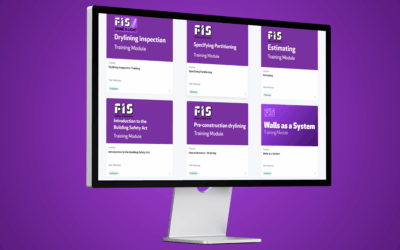
FIS has continued the expansion of its e-learning offering with the introduction of three new training courses. Tailored to meet the evolving needs of those working in the sector industry, these courses are a valuable resource for those working in the sector to...
Len Bunton, an unwavering pillar of support for countless FIS members, continues to bolster our contractual endeavors with unyielding dedication. Even as he marks his 80th birthday, his momentum is undiminished.
Let’s hear directly from the man himself:
My lifetime has been spent in the construction industry and I have been extremely fortunate to meet and work with so many brilliant people, whose friendship I have shared.
The commitment to a fairer construction industry continues. Being asked to Chair the Conflict Avoidance Coalition Steering Group has been huge honour, and again working with so many great people, with a shared vision.
The professional institutions deserve great credit for supporting this, but really the RICS support has been unstinting and incredible. Working with construction organisations has also been stimulating, and I particularly mention, the Finishes, and Interiors Sector. The force of nature, in CEO, Iain McIlwee has been an inspiration, as has the backup team of Michelle, Clare, Gregg and Joe.
The Conflict Avoidance Conference in London last week was a great success, and we need to build on that and Conflict Avoidance needs to be the “norm” and not the “exception”.
I have been blessed with so many great friends, with 4 wonderful children [now grown up] with lovely grandchildren and great grandchildren. Most of all an incredible wife Sheila. She has endured my working long hours, travelling away from home many times, but she has been the rock for our family, and my inspiration.
To our many clients, some of over 20 years, thank you for trusting us.
So, to those of you who are thinking – “at last he’s hanging up his foghorn”, rest assured I am not, and as long as I have my health, I will continue to fight for honesty, integrity, respect, and trust in our industry.
FIS are working with NCC Bircham Newton to deliver the Interior Systems Installer Apprenticeship – Ceilings pathway, early next year.
Interior System Installer (Ceilings and Partitions) Apprenticeship
The Interior Systems Apprenticeship (Ceilings and Partitions) has been developed by employers and approved by the Institute for Apprenticeships and Technical Education (IFATE). The Ceiling and Partitions pathway incorporates different ceiling and partition systems within a building.
Programme outline:
Start date: February 2025 – (dates are flexible)
24-month programme
9 x 2-week immersive training blocks delivery by industry experts
Workplace coaching sessions every 10 weeks support you and the apprentice to implement their new skills and knowledge
3-month end point assessment window includes a knowledge test and practical observation and questioning
National Construction College are also able to offer:
Meet (virtual or face to face) with members to discuss and shape the programme in greater detail
Set up a Webinar where NCC can share a virtual tour of Bircham and its facilities and answer any questions
Facilitate a site tour of Bircham in person to any members and/or potential apprentices
If you are interested in taking on apprentices in this subject, or would like to find out more, please get in touch withmarieflinter@thefis.org
A recent safety report from Collaborative Reporting for Safer Structures UK (CROSS) has highlighted a consideration for contractors around the design of moment connections in staircase stringers that have be under designed. Mandatory occurrence reporting procedures that are required under the building safety act in higher risk buildings demand that anyone on site report issues whenever and wherever we see them, and this could be crucial where a specialist sub-contractor has any interfacing works or is responsible for elements that conceal or clad these details.
Ensuring that all parties involved in the construction and design process are aware of their responsibilities is essential for maintaining safety standards. This includes conducting thorough inspections and collaborating closely with design engineers to verify that all moment connections are correctly specified and installed. It also emphasises the importance of continuous training and communication among team members to recognise and address potential risks before they escalate into safety hazards.
Moreover, the report underscores the value of fostering a culture of transparency and accountability, where every worker feels empowered to voice concerns without fear of repercussions. By doing so, the industry can work towards a safer built environment, minimising the likelihood of structural failures and ensuring the well-being of all building occupants.
In light of these findings, contractors and subcontractors should prioritise regular audits of design specifications and site practices, ensuring compliance with safety regulations and adapting to emerging challenges with agility and diligence
The government announce the introduction of tougher measures to tackle late payments to small businesses.
Secretary of State Minister Jonathan Reynolds has set down his commitment to:
foster a strong payment culture in the UK by bringing the payment performance and behaviour of large companies more clearly into focus.
The Minister confirmed intent to lay secondary legislation “in this parliamentary session” to make it a requirement for large companies to extend information requirements about their payment performance in their Annual Reports. Changes will include the additional requirement to report on value of invoices outstanding and, for construction firms, their practices, policies and performance with respect to retention clauses in any qualifying construction contracts with suppliers. The measures are intended to increase transparency around the payment practices of large businesses and bring them into focus for boards and investors.
The Minister also confirmed that Government will be launching a new supercharged Fair Payment Code to be overseen by the Small Business Commissioner (a voluntary code of best practice for companies committed to fair and fast payments that can be set as a procurement requirement). This will replace the existing Prompt Payment Code, with a clearer and more measurable set of ambitious commitments and will be a further lever to improve the UK’s business payment culture by shining a light on the best performers.
The Department for Business and Trade will also be launching a public consultation “within months” on additional legislative measures to address late payments and long payment terms to ensure improvements in payment times, especially for small businesses and the self-employed.
The Small Business Commissioner, Liz Barclay, said:
I am delighted to announce a new Fair Payment Code will be launched this autumn. The new code will reward businesses that treat their suppliers fairly and pay them quickly. It will also include an ambitious new Gold Award which aims to make 30-day payments the new standard for which businesses can aim.
We need sustainable, resilient businesses at all levels of the supply chains, to achieve the growth the economy needs. That means paying everyone from the largest supplier to the sole trader quicker, so they have the confidence to invest, improve productivity and grow. Fair payment terms and on time payments are the key.
Responding to the announcements FIS CEO, Iain McIlwee said:
The measures on reporting are welcome and mirror the work we supported with the last Government and recently wrote to the Construction Minister (Sarah Jones) to ensure that they did not get lost in the change. The reality is that better measurement will help to isolate the problem, but further consultation and action is required to solve it. We can’t wait for the data to tell us what we already know. The problems the Minister is looking to address are hiding in plain sight.- we only need to look to the spate of recent insolvencies and particularly the devastation caused by the failure of ISG to see the ultimate impact.
We also welcome the changes to the Prompt Payment Code. FIS has worked closely with Liz Barclay and found her to be a powerful advocate for the SME and we will be doing all we can to support Liz in this work and ensuring that the Prompt Payment Code is front and centre on all Public Sector Jobs and principals starts to resonate with Responsible Clients in the private sector too.
FIS will be drawing on the Manifesto already issued to the Construction Minister as the mainstay of our response. Key recommendations included in this document are:
NEAR TERM LEVERS (which have been addressed in above):
More robust enforcement of the duty to report legislation: Improvements to the Payment Practices and Performance (Amendment) Regulations announced in Autumn 2023 are positive, but
need to be backed by effective enforcement. To date there has been no enforcement of the duty to report, and the Prompt Payment Code has not been backed with sufficient resources to deliver the intended changes. The Office of the Small Business Commissioner needs more authority and resource to support effective enforcement.
LONGER TERM LEVERS Reform of the Construction Act is required
The process surrounding application, due dates and pay less notices needs to be simplified to ensure that they cannot be abused. Drawing on international comparisons, the Irish Construction Contracts Act provides for a 30-day payment period from the date at which the payment claim is submitted. This is far simpler than the ‘due date’ referenced in the UK Construction Act, which relies on supplementary information in the contract that can be distorted. There is also less room within the Irish legislation to extend payment terms in a subcontract agreement.
The Construction Act should be amended to ensure retentions are automatically released at the defined date. They should not require additional applications from contractors or relate to dates that are not explicitly related to the completion of their works.
Equally, retention money should be held in trust; it cannot be forgotten that Carillion wiped out £700m of retentions held against the supply chain. Consideration should be given to replicating the recent developments in New Zealand where it has been legislated that retentions are held in trust.
Where Collateral Warranties are held, retentions should be immediately and automatically returned.
The process and cost of adjudication also needs to be considered. Costs will be eased by greater clarity in the Act on payments and better use of standard contracts. Adjudication decisions should be binding to
help avoid costly legal costs/
Make interest on late payment compulsary New EU regulations require compulsory interest payments to be automatically applied to late payment and accrued until payment of the debt. This makes non payment a liability as opposed to an enforcement right that an embattled supply chain is disinclined to impose.
If you have any views on payment reform that you feel should be reflected in FIS Lobbying work, please email iainmcilwee@thefis.org
This year’s SkillBuild Final event is taking place at the Marshall Arena, Milton Keynes on 20 -21 November 2024.
Alongside observing the competition, visitors will have the opportunity to have a go at a range of inspiring activities that highlight the construction trades at our designated careers experience hub, the Construction Showcase, open on Wednesday 20 November 2024 from 09.00 to 16.00 and Thursday 21 November 2024 from 09:00 to 15:00.
The SkillBuild National Final consists of 10 trades including Bricklaying, Carpentry, Drylining, Furniture and Cabinet Making, Joinery, Painting and Decorating, Plastering, Roof Slating and Tiling, Stonemasonry, and Wall and Floor Tiling. Visitors will be able to watch our top scoring competitors battle it out against each other to be crowned the winner in their trade and the best in the UK. The competition is a wonder to watch as the project builds progress and construction trades come to life. Blank canvases turn into pieces of art, timber is constructed into furniture from the intricate projects that our expert panel of judges has created for our competitors.
The Construction Showcase – Wednesday 20th from 09.00 to 16.00 and Thursday 21st November from 09.00 to 15.00
FIS will be having a stand as part of theThe Construction Showcase. This is an experience hub filled with have-a-go activities and demonstrations for children and young people from some of our sponsors and affiliates. If you are able to support with ‘have a go’ activities, please do get in touch with beenanana@thefis.org by Friday 25 October
On 26 October 2024, the Worker Protection Act will come into force, which puts a new duty on employers to take “reasonable steps” to prevent sexual harassment at work. The new responsibilities mark a shift towards a proactive, preventative approach . To help members get prepared, FIS Associate Member Citation has put together a brand-new legal update going into detail about everything you need to know.
We’ve put together a detailed guide to the new rules outlining the steps you can take to proactively prevent harassment in your business which you can access here.
What is the new duty? Sexual harassment is defined in the Equality Act as “unwanted conduct of a sexual nature that has the purpose or effect of violating an individual’s dignity, or creating an intimidating, hostile, degrading, humiliating or offensive environment for the victim”
Employers are vicariously liable for acts of harassment carried out by their employees, even if they were unaware of these acts and would not have approved of them, unless they can show that they took “all reasonable steps” to prevent the harassment occurring.
Under the new rules, employers have a new, proactive duty to take ‘reasonable’ steps to prevent sexual harassment occurring. It’s intended to focus employers on putting measures in place to minimise the risks of incidents of sexual harassment arising in the first place.
How will a breach of the duty be enforced? There are two ways action can be taken if you breach your duty:
Employment tribunal proceedings and
Enforcement by the Equality and Human Rights Commission (EHRC)
Employment tribunal proceedings Workers can’t bring a stand-alone tribunal claim for breach of this new duty. But if they bring a successful claim which involved sexual harassment to any extent, the tribunal has to consider whether the employer failed to take ‘reasonable steps’ to prevent the sexual harassment occurring.
If so, the tribunal can increase the compensation awarded by up to 25%. For example, if an employee is awarded £50,000 in compensation for sexual harassment they suffered at work and the tribunal felt that the employer had not taken reasonable steps to prevent this happening, they could increase the award by 25%, bringing the total compensation awarded to £62,500. The size of the uplift will depend on the extent to which the tribunal believes the employer breached their duty to take preventative steps.
Enforcement by the EHRC The EHRC is Britain’s independent equality and human rights regulator. The Equality Act gives the EHRC enforcement powers such as:
The power to conduct investigations.
The power to issue an unlawful act notice if an investigation finds an employer to be in breach of their obligations. The employer would then need to prepare an action plan setting out how they’ll remedy the breach and stop it happening again.
The power to make action plans or enter into legally binding agreements with the employer to prevent future breaches.
The power to apply for injunctions against a person in breach of their duties.
Unlike employment tribunals, the EHRC can take stand-alone action for a breach of the new duty – so even if no acts of sexual harassment have happened, they could take action against you for not taking reasonable steps to prevent it.
Does the new obligation cover acts by third parties? The Equality Act originally included provisions making employers liable in certain circumstances for acts of harassment by third parties, but these were repealed in 2013.
The notes to the Worker Protection Act make it clear that the new rules don’t give workers the right to bring a tribunal claim under the Equality Act against their employer for sexual harassment by third parties. However, the EHRC updated their guidance to employers on preventing sexual harassment on 26 September 2024 and made it clear that they would consider a failure to take reasonable steps to prevent sexual harassment by third parties to be a breach of the new duty for which they could take enforcement action. So, you should make sure that harassment by third parties is covered in your policies and procedures.
How should employers approach preventing sexual harassment in the workplace? The EHRC guidance makes it clear that to comply with the new duty to take reasonable steps to prevent sexual harassment, you need to anticipate scenarios where your workers could be subject to sexual harassment and take action to prevent it.
Carrying out a risk assessment will be key to proving that you’ve complied with this new duty. Your risk assessment should:
Assess the risk of workers being exposed to sexual harassment (including by third parties) and
Outline what steps you can take to minimise those risks
The EHRC also recommends that employers consult with employee representatives about the measures they plan to put in place.
10 steps which can help prevent sexual harassment in your business
Carry out a risk assessment
Have the right policies in place
Ensure your policies are available to all workers
Train all workers
Train managers
Have clear reporting channels for formal and informal complaints
Respond to complaints appropriately
Monitor trends
Review and evaluate the effectiveness of your policies on an ongoing basis
Communicate your strategy for prevention, for example publish your completed action plan.