0121 707 0077

Industry and Government unite to launch Construction Talent Retention Scheme

Industry and Government unite to launch Construction Talent Retention Scheme

The Government has moved to secure vital talent needed to build the UK’s recovery from Covid-19, protecting employment for thousands of people working in the construction sector.

  • Construction Talent Retention Scheme will keep skills in the sector, matching displaced workers with employers seeking new staff
  • Scheme is based on proven model to safeguard talent in the aerospace and automotive sectors
  • Supported by the Construction Leadership Council (CLC) and all leading sector trade bodies

The Chancellor of the Exchequer, Rishi Sunak, today (8 July) announced the launch of the Construction Talent Retention Scheme, a partnership between the Government and industry to secure essential talent in the UK construction sector.

The Construction Talent Retention Scheme, to formally launch later this month, will be an online portal that supports redeployment of staff at risk of redundancy across the sector, while also enabling temporary employee loans between businesses. The Scheme give displaced  workers from other sectors a route to find new employment in construction.

Construction Leadership Council (CLC) co-chair Andy Mitchell added: “This is a great example of what we can achieve when we work collaboratively with Government and we look forward to continuing in this spirit when the proposals and recommendations of our broader Roadmap to Recovery are published. In the meantime we will work with our members and industry stakeholders to encourage the scheme’s use and success.”

Association for Consultancy & Engineering (ACE) chief executive Hannah Vickers said: “This is a proven solution with a strong track-record in other sectors, cross-industry support and pledges from our leading employers. It is vital we keep the skills in our sector to avoid a talent drain and is the only way we will be able to ramp-up activity to lead the recovery of the wider economy and deliver growth through new buildings and infrastructure.”

Group chief executive of Mace, and skills workstream lead at the Construction Leadership Council, Mark Reynolds, said: “The CLC’s Construction Talent Retention Scheme will offer a critical lifeline for the construction industry, it will help the industry retain and share our exceptional talent needed to deliver vital infrastructure and support the country’s recovery plan. The scheme is a great example of Government and industry collaboration during these challenging times for the construction sector. We are delighted to support the initiative as a real solution to protecting employment for thousands in our industry, continuing to build a better future.”

The not-for-profit programme now has funding secured until the end of the financial year, providing a free online platform for any organisation looking to hire, while ensuring that candidates’ skills and experience are given a prominent platform within the industry.

Businesses can register their interest in the scheme at: www.trs-system.co.uk/construction

Finishes and Interiors Sector CEO, Iain McIlwee added a note of thanks to the group who have pulled this together “Construction is one of the most people intensive business, but the erratic nature of the industry, poor planning and communication means that our talent funnel leaks.  The underlying message from the CLC and behind this initiative is that people are at the heart of our industry and we must do all we can to retain the best of us to lead the industry forward.  The challenge for any one business in an uncertain environment is how we flex and adapt as businesses around project and location.  If we don’t start to work more effectively as a wider ecosystem to balance this then we continue to lurch from skills crisis to skills crisis and we will fail to get to the nub of the competency and emerging productivity challenge that we currently face.  We look forward to learning more and working with our members and the wider sector to ensure that this platform works for the people and businesses in our sector.”

Quality in Construction – Free online course supported by FIS

Quality in Construction – Free online course supported by FIS

Free Online course where you learn how to foster a culture of quality in construction with the CIOB.

Poor quality builds have a detrimental impact on the construction industry. On this course, you will tackle this problem with professional research and insight into the delivery of quality construction and development projects.

You will look at the current issues faced by the construction industry and how quality management has developed in construction and elsewhere. You will also address some basic practical steps that can be made to ensure construction quality. Upon completion of the course, you will become more confident at instilling a culture of quality on all your construction projects.

FIS Technical Director, Joe Cilia is one of the contributors:

“It was great to support the CIOB in the development of this course.  The FIS PPP Quality Framework is central to all we do and it is great to get this opportunity to share it with the professionals from across the sector and promote these values more widely.”

Joe Cilia

For construction professionals requiring a more in-depth look at the topic and the practical tools and techniques to achieve quality, our 2 day course on Construction Quality Management is the perfect solution.

Here are the answers to some of the most commonly asked questions about this course:

  • The course takes place 100% online over a period of 3 weeks. New content is released on a weekly basis, and those who sign up should expect to make a commitment of 2 hours per week.
  •  There are no live sessions; we will not expect you to be online at any specific times over the duration of the course.
  • If you require a Certificate of Achievement, please select the option to upgrade your enrolment for a fee of £42. Your certificate will be delivered at the end of the course. Those who don’t require proof of their studies can enjoy full access to the course free of charge.
  • The course will be open all the time from the 6th July 2020. To join, please click here to be redirected to the Future Learn online platform. This is where the course will be delivered, and it’s also the place where many more FAQs are answered.

By the end of the course, you will be able to:

  • Identify the impacts of poor quality in construction
  • Explain and define quality in construction
  • Summarise the history of quality management in various industries
  • Discuss relevant legislation, regulations and standards
  • Explain the principles of embedding a culture of quality in construction
  • Investigate quality management methods and systems

Curriculum

  • Defining quality in construction and its importance to those who build and interact with buildings and infrastructure
  • The social, economic and human costs associated with poor quality
  • A history of quality management in construction and other industries
  • The role and importance of training and education
  • Legal and regulatory environment for quality management
  • Putting quality into practice; methods, processes and systems
  • Changing an organisation to instil a culture of quality in construction

For construction professionals requiring a more in-depth look at the topic and the practical tools and techniques to achieve quality, our 2 day course on Construction Quality Management is the perfect solution.

Leaders

Martin McCabe MCIOB, C. Build E MCABE, CMIOSH, QTLS

Martin applies his years of experience in construction to create training that leads to real change. Chartered as a Construction Manager, Building Engineer and Health & Safety Practitioner, Martin has worked in a diverse range of roles across the industry and designed courses delivered around the world. He sits on the Chartered Institute of Building’s Education, Standards and Qualifications Committee and provides Quality Assurance for the CIOB and other awarding organisations. He consults in a variety of industry roles offering advice on Project Management, Health & Safety and Temporary Works. He has designed and run training programmes at the Royal School of Military Engineering. In 2017 Martin consulted on the lifting operations at London’s Natural History Museum for the blue whale main exhibit. Martin aims to facilitate learning that is relevant to each course delegate, so that the theory can be put into practice in the real world.

Scottish First Minister tells us to keep our distance

Scottish First Minister tells us to keep our distance

Today the Scottish First Minister (SFM) published the findings of a review by the COVID-19 Advisory Group on the 2 metre physical distancing rule. Their advice makes clear that the fundamental science around distance and transmission remains unchanged and that risk increases with proximity to an infected individual.

‘The risk of transmission will be increased if the physical distancing recommendation is reduced to 1 metre from 2 metres. This is not only because of the increased risk of direct transmission from respiratory secretions, but also because of increased surface contamination that would occur in indoor environments with higher occupancy.’

However in her update the SFM recognised that there is also a need to take into account the four harms as set out in our Framework for Decision Making. The framework made clear that, after the necessary condition of suppressing the virus has been met, decisions can be taken which seek to minimise overall harm viewed across health, the economy and broader society. What this means is that policy decisions are required that balance any increased transmission risk from changing the 2 metre requirement, given the current status of the epidemic, with the reduction in other harms that would stem from such a change to the 2 metre requirement.

‘In balancing these considerations, a value judgement must be taken as to whether reducing the physical distancing to 1 metre is a tolerable risk. If this is a policy decision, it must be accompanied by clear guidance on spacing in any indoor environment, emphasis on surface cleaning, hand hygiene and cough etiquette. Messaging must be clear that the virus is still present and a continued threat.’

In Scotland’s route map through and out of the crisis: Update on approach to physical distancing in light of advice from the Scottish Government COVID-19 Advisory Group, Published on 2 July 2020 the SFM sets out plans for exemptions and appropriate mitigations in certain sectors as Scotland moves to Phase 3 of the National Routemap (at present these do not include construction and will not impact on Construction Scotland’s Site operating procedures or additional guidance produced by the CICV Forum in Scotland).

Additional Downloads:

Advice Commissioned by the First Minister and Chief Medical Officer on Physical Distancing 2 July 2020

Advice Commissioned by the First Minister and Chief Medical Officer on Superspreading 2 July 2020

Update on Application of Building Regulations to Adaptations in Scotland

An update was also published yesterday from from Stephen Garvin, Head of Building Standards Division, on the Application of Building Regulations to Adaptations.

Letter re application of building regulations to adaptations, 30 June 2020

Advice note re application of building regulations to adaptations, 30 June 2020

FAQs re application of building regulations to adaptations, 30 June 2020


Over 40% of construction companies in parts of the UK expecting “Significant Financial Difficulties”

Over 40% of construction companies in parts of the UK expecting “Significant Financial Difficulties”

Build UK has been working with Constructionline to measure the impact of coronavirus on the industry, and have published the results in a new infographic based on data submitted from almost 8,000 suppliers.

The infographic provides some encouraging news with respect to the impact of the CLC’s work on Site Operating Procedures with 99% of respondents making use of this document.  The numbers related to whether companies are expecting significant financial difficulties ahead are concerning with 29% of companies in England, 42% in Scotland, 32% in Wales and 47% in Northern Ireland . 

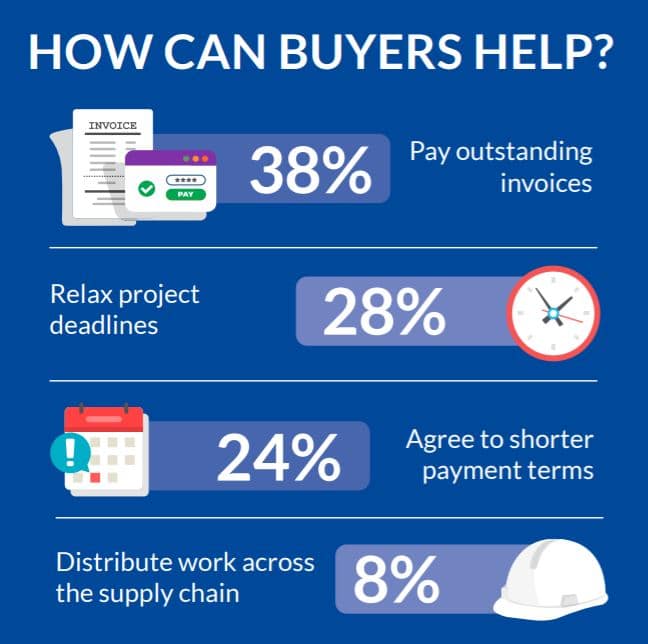
The Biggest challenges highlighted was continuity of work, however, the survey points also to the significant challenge the industry has in terms of productivity.  The three main things that would help suppliers are outstanding invoices to be paid (38%), a relaxation of project deadlines (28%), and shorter payment terms (24%).

Download the Constructionline-Build-UK Infographic here

Have your say on CITB announcement

Have your say on CITB announcement

Effectively CITB made three significant announcements today:

Your levy liability contribution is going to reduce

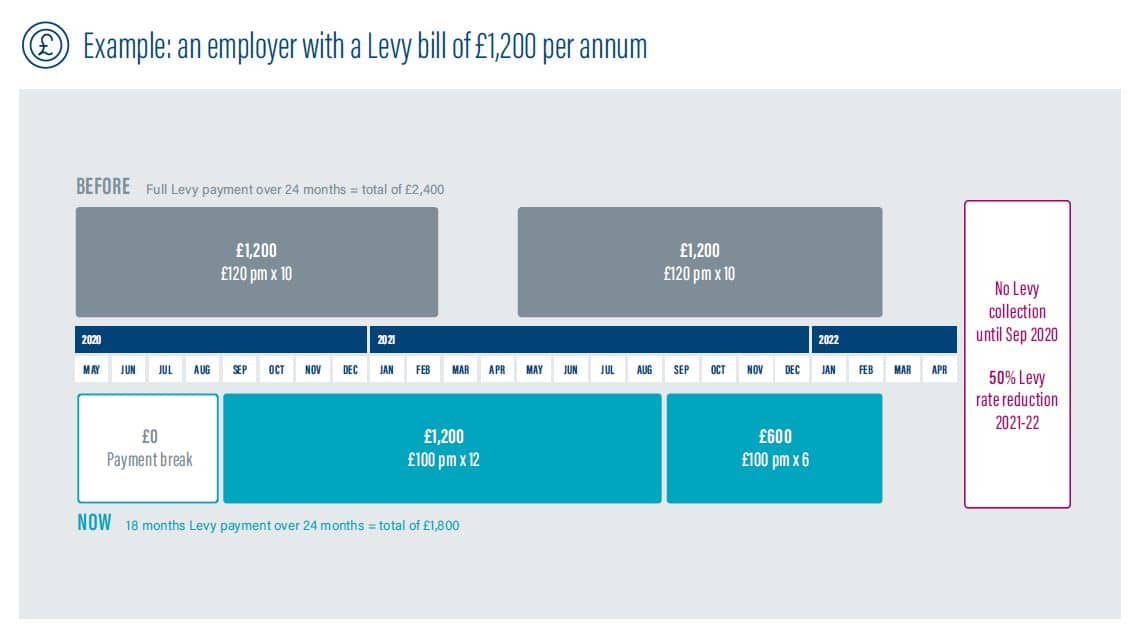
The CITB are cognisant of cash-flow challenges that industry faces, but by law they must collect the Levy.  The workaround is that they will continue the “Levy Holiday” until September (so you have nothing to pay until then).  In August you will get your full Levy Bill for 20/21 (remember the CITB tax year is April), but you will have a choice to pay up-front or over a 12 month period to August 2021.

Next year’s Levy bills (21/22) will be delayed and cut by 50%. This bill can also be paid in one go, or spread over 6 months, September 2021 – February 2022.

This means an overall Levy cut of 25% across two years. 

 It is anticipated that levy collection will then return to ‘normal’ rates and collection periods from March 2022, but this will be dependent on Government’s decisions around the Levy Order and feedback to CITB from the industry.

You will not get a consensus vote this year

In such an uncertain backdrop with so much in the air, CITB are responding to feedback that their focus needs to be on helping the industry meet the challenges posed by COVID.  The decision has therefore been taken to suspend the consensus process (that was due to run this summer), this has been agreed with the Department for Education.

To ensure CITB are in tune with industry needs they have been engaging with employers and industry groups to gather views on their plans going forward.  We are told this process will continue over the summer, when CITB will be seeking the industry’s views on a skills strategy for 2021-23 and the Levy required to fund it. New Levy Proposals will then be put to the Department for Education to enable it to present a new Levy Order to Parliament.

CITB have published a new Business Plan

This CITB Skills Stability Plan 2020-21 is effectively the CITB business plan for the current financial year (to March 2021). It outlines how, they intend to support construction with the skills it needs, including assistance to recover from the COVID-19 crisis. Emphasis is on reducing the financial call on employers, supporting apprenticeships and direct funding for employers’ skills needs through the Grants scheme and the Skills and Training Funds.  In the plan you can see the range financial commitments.  CITB is working on the assumption that the effect of the above levy cuts will see levy income fall by £166 million over the two-year period (this is a little over 40% of the roughly £400 million previously forecast).   Internal costs and expenditure have been reduced and these will be cut further.   CITB currently has around half of its employees furloughed.

Have your say

During the last consensus process FIS was one of the two organisations that did not support the levy proposals during the last round of consensus.  Without a formal consensus process, we need to ensure that CITB delivers for our sector and that your views are reflected in our ongoing discussions surrounding this with CITB, the Construction Leadership Council (CLC) and Government.

At this stage we would like to gather your initial views via this simple and short survey here.  The proposals will be looked at in more detail by the FIS Skills Board.  If you are interested in getting involved, find out more about the work of the FIS Skills Board here.

What next for the Construction Products Regulations?

What next for the Construction Products Regulations?

The Construction Products Regulation lays down EU-wide rules for marketing construction products.  The European Commission has opened a formal review to includes:

  • addressing the issues identified in the 2019 evaluation
  • improving how the single market for construction products functions.

The aim is to unlock the sector’s growth and jobs potential, promote environmental goals as part of the Green Deal and Circular Economy Action Plan, and possibly promote product safety.

While the UK is currently in the Transition Period which ends on 31st December 2020, we are obliged to follow EU legislation being passed. Even after the end of the Transition Period, the UK will more than likely continue to use the CPR as the governing legislation for the placing of construction products on the UK and EU markets.  It should also be remembered that this consultation is against a backdrop that MHCLG made clear its intention to review the current test and evidence methodology for construction products, possibly using a parallel system to the Construction Products Regulation, but independent and UK limited through the Construction Products Standards Committee.

As it stands, FIS will be responding to this consultation through the Construction Products Association and Construction Products Europe.

To support an informed consultation, The European Commission has issued invitations to two online Q&A sessions on:

A summary of concerns with the current iteration of the Construction Products Regulations are provided below:

Summary of the current CPR problem areas

This document provides an overview of the numerous problems surrounding the CPR and hopefully sheds some light on the issues concerned. It does not cover possible solutions at this stage.

  1. The current CPR acquis

By the CPR acquis we mean published and cited hENs, cited European Assessment Documents (EADs) and delegated and implemented acts published in the OJEU.

Within these documents, formal contradictions to the CPR exist and, therefore, they do not meet the current legal framework. According to the numerous European Court of Justice (ECJ) rulings e.g. James Elliott case, the European Commission is responsible for the correct content of the hENs.

The CPR acquis should be in line with the CPR itself (both the current Regulation and any future revision). The current CPR acquis must continue to be available as the basis for the European single market for construction products. Withdrawing most of the hENs is not viable as it would destroy the existing single market.

2. Backlog of blocked standards

According to the Commission, the vast majority of revised and newly developed hENs have been refused citation because they “formally contradict the CPR or they do not comply with the respective Mandate”. Behind this is the series of rulings by the ECJ making the Commission legally responsible for the content of hENs. This has brought to a standstill the technical progression of standard writing.

It is a necessity that the CPR acquis adapts to enable technical progression of hENs under the existing CPR and any future revision of the Regulation. It is imperative that the existing backlog of citations be successfully overcome ASAP, while still ensuring the hENS remain in line with the CPR.

  1. Adaptation to technical and regulatory progress

Although a hEN may be regarded as being exhaustive today, as national and European regulations adapt to meet market demands, gaps could well appear in the future. Thus, a procedure is required to adapt hENs to accommodate technical and regulatory progress without creating new barriers to trade. These changes to regulatory requirements need to be covered by harmonised technical specifications in a reasonably short time frame.

  1. Exhaustiveness and gaps in hENs

Member States have complained that the essential characteristics within a hEN do not always exist enabling compliance with national provisions. Current ECJ rulings prohibit Member States plugging these gaps with supplementary national provisions as this would be against the basic presumption of exhaustiveness.

Member States and the Commission expect hENs to contain all the relevant essential characteristics so that no gaps exist. Similarly, industry expects the hENs to have all the necessary information for the single market to function without any additional national requirements.

  1. Empowerment of the Commission for correcting errors in harmonised technical specifications.

CEN has been criticised by the Commission for submitting hENs for citation which do not meet the requirements of the respective Mandate or that they contradict the CPR. The Commission goes on to state that it does not have the power to correct such errors and, therefore, the backlog of standards for citation continues to rise.

It is imperative that hENs comply with their respective Mandate/Standardisation Request and the principles of the CPR. Practical procedures must be developed to correct these identified errors, however, the Commission wants to be able to act by itself and not depend on CEN.

While CEN/TCs do not deliberately submit standards that are not compliant with the mandate or the CPR, the remedy for this problem should entail complete and detailed Mandates/Standisation Requests as well as having binding criteria and corresponding guidance for the drafting of hENs.

  1. Product compliance with National requirements

The CE marking and DoP are not directly linked to the requirements in a certain Member State which gives rise to complaints from industry professionals about the difficulties they have to assess whether they can install a specific CE marked construction product in a building of a specific Member State.

Users of CE marked construction products expect clear and simple information enabling them to decide whether the declared performance complies with the general requirements for its use in a certain country.

With future CE/DoP information becoming available in a structured digital format it is possible to develop compliance tools to automatically compare this information with national requirements in different Member States.

  1. Implementation of BRCW7+

Basic requirements for construction works (BRCW) are defined in Annex I of the CPR. There are three BRCWs which contain life-cycle / environmental impact / sustainability relevant requirements: BRCWs 3, 6 and 7. Collectively these are known as BRCW7+.

There is an increasing need for the inclusion of life cycle information with harmonised technical specifications. However, BRCW7+ has not yet been implemented in Mandates/Standardisation Requests so harmonised life cycle product information remains non-harmonised.

The alignment of EN 15804 with the PEF methodology has not yet been taken by the Commission as the final decision about assessment according to EN 15804 Amendment 2 and its integration into the CPR or whether PEF construction products need to be developed for this purpose.

  1. Transitional arrangements

The Commission has estimated that it will take up to 10 years to revise the CPR and to adjust the CPR acquis. This is far too lengthy a period.

During this period it requires that technical progress continues and, therefore, it must be possible to revise/adapt hENs in the meantime.

The current backlog in the citation of hENS must be remedied ASAP so that they can be used under the current CPR.

  1. Market surveillance

As currently operated by National Authorities, this is not satisfactory. The resources needed are not available, consequently there is insufficient coordination between individual, national market surveillance authorities etc.

Market surveillance is required to work as an incentive to fulfil legal obligations and to act as a tool to protect the market from inadequate practices. The process needs to focus on the non-conformity of products rather than undertaking formal document checks.

  1. Avoidance of double regulation

There are still issues on the overlap between the CPR and other legislation which must be avoided as they cause the utmost confusion in the market place for manufacturers trying to comply with legislation.

  1. EOTA

The criteria for the activities of EOTA and the national Technical Assessment Bodies (TABs) are not clear and transparent enough. Currently, EOTA can produce an EAD without a corresponding Mandate from the Commission thus throwing doubt on whether the current activities of EOTA/TABs are still in accordance with the original intention.

A clear separation of the standardisation process and the work of EOTA is required and needs to consider both legal and technical issues.

  1. Information in DoP and CE marking

Duplication of information appearing in the DoP and the CE marking is an unnecessary obstacle which requires a remedy. With the future implementation of BRCW 3 and 7 the amount of information to be included will become impossible to include in the CE mark.

It must be possible to affix the legally required CE marking (including BRCW 3 and 7 information) to a construction product to ensure a link is provided to the relevant information in a digital format.

  1. Introduction of product inherent properties

Some in industry see the need to include product properties which are independent from the products intended use in addition to the current building related essential characteristics. These should not be linked to the performance of the product across the lifetime of the construction works.

These independent properties need to be assessed on a case by case basis and where possible integrated into Standardisation Requests when their declaration in the CPR framework is necessary to protect individuals and the environment.

To assist debate and start to gather consensus, Construction Products Europe have prepared a draft reply to the consultation, which can be viewed here if anyone members have differing views email joecilia@thefis.org and we will feed these into the CPA and consider a separate response accordingly. Please feed any information by the close of the first week of August 2020 to enable us to make appropriate representations.