
by Clair Mooney | 7 Sep, 2021 | Sustainability
As part of a wider commitment to Net Zero, FIS has announced that it will become a Partner to the Construction Leadership Council (CLC) CO2nstructZero initiative.
CO2nstructZero builds upon the way that the industry united last year as a single force to tackle Covid-19, ensuring a consistent approach is taken by the whole sector while avoiding duplication of work. The initiative focusses on three key areas Transport, Building Performance and Construction Activity and sets down 9 priorities for change focused on measurement, specification, procurement construction and waste management and cultural change.
A company who is supportive of CO2nstructZero and has committed to the following:
- Signposting and support
- Provide support/guidance to one or more of the 9 priorities which can be signposted from the CLC’s Construct Zero website
- Report back to the CZ programme board on areas of missing advice and guidance which could be developed to support your members/network
- Communications and engagement o Use the range of your comms channels to cascade out CZ news and industry progress
- Host events for your members/network that focus on one or more of the 9 priorities, which support and are in collaboration with the CZ change programme
- Performance metrics o Assist with the collection of data from the industry that will form part of the performance framework and quarterly reporting
- Support members in selecting the appropriate metrics and commitments to sign up to
- Monitoring organisations within your network who have signed up to ‘Race to Zero’, to encourage their continued commitment to reducing their emissions targets
- Business Champions
- Support members to become business champions working with them to develop their initial case study.
- Finding an appropriate emerging leader to partner across your network with, if not able to find one internally
- Feature your business champion and emerging leaders in your comms, forums and events to help share their learning across your network to their peers
Commenting on the partnership Iain McIlwee, FIS CEO stated:
“Like so much of the CLC work in the past 12 months, CO2nstructZero provides a framework that we can collaborate around, the three key focal points and 9 priorities make sense and it is up to us now as sectors to prioritise and structure our work so that we can feed into the bigger industry effort. I am grateful for the work done by colleagues so far and we are looking forward to getting stuck in, with our own leadership group, and helping to deliver change”.
Speaking on behalf of CO2nstructZero and co-chair of the Construction Leadership Council, Andy Mitchell said:
“We have an open call for partners and are keen to see dynamic and progressive organisations like FIS to help co-ordinate efforts in their own community so that as a wider construction sector our efforts are joined up, and amplifying the broader work of the sector in this space. Collaboration is key to change and it is fantastic to have the support of FIS in this work”
More on the CO2nstructZero framework here
You can visit the FIS Sustainability Hub here
by Clair Mooney | 6 Sep, 2021 | CSCS, Skills
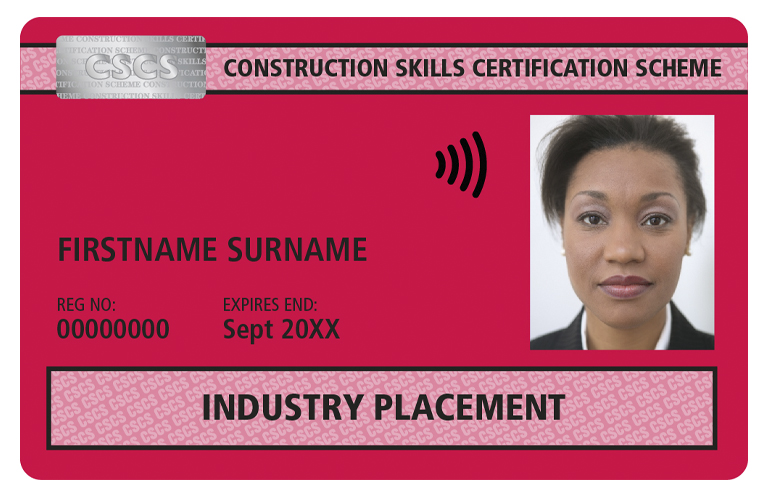
The Industry Placement card is to be made available by the Construction Skills Certification Scheme and a number of other partner schemes on 1 September 2021, in time for the new academic year.
Initially announced back in June, the card is for learners aged sixteen or above on qualification or training programmes requiring a minimum of 30 days’ work placement, which is intended to ultimately lead to a job in construction and the built environment.
The card is designed to support learners transitioning from the classroom to the workplace and mirrors changes to educational policy in the UK, which have seen an increased focus on vocational education.
This includes the introduction of the Traineeship Skills Development Programme and T Level qualifications, with these new pathways into construction involving a mixture of classroom learning and extensive on-the-job experience.
Initially the following four card schemes will make the card available from 1 September 2021:
All card schemes are keen to highlight the importance of applying to the card scheme relevant to the learner’s chosen construction pathway. For example, a learner undertaking a T Level in Building Services Engineering with a specialist pathway in Protection Systems Engineering should apply to the Electrotechnical Certification Scheme.
The introduction of the Industry Placement card follows extensive engagement with the industry including engagement with the Construction Leadership Council and the Department for Education, alongside feedback from an industry-wide consultation carried out in early 2021.
Visit the Industry Placement card page for further information and application requirements.
by Clair Mooney | 6 Sep, 2021 | Sustainability
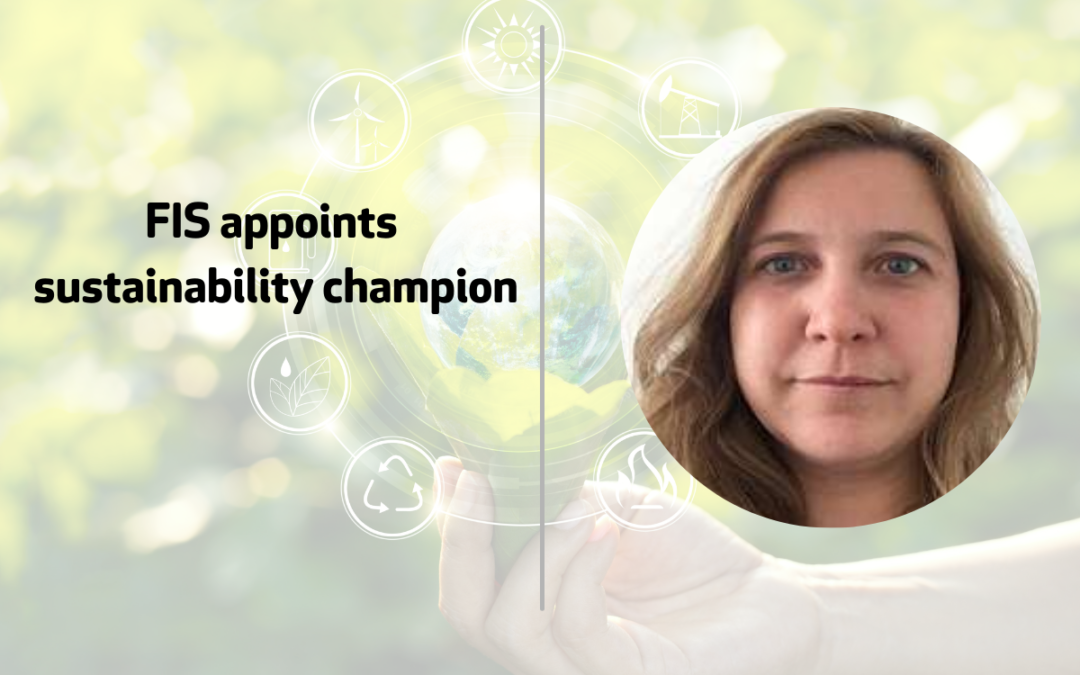
As part of a wider commitment to Net Zero, FIS has appointed a Sustainability Champion. This announcement is timed to coincide with Net Zero Week of the FIS Annual Conference 2021.
Flavie Lowres, will be joining the team on an initial six month contract from mid-September. Flavie has a PhD in Materials and Metallurgy Science and Engineering from the University of Birmingham. She joined BRE in June 2003, chairs the Construction Materials Group and is a Fellow of the Institute of Materials, Minerals and Mining. Flavie spent 18 years at BRE where she was an Associate Director responsible for running the LCA and circular economy section of the team. She has been working in the field of materials sustainability since 2007 and has been involved in a number of UK and international projects related to sustainability in the built environment.
On her appointment FIS CEO Iain McIlwee said:
“In this appointment we are recognising our responsibility, but also the opportunity to ensure Net Zero isn’t just about a better planet, but also a healthier sector where procurement recognises more than just how far we can screw down the best and final price. Our strategy for change is focusssed on three key pillars I, we and them; how can I be better, how we can work better together and what help we need from them. This eflects our need to support individual members to take the first and next step, the importance of collaboration to delivering change and how we can use the FIS influence to support this change through policy and procurement. In Flavie we are bringing in some heavy weight expertise so that we can better target our support and ensure that we focus on curating support, collaborating widely and creating content or tools where needed”.
Flavie added
“I have seen the outline plan from FIS and am excited to get stuck in helping to shape and deliver change and working with FIS members to look at how we can really make a difference as a community”.
FIS is hosting a debate with Barbour ABI as part of their Annual Conference 2021 on Wednesday 8 September focussed on how the finishes and interiors sector is adapting in a journey to net zero. The organisation has also announced this week that it has entered into a partnership with the Supply Chain Sustainability School to create an virtual training hub to support individual businesses in delivering on the wider sustainability agenda and also that it has become a delivery partner for C02nstruct Zero, the Construction Leadership Council’s Net Zero Strategy.
You can book your free place at the FIS Round Table Debate A Path to Net Zero here
Join the conversation at #FISNetZeroChallenge
You can visit the FIS Sustainability Hub here.

by Clair Mooney | 3 Sep, 2021 | Main News Feed
Over a million employees are estimated to currently be on furlough or flexible furlough. With the end of the furlough scheme looming on 30 September, employers may have difficult choices to make about what they should do next.
Employers can currently claim 60% of a furloughed employee’s wages through the Coronavirus Job Retention Scheme, up to a maximum of £1,875, and must contribute the remaining 20% to ensure that employees receive at least 80% of their wages, up to a maximum of £2,500.
Exploring your options
There are a number of different avenues employers can explore once the furlough scheme ends. FIS Associate Member Citation has put together a summary detailing the options available to employers if they are unable to bring furloughed employees back to work on the same basis as before, covering everything from redundancy, to short-time working and lay-offs, to sabbaticals and secondments – and more. Read the article here.

by Clair Mooney | 3 Sep, 2021 | Skills
To drive the economic recovery post‐COVID‐19, the industry will need to overcome its longstanding skills gaps. Whilst we continue to discuss the new Points‐Based Immigration System with the Home Office, employers should look at what they can do to recruit the next generation of UK workers as well as retain the existing workforce. One of the best ways to show how fantastic it is to work in construction is to open up our sites, offices and other workplaces or host an online event during Open Doors from Monday 4 ‐ Saturday 9 October. There have already been 100 events registered to take people behind the hoardings and if your organisation is yet to get involved what are you waiting for!
You have until 24 September to upload the details on the Open Doors website.
Following on from Build UK’s project with Timewise it was identifed that that flexible working is key to retaining a more diverse workforce, and Build UK Chief Executive Suzannah Nichol recently joined a Construction News roundtable on this issue saying:“We keep talking about more diversity in construction but we’ve actually got to do things differently to make a difference”. To find out how to implement flexible working across your business, download Build UK’s industry‐wide toolkit which includes a 10‐point action plan that companies of all sizes can use.
by Clair Mooney | 3 Sep, 2021 | Technical
BSI has released for public comment a draft PAS 7050 – Bringing safe products to the market – Code of Practice.
To provide your comments on this draft PAS please use the link in the email below.
To download, review and comment on this draft PAS, please visit https://standardsdevelopment.bsigroup.com/projects/2019-01401#/section (a downloadable PDF is also available from the bottom of this page).
The closing date for submission of comments is 27 September 2021. Please note that only comments submitted electronically through the online Standards Development Portal will be accepted.
If you are a new user, you will need to register (for free) via the Standards Development site and log in. If you have used the online draft review system before, you will need to log in with your existing login and password. For instructions on how to use BSI’s online draft review system, see https://standardsdevelopment.bsigroup.com/Home/Help

by Clair Mooney | 1 Sep, 2021 | Main News Feed
The Government has announced plans to introduce legislation which will enable CE marked goods to continue being placed on the Great British market until 1 January 2023. Although we are in a different legislative situation for the construction products sector, this new date for the end of recognition of the CE mark in Great Britain will also apply to construction products. MHCLG have updated guidance on GOV.UK (GB and NI) for construction products to reflect this.
The MHCLG recognised that as the pandemic continues to impact businesses, this has made adapting to the new regime more challenging and as a result the decision was made to provide an additional year for businesses to adapt to UKCA requirements.
All product sectors now have until 1 January 2023 to get ready to use the UKCA marking, with the exception of medical devices. The Government has stated that there will be no further extensions to this new date. The complete list of all the sectors covered by the UKCA marking can be found here.
Over the next 16 months, Government will continue to engage actively with industry and support their preparations for the new requirements. BEIS is hosting a webinar aimed at businesses on Thursday 2 September at 14:00. This is intended to help businesses understand changes and the actions they need to take. members can register to via this link.

by Clair Mooney | 1 Sep, 2021 | Skills
To ensure operable walls are regularly maintained, serviced and repaired, FIS has published a Best Practice Guide,
Servicing Operable Walls.
The guide was produced by members of the FIS Operable Wall Working Group which comprises representation from key suppliers of operable walls. This Best Practice Guide is intended to help facility managers and owners of operable walls understand the importance of regular servicing to ensure the correct operation of walls and ongoing safety of everyone. It will also help by identifying the type of wall that has been installed, its performance, sound, fire and robustness, servicing required, and enable users to identify competent service engineers.
Widely used in educational and leisure facilities, offices, exhibition halls and conference centres, moveable walls are often operated by a member of staff or a maintenance crew where damage and undue ware can be caused through not fully understanding the operating procedure or even through incorrect maintenance such as applying grease to moving parts. Furthermore, acoustic integrity can also be compromised due to damaged or poorly working peripheral seals and as a result of a lack of servicing. A good service and maintenance regime, underwritten by a service agreement is key to the wall’s serviceability and the welfare of those operating them.
Commenting on the launch of the guide, Julian Sargent, Chair of the FIS Operable Wall Working Group said:
“The importance of this guide to ensure the ongoing performance and safety of everyone using or working around these walls is paramount. The Best Practice Guide, Servicing Operable Walls will help to identify the competence expected of the engineers and allow facility managers and owners meet their legal obligations.”
With some operable wall panels exceeding heights of 6M and weighing 100kgs to 500kgs, training in working at height and the competence to work with specialist equipment such as chain lifts is important to check and address any health and safety legislation, where the facility team could become liable. Building managers or owners of the business have a responsibility under current health and safety laws to ensure that these systems are properly maintained and recorded as being serviced.
George Swann, FIS Skills and Training Lead added:
“The FIS Operable Wall Working Group employers have developed a National Occupational Standard from which formal qualifications for service, maintenance and repair of operable walls will be derived. To get involved in this work, express your support or to see the details please go to: Interior systems reviews.”
Established in 2015, FIS represents suppliers and contractors in the finishes and interiors sector. Its members are vetted when they join and then every three years. They abide by a code of conduct and agree to carry out work in accordance with the FIS best practice guides.
The free guide is available to download here

by Clair Mooney | 31 Aug, 2021 | Market data, Material Shortages
The latest CPA survey of the supply chain showed that the construction industry remained in expansion mode during the second quarter of 2021.
Construction product manufacturers reported the fourth consecutive quarterly rise in product sales, whilst SME building contractors and chartered surveyors saw workloads rise yet again in Q2. While growth in workloads remained broad-based across sectors, it was largely led by private housing and RM&I, where activity has been sustained by government housing policies and increased demand for larger properties with outdoor and office/study space in rural areas due to the homeworking trend. Infrastructure also remained a key driver due to works occurring on a number of large-scale projects and long-term regulatory frameworks, with civil engineering contractors reporting the third consecutive annual rise in workloads in Q2.
Forward-looking indicators point to further growth over the coming year, with the net balances for product sales and workload expectations, enquiries and orders all hitting multi-year highs in Q2. Despite this, the supply of materials and products remained the biggest issue for chartered surveyors and civil engineers and were viewed as the main risk to product manufacturers’ 12-month sales outlook due to ongoing global supply chain issues. Concerns with the recruitment of skilled labour were also echoed across the supply chain, most notably for carpenters and bricklayers relating to house building, as well as general on-site trades. Raw material costs also emerged as another potential constraint, but the proportion of civil engineers raising tender prices for both new work and R&M hit an all-time high, whilst chartered surveyors expect rising profit margins in the year ahead.
FIS members can access the full results of the Construction Trade Survey here.