0121 707 0077

FIS Attends SkillBuild 2024 – Congratulations to all the winners

FIS Attends SkillBuild 2024 – Congratulations to all the winners

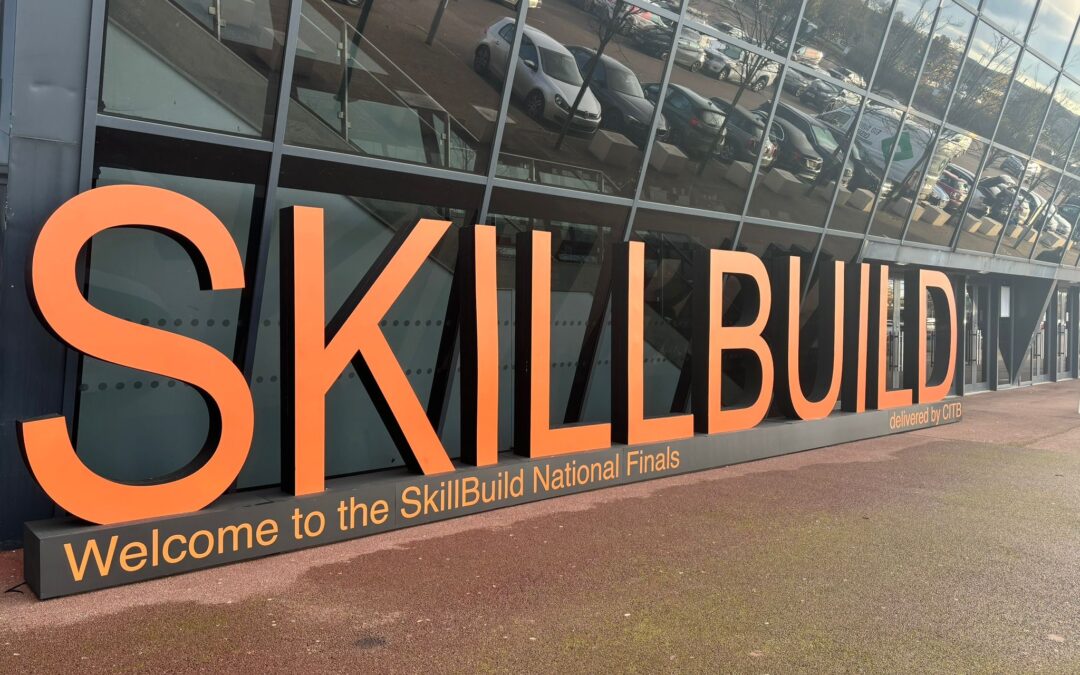
SkillBuild 2024 proved to be a tremendous success, highlighting remarkable talent and creative energy.

The FIS team was in attendance, advocating for the interior sector with FIS Head of Skills and Training, Beena Nana, who was graciously hosted by Locker & Riley at their booth. On the second day, Greg Greves joined Beena, interacting with our members and identifying emerging stars in our industry.

After the event, Beena shared her thoughts:

It was an honor to be part of the Construction Showcase at the SkillBuild Finals. Witnessing such talented individuals showcase their abilities was genuinely inspiring, and it was uplifting to see the industry come together to celebrate pride in their craft while connecting with fellow apprentices and trainees. The event truly celebrated construction, and I believe the many young people, educators, and careers advisors who attended caught a glimpse of a future they might one day embrace. We are dedicated to supporting SkillBuild and eagerly anticipate collaborating with CITB and colleagues from various trades to enhance its impact.”

We extend our heartfelt congratulations to all the winners from the event (notably FIS Members Michael amd Owen from Errigal who placed 1st and 2nd in the Dryliing Competition and Dawson from Tyne Metropolitan College who came third and Niall from Newcastle College and Wesley from Leeds College of Building who placed in the Plastering).  All involved should be commended for using their efforts. 

Discover the full list of winners here

UK Procurement Act 2023 and Statutory Instrument The Procurement Regulations 2024

UK Procurement Act 2023 and Statutory Instrument The Procurement Regulations 2024

The Procurement Act 2023 and the supporting Procurement Regulations 2024 come into force on 24 February 2025. The Act, along with the Procurement Regulations 2024 and the National Procurement Policy Statement provide a new regime for awarding public contracts in England, Wales and Northern Ireland ending the obligation for the UK to comply with EU Procurement Directives. The Scottish Government has opted not to join the rest of the UK having transposed EU Directives into their own statute book. However, the Act does apply to contracting authorities in Scotland which are either cross-border bodies or exercise wholly reserved functions.

The reforms open up public procurement to new entrants such as small businesses and social enterprises so that they can compete for and win more public contracts. The Act also embeds transparency throughout the commercial lifecycle.

The Procurement Regulations 2024 is secondary legislation which applies a broad range of powers within the Procurement Act 2023 providing additional details concerning various aspects of the new procurement regime.

The National Procurement Policy Statement (NPPS) is a statement published by the Government to communicate to contracting authorities policy objectives relating to public procurement. Contracting authorities must have regard to such a statement when they are carrying out a procurement. This guidance provides some explanation about the duty. The current NPPS has been withdrawn and is currently being redrafted. To read more about the NPPS please click here.

The Procurement Act will govern new procurements started after 24th February 2025. Procurement commencing prior to the Act coming into force will continue to be governed by the current regime meaning that two regimes will run parallel for some time.

To view the Procurement Act 2023 please click here.

To view the Procurement Regulations 2024 please click here.

Employment Rights Bill guide

Employment Rights Bill guide

On 10 October, the UK Government introduced its new Employment Rights Bill, marking the most significant overhaul of UK employment law in decades. Ministers assert that the proposals will create fairer workplaces and better address modern needs for both workers and employers, while also fostering economic growth.

The Construction Industry Collective Voice (CICV) has issued a briefing document outlining the key changes:

Day One Protection

Employees will be protected from unfair dismissal, with employers still able to operate probationary periods. They will also be entitled to paternity, parental, and bereavement leave from their first day on the job, eliminating the current two-year waiting period.

Zero-Hour Contracts

The Bill addresses exploitative zero-hour contracts, allowing workers on regular hours to request guaranteed hours while preserving flexibility for those who prefer it.

Fire and Rehire

The Bill aims to end ‘fire and rehire’ and ‘fire and replace’ practices, preventing companies from re-hiring employees on worse terms.

Statutory Sick Pay

Sick pay eligibility will be expanded by eliminating the lower earnings threshold and removing the waiting period before it begins.

Fair Pay

The Government has revised the Low Pay Commission’s remit to consider the cost of living when recommending the National Minimum Wage rate. This Bill will also remove age bands, ensuring that every working adult is entitled to the same minimum wage, regardless of age.

Flexible Working

Flexible working will become the default, unless employers can show why it is not practical for their business.

Pregnancy

Protections for pregnant women and new mothers returning to work will be strengthened, specifically safeguarding them from dismissal during pregnancy, while on maternity leave, and for six months after returning to work.

Pay Disparities Between Men and Women

Large employers will be required to produce action plans to address pay gaps between men and women.

Trade Union Rights

All restrictions on trade unions introduced by the previous Conservative administrations over the past 14 years will be repealed, and a series of new powers will be granted.

For a more detailed look at the changes our Associate Service Provider Member Citation’s latest guide, ‘The Employment Rights Bill: Your ultimate guide to the 28 changes‘, is designed to help you understand these changes so you can successfully adapt your business.

Navigating the Building Safety Regime: new mandatory reporting guidance

Navigating the Building Safety Regime: new mandatory reporting guidance

With new homes and infrastructure at the heart of the Government’s plan to drive economic growth, construction is firmly in the spotlight, and we need to ensure the industry is delivering high quality buildings that are safe to occupy and perform as expected. There is significant focus on the new building safety regime, which has strengthened existing legislation and introduced a raft of new requirements, and it can feel quite overwhelming as more information is published while everyone is getting up to speed.

Build UK, of which FIS is a member, is regularly meeting with the Building Safety Regulator (BSR) as well as the Ministry of Housing, Communities and Local Government (MHCLG), enabling them to respond to issues quickly and effectively.

There is still a long way to go, particularly with further changes likely as a result of the final report from the Grenfell Tower Inquiry, and through our links with Build UK we will continue to work closely with the BSR and MHCLG to ensure the new regime is implemented as effectively as possible. The prize is a more organised and productive industry, with earlier engagement of the contracting supply chain and more advanced design before construction work begins, and it is clear from the improved success rate at Planning Gateway One that the industry is adapting and fire safety measures have been integrated into the design process.

We understand that Gateway Two is proving to be a real challenge, and Build UK is developing guidance to support members through the process and have published a guide to Mandatory Occurrence Reporting, which includes a template MOR system for use during the construction of Higher‐Risk Buildings (HRBs) to help ensure a consistent approach across the supply chain. This guide is for Build UK members (which includes FIS members).

This guidance summarises the requirement under the Building Safety Act to notify and report certain types of building safety incidents and risks in HRBs to the BSR. Mandatory Occurrences are incidents and risks during the construction and occupation phases of an HRB that have caused, or if not remedied are likely to cause, the death or serious injury of a significant number of people and involve structural failure and/or the spread of fire or smoke in the building.

The BSR has provided additional information on why applications are being rejected. Applications must clearly demonstrate how the design and construction of the building complies with Building Regulations by identifying every single element that needs to demonstrate compliance, clarifying how compliance will be demonstrated using the appropriate standard or code, and justifying how compliance has been achieved with a narrative. Further details can be found on the BSR microsite and the BSR recommends that professional advice is taken before submitting an application.

There is also a new FAQ explaining the difference between Category A work, which involves significant alternations to the structure, safety or design of an HRB, and Category B work, which is much simpler in scope and includes all work that does not fall under Category A. Both categories of work are required to go through the Gateways with the BSR as the Building Control Body. Work carried out under a Competent Person Scheme and work that is exempt as defined in schedule 2 or emergency repairs as specified in Regulation 10 of The Building (Higher‐Risk Buildings Procedures) (England) Regulations 2023 do not fall under Category A or Category B.

Take our Building Safety Act Training Course

FIS created an online training course to help members understand compliance with the Building Safety Act, specifically for those in the finishes and interiors sector.

See more news likes this

Shining Stars: 2025 Training Awards Winners Announced

Shining Stars: 2025 Training Awards Winners Announced

FIS and Worshipful Company of Plaisterers have announced the winners of the sector Training Awards at its lunch held at Plaisterers’ Hall in London today. In front of a packed audience at Plaisterers’ Hall, the winners of the 2025 Training Awards were announced and...

FIS Proud to Support SkillBuild 2025

FIS Proud to Support SkillBuild 2025

FIS was proud to support SkillBuild 2025, the UK’s largest multi-trade skills competition, which once again brought together an impressive pool of talented and motivated individuals from across the country. The event celebrates the very best emerging professionals in...

Unlock CITB Funding and Grants – Don’t Miss Out

Unlock CITB Funding and Grants – Don’t Miss Out

If you’re a CITB-registered employer, you may be entitled to a wide range of grants to support the cost of training and developing your workforce. Many employers deliver training but never submit a claim, meaning valuable funding goes unused. FIS is here to help...

FIS relaunch Integrated Management Standard to support organisational capability

FIS relaunch Integrated Management Standard to support organisational capability

New requirements in the Building Regulations identify the need for businesses to demonstrate organisational capability.  On a basic level, this means businesses will need to evidence how they check people are competent and ensure they are supported by effective process controls that support consistent delivery.  This is not really a significant change as businesses have always had a legal requirement to ensure all reasonably foreseeable risks are effectively managed, but it does mean clients and Building Control officers will be showing more interest in your processes and management systems and will have more tools at their disposal to enforce where a business or individual fails to hit the required standards.

To support our community, the FIS Integrated Management Standard (IMS) has been relaunched as part of a newly developed Organisational Capability Toolkit.  This toolkit will help members implement tried and proven methods of streamlining their company for the benefit of their business and its stakeholders. The toolkit will help to link and contextualise the wealth of information that FIS members have available to support compliant business management and how they can use their membership to support claims of organisational capability.

This IMS sits as a central resource to help align and control resources. It provides a framework for implementing risk management systems (supported by the FIS Product, Process, People Quality Framework) that will help organisations to meet statutory and legislative requirements.

On relaunching the standard at the FIS Conference and AGM in November, FIS CEO Iain McIlwee stated:

“This standard was developed originally to support the FIS vetting process, but really comes into its own in this new environment.  It is clear in our work with members that many construction firms have great processes in place, but there can be a real disjoin between these processes.  Across the sector we see design, procurement, contracts and legal, and construction processes that should complement and support each other, however they often clash, cause confusion and conflict and ultimately undermine delivery.  This toolkit is a great opportunity to start to look collectively at how we can not just hit the baseline of compliance, but help to raise standards, promote professional businesses and support the Responsible No”.

The new FIS Organisational Capability Toolkit is available here.

Empowering the Responsible NO – New Toolkit

Empowering the Responsible NO – New Toolkit

FIS CEO, Iain McIlwee explores the importance of the word “No” in construction.

The procurement research FIS published in February 2023 coined the expression the “Responsible No”

“No” is a tiny word, one syllable, but at times, the hardest to say.  If we say “No” to a clause in a contract, there always seems to be another firm willing to say “Yes”. If we raise too many issues, or qualify too much in our tender response, we may well lose the job. It is easy to talk about “No”, but in a tight, price-sensitive market, with mouths to feed…

The problem is that if we don’t exercise the option of “No”, if we don’t clarify, qualify and draw the line we take responsibility for issues outside of our control, assume responsibility for compliance and sign up to damages and delays that we can’t cover. Even if we avoid the worst of the financial hit, how often do we find ourselves staring at a detail on a construction site, scratching our heads and working it out on the fly – “the site fix”?

Regulation is driving change, common sense demands it

Changes to The Building Act 1984 carried through as part of the Building Safety Act changes, mean that we are liable for that detail for 10 years from a Building Control enforcement perspective and if it impacts fire or structural safety, it could be a 15-year plus liability (with prison sentences if it can be proved we were negligent).

As a sector we pride ourselves on our ability to get the job done, to adapt the design and make it work, but duties in the Building Regulations are now clearer and more onerous. The regulatory environment has changed, a heart full of hope and a tube of mastic isn’t enough.

On higher risk projects we’ve got major and notifiable changes – strict change control processes that should be in place. On all jobs, the building control officer is under greater pressure to ensure evidence is provided – they want to see (or photos of) as-built details backed by evidence of performance and competence.

The principal designer needs to start signing the job off on completion too, it is all about evidence, quality control and information management. If the principal designer won’t support or Building Control won’t sign-off, works stops and with it the flow of monies, I refer you back to the cost of delays mentioned above.

Design liability and elements thereof are being pushed deeper into the supply chain leading to confusion around accountability for design elements.  Beyond the intended free-standing additions to the construction contract template, the norm has become to add complex schedules of amendment pertaining to design and programme responsibility.  The potential for this to cause confusion around risk and contingent risk, impact insurability and create gaps in insurance cover for specific elements (particularly interface details and fixings) is a real concern.  The impact is that businesses, buildings and projects may be uninsured or have significantly less cover than clients currently believe is the case.

Can we fix it?

The old days of “Bob the Builder, can we fix it?” and a rousing chorus of “Yes… we can” is changing. The retort now needs to be more like: “Not necessarily Bob, certainly not until Sarah the supervisor has checked with Alan the architect who has reviewed against the design, clarified with Edna the engineer and Mike the M&E designer, and ensured Quinn the quantity surveyor is aware. We also need to consider if we need to advise Barry the building control officer and he may need to liaise to Bertha the building safety regulator and Ivor the Insurer before … We can!”

This is a cultural change that we need to filter through our supervision protocols, into our Tool Box talks, and embed in our daily processes. But it isn’t just a site thing. Len Bunton always reminds me that dispute resolution begins and most problems could be solved before we sign the contract. There is always risk in construction, but with new potential for delays and new liabilities, we must understand these risks, cap them appropriately and insure them effectively.

Yes, but…

This need for risk awareness is the reason that we have introduced an FIS Contract Review Service. We know that 41% of our members never seek legal advice (scarily only 17% never start on site without a contract in hand!). This subsidised service is about helping members understand the risks and how to push back. It is also about FIS isolating unreasonable requests and pushing back as a collective. Getting your contracts reviewed routinely would be a good New Year’s Resolution. The “Responsible No” is a big ask, but sometimes we do need to say No, it shouldn’t be a flat No, but No, my insurance wouldn’t cover that, No we are not competent to Design that or simply No that is more risk that we can reasonably be expected to take on.

Remember compliance is changing clients have duties along with designers and contractors and good compliant projects supported by a resiliant and professional supply chain are essential.  The truth is that we don’t need to say No to everything, but if more of us call out the unreasonable demands, we can start to say Yes to the work, but No to irresponsible asks – maybe we can make 2024 the year of the Confident, well Reasoned “Yes, but…”.

 

As FIS have explored the competence and capability with our community, the importance of deploying “No” has been repeatedly raised.  Ultimately competence and capability require you to know your limits and ensure that all reasonably foreseeable business risks can be effectively managed and addressed. 

If we don’t clarify, qualify and draw the line we take responsibility for issues outside of our control, assume responsibility for compliance and sign up to damages and delays that we can’t cover. 

The FIS is focussed on Empowering the Responsble No and has launched a campaign to support this.