by Iain McIlwee | 17 Apr, 2026 | Main News Feed
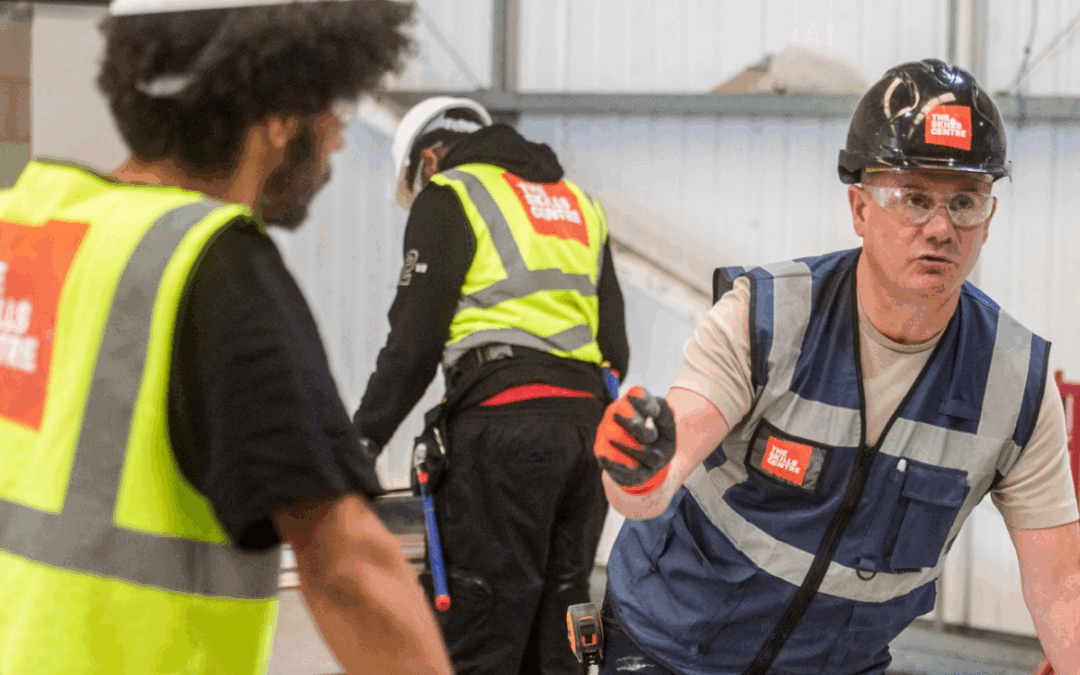
The Construction Skills Mission Board (CSMB) has published its Spring 2026 update, outlining progress towards its goal of supporting the 100,000 new construction workers per year needed by 2029 to deliver the UK’s housing, infrastructure and net‑zero ambitions. Launched in 2025, the Board brings industry and Government together and is backed by a £625 million Construction Skills Package.
Delivery of funding is already underway, including £100 million for Construction Technical Excellence Colleges, £100 million for construction Skills Bootcamps (expected to support around 60,000 new entrants by 2029), increased support for Foundation Apprenticeships, and £165 million to expand college‑based training through funded course programmes.
The update highlights a mixed workforce picture, with direct employment dipping slightly towards the end of 2025 while total construction jobs increased, reinforcing the urgency of coordinated skills action. Priority workstreams include improved skills intelligence, industry placements, pathways for NEETs, faster Level 4 entry routes, local coordination pilots, stronger engagement with major infrastructure clients, and enhanced apprenticeship support. Sector Skills Plans for Homebuilding, Infrastructure, and Engineering & Building Services are now live, with more in development.
What this means for industry: funding is flowing and programmes are live – but employer engagement is critical to turning ambition into skilled people on site.
Get Involved
FIS CEO, Iain McIlwee is working closely with the CSMB attending weekly meetings of the CSMB Advisory Group, helping to ensure that the work is grounded in reality for particularly relevant specialists and feeding in views of the FIS Membership, including the FIS Skills Board.
Members are encouraged to:
Just let me know.

by Iain McIlwee | 17 Apr, 2026 | Health and Safety, Main News Feed
Key outcomes from the FIS Health & Safety Working Group – April Meeting
The April meeting of the FIS Health & Safety Working Group brought together members, specialists and partner organisations to address some of the most pressing health and safety challenges currently facing the finishes and interiors sector. Discussions were frank, practical and firmly rooted in site experience, reflecting the increasing need to bridge the gap between regulatory intent and day‑to‑day delivery.
Falling objects, safe working zones and RIDDOR
A major focus of the meeting was the HSE’s consultation on proposed changes to RIDDOR, particularly the expansion of reporting requirements for unintentional falling objects. Members agreed that many everyday activities in finishes and interiors work—such as drilling, fixing and board installation—carry genuine falling‑object risk, even when traditional “safe working zones” are in place.
The group highlighted that objects rarely fall straight down and can deflect or travel beyond exclusion zones, especially on constrained or high‑rise residential sites. As a result, exclusion zones alone cannot be treated as absolute protection. The consensus was that zones must be dynamic controls, supported by good planning, sequencing, tool and material control, and supervision. FIS will submit a coordinated response to the consultation, supporting clarity, proportionality and a prevention‑led approach.
Limb (b) workers, PPE and RPE
There was significant discussion around the increasing complexity of limb (b) worker status and responsibility for PPE and RPE. Members expressed frustration that legal definitions often fail to reflect how work is actually controlled through RAMS, supervision and works orders.
Particular concern focused on RPE, facial hair, and the growing use of PAPR as a default control. Members were clear that PAPR is often expensive, difficult to manage hygienically, and disproportionate for short‑duration work. While dust exposure is recognised as a serious health risk, the group agreed the industry currently lacks the clear, structured control framework seen with hazards such as asbestos. There was strong agreement on the need for practical FIS guidance to support risk‑based, defensible decision‑making.
Board lifters – suitability, risk and dynamic assessment
The use of board lifters generated one of the most detailed discussions of the meeting. Members consistently reported that board lifters are rarely used in practice, not through resistance, but due to genuine constraints such as space, congestion, board size, ceiling height and set‑up time.
The group highlighted that regulators are increasingly less concerned about whether board lifters are present, and more focused on whether decisions not to use them are supported by a documented, task‑specific dynamic risk assessment. Risks associated with board lifters—including instability, falling boards, fatigue and potential lone‑working—must be balanced against manual handling benefits. A simple pre‑use checklist already used by members will be shared to strengthen FIS guidance.
Innovation and safer ways of working
Members welcomed innovation that better aligns equipment with real site conditions. BRAVI Platforms presented the Solo Gyps attachment, designed to support safer board installation from MEWPs. While innovation was encouraged, members stressed that space, access, sequencing, training and RAMS integration remain critical to determining suitability on site.
New SFS Safe Working Practices Guidance
FIS confirmed completion of new SFS Safe Working Practices Guidance, developed with sector input. The guidance places strong emphasis on falling‑object risk, collective protection, dynamic exclusion zones, and pre‑construction planning under CDM. Members welcomed it as a practical benchmark that also strengthens conversations with principal contractors and clients where access or sequencing is inadequate.
Manual handling training – strong member engagement
There was strong, collective support for the new drylining‑specific manual handling e‑learning course, now approaching launch. A broad cross‑section of members volunteered to assist with final review, helping ensure the training reflects real tasks, constraints and site pressures rather than generic assumptions.
Powered access and IPAF collaboration
IPAF provided a comprehensive update on powered access safety, sharing accident trends, global safety campaigns and new British Standards for MEWPs and mast climbing work platforms. Members welcomed closer collaboration with IPAF, particularly around recovery and rescue planning, data sharing, and alignment of training and standards with site realities.
Pallet handling and materials movement
The group revisited risks created by plasterboard pallet design, particularly where bearers prevent safe pallet‑truck access. A bespoke pallet‑truck concept was presented as a potential solution. Discussion focused on braking requirements, site acceptance, trialling and the importance of engaging manufacturers to address risk at source.
Dust control and occupational health
Under Any Other Business, members discussed increasing enforcement attention on dust control, including the growing move away from dry sweeping towards vacuum‑based solutions. While practical challenges remain, the group acknowledged the direction of travel and reinforced the need for better planning, segregation and extraction. Members also noted increasing client and insurer demands for occupational health evidence relating to dust, HAVS and noise.
Get Involved – Help Shape Practical Guidance for the Sector
What’s Next?
Following the April meeting, the FIS Health & Safety Working Group has established a number of task and finish groups to turn discussion into practical guidance and tools for members:
- RIDDOR Consultation – Falling Objects and Safe Working Zones
Developing a coordinated FIS response focused on proportionality, prevention and real‑world working conditions.
- Limb (b) Workers, PPE and RPE (including PAPR)
Producing practical guidance on responsibility, RAMS ownership and defensible, risk‑based approaches to PPE and RPE.
- Board Lifters – Dynamic Risk Assessment and Guidance Review
Strengthening guidance on suitability, limitations and dynamic, task‑specific decision‑making.
- Board Lifter Innovation and Mechanisation
Exploring longer‑term solutions, including powered and platform‑integrated lifting systems.
- Manual Handling – Drylining‑Specific E‑Learning Review
Finalising sector‑relevant training with strong member involvement before launch.
- Construction Dust – Planning, Control and Monitoring
Supporting better planning, control hierarchy application and client engagement on dust risk.
- Plasterboard Pallet Handling and Pallet Trucks
Investigating safer handling solutions and potential manufacturer engagement.
- Annual FIS Health & Safety Survey
Reviewing and refining survey questions to ensure data continues to drive meaningful improvement.
Members are encouraged to get involved—participation ensures FIS guidance remains practical, proportionate and grounded in real site experience. To find out more, contact the FIS team.
Members can download full (draft) minutes of the meeting here
You can access the FIS H&S Toolkit here
by Iain McIlwee | 9 Apr, 2026 | Main News Feed
FIS has been featured in a recent Financial Times opinion article examining how artificial intelligence and automation are reshaping career choices and what this means for interest in skilled trades within the construction sector.
The article reflects on growing concern about the vulnerability of some white‑collar roles to AI, and the resulting attention being given to hands‑on occupations that are less exposed to automation. In that context, it explores routes into trades such as plumbing, plastering and drylining, while recognising the skill, professionalism and long‑term commitment required to succeed in construction.
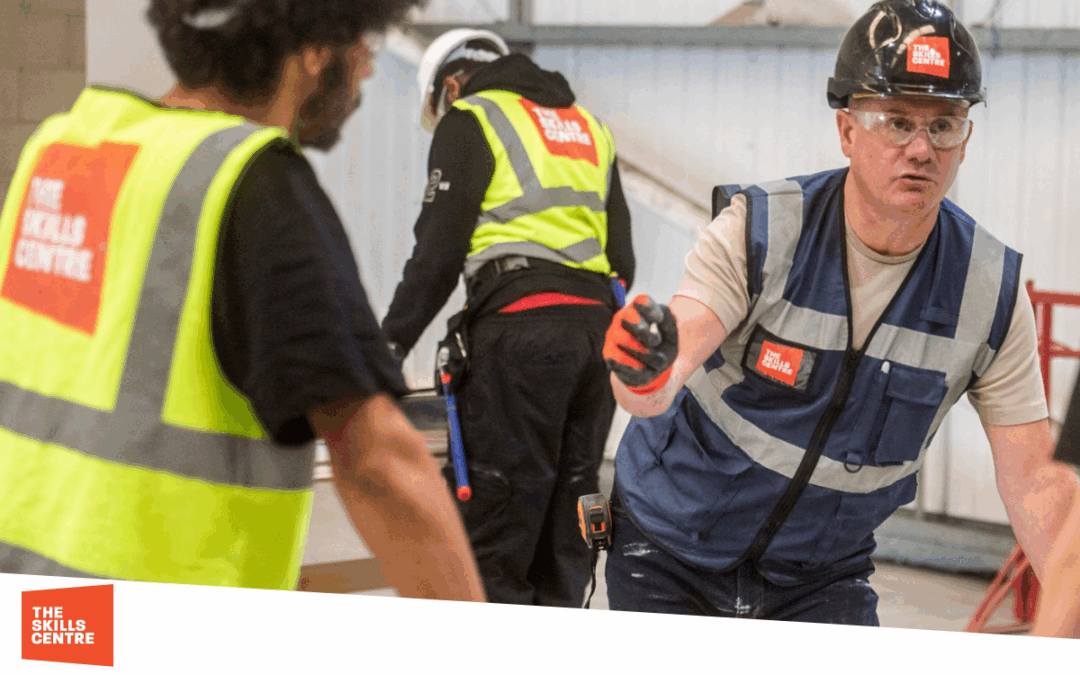
FIS was referenced to provide insight into how workforce patterns are already changing. Commenting in the article, Iain McIlwee, Chief Executive of FIS, noted that there are already positive signs that more young people are choosing construction and trade pathways, with the proportion of carded site workers under the age of 30 increasing from 17 per cent to 25 per cent since 2021. This reflects both the appeal of earning while learning and a growing awareness of the risks associated with student debt and uncertain graduate employment in an AI‑disrupted labour market.
The article also includes contributions from Jade Sandhu, Group People Director at Measom Drywall Systems and Chair of the FIS Skills Board. Her comments highlight that skilled trades can offer strong earning potential, security and autonomy, particularly where individuals develop competence, run well‑managed businesses and price work appropriately. The article also reflects her view that these opportunities are still not well understood or clearly communicated within schools and colleges.
Importantly, the FT coverage avoids presenting construction as a simple alternative to office‑based careers affected by AI. It acknowledges the physical demands of site work, the costs of tools and vehicles, the prevalence of self‑employment and the sector’s sensitivity to economic cycles, all of which underline the need to approach construction careers with realism and respect for the skills involved.
From an FIS perspective, the article aligns with a long‑standing position: as AI reshapes the wider economy, skilled trades offer resilient and rewarding careers, but only when the skills required are properly valued, supported and invested in. Encouraging entry into construction must go hand‑in‑hand with quality training, fair payment, sustainable workloads and clear progression routes.
The Financial Times piece provides a thoughtful contribution to the discussion on AI, employment and skills—and reinforces the importance of seeing construction not as a default alternative, but as a professional career choice that underpins the built environment and the wider economy.
Find out more about the work of the FIS Skills Board here.
You can read the full article in the Financial Times here (subscriptions apply).