Regulator publishes new guidance on competence management

Regulator publishes new guidance on competence management

The Industry Competence Committee (ICC) has published ‘Setting Expectations on Competence Management’ setting down clear principles for managing both individual and organisational competence under Building Regulations.

The ICC was formed under the Building Safety Act 2022 to provide strategic leadership, assistance, and encouragement to facilitate the improvement of competence in the built environment industry. It advises both the Building Safety Regulator (BSR) and industry on matters of competence.

The ICC has set out clear expectations for industry by sharing clear principles on how organisations should manage the competence of those working for them.

This document is aimed at organisations who:

  • Carry out any design or any building work (in all buildings)
  • Manage buildings, and particularly those that manage Higher Risk Buildings (HRBs)

The advice builds on feedback received from industry consultation in May and September 2025. It establishes ICC’s expectations for how organisations should manage competence, setting out the common principles that should be in place across the sector.

The ICC will build on this advice during 2026 by developing case studies and examples, to assist industry at a more practical level

FIS has been involved in the drafting of this document and commends this resource to members.

The document can be accessed via the Built Environment Hub Setting Expectations on Competence Management – ICC Advice for Industry

Ensure your compliance with the new FIS e-learning module: Building Regulation Compliance: Contractor Roles

A common misconception is that roles like Principal Contractor and Contractor only apply to Higher Risk Buildings. However, in reality, these are mandatory roles across ALL regulated works, and understanding them is critical to staying compliant.

Our new competency-led e-learning module provides you with clear, practical guidance on what compliance really means and how it applies to you. It has been designed for directors, managers, and senior leaders within contracting organisations, while also offering valuable insight for project teams and supervisors responsible for maintaining standards on the ground.

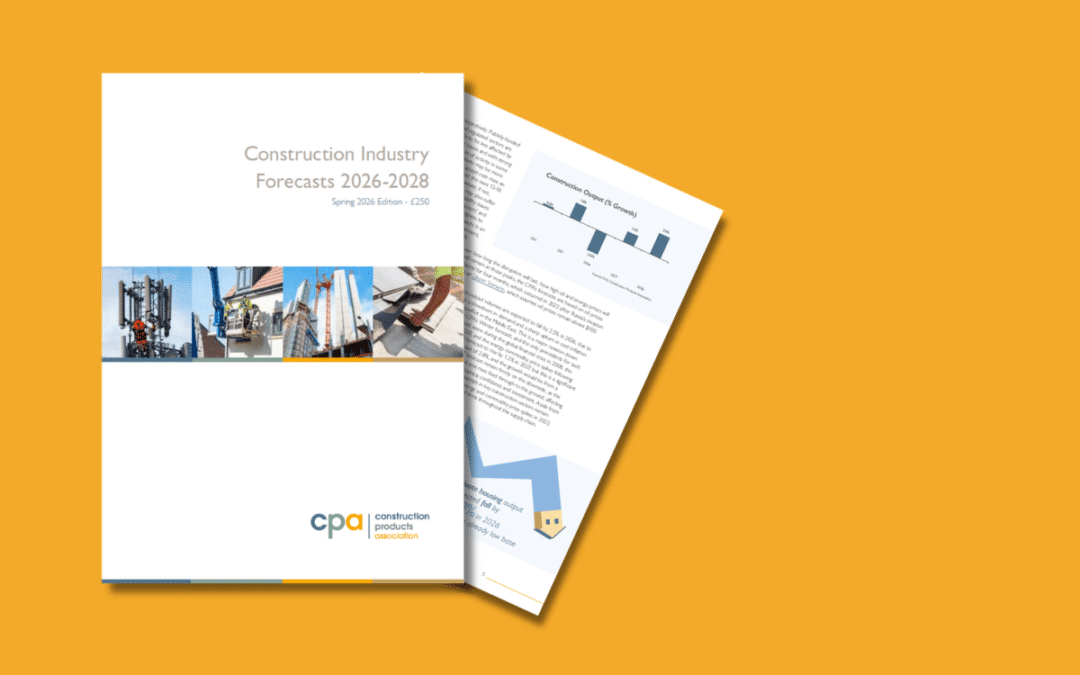
Middle East conflict casts a dark shadow over 2026-27  forecasts

Middle East conflict casts a dark shadow over 2026-27 forecasts

Conflict in the Middle East and its potential impacts on the global economy, the UK economy and the construction industry cast a dark shadow over the forecasts for 2026 and 2027. It appears increasingly likely that the second half of this year will see a drop in demand and sharp cost rises. How long the global disruption and high oil and energy prices last remains uncertain at the time of writing, and the CPA has had to make assumptions about the extent and duration of the supply shock.

However, based on the CPA’s assumptions, construction output is now forecast to fall significantly in 2026, with growth in 2027 also adversely affected. The largest of the conflict impacts are likely to be felt on both the demand and supply side for private housing and private housing repair, maintenance and improvement (rm&i), the two largest construction sectors. In addition, the risks to the forecasts remain heavily skewed to the downside, although potential upside risks remain if the government provides stimulus to boost demand and reduces its additional cost burdens on the construction industry. In addition, all construction forecasters continue to highlight the major problems with the Office for National Statistics (ONS) construction output data on which construction forecasts are based, so users should treat the historical data with extreme caution.

At the end of last year, with the uncertainty created by the government’s Autumn Budget out of the way and with an expected slight acceleration in UK growth this year, there was a degree of cautious optimism over prospects for many key construction sectors in 2026 and 2027. However, the start of this year was already challenging for construction, with persistent rain affecting activity, particularly outdoor work and the start of new projects. The hope was that better weather in March and April would lead to stronger activity, and this appeared to have occurred, although there was little evidence of any significant ‘catch-up’ activity delayed at the start of the year. But the Middle East conflict is likely to raise its own challenges for the UK economy and the construction industry in particular. Even if there was a resolution to the conflict on the day of the forecasts being published, a degree of permanent damage would be done to oil production, shipping channels, and additional global uncertainty and risk would be priced in, which is likely to lead to both a spike in CPI inflation across the economy and construction product price inflation due to oil, energy and input cost rises.

Privately funded construction sectors are most likely to be affected by these cost increases. In addition, privately funded construction sectors will be affected by increases in mortgage and financing costs, which will hit homebuyers and site viability, respectively. Publicly-funded and regulated sectors are likely to be less affected by these issues and with strong pipelines of activity in some areas, clients may be more willing to accept cost rises on projects over the next 12-18 months. However, if not, these sectors may also suffer from project viability issues and major contractors’ and consortia’s unwillingness to sign up to large projects in an uncertain cost environment, given the increasing risk.

Due to the uncertainty over how long the disruption will last, how high oil and energy prices will peak, and how long they will remain at those peaks, the CPA’s forecasts are based on oil prices remaining above $100 per barrel for four months, which occurred in 2022 after Russia’s invasion of Ukraine. The CPA also has an Upper Scenario, which assumes oil prices remain above $100 per barrel for 2 months.

In the CPA’s forecast, construction output volumes are expected to fall by 2.5% in 2026, due to a weather-affected Q1, followed by a slowdown in demand and a sharp upturn in cost inflation in H2, driven by the impacts of the conflict in the Middle East. This is a major revision down from the 1.7% growth forecast in the CPA’s Winter forecast, and the only precedents for such large downward revisions to the forecasts were during the global financial crisis in 2008, the initial Covid-19 pandemic lockdown in 2020, and the energy commodity price spikes following Russia’s invasion of Ukraine. Output is still forecast to rise by 1.2% in 2027, but this is a significant revision down from the CPA’s Winter forecast of 2.8%, and the growth would be from a lower base. In addition, the risks to the 2027 forecast remain firmly on the downside, as the lagged impacts of borrowing rate increases and cost rises feed through to the ground, affecting consumer confidence and spending, as well as business confidence and investment. Aside from issues arising from the recent conflict, the fundamentals in key construction sectors remain unchanged. However, as with the impacts of the energy and commodity price spikes in 2022, the recent conflict is likely to affect the cost bases of firms throughout the supply chain.


SFS Working Group: progress on competence, regulation and technical guidance

SFS Working Group: progress on competence, regulation and technical guidance

The FIS SFS Working Group met in April 2026 for a wide‑ranging discussion covering workforce competence, regulatory reform and key technical challenges facing the sector.

A major focus of the meeting was progress on the new SFS installer qualification, developed in response to the Building Safety Act and growing requirements to evidence competence on site. Members were updated on a CITB‑funded pilot for experienced installers, due to launch in May/June, which will provide a clear Level 2 competence route aligned to CSCS. The group strongly supported the pilot, recognising the immediate value this will bring to both members and their clients.

The group also reviewed anticipated developments in construction product regulation, including the government’s Construction Products Reform White Paper and proposals for a new General Safety Requirement covering products and kits not subject to designated standards. Discussion highlighted concerns around the definition of “kits”, the role of economic operators, and the potential for unintended liability within the supply chain. PAS 2000 was noted as an important emerging reference for product risk assessment, and further member engagement is planned ahead of the consultation deadline.

On the technical front, members discussed challenges around fixing external insulation to SFS, particularly where increasing insulation thicknesses exceed available fixing lengths or rely on sheathing boards. Rather than issuing prescriptive guidance, the group agreed to raise awareness of the issue and reinforce the importance of early design coordination, while continuing to develop clearer supporting guidance.

The meeting welcomed a substantial new SFS Safe Working Practices Guide, consolidating best‑practice health and safety advice across all common SFS applications. Members praised the guide’s practical focus and agreed it should be published and supported through toolbox talks and short learning modules.

Further updates were provided on industry‑funded research into rotational movement of fixings and emerging considerations around fire resistance of loadbearing SFS, reinforcing the value of collaboration and evidence‑led guidance.

The meeting closed with updates on FIS’s expanding e‑learning offer, proposals to develop an SFS design competence standard, and opportunities for members to contribute to the Approved Document B consultation.

FIS launches new E-Learning module to help contractors navigate changing Building Regulations

FIS launches new E-Learning module to help contractors navigate changing Building Regulations

FIS has launched a new e-learning module, Building Regulation Compliance: Contractor Roles, designed to help construction professionals understand and meet their responsibilities under the latest regulatory changes.

Our new competency-led e-learning module provides clear, practical guidance on what compliance really means and how it applies to you. It has been designed for directors, managers, and senior leaders within contracting organisations, while also offering valuable insight for project teams and supervisors responsible for maintaining standards on the ground.

Challenging misconceptions and clarifying responsibilities

A key focus of the course is addressing a widespread misconception across the industry that roles such as Principal Contractor and Contractor apply only to Higher Risk Buildings. In reality, these roles are mandatory across all regulated works, making a clear understanding of responsibilities essential for compliance.

The course breaks down these requirements in a straightforward, accessible way, helping contractors understand exactly where they fit within the regulatory framework and what is expected of them.

Practical, competency-led learning

Developed through our close collaboration with members and industry experts, the module is built around real-world application. It aims to demystify complex regulatory requirements and support organisations in embedding best practice.

Designed primarily for directors, managers, and senior leaders within contracting organisations, the course is also highly relevant for project teams and supervisors responsible for maintaining standards on site.

Learners who enrol will:

  • Build confidence in the requirements of the new regulations

  • Drive their understanding of the Building Control process

  • Strengthen their organisation’s competence and capability

  • Gain CPD points to support their professional development

Supporting a culture of competence and compliance

Competence sits at the heart of compliance and understanding how regulations apply at both an individual and organisational level is critical to managing risk and delivering safe, high-quality projects.

This new module forms part of our ongoing commitment to support the sector through regulatory change, providing timely, practical training that reflects the realities faced by contractors today.

Members can access the e-learning for free here. The courses are available to non-members for a fee. Visit the FIS Academy here.

New FIS Training Module to support changes in Welsh Building Regulations

New FIS Training Module to support changes in Welsh Building Regulations

From 1 July 2026 a new building safety regime will come into force in Wales, introducing fundamental changes to how building work is regulated, approved and enforced. While closely aligned with the principles of the Building Safety Act 2022 introduced in England, the Welsh system is not identical and will operate through different regulators, processes and documentation requirements.  To support members in understanding and preparing for these changes, FIS has launched a short, targeted e-learning module: The Building Safety Act Wales 2026.

What is changing in Wales?

Wales is introducing a dutyholder‑led regulatory framework that applies to all regulated building work, with additional and more stringent requirements for higher‑risk buildings (HRBs). The system has strong parallels with the English regime, but there are important practical differences that contractors, designers and specialists need to understand.

Key features of the Welsh regime include:

  • a dutyholder framework similar to England, applying to clients, designers, contractors, principal designers and principal contractors
  • mandatory competence requirements for individuals and organisations carrying out design or building work
  • replacement of the traditional “deposit of plans” system with a new application‑based building control approval process
  • strengthened enforcement powers, including compliance notices, stop notices and extended enforcement periods
  • a separate staged approval system for higher‑risk buildings, administered through local authority building control rather than a Building Safety Regulator

A significant difference is that Wales has not created a standalone Building Safety Regulator. Higher‑risk buildings and enforcement remain within the jurisdiction of local authority building control, with different approval routes, statutory declarations and appeal mechanisms to those used in England.  Additionally the Welsh regime:

  • uses staged approvals rather than England’s gateway process
  • defines higher‑risk buildings more broadly, capturing buildings with at least one residential unit as well as hospitals and care homes with overnight stays
  • requires specific prescribed documents, including competence declarations, construction control plans, change control plans and golden thread information
  • introduces formal change‑control categories for HRBs, with major changes requiring fresh approval before work can proceed

Understanding these changes and the distinctions will be essential to helping avoid delays, rework, rejected submissions or enforcement action once the new regime is live.

What the FIS Wales 2026 module covers

The new FIS training module draws out the differences in Wales and is targeted at those who have already completed the Introduction to the Building Safety Act and now need to understand how the Welsh system works.

The module provides: 

  • a clear explanation of how the Welsh building safety regime has evolved
  • an overview of the dutyholder and competence requirements applying from July 2026
  • practical guidance on the new building control approval process
  • detailed insight into higher‑risk building procedures, staged approvals and prescribed information
  • clarity on enforcement powers and what they mean in practice
  • a plain‑English explanation of transitional arrangements for projects already underway

Preparing for July 2026

Transitional provisions mean that some projects already in the system before 1 July 2026 will continue under the current arrangements. However, any project that has not deposited full plans or secured acceptance of an initial notice by that date will need to comply with the new Welsh regime from the outset.  With increased emphasis on competence, accountability and documented compliance, now is the right time for organisations to ensure their teams understand how the Welsh system operates.

FIS remains committed to supporting the finishes and interiors sector through the biggest regulatory change in a generation. Alongside this new Wales‑specific module, FIS continues to provide guidance, training and practical tools to help members manage risk, improve safety and remain compliant.

To access the course, visit the FIS E-Learning Academy.  For any questions about the regulations contact the FIS team at info@thefis.org or 0121 707 0077.

Navigating today’s energy market: How FIS Members can gain control, confidence and savings with Enexus Energy

Navigating today’s energy market: How FIS Members can gain control, confidence and savings with Enexus Energy

The energy market continues to present challenges for businesses across the UK, and for companies operating within the finishes and interiors sector, controlling overheads remains as important as ever. With wholesale prices still reacting to global events, changing demand levels, weather patterns, network costs and policy updates, energy procurement is no longer something businesses can afford to leave on autopilot.

For FIS members, having the right strategy in place can make a significant difference to both short-term costs and long-term stability. That’s where Enexus Energy can help. As part of your FIS membership, you have access to expert support designed to help you better understand the market, review your current contracts, and identify opportunities to reduce costs and improve efficiency.

Whether you’re approaching renewal, unsure if your current rates remain competitive, or simply want clearer visibility over your utilities spend, Enexus can provide independent guidance tailored to your business needs. They will work with you to simplify what can often be a complex market, helping you make informed decisions with confidence.

Support can include:
* Reviewing current electricity and gas contracts
* Benchmarking rates against the wider market
* Procurement support and renewal strategy
* Invoice validation and billing support
* Identifying energy-saving opportunities
* Guidance on sustainability and future planning

In a market that remains uncertain, having a trusted energy consultant on your side can provide reassurance and real value. If you’re an FIS member and would like to explore how Enexus can support your business, get in touch with the Enexus Energy team today.

Andy Radcliffe
FIS Energy Expert
01253 966964
Andy.radcliffe@enexusen