
FIS publishes revised Client Guide to Office Fit-Out and Refurbishment

FIS publishes revised Client Guide to Office Fit-Out and Refurbishment

FIS has launched a revised Client Guide to Office Fit-Out and Refurbishment to promote best practice in the fit-out process and to take account of new working practices and advances in sustainability.

The situation post-Covid and Grenfell has fundamentally changed the way business environments are used, with ever-increasing agile working and online meetings being the new norms, not the exceptions.  This guide aims to guide you through the process from the initial decision as to whether to refurbish an existing office or relocate and fit-out new premises, through to post-occupancy evaluation.

The authors of this guide understand that not all those involved or sanctioning projects are fully conversant with statutory rules, and may not be industry professionals. With this in mind, a step by-step approach has been produced that clearly identifies all processes from initial concept to successful completion and handover. 

To further support, FIS has also developed the guide into e-learning to provide an interactive alternative. It reflects on the driving forces behind changes to office space design from the responsibilities of a client and other implications of the Building Safety Act such as the interaction with ‘higher risk buildings’ (as defined in the legislation), and how to consider the impact in the early stages of planning a fit-out.  It also reflects the evolution and rapid maturation of best practices and methods of measurement relating to sustainability.

Commenting on the launch of this updated guide, FIS Technical Director James Parlour said:

“Clarity over process and expectations in the fit-out process benefits clients, designers and contractors alike. The guide is aligned with the RIBA plan of works and lays the groundwork for better design that dramatically reduces the risk of delays and non-compliance during the construction phase.”

The guide is freely available from the FIS website at https://www.thefis.org/membership-hub/publications/fit-out/client-guide-to-fit-out/ and the e-learning can be accessed via the FIS Academy at https://www.thefis.org/skills-hub/training-offers-for-members/fis-training-modules/clients-guide-office-fit-out-refurbishment/


How the Carbon Border Adjustment Mechanism will affect FIS members

How the Carbon Border Adjustment Mechanism will affect FIS members

FIS has been closely monitoring developments in Government plans to introduce a Carbon Border Adjustment Mechanism (CBAM) in January 2027 and how it will impact our members.  The measures will apply to importers of relevant goods, but clarity has been missing in a few critical areas such as whether you need to register, identifying eligible goods, monitoring and reporting obligations and calculating your liability.

Government has recently ran a series of webinars, as below, to support implementation:

General CBAM Overview

1 October 2026

Recording available here

CBAM: Monitoring, Reporting and Verification (MRV)

19 October 2026

Recording available here

CBAM: Carbon Price Relief (CPR)

26 October 2026

Recording available here

 On Friday 16 October, Government published a package of information to support businesses in preparing for the introduction of the (CBAM).  Additionally, the Financial Secretary to the Treasury has made a written ministerial statement announcing the publication of illustrative CBAM rates, the default emissions values to be used in 2027 and 2028 and confirmation of the intention to move to country-specific default values from 2029. You can read this statement here.

You can find all the latest information on CBAM, including the above publications on this GOV.UK page.

The Construction Products Association (CPA) has produced a summary of the relevant publications to date that includes audiences likely to have a primary interest.

If you have any further questions about CBAM, please don’t hesitate to reach out to either jamesparlour@thefis.org of flavielowres@thefis.org for support.

CPA publishes 2026 Autumn forecasts

CPA publishes 2026 Autumn forecasts

The Autumn Forecasts from the Construction Products Association have been published, sharing that macroeconomic headwinds remain challenging for many construction sectors, and overall output is forecast to fall by 4.0% in 2026 and by 0.4% in 2027 as the lagged impacts of the Middle East conflict erode confidence among homebuyers, homeowners, and private-sector clients, particularly amid rising construction and financing costs.

As in previous forecasts, strong niches of activity remain in energy distribution, data centres, water infrastructure and commercial refurbishment and fit-out. Furthermore, positive risks to the forecast remain, given that UK economic growth has surprised on the upside so far this year and inflation has not risen as much as expected, yet. However, downside risks continue to outweigh these, particularly given the re-emergence of Middle East conflict in September and rising oil and energy prices, which are likely to keep inflation higher for longer in both the economy and in construction. In addition, the 2027 forecast assumes no unpredictable major global disruption, but as previous forecasts have highlighted, six unpredictable major disruptions have occurred since 2020 and, as a result, disruptions appear to be the ‘new normal’, and caution is advised going forward.

FIS members can access the report here, as part of your FIS membership.

Celebrating innovation in the finishes and interiors sector

Celebrating innovation in the finishes and interiors sector

Yesterday, FIS revealed the winners of the 2026 FIS Innovation Awards at our inaugural Innovation Awards Dinner at Whittlebury Park. The awards celebrate the pioneering products, sustainability initiatives and digital processes driving progress across the our sector, recognising the companies and individuals embracing new approaches and developing innovative solutions that are helping to shape the future of our setor.

All entries were independently assessed by a panel of expert judges and the winner of the Product, Digital and Sustainable catgeory were announced in front of a live audience. Each category winners was then invited to deliver a short pitch on their innovation to the audience, who then determined by a live vote, the overall 2026 Innovation of the Year winner.

The 2026 award winners are:

Innovation of the Year
KOPE for its AI platform for productization, KOPE

Digital
KOPE for its AI platform for productization, KOPE

Product
British Gypsum for its industry-first, evidence-based Fire Rated Junction (FRJ) Guide

Sustainability
SAS International for its service and product line, Recover

The awards and event were supported by sponsors Simonswerk, British Gypsum, Isover and  SpecFinish

Find out more about the winners and shortlist across all three categories.

FIS Conference: Raising the Bar Together

FIS Conference: Raising the Bar Together

The FIS Conference and Innovation Awards brought together industry professionals yesterday for a day of insight, innovation and collaboration, exploring the key opportunities and challenges shaping the future of the finishes and interiors sector.

Discussions covered a broad range of topics, including the construction outlook, regulation, sustainability, artificial intelligence, future skills and supply-chain collaboration, highlighting the importance of working together to drive positive change across the industry.

FIS would like to thank all speakers, panellists, sponsors, exhibitors and delegates for their valuable contributions, thought-provoking discussions and commitment to sharing knowledge and challenging established thinking.

Congratulations also go to all the winners of the FIS Innovation Awards, recognising the ideas, products and initiatives helping to drive progress across the sector.

While the conference provided an opportunity to reflect on current challenges and emerging opportunities, its lasting impact will be measured by what happens next: turning ideas into action, strengthening industry relationships and delivering meaningful improvements through collaboration.

Under the theme Product, Process, People: Raising the Bar Together, the event reinforced the importance of continued innovation and collective action in building a stronger, more sustainable and forward-thinking industry.

New CROSS Topic Paper published: Fire Test Evidence and Product Assurance

New CROSS Topic Paper published: Fire Test Evidence and Product Assurance

CROSS has received several Safety Reports raising concerns about the use of construction products where application-specific fire test evidence is unavailable, or where the available evidence does not directly reflect the intended use.

In these circumstances, fire performance may be supported by a combination of test data and engineering assessment, or sometimes by general statements about expected performance. However, the Reports received by CROSS suggest that the basis for these assurances is not always clearly defined, and the level of confidence conveyed may not be proportionate to the evidence available.

This Topic Paper explores how fire test evidence is interpreted in practice, the role of assessment in supporting that evidence, and the wider implications for product assurance across the built environment.

A valuable read for those involved in fire safety, fire engineering, building design, construction, building control and product manufacture and supply.

Read the Topic Paper: https://bit.ly/4ziuJgp

FIS announces new CEO and Board of Directors

FIS announces new CEO and Board of Directors

New CEO appointed as members elect their representatives for the year ahead, with Justin Devaney taking up the Presidency for a two-year term.

FIS is pleased to announce the appointment of Helen Gawor as its new Chief Executive Officer from January 2027, alongside the newly elected Board of Directors, following a member vote to elect representatives who will help shape the direction of the organisation over the coming year.

The appointment of a new CEO marks an important chapter for FIS as it continues to champion the finishes and interiors sector, support its members and respond to the challenges and opportunities facing the industry. Working closely with the Board and FIS Team, Helen will lead the organisation in delivering on its strategic objectives, working collaboratively to represent members, address industry challenges and support a stronger future for the sector. 

Speaking of her appointment, Helen said:

“FIS has established itself as a strong and respected voice for the sector, and I’m proud to have the opportunity to build on that work.

“Our members deliver quality every day, often in challenging market conditions and under commercial pressure. My priority will be to support them in building resilient businesses, demonstrating their value and competence, and turning this into real competitive advantage.

“We will continue to champion the interests of our members, working with government, clients and the wider industry to drive fairer procurement, contract and payment practices. These are fundamental to improving productivity, raising standards and creating a stronger, more sustainable sector.

“I’m grateful to the Board for their confidence in me and look forward to working with the FIS team and our members to build on the strong foundations Iain has built”.

This year also marks a changeover of Presidency, with Justin Devaney of FIS Contractor Member Platt & Reilly taking up the role for a two-year term with Lucia Di Stazio stepping into the role of Vice President.  These appointments come at an important time for the sector, with FIS firmly focused on supporting its members through the challenges ahead, helping them build resilience, strengthen their businesses and be well-positioned to take advantage of opportunities as the sector recovers.

The election gives FIS members an important opportunity to have their say in the leadership of the organisation, ensuring that the Board reflects the views, priorities and interests of the membership.  The newly elected Directors will play a key role in guiding the work of FIS, supporting its members and helping the organisation continue to champion competence, collaboration and technical best practice across the sector.

The elected contractor candidates are:

Mick Dillon – OCL Facades

Andrew Measom – Measom Dryline

Hamanvir Manak – Stanmore


And the elected supplier candidates are:

Sharon Baker – Avonside Supplies

Richard Mason – Saint-Gobain Interior Solutions – British Gypsum

Craig Newman – CCF

These individuals will join existing Board members, Justin Devaney – FIS President (Platt and Reilly), Lucia Di Stazio – FIS Vice President (Encon Group), Ian Strangward  – FIS Immediate Past President (Architectural Wallsz), Jim Brennan (Nova Plasterboard Systems), Richard Grimes (Grimes Finishings) and Elizabeth McDermott (QuickFix Profiles).

FIS would like to thank all members who took the time to participate in the vote, as well as everyone who put themselves forward for election. Member engagement is vital to ensuring that FIS continues to represent the breadth and diversity of businesses and professionals working across the sector.

Construction Jobs Plan published: what it means for the finishes and interiors sector

Construction Jobs Plan published: what it means for the finishes and interiors sector

The Government has published its Construction Jobs Plan, backed by the £625 million Construction Skills Package. FIS welcomes the Plan, which reflects many of the priorities in our Skills Manifesto, and is working to make sure it delivers for specialist contractors and installers.

Published on 19 October, the Plan sets out a national framework for tackling construction’s workforce and skills shortages. It supports the Construction Skills Mission Board’s (CSMB) ambition of 100,000 job opportunities a year by the end of this Parliament, through ten commitments agreed by industry.

The headline measures include:

  • 40,000 industry placements a year for Level 2 and Level 3 construction learners aged 16 and over
  • up to 10,000 new construction-focused Foundation Apprenticeships, including a finishing trades route
  • 35,000 additional construction-focused Skills Bootcamp places
  • a new Construction Apprenticeship Network to help smaller firms recruit apprentices
  • dedicated workforce plans for housebuilding, infrastructure, repair and maintenance, and professional and technical roles

Representing members on the Mission Board

FIS has worked closely with the CSMB as the Plan has taken shape. As a member of the CSMB’s Operations Group, we have made sure the voices of specialist contractors, manufacturers and suppliers and the views of the FIS Skills Board (captured through our Skills Manifesto) are heard, and that the Board’s work reflects the realities members face on site. We have also called for construction qualifications to map to the competence frameworks being developed by industry, so that training leads to genuine competence.

Our response

Beena Nana, Head of Skills and Training at FIS, said:

“FIS welcomes the Construction Jobs Plan. A £625 million skills package, 40,000 placements a year and a Construction Apprenticeship Network for smaller firms are real steps towards the joined-up, employer-led approach we set out in our Skills Manifesto.

“For our sector, the test is whether this support reaches the specialist trades – drylining, plastering, ceilings and partitions, carpenters and joiners – where shortages bite hardest. Our Skills Manifesto calls for the 40,000 placements to be judged on how many lead to real jobs, and for finishing trades to be in the first wave of competence frameworks built into funded qualifications. Placements and apprenticeships must lead to recognised competence, not just headline numbers.

“FIS is ready to help deliver. Through our Skills Bootcamps, competency frameworks and work with CITB, we are already bringing new people into finishes and interiors. Through our work with the Construction Skills Mission Board, we will keep feeding in the voice of our members to make sure this Plan works for specialist contractors and SMEs.”

What it means for members

Several new and existing schemes in the Plan can help members recruit and train now:

  • Apprenticeship hiring payment: from October 2026, non-levy employers (typically SMEs) receive £2,000 for taking on a 16–24-year-old apprentice as a new employee, including foundation apprentices.
  • Fully funded training: apprenticeship training is fully funded for eligible apprentices under 25, for all employers, from August 2026.
  • Foundation Apprenticeships: a Level 2 finishing trades route, with up to £2,000 extra for employers on top of the hiring payment.
  • Industry placements: an Industry Placement Playbook, due this autumn, will guide employers hosting three-week placements for Level 2 and 3 learners.
  • Recruitment support: CITB’s New Entrant Support Team (NEST) helps SMEs and micro-businesses recruit, fund and keep apprentices and new entrants.
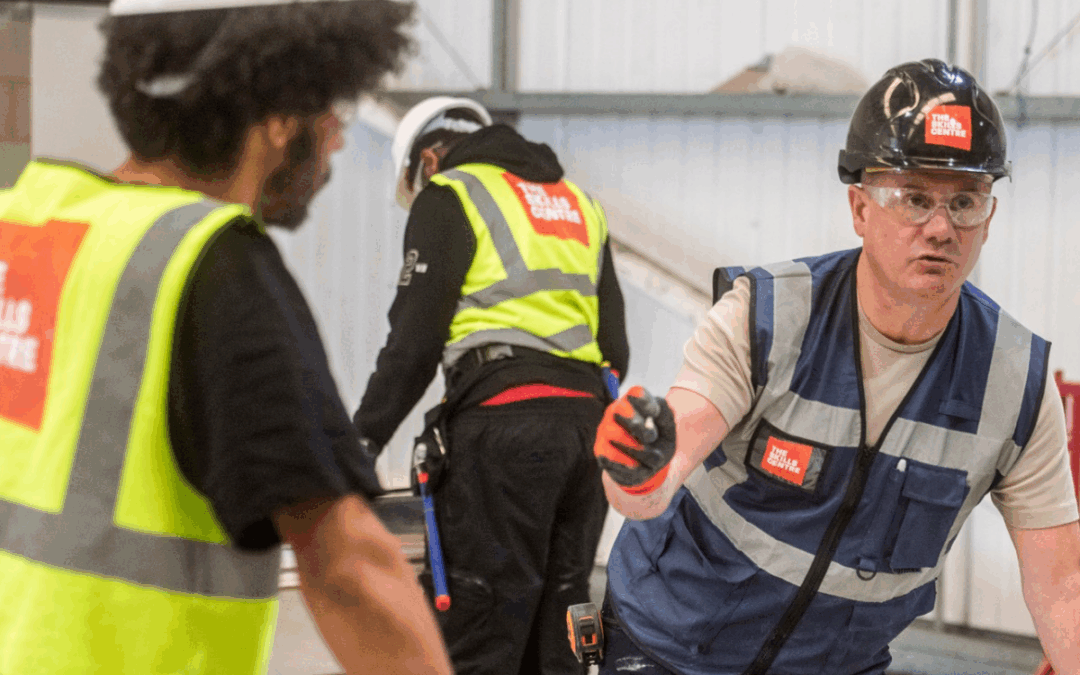
  • Skills Bootcamps: FIS runs Skills Bootcamps with The Skills Centre to produce job-ready drylining and interior fit-out recruits.

Over the coming weeks, FIS will share guidance on how members can make the most of these schemes. For help now, contact the FIS Skills team at info@thefis.org or 0121 707 0077, or visit the FIS Skills Hub.

Read more: the Construction Jobs Plan on GOV.UK · the FIS Skills Manifesto

Payments Bill set to clear the Lords: now is the time to talk to your MP

Payments Bill set to clear the Lords: now is the time to talk to your MP

The Commercial Payments Bill cleared the House of Lords yesterday, 20 October, and moves next to the House of Commons. For finishes and interiors contractors, it is the most important change to payment practice in more than 25 years.

The Bill bans cash retentions in construction contracts. The ban comes in over three years from commencement. After that point, every retention clause becomes void and any money still held must be paid out. The Bill also:

    • caps payment terms at 30 days for public sector payers and 60 days for private sector payers
    • makes statutory interest on late payment impossible to contract away
    • gives the Small Business Commissioner new powers to investigate and penalise persistent late payers

The Bill passed through the Lords with the retentions policy intact. An amendment to exempt resident management companies from the ban was rejected at Report stage. It is likely to be tabled again in the Commons.

Around £4.5 billion of retention is held each year in England, and £229 million of it is lost every year when firms further up the chain become insolvent. Between £300 million and £600 million is held from the finishes and interiors sector alone. More than half of FIS members (52 per cent) report problems getting their retention back.

Iain McIlwee, Chief Executive of FIS, said:

“This Bill can change how money moves through construction, and we cannot afford to lose it now. Retention does not buy quality. It takes working capital away from the firms we rely on to train people and deliver safe buildings. The biggest risk in the Commons is delay. Exemptions and amendments that reopen settled ground could leave the Bill running out of time. Every MP needs to hear from the businesses this will affect.”

FIS is working with colleagues from across the industry  to make sure MPs understand what is at stake.

What FIS is asking for

FIS supports the Bill without qualification. Our asks are about making it work in practice:

    • no exemptions from the retentions ban for any client group
    • no substitutes for retention, such as fixed sums or staged payments tied to defects
    • a firm commencement date
    • a commitment to use the Bill’s new power to bring payment terms below 60 days
    • affordable, fast dispute resolution for low-value claims

Next Step: Contact your MP

Members can help by writing to their local MP now, before the Bill’s Commons stages begin. Use TheyWorkForYou to find your MP’s contact details. A short, personal message about how retention and late payment affect your own business carries far more weight than a template, but to help we have suggested text to adapt:

Dear [MP name],

I run [company], a [specialist finishes/interiors] business in [town] employing [number] people. The Commercial Payments Bill will soon reach the Commons, and I’m writing to ask for your support.

At the moment we have £[amount] held in retention across [number] projects. That is money we have already spent on labour and materials, and we could be investing it in apprentices and training. Retention does not improve quality, and when contractors further up the chain fail, it is often lost altogether.

Please support the Bill and resist any amendments that would add exemptions or delay. I’d welcome the chance to tell you more, or to show you our work.

Yours sincerely,
[Name]

Feel free to send the FIS Policy Position with the email.

A more detailed briefing which looks at a is available on request from info@thefis.org – this briefing adds a clause-by-clause analysis, the full evidence base and responses to common objections to support protecting the key parts of the Bill.

References: