
by Clair Mooney | 29 Jan, 2021 | Labour, Membership, Skills
In a report on CNews today, FIS has continued to raise concerns about potential labour shortages.
Iain McIlwee, FIS CEO commented: As the article in CN news reflets, the extent of the immigration issue is still very much unknown, but it is concerning, especially in our sector where over 40% of the workforce is from the EU. What we do know is that over 40% of our members are currently reporting a shortage and 60% are expecting one, how bad it will get we don’t fully know right now, but we anticipate that it will impact rates and programmes. The problem has two parts, the immediate concern over who will stay and settle, we are trying to understand the cliff ledge post-Christmas and there is potentially another one coming in the summer when the Right to Works checks kick in. But, that is only part of the problem – even if all the EU workers return and stay, our annual recruitment and training target has doubled over night, because many trades do not make it on the skilled or shortage occupation list and so the EU tap is well and truly off. If just 5-10% opt to ply their trade within the EU instead, this target triples, quadruples and so on. This is the number one concern for the FIS as we move into 2021 – the infrastructure and time just isn’t in place to solve this – realistically we need to see some relaxation of the rules to give us time to transition.
Read the full article here: Labour shortages could raise rates ‘at least 10%’
by Clair Mooney | 29 Jan, 2021 | CSCS, Main News Feed
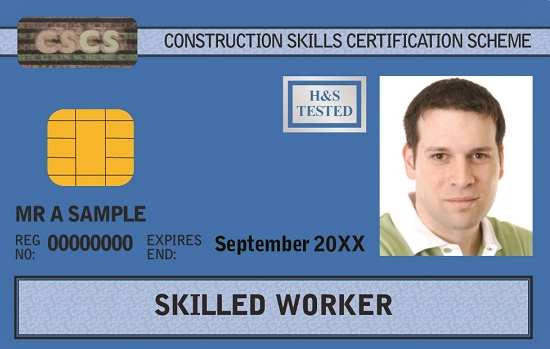
CSCS has launched virtual CSCS cards providing instant access to an individual’s training and qualification records. Virtual cards carry all the same information as physical cards but are stored within the My CSCS app, which is free to download via Google Play and Apple Store.
Virtual cards benefit the card holder and their employer by providing both with instant access to the individual’s training and qualification records and eliminating the need to carry a physical card on site.
Alan O’Neile, Head of Communications at CSCS said: “This is a game changer for CSCS cards. The technology will improve safety and efficiency on construction sites by making it easier for the employer to check that workers hold the appropriate qualifications and training for the job they do on site.”
The virtual card is generated automatically and can be downloaded to the My CSCS app as soon as an application is approved, and payment is taken. The virtual card can then be used immediately on site before the traditional plastic card has arrived in the post. CSCS is keen to highlight to employers that virtual cards are safe and secure but, just like the traditional plastic card, they should always be electronically checked using the free Go Smart software. This is to ensure the card is valid and to confirm that the holder has the appropriate training and qualifications for the job they do on site.
Alan O’Neile continued: “As well as storing the virtual card the app has many other benefits. Card holders can view the status of their applications, manage their personal details and get in touch with our Customer Service team via the app.”
The My CSCS app is available 24 hours a day, 7 days a week, providing card holders with access to the information they need when they need it.
Visit www.cscs.uk.com/mycscs to find out more about virtual cards and the My CSCS app

by Clair Mooney | 29 Jan, 2021 | Membership
FIS, alongside Build UK, is part of a coalition of industry trade bodies calling on the Chancellor to withdraw the VAT Reverse Charge which is due to be introduced on 1 March.
The new legislation will restrict the cash flow of companies throughout the construction supply chain, and Build UK is launching a campaign #StopReverseVAT on Monday 1 February to ensure that the Treasury and HMRC fully understand the impact of Reverse VAT. We are keen to involve all our members and you can feature your company on Build UK social media postcards by emailing Build UK the following:
- a hi‐res headshot of your Chief Executive or Chairman/President
- their name, job title and company
- a quote (50 ‐ 75 words) that sums up the impact that Reverse VAT will have on your business or sector.
You can also help us to raise the profile of this issue by sharing the postcards on Twitter and LinkedIn using the hashtag #StopReverseVAT and tagging in @hmtreasury and @HMRCgovuk. By working together, we can demonstrate the significant impact Reverse VAT will have on the industry at a time when we have been singled out as vital to the economic recovery.

by Clair Mooney | 28 Jan, 2021 | Main News Feed
The Department of Health & Social Care (DHSC) is widening the scope of the support they provide for asymptomatic Lateral Flow Device testing to include businesses in construction and other priority sectors with over 50 employees.
If FIS emmbers would like to be part of DHSC’s testing scheme then please attend one of the webinars noted below, and email Covid19.WorkforceTesting@defra.gov.uk or employee.testing@beis.gov.uk. You should outline interest in commencing LFD testing in your workplace, and request an invite to a follow up LFD Operational Overview Session.
BEIS has advised that you should state if you have more than one site that would like to join the scheme. If you sign up to the scheme please notify Build UK via emai on Communications@BuildUK.org
Smaller sites and businesses can access employee testing via their Local Authority’s Community Testing scheme. For more details on this please email communitytesting.centralops@dhsc.gov.uk.
An ‘Introduction to Mass Testing’ webinar – Monday 1 February – Friday 5 February between 14:00 – 14:45 (The link to join is below, and is the same for each meeting)
These introductory overview sessions will last 45 minutes, provide an overview of testing and answer any initial questions you may have. They will cover:
- High level overview of Mass Testing for surveillance and Daily Contact Testing to provide understanding of the processes and what is required
- Lateral Flow Technology and reason for using
- Frequency of testing
- Resources required
- Test Site requirement
DHSC Introductory webinar – Monday 1 February – Friday 5 Feb, 14:00-14:45 – Click here to join the meeting
Join with a video conferencing device
892762625@t.plcm.vc
Video Conference ID: 125 385 330 9
Alternate VTC dialing instructions
Or call in (audio only)
+44 20 3443 8728,,273694178# United Kingdom, London
Phone Conference ID: 273 694 178#
Find a local number | Reset PIN
If you have any further questions, please contact Employee.Testing@beis.gov.uk

by Clair Mooney | 28 Jan, 2021 | Main News Feed
HSE’s guidance on disinfecting premises during the coronavirus pandemic has been updated to include joint advice on risks to health that can be created by using walk-through spraying or misting systems.
HSE and public health bodies in England, Wales and Scotland have agreed joint advice on the risks to health from walk-through disinfecting systems for dutyholders considering using them to reduce transmission of coronavirus.
Spraying people with disinfectants is not recommended under any circumstances (including in a tunnel, cabinet, or chamber). The World Health Organisation has also confirmed that it could be harmful and does not reduce the spread of the virus. This is because transmission is usually through droplets or contact, so the effectiveness of these systems is likely to be minimal.
There is more information from the government’s Scientific Advisory Group for Emergencies (SAGE) on potential health risks from whole-body walk-through systems.
The updated page on HSE’s site also has helpful advice on:
- cleaning premises using fog, mist or UV treatment
- the law on disinfectants
- only using HSE-authorised products in the UK
- supply and manufacture of disinfectants

by Clair Mooney | 28 Jan, 2021 | Market data
Construction product manufacturers reported a second quarterly increase in sales in the fourth quarter of 2020, according to the Construction Product Association’s (CPA) State of Trade Survey for 2020 Q4. This reflects a catch-up in construction activity and pent-up demand in sectors such as housing as the industry continues its recovery from the Covid-related contraction in the first half of the year. Constraints related to material and component supply, however, as well as capacity and import concerns all registered more strongly than in recent surveys.
FIS members can access the full results here.

by Clair Mooney | 25 Jan, 2021 | Building Safety Act, Market data
FIS Members are invited to take part in an industry-wide consultation into a new proposed Code for Construction Product Information (CCPI), to gather the views on the Code before it is formally launched later this year.
The Code has been developed by the CPA’s Marketing Integrity Group (MIG) with input from FIS, which was tasked with responding to the issues raised in Dame Judith Hackitt’s report ‘Building A Safer Future’, and the credibility challenge facing our industry following the Grenfell Tower fire. The report confirmed radical change was needed for construction products, particularly in the areas of testing, information and marketing.
The Code, made up of 11 clauses, aims to set the benchmark for how product information is presented and marketed by manufacturers. A new microsite dedicated to this consultation – www.buildingsafely.co.uk – explains the background, and includes a specially written report on the new Code. It’s presented in an easy-to-read, digestible format for the industry to review and respond.
The MIG’s work tackles shortcomings in ‘Product Information’ identified in Chapter 7 of the ‘Building A Safer Future’ report. Its work represents two years of open debate and discussion, and of engagement with various parts of the supply chain. It follows detailed analysis of the Call For Evidence survey in 2019, which attracted over 500 responses from across the industry. The survey confirmed that for product and performance information to be trusted, it must be Clear, Accurate, Up-to-date, Accessible and Unambiguous. These five points are the acid tests that now stand behind the 11 Clauses in the new Code.
The MIG is driving a wide-reaching consultation to give manufacturers, specifiers and users of information an opportunity to comment on the new Code, the implementation of its 11 Clauses, and its ongoing management and policing. The consultation is being carried out independently by industry specialists, MRA Research.
CPA Chief Executive Peter Caplehorn comments: “The importance of this new Code and consultation process will be obvious to all those working in the built environment post-Grenfell. It is our responsibility as an industry to regain public trust and credibility in what we do, and to demonstrate that technical competence can be trusted. I believe the Code represents both a determined attempt on behalf of manufacturers to correct disingenuous marketing practices and a proactive and collaborative effort to address the issues highlighted in Dame Judith Hackitt’s Report.
“The first industry consultation in 2019 was key in establishing the way forward. We are now encouraging all FIS Members to have their say once more before the Code is launched. CPA are reaching out to every organisation across the construction supply chain, whether that be manufacturers, specifiers, suppliers, distributors, contractors or installers. They hope businesses and individuals will embrace the opportunity to be involved, and recognise the urgency of change that is needed for our industry to ensure safe buildings.”
MIG Chair Adam Turk adds: “Following Grenfell, our industry reputation has been damaged. This Code is an opportunity to demonstrate our commitment to setting a level playing field for all construction product manufacturers to ensure that information they provide passes the five acid tests. In particular, that users of our products can once again rely upon the information given to them, to build the great buildings and infrastructure in which we live, work and play.”
We think this is one of the biggest changes in the way that manufacturers describe their products and demonstrate their commitment to Clear, Accurate, Up-to-date, Accessible and Unambiguous information, and we see this as a mark of quality that all members will want to be associated with.
Download the Code for Construction Products Information at www.buildingsafely.co.uk and register to have your say. The consultation will open on 1st February and run until 31 March.
FIS will be holding a webinar on Friday 5 February to expand on this introduction and discuss any questions that you may have before submitting your response. To register please follow this link https://www.eventbrite.co.uk/e/consultation-on-new-code-for-construction-product-information-tickets-138263563039

by Clair Mooney | 25 Jan, 2021 | Membership
The FIS Site Guide for Suspended Ceilings has been revised and updated by the FIS Ceilings and Absorbers working group and is available to download here.
The site guides are intended to help main contactors, designers and project managers that you are working with to understand the terminology, descriptors and different ceiling systems used, and the process of delivery, handling, planning the installation, as well as understanding the site conditions, the plant and access equipment needed. It also highlights the key health and safety points and requirements from the Construction (Design and Management) Regulations 2015 (CDM).
The guide sits alongside our other best practice guides that relate to ceilings:
These guides work well when they are included in proposals and project plans to demonstrate how you will approach a project, they are also good differentiators when you find yourself in competition with non-members and are an excellent introduction to new members of the team and any trainees and apprentices.
The next online meeting of the Ceilings and Absorbers working group will be held on 2 March. To register please follow this link, or call Joe Cilia on 07795 958 780 if you have any questions.

by Clair Mooney | 25 Jan, 2021 | Membership, Skills
The FIS Training Group has secured additional funding to support the cost of training and qualifications completed by FIS employer members in scope to CITB.
The additional funding, of up to £2,000 per company, covers a range of training from generic health and safety through to specialist courses such as spray plastering, deflection heads or fire door inspection and includes vocational qualification achievement. This funding is in addition to the CITB grant eligible training (GET) code grant you already claim from CITB.
How to claim
Simply send the invoice for training completed since 1st August 2020 to info@thefis.org if it meets the criteria set out below, we will arrange a refund to the full 100% of the course cost (up to a maximum of £2,000 per company, less the grant already claimed from CITB and less VAT incurred). The funding will be available on a first come, first served basis.
For a full list of eligible courses please see: CITB training standards
CITB GET Fund FIS Supplement Terms and Conditions
- The supplement cannot be used for GET codes that are already included on an individual employer contracted CITB Skills and Training allocation.
- An FIS supplement can only be paid to organisations ‘in scope’ to CITB and up to date with levy payments.
- The supplement is primarily for micro and small organisations no more than 25% of the total fund can be paid to large organisations (100 or more employees).
- Non grant eligible training is not covered by this supplement.
- Training must have taken place between 01 August 2020 and 31 March 2021 and have been completed before applying.
- Training must have been completed by delegates who are currently employed by or are NET (taxed) Construction Industry Scheme (CIS) sub-contractors of CITB registered employers.
- Invoices supplied must show the full costs of the training completed including CITB registration number, Training Provider, course name, CITB GET code, Tier value, date of completion, number of delegates, course cost and VAT.
- Successful applications will be notified within 25 working days.
- Payments will be made when the invoice is verified.
Funding is limited so cannot be guaranteed.
FIS is happy to review and support all of your funding claims through our one to one Skills and Funding Clinics.
This is a service freely available to members through the booking form here. Members are also strongly advised to apply for the CITB Skills and Training Fund 2020 which can allow organisations to claim up to £25,000 to support their training needs.