
by Clair Mooney | 5 Aug, 2022 | Main News Feed
Now that Making Tax Digital for VAT has started to bed in, we can expect to see HMRC starting to impose penalties for failures to comply with the detail of the legislation; so now is the time to make sure you have checked your process. More information on how to avoid penalties for Making Tax Digital for VAT is available here.

by Clair Mooney | 4 Aug, 2022 | Main News Feed
The New Hospital Programme (NHP) is hosting an Industry Day on Tuesday 20 September to outline how businesses across the supply chain can play a role in the biggest hospital building programme in a generation. With a target to develop 48 hospitals by 2030, the NHP will set out how it is building better, faster and greener ahead of the forthcoming procurement launch of the NHP’s Framework Alliance. Places are limited and members can register their interest to attend either in‐person at the Vox Conference Venue in Birmingham (B40 1PU) or online.
The NHP has previously published the NHP Supplier Guide outlining what it requires from its supply chain, along with the first NHP commercial pipeline which provides visibility of current and future contract opportunities up to 2024.

by Jane Knight | 28 Jul, 2022 | Main News Feed
With the sector needing to recruit more than 5,000 new entrants each year to maintain output and keep up with the forecasted growth of the construction industry the need for employers and those joining the industry to understand the different routes of entry is more important than ever. FIS is producing Skills Fact Sheets to provide information, advice and guidance on the various ways young people get introduced to the construction industry and the finishes and interiors sector, including Apprenticeships, Traineeships, T-Levels and Degrees. Whilst not all employers can take on an apprentice, most can offer work experience or provide support to schools, colleges or universities to help inspire the next generation to choose construction.
Attract T-Level students through work placement
There are a number of progression options open to sixth form students. These include skilled employment, an apprenticeship and/or university education. If you would like to offer an Industrial Placement for T-Level students, you can register at Employers Next Steps or call 08000 150 600 (choose option 4). There is T Levels and industry placement support for employers available for employers that explains the process and expectations.
T-Levels are courses which follow GCSEs and are equivalent to 3 A levels. These 2-year courses are for 16 to 19 year olds, sixth form students, and have been developed in collaboration with employers and businesses so that the content meets the needs of industry and prepares students for work, further training or study. T-Levels offer students a mixture of classroom learning and ‘on-the-job’ experience during an industry placement of at least 45 days. Most of the learning will take place in the classroom which makes them different from an Apprenticeship. The industrial placement can take place as a block, day release or a mix of these. There are currently two Construction T-Levels:
- Design, surveying and planning for construction the course offers a core knowledge of how the construction industry works, the principles of design and the role of technology and sustainability. Students then have the chance to specialise in either Building services design, Civil engineering, Hazardous materials analysis or surveying.
- Onsite construction learners have the option to cover at least one trade from a choice of bricklaying, carpentry and joinery, painting and decorating or plastering.
There’s CSCS Card for Industry Placement: https://www.cscs.uk.com/card-type/industry-placement-card/ specially for T-Level and Traineeship students.
Traineeships are for people not in employment, contact your local college and ask what Traineeships they are delivering and how your organisation can support by offering a work placement. There is a Traineeship for Dryliners.
Become a STEM Ambassador
FIS is working with the Construct STEM Ambassador network to produce presentation packages bespoke to finishes and interiors occupations. FIS is hosting a one hour webinar on Wednesday 07 September 2022 starting at 12:00 on how to become a Construction STEM Ambassador for more details and to register please here. This webinar is intended to help members understand what they can do to build the pipeline of skills and support new entrants to find their first opportunity in construction and hopefully in the sector. The commitment as an Ambassador is deliver at two events per year.
Harness the skills of HM Forces leavers
HM Forces Service Leavers are considered a strong recruitment source of willing capable people. FIS are partnered with the charity Building Heroes and this organisation is an FIS member. Established in 2014, Building Heroes is a gateway service supporting military families. This organisation provides training and employment support to service leavers who are looking for a new career in construction by training individuals with a broad range of trade skills and then connecting them with a network of employers. Building Heroes recruitment provides a personalised service that matches the right candidate to the right job. Embedded in their training is a Drylining option, aligned to the FIS BuildBack programme. The organisation is currently looking to place individuals who have completed this programme (a two weeks of introduction) with Fit-out employers. For further information including details of their introduction fees please contact Rachel Fianko rachelf@buildingheroes.org.uk
In addition, the Regular Forces Employment Association (RFEA) also provide support to Service leavers, reservists, veterans and their families to enable them to access new careers and training opportunities. Through their links with the Careers Transition Partnership, employers can access a high quality, no cost recruitment service. Candidates are highly motivated and experienced ex-military personnel, ready to bring their considerable skills and abilities to your organisation. Find out more
Utilise Job Centre Plus
The Department for Work and Pensions can arrange work placements through Job Centre Plus. This service together with a variety of employer support for recruitment is available free of charge for more details see here.
FIS is here to help and has a section on our website dedicated to collating advice, ideas and support to help your recruitment efforts – you can access information on recruiting school leavers, ex-offenders, service leavers, career switchers, offering work placements and how to focus on greater diversity here. If you want to talk about what more you can do and the support available for your own efforts to recruit, FIS have a dedicated team to help.
by Jane Knight | 28 Jul, 2022 | Main News Feed, Membership
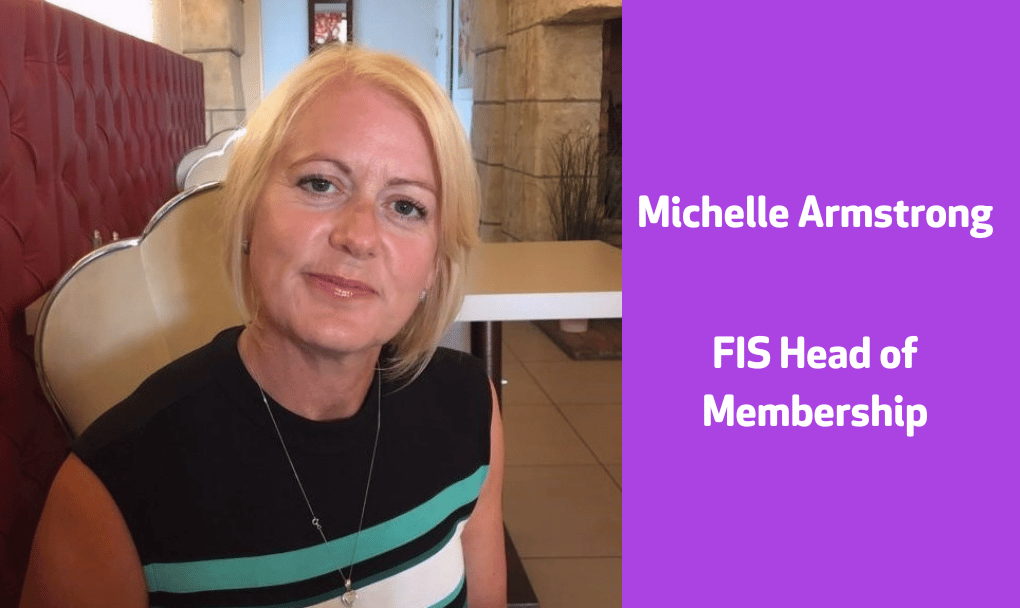
FIS is delighted to announce the appointment of Michelle Armstrong as Head of Membership. The role has been newly created in support of the company’s growth strategy, achieved by the development of a programme of member engagement and recruitment activities.
Michelle has over two decades of experience in the construction industry, having worked for the Construction Industry Training Board (CITB) since 2000. She is a skilled and practised Company Development advisor, making her FIS’ clear choice to fulfil the new position of Head of Membership.
In her new role, Michelle will continue to develop the company’s growth strategy by developing and leading a programme of member engagement and recruitment activities. She has most recently worked as an Area Delivery Manager for CITB, ensuring she brings a wealth of organisational experience to the new role in addition to her recruitment background.
Michelle’s extensive career in construction has given her great insight into the sector, allowing her to understand how the industry operates and the obstacles faced by members. This understanding will be fundamental to her new role, as she will help to overcome these systemic challenges.
The role will see Michelle at the forefront of ensuring that FIS is a dynamic and growing membership community, alert and responsive to the challenges members face and delivering effective and practical support.
Working with the FIS Community in this new role, Michelle will lead the company’s efforts to strengthen relationships with members through improved account management and formulating an effective regional strategy, ensuring member retention remains exceptional and FIS continues to attract new members and grow.
Michelle commented: “After 21 years working for CITB and navigating the challenges of the construction industry, I am delighted to be joining FIS. I look forward to working with colleagues in continuing to provide a first-class service to our members, as well as extending our influence to new members.”
Commenting on the new appointment, FIS CEO Iain Mcilwee said: “We are excited to have Michelle join the team, she builds a wealth of experience in developing and managing relationships. FIS is a Membership body and a voice for the sector – to be effective we need to engage with our members, to listen and ensure that they are accessing all we have to offer and matching our resources to meeting their challenges head on. The organisation has been steadily growing and it is the right time that we bring someone in to help us to better structure and manage relationships, to support ongoing growth built on a foundation of active engagement, open communication and dynamic support.“
For further information or for any questions please contact the FIS at info@thefis.org or call 0121-707-0077.

by Iain McIlwee | 28 Jul, 2022 | Building Safety Act, Main News Feed
The Building Safety Act passed into Law in April 2022 and it brings into being a new Regulator – The Building Safety Regulator will help to deliver the two underlying objectives of the Act, namely securing the safety of people in and around buildings in relation to risks from buildings and improving building standards.
Contrary to popular belief, the The Building Safety Regulator has a wider remit than High Rise High Risk Buildings and is tasked to:
- implement a new, more stringent regulatory regime for high-rise buildings in England
- being the building control authority in England for building work on high-rise buildings
- overseeing and enforcing the new regime in occupation of high-rise buildings
- oversee the safety and performance of all buildings. This has two aspects:
- overseeing the performance of other building control bodies (local authorities and registered building control approvers (currently known as approved inspectors))
- understanding and advising on existing and emerging building standards and safety risks
- promote competence among industry professionals and regulators to raise standards in the design, construction, and management of buildings
The Regulator will be part of the Health and Safety Executive (HSE) and so the mechanisms and enforcement approach will be familiar to the construction sector already immersed in compliance with CDM.
In a new Factsheet the Building Safety Regulator starts to outline how they imagine this will work in practice, starting with the clear principle (akin to that in CDM) that the person or entity that creates, or is responsible for, a building safety risk should be responsible for preventing, managing, and controlling that risk. This includes building designers, who have a responsibility to design a building that complies with relevant building regulations.
Regulatory intervention will be targeted on activities where there is high actual or potential harm arising from any breach. In judging how far dutyholders have taken steps to reduce or mitigate safety risks, the Building Safety Regulator will balance the degree of risk against the money, time or trouble needed to avert that risk in the particular circumstances, as well as the impact of any action on businesses and residents.
The Building Safety Regulator will expect that dutyholders, in turn, will adopt a sensible and proportionate approach to managing safety, focusing on significant risks.
It is intended that the Building Safety Regulator will employ a variety of methods to encourage and support dutyholders to meet the requirements of relevant Building Regulations and to manage fire and structural risks in buildings in a sensible and proportionate way. This reflects the aims in chapter 8 of the document: A reformed building safety regulatory system: government response to the Building a Safer Future consultation, published by MHCLG in April 2020.
The appropriate and proportionate use of enforcement powers, regulatory tools, and sanctions by the Building Safety Regulator will be set out in a published Enforcement Policy Statement (EPS) in due course.
For further information about the Building Safety Act, including an outline summary of what it all means to the finishes and interiors sector, click here
For further information from the HSE on how they will be supporting compliance and enforcing in the event of non-compliance click here.
by Jane Knight | 27 Jul, 2022 | Main News Feed
FIS, University of Reading, AMA Research and Barbour ABI are working together to understand how the fit-out, finishes and interiors sector can deliver better value and improve supply chain relationships. You can complete our survey here.
The £10 billion fit-out, finishes and interiors sector puts the ‘wow’ into buildings – turning structures into functional, comfortable and safe environments. Homes, shops, offices, hospitals and schools are all rendered operational through fit-out. The workforce of 250,000 provides the essential scenery and settings which shape the lived experiences of building users. If construction is indeed to be assessed on perceptions of ‘value’, then the fit-out sector punches way above its weight.
Whether it be refurbishment or newbuild, construction of the interior system is a particularly time-sensitive and complex part of the building process and relies on robust procurement. Trade body, Finishes and Interiors Sector (FIS), is looking to better understand the challenges our industry is facing, how current procurement practices work and more importantly, can be improved.
The nature of the procurement process is often identified as a barrier to change. Dame Judith Hackitt’s statement from the 2018 ‘Building a Safer Future’ Report, confirmed that ‘Improving the procurement process will play a large part in setting the tone for any construction project. This is where the drive for quality and good outcomes, rather than lowest costs must start.’
Whilst previous research has been published on mainstream construction procurement, such studies often fail to address the experienced realities of the specialist finishes and interiors sector. FIS recognises that more needs to be done to understand how procurement practices are affecting the fast-moving fit-out industry.
Reaching into the Supply Chain
As an initial phase, the group are inviting all in the supply chain to take part in this study and are keen to give a voice to all those doing the work to better understand how procurement practices in the finishes and interiors sector are working and need to evolve.
The research has been commissioned by FIS as part of its focus on supporting positive transformation within the sector. The aim is to benchmark current practices and explore how procurement impacts effective delivery.
Data will be gathered in the strictest of confidence and aggregated to support the wider research. All those responding will be issued a final copy of the report.
FIS Chief Executive Iain Mcllwee stated: “The key to unlocking the potential of construction and unleashing the culture change that we need in the finishes and interiors sector sits squarely in procurement. That isn’t a revelation. Virtually every report written about the sector has raised concerns about procurement practices that facilitate a race to the bottom and create adversarial relationships.
Our sector is complex and fast moving, too fast at times. To work out where we are going we need to be honest and open about where we are at, understand the real time pressures we are creating, the pinch points, to take stock, benchmark and vitally, to understand from all parts of the supply chain how we can improve.
The regulatory, environmental, commercial and moral drivers for change have never been stronger and this research is an exercise in active listening, an opportunity to give voice to all in the supply chain and the start of a practical call to action for positive change.”
Professor Stuart Green from the University of Reading commented: “Procurement is undoubtedly of central importance to construction performance. But despite many well-intentioned previous initiatives, few have bothered to access the reality of how procurement operates within the finishes and interiors sector. We are seeking to redress this imbalance by collecting evidence from those directly involved. In striving to improve procurement practice, it is vital to establish the baseline from which we are starting. Wishful thinking alone will not deliver the sustained improvement in practice which is undeniably necessary.”
You can access the survey here.
For further information or for any questions please contact FIS at info@thefis.org or call 0121 707 0077.