by Oscar Venus | 17 Oct, 2019 | Main News Feed
The Construction Products Association’s State of Trade Survey for 2019 Q1 reveals a balance of 46% of both heavy side and light side manufacturers experienced a rise in sales during the quarter.
Growth in product manufacturers’ output is anticipated to rise further in the coming months, with 33% of heavy side firms and half of those on the light side expecting an increase in sales in Q2.
FIS members can read the full report here.
by Oscar Venus | 11 Oct, 2019 | Main News Feed
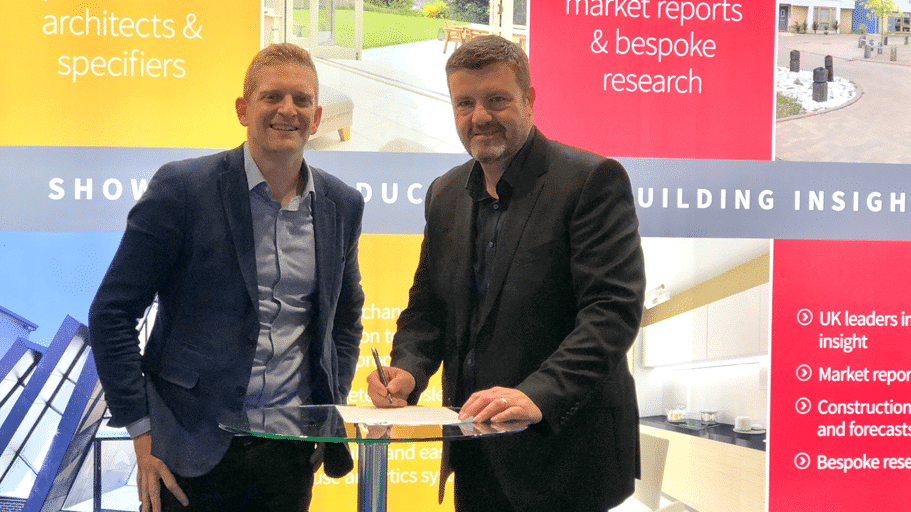
At UK Construction Week, Finishes and Interiors Sector (FIS) and Barbour Product Search signed a new partnership agreement focussed on promoting excellence and supporting specifications in the finishes and interiors sector.
With buildings anticipated to go through 30 refits over their lifetime and accounting for 11% of construction spend, the finishes and interiors sector is a vital part of the built environment. It is also a complex arena with aesthetic, acoustic, thermal and fire safety performance all intrinsic to an effective fit-out. Ultimately the way buildings are finished impacts the safety and wellbeing of everybody who lives, works, learns and plays in them. Through this partnership Barbour Product Search and FIS aim to educate and inform the wider construction industry on regulations, technical performance, innovation in products and processes and to deliver technical content and industry news to the specifier audience to support best practice.
FIS CEO Iain McIlwee commented “Whether it is acoustic performance, fire safety or innovation in construction, we want to ensure that specifiers know that they can turn to our community for help. Through FIS specifiers have access to a wealth of knowledge and a community of vetted members, but this can be lost in the noise – there is so much confusing and conflicting information out there and who specifies is an ever increasing complex area, making it more and more difficult to target communications. Collaboration is the answer.”
“Barbour Product Search is a natural partner here and we are excited about the opportunity and the message that this new partnership sends out. Barbour Product Search is part of the Barbour ABI group, one of the leading lights in terms of construction intelligence and they command a powerful network and we are confident that through Barbour Product Search our expertise will blend with theirs and ensure the specification world is better informed about the options open to them to ensure buildings are finished effectively and safely.
Simon Mahoney, Group Director of Barbour ABI said “We recognise the importance of this sector and have also been impressed with the expertise, energy and drive that we see evident in FIS. It just made sense that if we were going to step up our work in this arena that we should do it with the leading trade body. We are very much looking forward to working with FIS and their membership over the coming months to really develop a finishes and interiors hub on Barbour Product Search that supports decision making in our community and promotes excellence in the sector”.
The agreement between Barbour Product Search and FIS was signed on the Barbour ABI stand at UK Construction Week today, the two organisations are now working to deliver the platform in time for launch at the FIS AGM and Rethinking Construction Conference on the 19th November.
More information on the partnership is available here

by Clair Mooney | 9 Oct, 2019 | Main News Feed
With the support of CITB, FIS has relaunched the flagship Fit-out-Futures programme targeting a more consistent and effective approach to attracting and introducing new starters into the finishes and interiors sector. Changes to the programme enable FIS to extend the successful BuildBack project (which has over the past 18 months given induction training and employment opportunities to over 800 individuals who were previously long-term unemployed), using the principles and learnings to support key target demographics:
- Young people not in education, employment or training
- Unemployed
- Ex-military service leavers
- Full-time learners (particularly those studying for construction and built environment diplomas).
- We are also interested in those people retraining in construction.
There are two key elements to this work. A structured assessment and induction programme for finding and embedding new starters and a clear work-experience framework that supports employers in finding and managing work trials, connecting employers with college learners. The programme is also looking at addressing diversity across the key target groups.
FIS CEO, Iain McIlwee stated, “Fit-out-Futures focuses on the way we attract and induct people, it is built on the principle that if we start people right we will reduce what is now a quite horrific waste of time and resources invested in training. In interrogating where people start and how they flow through our industry, there are clear areas of waste. The fact that, whilst we recognise we have a skills shortage, almost 70% of students currently studying a construction related course in college will never work in the industry is mind-blowing. We also know that if we don’t assess and induct people effectively, we end up wasting time and money training people who have no future in our sector.
We learned a lot through BuildBack and in working with our Approved Training Providers in phase one of Fit-out-Futures, but it became ever clearer that to put a real dent in overcoming our skills shortage we need marginal gain across all groups entering our sector. This project will help to integrate a more consistent induction for new starters to the broadest cross-section of new starters, so they get a better feel for the industry they are joining and have clearer understanding of competency requirements and opportunities. Through Fit-out-Futures we are also interrogating what attracts and turns people off when it comes to the way we introduce them to the finishes and interiors sector, we want to understand where we get it wrong so we want to do it better.
Another key part of the project is how we engage with colleges, we all allowed this vital relationship to slip away and now colleges often feel apart from rather than a part of our sector. We have engrained relationships with FE Colleges and other key training providers into Fit-out Futures to ensure that we understand the issues from all angles”
FIS are now calling for employers, trainers and assessors to get involved. Collaboration and partnership are at the heart of the FIS strategy. FIS is well placed and open to developing key relationships across main contractors, housebuilders, local authorities and agencies providing the basis for excellent reputation across all areas of the industry. In delivering Fit-out Futures Version 2 FIS will manage and deliver all strands and options end to end working with all parties, delivering a seamless experience and making it as easy as possible for employers to take on new entrants and for new entrants to get skilled and employed.
Fit-out-Futures is a critical part of the wider FIS Competency SAKE work, where we continue to work to support our sector in raising levels of competency and attacking skills shortages within the sector.
To find out more about how you can benefit from Fit-out Futures visit our website at:
www.thefis.org/skills-hub/fit-out-futures/ or email us at skills@thefis.org
by Oscar Venus | 9 Oct, 2019 | Main News Feed
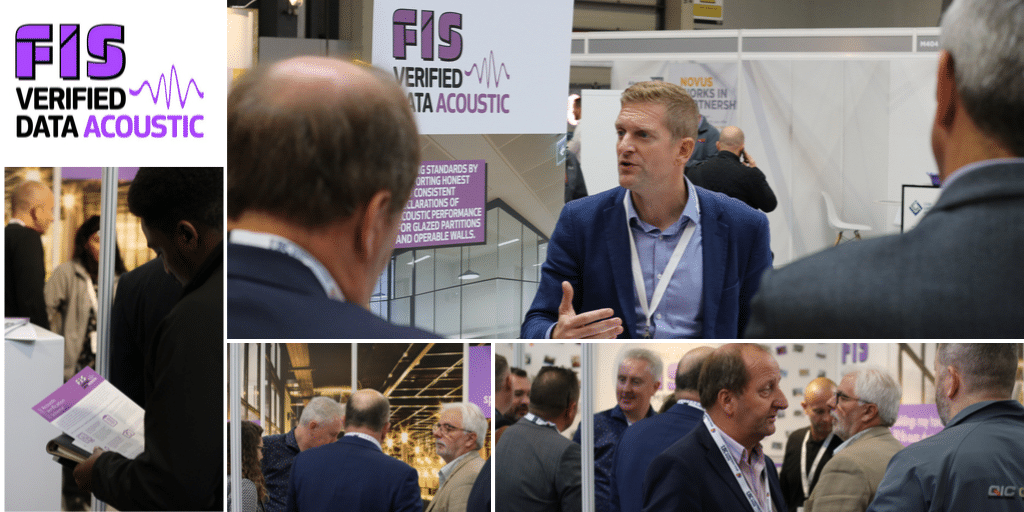
To create a level playing field for the declaration and verification of the acoustic performance of products, the Finishes and Interior Sector (FIS) has today at UK Construction Week launched the FIS Acoustic Verification Scheme for Operable walls and Partitions. The scheme will allow designers, architects and contractors to specify products, safe in the knowledge they will provide the acoustics performance claimed, eliminating any misinformation and misleading information.
Created in partnership with the acoustic team at multi-disciplinary consultants Cundall, this new verification scheme takes manufacturers’ test reports and assessments and runs a series of thorough checks to verify the data is accurate and compliant. The scheme has been created to enable best practice and prevent inaccurate or misleading information from undermining the market and responsible manufacturers and suppliers.
Commenting on the launch, Iain McIlwee, FIS CEO said: “The misleading use of data has become an industry concern, as it means clients end up paying for acoustic performance that is not achieved and undermines the credibility of our sector.”
“We are determined to curb this practice, to create not only a level playing field for manufacturers, but peace of mind for clients, specifiers and contractors that the product selected has been properly tested and met the performance claimed. The test framework we have created will provide consistency and will enable the comparison of products and systems on a ‘like for like’ basis.”
The FIS Acoustic Verification Scheme will enable members to verify tests against an agreed criterion and a methodology to present these to market in a consistent and transparent manner.
A robust process has been created that will see manufacturers provide product data in a standardised format, along with test reports and where applicable third-party certificates. Non-English test information must be translated by the original test house to ensure accuracy and traceable evidence on the independence of the test facility has to be supplied. Photographs of the test, where available, along with drawings of the installation of the test sample must be supplied. This information is then provided to Cundall for independent verification in line with the schemes agreed criteria.
FIS is a driving force within the industry, providing unparalleled guidance, events, training and technical support for its members. A unique voice for the sector, FIS is committed to delivering the best knowledge and services for its members, continually reflecting the trends and innovations the industry has to offer.
For manufacturers and suppliers wanting to find out about getting test data verified, email info@thefis.org and request a copy of the FIS Acoustic Verification Scheme Manual.
More information on the click here

by Oscar Venus | 30 Sep, 2019 | Main News Feed
Looking to understand more about the new ISO 19650 BIM standards and certification?
Whether you’re new to BIM, want to learn more about ISO 19650 or are looking at transitioning over from your current PAS 1192-2 certification to the new ISO, this webinar is a great place to get the facts.
When: 16 April, 10:00-11:00 BST
Where: Online
Register: Register here
Join BSI and other BIM professionals to:
- Gain an understanding about the new international standards for BIM
- Ask our experts direct questions on BIM and ISO 19650
- Learn how companies can migrate from PAS1192-2 to ISO 19650 certification
- Gain insight into a typical BIM assessment
- Realize steps to get you started today