by Clair Mooney | 15 May, 2020 | Main News Feed
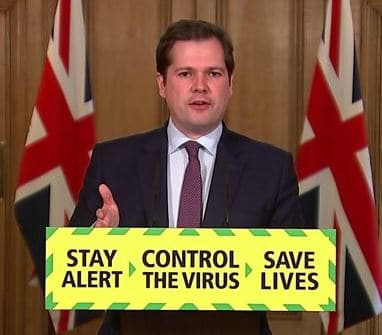
The Secretary of State for the Ministry of Housing, Communities and Local Government (Robert Jenrick) issued a written statement yesterday around the need for the construction industry to adapt its normal practices.
To enable this he has requested that, with immediate effect, local planning authorities should take a swift and positive approach to requests from developers and site operators for greater flexibility around construction site working hours. This is to ensure that, where appropriate, planning conditions are not a barrier to allowing developers the flexibility necessary to facilitate the safe operation of construction sites during the response to the COVID-19 pandemic and to proceed at pace with work otherwise delayed as a result of COVID-19.
A Q&A to support this approach is available here.
The full script of the announcement is available here.

by Clair Mooney | 14 May, 2020 | Main News Feed
FIS is seeking comments on its final draft of the Specifiers Guide to Ceilings and Acoustic Absorbers.
This Specifiers Guide has been produced to assist the selection and specification of a suspended ceiling and acoustic absorbers by providing a structured approach to help specify products.
It is not a definitive list of standards, regulations or product types. Importantly it is not a replacement for professional consultation on critical performance requirements or discussions with manufacturers on specific product use.
Once published, this guide will be freely available to specifiers and designers to access on the FIS website.
Comments should be returned by 5 June using this comments sheet. A copy of the draft guide is available here.

by Iain McIlwee | 12 May, 2020 | Main News Feed
The CICV Forum has written to Holyrood urging the Government to adopt a five-point plan to assist contractors through the worst of the COVID-19 crisis.
The collection of 23 trade and professional bodies (including FIS) has addressed its appeal to Kevin Stewart MSP, Minister for Local Government, Housing and Planning. The letter asks the Scottish Government to implement the following five key points, along with desired aims:
- Agreement by public sector procurers on all project costs at March 31, including resolution of disputes, and payment within 14 days.
Aim: Release cash to the industry and the supply chain.
- Public sector procurers to consider release of all or part of retentions.
Aim: As above.
- Introduction of 14-day payment period when construction recommences.
Aim: Improvement of cashflow.
- Introduction of Project Bank Accounts (PBAs) when construction recommences.
Aim: Ensuring rapid cashflow.
- Lowering PBA threshold on public sector procurement to £250,000
Aim: Ensuring rapid cashflow.
The urgency of the appeal was highlighted by the fate of the latest victim of the building industry shutdown – Central Building Contractors (Glasgow), which went into administration at the end of April, making 148 staff redundant and sending shivers down the supply chain.
Len Bunton, head of the CICV Forum Clients sub-group, said: “Even before the sudden shutdown of the construction industry in Scotland, the sector was experiencing extreme difficulties in relation to cashflow and payment. Urgent attention to payment cash flow and fairness is now needed by the public and private sector in Scotland.”
Iain McIlwee, CEO of Finishes and Interiors Sector (FIS) added, “Our industry faces an unprecedented challenge in Scotland and we need to to all we can to ensure that we protect it during this hibernation phase so that it is ready to scale back up and support growth again in Scotland. Critical to this is protecting cash reserves and Government must lead by example.”
The CICV Forum, which was set up two months ago, now has 23 trade and professional body members. It has established a series of influential sub-groups dealing with mission-critical aspects such as Health and Safety, Skills, Communication and Future Planning.
Find out more about the CICV Forum here

by Iain McIlwee | 11 May, 2020 | Main News Feed
New guidance on safer working has been published for a variety of sectors including “Construction and Other Outdoor Work” and also “Guidance for people who work in or run offices, contact centres and similar indoor environments” can be accessed here. The Guidance does little to extend the work of the Construction Leadership Council. On the construction specific elements there is a working group in place to review whether new guidance will result in changes to the Site Operating Procedures, but in the meantime it is worth referring to new Guidance on PPE and Face Masks to support existing risk management strategies (note this is not construction specific and repeated for all sectors).
Personal Protective Equipment
PPE protects the user against health or safety risks at work. It can include items such as safety helmets, gloves, eye protection, high-visibility clothing, safety footwear and safety harnesses. It also includes respiratory protective equipment, such as face masks.
Where you are already using PPE in your work activity to protect against non-COVID-19 risks, you should continue to do so.
At the start of this document we described the steps you need to take to manage COVID-19 risk in the workplace. This includes working from home and staying 2m away from each other in the workplace if at all possible. When managing the risk of COVID-19, additional PPE beyond what you usually wear is not beneficial. This is because COVID-19 is a different type of risk to the risks you normally face in a workplace, and needs to be managed through social distancing, hygiene and fixed teams or partnering, not through the use of PPE.
The exception is clinical settings, like a hospital, or a small handful of other roles for which Public Health England advises use of PPE, for example, first responders and immigration enforcement officers. If you are in one of these groups you should refer to the advice at:
Workplaces should not encourage the precautionary use of extra PPE to protect against COVID-19 outside clinical settings or when responding to a suspected or confirmed case of COVID-19.
Unless you are in a situation where the risk of COVID-19 transmission is very high, your risk assessment should reflect the fact that the role of PPE in providing additional protection is extremely limited. However, if your risk assessment does show that PPE is required, then you must provide this PPE free of charge to workers who need it. Any PPE provided must fit properly
Face coverings
There are some circumstances when wearing a face covering may be marginally beneficial as a precautionary measure. The evidence suggests that wearing a face covering does not protect you, but it may protect others if you are infected but have not developed symptoms.
A face covering can be very simple and may be worn in enclosed spaces where social distancing isn’t possible. It just needs to cover your mouth and nose. It is not the same as a face mask, such as the surgical masks or respirators used by health and care workers. Similarly, face coverings are not the same as the PPE used to manage risks like dust and spray in an industrial context. Supplies of PPE, including face masks, must continue to be reserved for those who need them to protect against risks in their workplace, such as health and care workers, and those in industrial settings like those exposed to dust hazards.
It is important to know that the evidence of the benefit of using a face covering to protect others is weak and the effect is likely to be small, therefore face coverings are not a replacement for the other ways of managing risk, including minimising time spent in contact, using fixed teams and partnering for close-up work, and increasing hand and surface washing. These other measures remain the best ways of managing risk in the workplace and government would therefore not expect to see employers relying on face coverings as risk management for the purpose of their health and safety assessments.
Wearing a face covering is optional and is not required by law, including in the workplace. If you choose to wear one, it is important to use face coverings properly and wash your hands before putting them on and taking them off.
Employers should support their workers in using face coverings safely if they choose to wear one. This means telling workers:
- wash your hands thoroughly with soap and water for 20 seconds or use hand sanitiser before putting a face covering on, and after removing it
- when wearing a face covering, avoid touching your face or face covering, as you could contaminate them with germs from your hands
- change your face covering if it becomes damp or if you’ve touched it
- continue to wash your hands regularly
- change and wash your face covering daily
- if the material is washable, wash in line with manufacturer’s instructions. If it’s not washable, dispose of it carefully in your usual waste
- practise social distancing wherever possible
You can make face-coverings at home and can find guidance on how to do this and use them safely on GOV.UK
Further details of the recovery strategy and social distancing guidelines can be found below:
You can visit the FIS COVID-19 Hub here.
You can access the FIS COVID-19 H&S Toolkit here (this includes the FIS Guide to PPE)
by Clair Mooney | 11 May, 2020 | Main News Feed
The latest Construction Products Association’s State of Trade Survey for 2020 Q1, looks at the early impact of the COVID-19 lockdown. Key survey findings include:
- A balance of 14% of heavy side firms and 8% of light side firms reported that construction products sales declined in Q1 compared with a year earlier, the lowest balances in seven years
- On balance, 54% of heavy side manufacturers anticipated a fall in sales in the next year, the lowest balance in nearly 10 years
- On the light side, 92% of firms expected a decline in product sales in the next 12 months, the lowest balance in the survey’s history

by Oscar Venus | 30 Apr, 2020 | Main News Feed
Having identified over a 100 work items that are currently performed in the finishes and interiors sector where it was deemed difficult to maintain the two-metre working rule, a Task Group established through specialist trade body, Finishes and Interiors Sector (FIS) reviewed methods of work and assigned a ‘traffic light’ category (red, amber, or green) to each task. This has resulted in a Four Step People First COVID-19 Safety Protocol and supporting toolkit aimed at helping contractors manage their return to work during the COVID-19 pandemic.
The Four Steps are:
- Start Safe – Essential information for workers and guidance on travelling to site
- Site Safe – Building on requirements in the Construction Leadership Council’s (CL) Site Operating Procedures
- Task Safe – Assessing tasks against the 2m working rule
- Home Safe – Advice on decontamination processes
The Task Group set-out to review common tasks in the sector through a detailed survey, the results of which identified eight tasks (red) that cannot be done by following current methods and 32 tasks where significant change to the process is required in order to maintain the two-metre social distancing rule (amber). The Task Assessment Tool collates the data and against each task provides a suggested review of existing methods of working and controls for the two-metre rule.
Work is ongoing and the Task Group has been meeting virtually every few days and is supported by over 30 H&S experts from the sector through the COVID-19 H&S Task Group established through the FIS. Whilst new tasks can still be reviewed against the criteria, the focus of the group is now on developing clearer information on appropriate PPE, reviewing innovative ideas and exchanging and sharing best practice in order to support safer working across the sector.
FIS CEO, Iain McIlwee said “It is clear that the top down approach from the CLC needs to be supported by a bottom up approach through the specialist sectors, the devil is in the detail. Collaboration is critical at the moment. There is a lot of information out there, but it can be difficult to line up and lacks critical detail – this has the potential to lead to conflict and compromise. Some compromises could take us too far – our approach has to be people first. Beyond this, we are aware of the contractual pressures on our community and it is vital that companies have a formal review process to identify if people can get to site safely, the site itself is safe and that work that needs to continue can be managed safely. The easier we can make and the more we can support this review process, the less disputes there will be. The industry now needs to be better than it has ever been – for too long we have been overly contractual and this has led to risk avoidance rather than risk management. As we start to return to work we must leave the bad old days behind us, avoid the disputes, siloed thinking and tiered approach, instead focussing on finding ways to support one another, putting our energy into innovation rather than infighting”.
These resources are all available through the FIS website.
Howard Collins, Managing Director COBRA Insurance Brokers who has been working closely with the FIS added:
“The FIS Four Step People First Covid-19 Safety Guidance and Task Assessment Tool supports members and their employees with their risk management planning for returning to constructions sites. UK Employers’ Liability Insurance is designed to provide cover for an Insured’s legal liability for injury arising out of the Insured’s actions or failures to act where a duty of care is owed. The safety of workers is paramount in the minds of the association and its members, following the four steps protocol will help companies to protect their employees and demonstrate to their insurers that they have a considered approach to risk assessments.”
The four step protocol and task assessment tool can be downloaded from the H&S Toolkit on the FIS Website