
by Clair Mooney | 14 Oct, 2020 | Main News Feed
CITB Levy registered employers should have now received their 2020 Levy Return, covering 6 April 2019 to 5 April 2020, which must be completed and submitted by 30 November 2020. Failure to submit the Levy Return by 30 November will result in grant claims being withheld and if it is not received by 31 March 2021 employers will lose eligibility for all grant claims.

by Clair Mooney | 12 Oct, 2020 | Main News Feed
The UK has left the EU and is leaving the EU single market and customs union. The end of the transition period will affect construction businesses. Your business should take action now to prepare.
This webinar, presented by the Department for Business, Energy & Industrial Strategy, will provide information on the actions you should take to prepare your business for new rules from January 2021 including:
- Hiring staff from outside of the UK
- Providing services to EU customers
- Preparing for changes to importing and exporting
- Checking your goods comply with regulations in Great Britain and in the EU
- Checking tariffs that will apply to goods you import
- Complying with UK REACH chemical regulations
- Transferring personal data between the UK and the EU
Who should attend: This webinar is aimed at those who run or own construction businesses including:
- Merchants
- Manufacturers
- Housebuilders
- Consultants Engineers
- Supply chain businesses
by Clair Mooney | 8 Oct, 2020 | Main News Feed
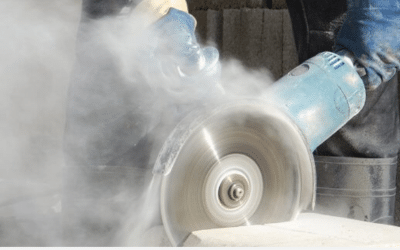
Across October, the Health & Safety Executive (HSE) is conducting assessments across the UK to analyse any respiratory risks caused by the exposure from certain substances across construction sites.
One of the biggest causes of respiratory-related illnesses in the construction sector is the exposure of harmful dusts affecting workers’ lungs. Statistics show that more than 3,500 builders die each year from cancers related to their work, with thousands of more cases of ill-health and working days lost.
Have you got adequate measures in place to protect your workers against being exposed to harmful substances like dust?
FIS Associate Member Citation has created a free guide for FIS members summarising all you need to know about dust, how to prevent being exposed to it, and how to ensure your people are fully equipped and protected.
Your FIS Member Benefit
If you’d like to chat about how Citation can help with the HR and Health & Safety side of your business, just give them a call on 0345 844 1111, or fill in this call-back form and Citation will get back to you.
FIS members are entitled to preferential rates on Citation’s services. Quote ‘The Finishes and Interior Sector’ when enquiring to access your member benefit.
Interested in becoming a member? Visit www.thefis.org/join for more details. Or call us on 0121 707 0077 and we’d be happy to discuss this with you.
by Iain McIlwee | 7 Oct, 2020 | Main News Feed
The main reminder from the Grenfell Inquiry last week was that Building Control should be used be a safety net, not a fundamental part of the design process. We also learned more about potential communication failings between interior and exterior contractors.
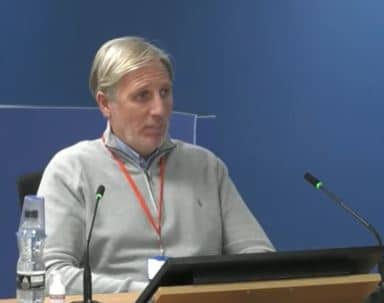
It was frankly heart breaking to hear the testimony of John Hoban, the Building Control Officer for the Grenfell construction works. The catalogue of issues points to clear systemic failings and, whilst the sign off process raises an eyebrow, you have to question how Building Control could ever be resourced to make up for shortfalls in the design process. Too often in construction it has been “we’ve got a certificate, so it is compliant” not that “we engaged the supply chain early, overcame issues and made it easy for Building Control to do their job. The need through the Building Safety Bill to establish clear STOP / GO gateways is very clear.
In other testimony, another problem emerging was an apparent lack of communication between trades leaving siloed and inconsistent decisions around vital interfaces. Externally confusion over horizontal and vertical cavity closers and the role of intumescent seemed to point to a lack of knowledge from experienced fitters. Vital cavity closers were fitted the wrong way round, horizontal closers where vertical should be and poor workmanship were all cited and contributed to the situation where intumescent strips could not provide the necessary protection. A point made was that the speed at which these would have been covered up and a lack of allowance in the programme for adequate inspection made detailed inspection impossible.
The lack of joined up approach between external works was clear when Mark Dixon of SD Plastering took the stand. SD Plastering were contracted to install the window trim inside the tower. The package was under pressure to remove cost, material was switched from wood to PVC seemingly without consideration for the differening performances. Insulation Board was again added, in part to provide support related to the movement of the windows. In selecting the material, whilst Rockwool was recommended, the material selected was not of limited combustibility. Mark Dixon confirmed in testimony that he did not consider the fire performance, and assumed that strategy was in place to deal with external issues.
If you are not following the Inquiry, I do recommend setting aside 40 mins each week, to download the podcast from BBC Sounds, it without doubt creates pause for thought about how the culture and established processes in construction must change and context for the introduction of the new Building Safety Bill.
You can listen to the latest Grenfell Podcast on BBC Sounds here
You can access full transcripts and videos of the Inquiry here
Join the FIS / ASFP Debate on the incoming Building Safety Bill on the 8th October here.

by Clair Mooney | 5 Oct, 2020 | Main News Feed
The competence requirements for the proposed new role of the Building Safety Manager have been set out in a new report Safer people, safer homes: Building Safety Management.
Under new legislation being introduced in the draft Building Safety Bill published in July, those deemed responsible in law for the safety of higher-risk building, such as the landlord, will be required to appoint a Building Safety Manager. In the draft Building Safety Bill, homes that fall in the higher risk category are multi-occupied residential buildings of 18m or above, or six or more storeys in height.
The role of the Building Safety manager will be to look after the day-to-day management of fire and structural safety in higher-risk buildings and establish a clear point of contact for residents for fire and safety related issues.
The concept of the Building Safety Manager role was recommended by Dame Judith Hackitt in Building a Safer Future review of fire safety, in the wake of the Grenfell Fire, published in 2018.
Safer people, safer homes: Building Safety Management is the result of a two-year collaboration between experts from the social housing sector, commercial and residential management, facilities managers, health and safety experts and fire safety experts.
This expert group (Working Group 8) is one of a number of sub-groups within the Competence Steering Group which has brought together 150 organisations from across the built environment and fire sectors to improve competence and change the culture of those who design, construct and manage buildings. A summary of WG8’s work is included in the Competence Steering Group’s final report, Setting the Bar, which is also published at the same time.
Safer people, safer homes: Building Safety Management sets out a comprehensive framework for the new Building Safety Manager role, focusing on the competences and job functions for individuals – so called ‘Named Individual Building Safety Managers’ and how they can sit within a wider organisational structure, the Organisation Building Safety Manager, to ensure sufficient support and resources. The report updates and enhances the work undertaken and reported in WG8’s interim report issued in August 2019.
The skills, knowledge, experience and behaviours outlined in Safer people, safer homes: Building Safety Management will be used by the British Standards Institute to develop a national standard, that Building Safety Managers will be expected to meet.
Anthony Taylor, chairman of Working Group 8, said: “It is fully understood that the immediate concern is to deliver safe homes to those in ‘higher risk residential buildings’, but we have anticipated that the role, model and management systems should be rolled-out across the whole residential property sector during a reasonable, and sustainable, transition period to support the wider culture change needed.”
Graham Watts, Chairman of the Competence Steering Group and chief executive of the Construction Industry Council, said: “This is a ground breaking piece of work that will help raise the standards of people who own and manage residential blocks, and provide assurance for those that live in them.”
Safer people, safer homes: Building Safety Management is also calling for the Building Safety Manager role to retain the wider ‘holistic whole building’ obligations for occupiers’ safety and health, including public health considerations as well as those for fire and structural safety.
The full report also makes recommendations on:
- The responsibilities and role of the Accountable Person (the term for a landlord or owner responsible in law for the safety of the building)
- Calls for occupiers to play their part in improve their and their neighbours’ safety, to have access to relevant information and to be provided with clarity on their obligations to relevant stakeholders
- The need for an extended “Fire Kills” campaign to inform occupiers about potential fire safety risks and how to mitigate them
WG8 Report Safer people, safer homes: Building Safety Management is available here
The Full Report Setting the Bar and accompanying Annexes can be downloaded here.
The Executive Summary is available here
Join the FIS / ASFP Debate on the incoming Building Safety Bill on the 8th October here.
by Clair Mooney | 5 Oct, 2020 | Main News Feed
A blueprint to improve competence for those working on higher-risk buildings and drive culture change has been set out by a cross-industry group representing more than 150 organisations (including FIS) in the fire and built environment industries.
Setting the Bar is the second and final report of the Competence Steering Group [CSG] and is an update of its Interim Report, Raising the Bar, published in August 2019. The work was initiated by the recommendations in Dame Judith Hackitt’s review Building a Safer Future.
The proposed overarching system of competence set out in the report is made up of four key elements:
- a new competence committee sitting within the Building Safety Regulator
- a national suite of competence standards – including new sector-specific frameworks developed by 12 working groups
- arrangements for independent assessment and reassessment against the competence standards
- a mechanism to ensure that those assessing and certifying people against the standards have appropriate levels of oversight.
Since the publication of Setting the Bar, the CSG and its working groups have consulted widely and taken on board feedback as they have continued to develop sector frameworks and overarching competence frameworks. These frameworks will provide the skills, knowledge, experience and behaviours needed to carry out specific roles, and deliver a more rigorous approach to the essential training and assessment that is required.
CSG Chairman, Graham Watts, Chief Executive of the Construction Industry Council, said: “We would see higher-risk buildings as an essential starting point for the new competence frameworks for the whole of the built environment, which would result in a step change across the sector and change of industry culture.”
The CSG has worked closely with the Ministry of Housing Communities and Local Government and some of the Report’s key recommendations have already been adopted, including the proposal for a Committee on Industry Competence as set out in the draft Building Safety Bill.
The CSG is urging government to make mandatory the assessments against the frameworks for those working on higher-risk buildings, and is calling on government to take the lead by requiring that the competence framework set out within this report [subject to their review against the Overarching Competence Framework Standard currently being developed through BSI] must be met by any company or individual working on any higher-risk building.
Watts said: “There is no time to lose in casting aside the substandard practices that have shamed the industry. In this document we have set a new bar and we would urge all those working in life-critical disciplines to attain these higher levels of competence. Only then can we rebuild the trust of those who occupy and live in the buildings we design, construct and manage.”
FIS CEO, Iain McIlwee responded “This is a huge body of work that FIS and colleagues from across the industry have dedicated a huge amount of time to. Our efforts have been very much focussed on Working Groups 2 and 12 looking at competency in the supply and installation of products respectively. For me this report starts to set down what is reasonable and we are focussing our efforts on helping members to implement the changes recommended and get ahead of the regulatory requirements that will follow. Through our working group we have been focussing on the FIS Competency SAKE framework based on the Skills, Attitude, Competence and Experience and have started to develop frameworks for each of the occupational areas that we represent. As Graham says, we simply cannot wait.”
Additional to the launch, the competence requirements for the new role of Building Safety Manager have also been completed – which has been a major element of the CSG’s work. Setting the Bar includes a summary of the key points under the Working Group 8 section, but there is a full and separate report published by WG8 alongside this report, Safer people, safer homes: Building Safety Management, reflecting the fact that WG8 is establishing a completely new role and the competence needed.
The Full Report Setting the Bar and accompanying Annexes can be downloaded here.
The Executive Summary is available here.
WG8 Report Safer people, safer homes: Building Safety Management is available here.