
by Iain McIlwee | 5 Jul, 2021 | Main News Feed, Material Shortages
This month we have seen further announcements on price rises, whilst at the same time we can see in the latest tender price reports from MACE showing that current tender price inflation is running at just 1.5% at the moment and expected to rise to a meagre 2.0% next year. It doesn’t take mensa maths to work out what this is doing to margins. Whilst we try and get our heads round the fact that despite rising costs of labour and materials and a healthy pipeline emerging prices are being squeezed in this way, we have updated our headline and supporting guidance on managing your business in a time of shortage below.
Talk to your clients about the challenges in securing material and the importance of early appointment to give you time to prepare.
Be wary of design liability. It is also vital to consider the specification, switching elements because you can secure them as an alternative may not necessarily support full certification and warranties as a system, to fulfil programmes. Any change to materials and products installed should be EQUAL AND APPROVED or you may be absorbing risk and design liability. Beyond inadvertent design liability, we are also seeing (for a combination of reasons, not least cost and availability of insurance) pressure on subcontractors to take on design liability within their contract. Do you fully understand what is the liability and cost of this, does your insurance cover it? We strongly urge you to exercise caution.
Before accepting a contract, make sure you can fulfil it. It is vital to check you can secure the material and at what price, does your supply agreement guarantee a price?
Double check your estimates. With pricing erratic, double check your maths – estimations need to be on point and there is literally little margin for error. Make sure you state that the quotation is only valid for a short amount of time, and that it is dependent on material supply (do you need to update statements on estimates, quotes and to issue new advice to your team?). If you are trimming supervision to make the maths work, what could be the risk and cost in terms of quality and safety?
Consider the resilience of your supplier, how long have you worked with them, how well do you know them, how important are you to them, how confident are you they will deliver? There is some support and guidance on this in the FIS Project Risk Assessment Tool.
Consider the resilience of your customer, through FIS you can get free credit checks. This isn’t a panacea, but we have seen a number of failures in the construction sector and if margins continue to squeeze there will be more. In the wake of the burden of retentions and aggressive tendering meaning profits will be lost and won in variation and change – will you get paid, how much and just how contractual is this job likely to be at that price?
Be realistic. Before signing a contract with potentially onerous delay responsibilities ensure you have checked these carefully, are all these risks in your control to manage? If you are already locked into a contract and experiencing delays/inflation then look to your contracts and follow the process – remember it is likely that, regardless of blame and responsibility, you will be obliged to ensure that as soon as it becomes “reasonably apparent” that work is likely to be delayed, notice must be given to the relevant party. If prices are spiralling, talk to your customer, negotiate.
Check for damages. If you are yet to sign, it is well worth ensuring that supply related delays that will in many cases be beyond your control cannot be a factor in determining liquidated damages. Remember force majeure relies on events being unforseeable.
Dust off those fluctuation clauses. Before you sign a contract check the fluctuation clauses too (albeit they typically seem to be scratched out of the standard contracts). If you cannot negotiate a shared risk approach with your client (and we are getting reports that clients are starting to accept fluctuations), you need to seriously consider pricing in risk moving forwards – what could worse case scenario mean to your business if prices drifted?
FIS has updated advice in its Contractual and Legal Toolkit, including advice on fluctuations, managing delays and extensions of time within contracts. It also highlights the role that the RICS developed and CLC endorsed Conflict Avoidance Process and Conflict Avoidance Pledge can play in helping to ensure issues related to shortage and availability doesn’t flair up in unnecessary conflict and exacerbate a difficult situation to a crisis.

by Clair Mooney | 2 Jul, 2021 | Main News Feed
From 1 July employers will, for the first time since last year, have to contribute toward furlough payments – employer contributions now sit at 10% and will rise to 20% in August and September. This change marks the start of the wind down of the scheme, which is proposed to end on 30 September 2021.
With these changes in mind, are you confident you know what your options are when it comes to the end of furlough? Citation’s HR & Employment Law experts have put together a flow chart that outlines some of the possibilities. You can download a copy here.
If you’ve got questions about what to do when it comes to bringing people off furlough, FIS members have access to the Citation advice line 24/7 on 0345 844 4848.
by Clair Mooney | 2 Jul, 2021 | Main News Feed, Membership, Technical
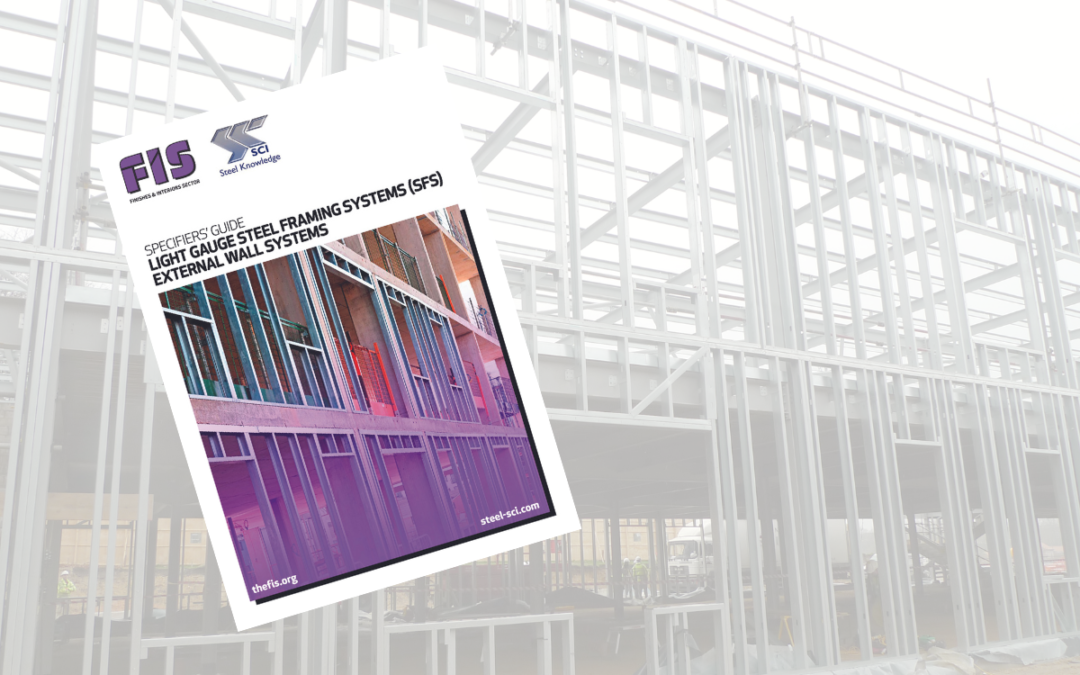
FIS in partnership with the Steel Construction Institute (SCI) has launched a Specifiers’ Guide to Light Gauge Steel Framing Systems (SFS) External Wall Systems to help specifiers understand the granular details involved in the design process and production of a specification.
The Specifiers’ Guide was produced by the FIS SFS working group made up of manufacturers and installers of SFS external wall systems in conjunction with the Steel Construction Institute (SCI), which provide an independent source of information and engineering expertise in steel construction. It is intended to guide architects, engineers, designers and installers through the stages in designing, selecting and specifying steel framed systems to form the external envelope for steel and concrete framed buildings.
FIS Chief Executive Iain McIlwee said: “This is the second specialist guide that FIS has produced in partnership with the Steel Construction Institute and demonstrates the strength in collaboration, producing guidance to ensure that accurate and detailed specifications can be written so that external walling systems can be procured and installed to meet the required specification.
Commenting on the guide, Colin Kennedy, Chair of the FIS SFS working group and Managing Director of FIS member Veitchi Interiors said: “Specifying SFS external wall systems requires considerable thought and design, even before a specification can be written. This is because the specification should be developed alongside the engineering design rather than a simple output from a list of attributes and parameters, to cover the three light steel external wall systems and the six current variants of SFS.”
Andrew Way, Associate Director at the Steel Construction Institute, added: “In order to achieve the correct specification, a considerable amount of information is required about the intended use of the product and the desired performance characteristics. This was the learning curve for me and the key lesson that this new guide addresses, in that the SFS should be fully engineered specifically for the building. Most importantly its location, proximity to other buildings and how that building is designed to accommodate movement is essential before it can be specified.”
Colin Kennedy continued by saying: “The construction industry is rightly under the microscope to ensure that the lessons from the terrible tragedy three years ago at Grenfell Tower are learned and that this starts with ensuring that the specification is clear, compliant and written by those who are competent and subsequently installed by those who can demonstrate they have the Skills, Knowledge, Experience and Behaviour (SKEB) to be considered competent.”
The guide includes 23 questions relating to ‘critical building information’, a further 15 questions to check that they are all addressed, a list of 10 questions on risk and how to avoid them and a further 10 questions on writing a smart specification to ensure a safe, compliant and complete specification can be written. All of which is crucial to ensure that the specification is not open to misinterpretation, and that any alternatives can be assessed and checked as equal, before approving them.
The guide sits alongside other FIS best practice guides that relate to SFS:
Design and Installation of Light Steel External Wall Systems
Recommendations for the Safe Ingress of Plasterboard
FIS Health and safety handbook
These guides work well when they are included in proposals and project plans to demonstrate how to best approach a project and are an excellent introduction to new members of the team and any trainees and apprentices.
You can download the Specifiers’ Guide to SFS External Wall Systems here https://www.thefis.org/membership-hub/publications/specifiers-guides/light-guage-external-wall-systems/

by Clair Mooney | 28 Jun, 2021 | Main News Feed
On 6 July, CPA will be hosting a webinar to update the sector on the outstanding issues of concern following the UK-EU trade and cooperation agreement particularly around CA marking, new border controls and logistics for construction product manufacturers, as well as the impact of all this on product availability.
The webinar will be hosted by CPA Chief Executive, Peter Caplehorn with input from CPA Senior Technical Manager, Duncan King. There will be an opportunity for Q&A towards the end of the webinar. Join this CPA webinar on Tuesday 6 July 2021 at 3pm to find out. This webinar is open to both CPA members and non-members alike. Please register here.
by Clair Mooney | 24 Jun, 2021 | Insurance, Main News Feed
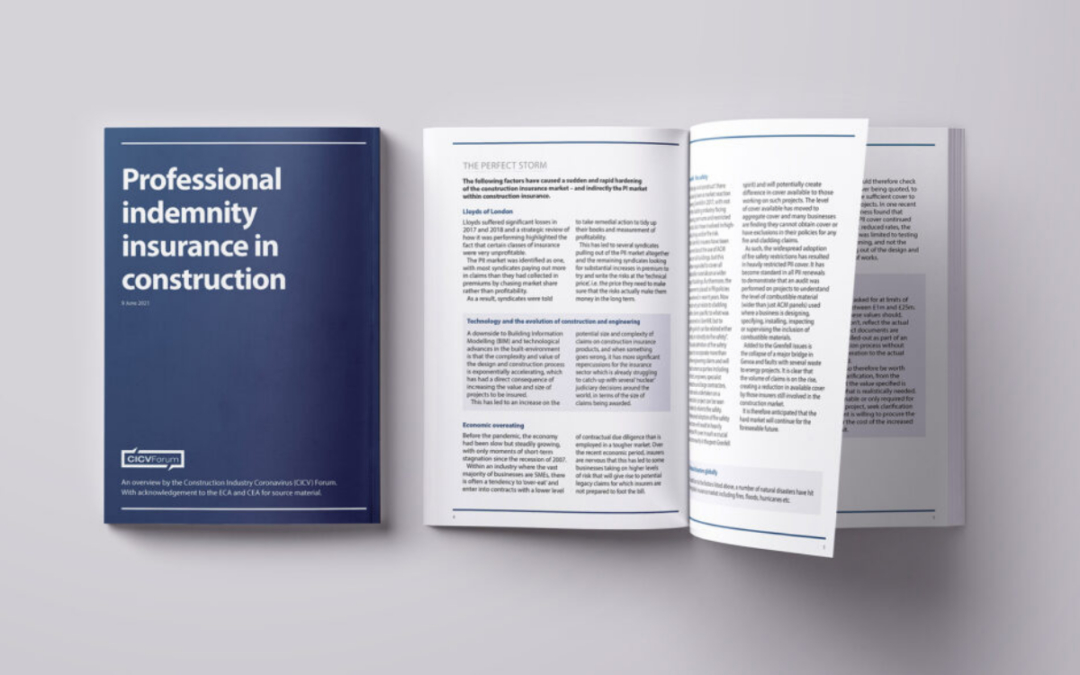
The CICV Forum has unveiled a new guide to the crucial and increasingly complex issue of professional indemnity insurance (PII).
The easy-to-understand downloadable document, produced by the Forum’s unique collaboration of trade associations, professional bodies, companies and individuals, outlines the state of the insurance market, the precautions firms should take and the pitfalls they face.
And it warns that over the last 18 months or so, a variety of reasons have seen the cost of PII increase hugely while businesses have often suffered reductions in the scope of cover.
The free guide, which will be invaluable in a febrile market, offers advice on subjects ranging from extending liability to contractual liability, the nature of PII cover, insurance limits, obligations under ancillary documents and risk management.
Alan Wilson, CICV Forum Chair and Managing Director of electrical trade association SELECT, said:
“PII is a necessary tool for protecting business owners who provide a service or give advice if a client claims a service is inadequate.
“Until the past few years, the construction insurance market has been soft, in that there has been plenty of capacity leading to broad coverage and premium reductions driven by competing insurers.
“The market has now become very hard with the consequence that premium rates have increased, cover has been restricted and, indeed, several insurers have left the market altogether.”
The guide explains that market attitudes have changed following a number of incidents, including:
- A review of unprofitable insurance classes by Lloyds of London
- Advances in the size and complexity of the design and construction process
- Over-eating, or businesses taking on higher levels of risk
- The effects of the Grenfell tragedy, and
- A series of natural disasters globally.
Len Bunton, construction consultant and co-Chair of the Forum’s Pipeline and Commercial Sub-Group, said:
“The issue of PII appears to be a potentially massive problem for the industry. This guide therefore outlines the nature and likelihood of liability and looks at how businesses can manage their risks by identifying them, evaluating their impact and taking steps to control them.
“It offers advice on negotiating with insurers and stresses that full disclosure of risk is vital, despite the onus placed on underwriters by the Insurance Act of 2015 to ask the relevant questions of a business.
“Demonstrating that you have a solid risk management culture, robust financial resources and controls, as well as providing insurers with proof and documentation of risk mitigation, internal practices, cashflow and profit margins, will all help lower premiums.”
Formed in March 2020, the Forum is now made up of 29 leading trade associations, professional services bodies and companies.
Since its inception, it has maintained a steady supply of information and practical advice to the sector as well as carrying out surveys, hosting webinars and holding regular discussions with the Scottish Government.
The Forum’s most recent event was a political hustings in April, during which Scottish Parliamentary candidates from the five main political parties debated the major issues facing today’s construction industry.
- Download the document here.

by Clair Mooney | 24 Jun, 2021 | Main News Feed
Following the delay in the easing of lockdown restrictions, the Government has confirmed that temporary changes to right to work checks will now end on 31 August 2021. After this date, employers must revert to face‐to‐face checks, in place of video calls, and scanned copies will no longer be accepted instead of original documents.
There has been no change to the deadline for the EU Settlement Scheme and applications must be submitted by Wednesday 30 June. There is a pack for employers containing a range of resources that can be shared with employees from the EU or EEA who were living in the UK before 31 December 2020 to help them apply.
The Home Office is hosting a free industry webinar on the Points‐Based Immigration System next Monday 28 June from 11:00am ‐ 12:00pm which is open to all FIS members. Build UK has also published an easy‐to‐follow flowchart on employing foreign workers which members may find useful.
