by Clair Mooney | 8 Dec, 2021 | Sustainability
Have you ever wondered where the products you buy come from?
For products made with wood (table, paper or construction products), labels such as FSC or PEFC for timber products have been in place for a long time. Those labels promote the responsible management of forests and provide the buyers with reassurance on the origin of the products.
BES6001 is a certification scheme, developed by BRE Global over 10 years ago, which provides a framework for the assessment of responsible sourcing and a route for the certification of construction products against a multi criteria approach. BRE is proposing a new version of the standard, version 4, which is now avaialble for public comments. CPA worked with BRE on the initial development of this standard over a decade ago and has commented on previous versions of the standard. FIS, unless otherwise challenged by its members, broadly support the approach as it provides a route for the demonstration of best practice.
The standard is available here and track changes highlight changes from version 3. If you have any comments please feed these in to Flavie Lowres via email (flavielowres@thefis.org) before 15 December 2021.
by Iain McIlwee | 12 Nov, 2021 | Main News Feed, Sustainability
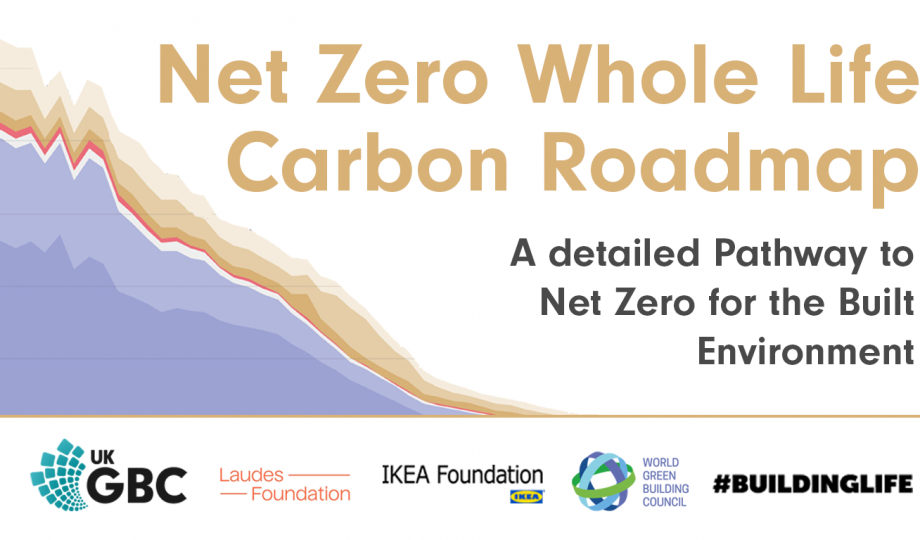
UK Green Building Council launches first ever UK Roadmap for achieving Net Zero carbon built environment by 2050.
- Whole Life Carbon Roadmap from the UK Green Building Council highlights the growing need to quickly close the policy gap on net zero homes and embodied carbon
- Only with urgent measures and intervention can the UK deliver on its interim target to cut 78% of emissions by 2035, an essential milestone in the nation’s transition to Net Zero by 2050
- With homes responsible for 16% of total UK carbon emissions, Government must immediately bring forward a national retrofit programme to unlock significant carbon savings, as well as deliver high-quality and cheaper to heat homes for people
- The Roadmap is the first quantification of the carbon reductions required each year from buildings and infrastructure if the UK is to be net zero by 2050
- A transformative shift in industry practices is required and so action plans are provided for 14 key stakeholder groups
As global leaders convene at COP26 to discuss the role of the built environment in addressing climate change, the UK Green Building Council (UKGBC) has launched a Net Zero Whole Life Carbon Roadmap for the UK Built Environment (The Roadmap) detailing the necessary actions government and industry must take to achieve net zero across the sector. The built environment is directly responsible for 25% of the total UK carbon footprint, and therefore has a critical role to play in the national transition to Net Zero. Co-created by industry with over 100 organisations contributing, the Roadmap provides a shared vision and set of actions for achieving a net zero UK built environment by 2050, in relation to construction, operation and demolition of buildings and infrastructure.
The Roadmap quantifies, for the first time, the specific emission reductions across sub-sectors of the built environment that will need to take place year-on-year to meet the 2050 deadline. The analysis includes not only domestic emissions, but emissions related to the consumption of imported construction products and materials. The Roadmap establishes a net zero emissions budget and trajectory to 2050, consistent with wider UK carbon targets and budgets as set-out by the Climate Change Committee (CCC), enabling government and the UK built environment to benchmark progress over the coming years and decades.
Julie Hirigoyen, Chief Executive at UKGBC said:
“After all the talk, it’s time for action. The UK Government’s Heat and Buildings Strategy is a step in the right direction but fails to address several key priorities that this analysis clearly demonstrates are non-negotiable to achieving a net-zero carbon built environment by 2050. The Net Zero Whole Life Carbon Roadmap pulls together disparate strands of recent policy and action into one coherent pathway, with clear recommendations for National Government and Local Authorities, as well as the private sector and the wider industry. We urge policy-makers and industry to embed these recommendations into policies and strategies to make good on the promises and commitments of COP26.”
 The Roadmap sets out policy recommendations for central and local governments to help drive and enable the transition needed to decarbonise the sector. These go beyond the recently published UK Government Heat & Buildings strategy and cover existing homes, existing non-domestic buildings and new buildings as well as for the infrastructure which connects our buildings and industry.
The recommendations include:
1) Nation-wide retrofitting of existing homes.
- Establish an immediate national programme of “fabric first” home retrofit to make homes efficient, warm, and transition away from fossil fuel heating.
- Bring forward the cut-off date for the sale of gas and oil boilers to 2030.
- Reform EPCs and introduce minimum EPC ratings for homes at point of sale by 2028.
- Remove VAT on energy efficient retrofit building works and introduce variable stamp duty linked to energy performance.
- Introduce direct government retrofit grants for low-income households.
2) Energy performance disclosure for non-domestic buildings.
- Introduce mandatory in-use energy disclosure for non-domestic buildings.
- Accelerate the roll-out of energy performance rating schemes across non-domestic sectors, followed by minimum standards and fiscal incentives.
3) Adoption of a design for performance approach to new buildings.
- Reform building regulations to introduce Energy Usage Intensity (kWh/m2/yr) targets for new buildings from 2025.Alongside low carbon heating for all new buildings from 2025, introduce space
heating demand limits (kWh/m2/yr), measures to limit peak demand, and minimum standards for currently unregulated key appliances.
4) Whole life carbon measurements and agreed limits.
- Introduce the regulation of embodied carbon for new buildings and major refurbishments
- Support and invest in industrial decarbonisation of key construction material supply chains
- Use planning reforms to prioritise reuse of existing buildings and assets
5) National infrastructure investment based on the net emissions impact.
- Establish a National Infrastructure Integrator with full oversight of carbon impacts
Nigel Topping, COP26 High Level Climate Action Champion, commented:
“As we start a critical decade for climate action, the United Kingdom can and should take a leadership role. This report epitomises leadership and establishes that the UK built environment has a comprehensive and rigorous plan for abating its emissions across the construction, operation, and demolition of buildings and infrastructure. I invite you all to use this Roadmap for delivering a net zero future.”
The Roadmap was co-created by the industry through a project Steering Group and four Task Groups with over 100 organisations contributing. Many of the recommendations align with existing industry initiatives such as Construct Zero from the Construction Leadership Council, and the Construction Industry Council’s Climate Action Plan as well as those contained in the recently published Scottish Government Heat & Buildings strategy. In some cases, the recommendations build on existing Government policy initiatives to facilitate adoption of further proposals and timelines.
UKGBC is one of several European GBCs developing national whole life carbon roadmaps under the #BuildingLife project and The Roadmap was made possible thanks to the support of Laudes Foundation and Ikea Foundation.
FIS Members wishing to update or develop a Carbon Reduction Plan can visit the FIS Sustainability Hub for resources and ideas or contact FIS Sustainability Champion, Flavie Lowres to discuss ideas and options.

by Clair Mooney | 11 Nov, 2021 | Sustainability
The construction industry is playing its part in transforming its working practices and leadership models to contribute to the global ambition for a net zero future. The Construction Leadership Council (CLC) has partnered with ITN Productions Industry News to produce ‘Building a Greener Britain’, a programme exploring some of the new pathways and sustainable methods the sector is adopting, alongside initiatives such as the Construct Zero programme, CLC’s response to the climate emergency.
Anchored by presenter Clare Nasir, Building A Greener Britain, features experts from within the construction industry along with informative interviews, news items and sponsored editorial profiles, filmed in the ITN Productions Industry News London studio and remotely on location. Brian Berry, Chief Executive of the Federation of Master Builders, joins Clare Nasir to represent the CLC Steering Coordination Group and discuss how the sector is meeting the challenge.
The feature focusses in on some of the Business Champions who are demonstrating the sector’s commitment towards reducing carbon emissions. These include
Construction company and property consultancy, Rider Levett Bucknall, is making sustainability an integral part of the conversation at the outset of projects to help achieve greener results.
At the University Hospitals of Leicester, NHS Trust, where the company is reconfiguring the estate with new construction alongside repurposing existing buildings, Andrew Reynolds, Chief Executive of Rider Levett Bucknall, talks about the role of the CLC in meeting sustainable development goals.
The Active Building Centre in Gloucester, created as part of UK Research and Innovation (UKRI) Transforming Construction Challenge, which is demonstrating how future builds can be both labour and energy efficient.
A familiar face to many in the finishes and interiors sector Mike Chaldecott, CEO, Saint-Gobain, UK & Ireland, outlines the company’s long-term sustainability strategy.The programme goes to the plant in Yorkshire where Saint-Gobain has invested £30m to produce glass using less energy with higher levels of recycling and more innovation.
Find out more about Construct Zero here
To help start or continue your net zero journey, visit the FIS Sustainabilty Hub here.

by Clair Mooney | 11 Nov, 2021 | Sustainability
FIS and the Supply Chain Sustainability School are collaborating to help deliver Net Zero in the finishes and interiors sector through a new virtual training portal hosted on the Supply Chain Sustainability School website.
This sustainability training hub is another output of the FIS Sustainability Working Group, which has been established within the FIS community to support a focus on individual change, collective focus and supply chain engagement. The working group has five core objectives:
- Increasing knowledge and understanding within the supply chain
- Setting targets and standardisation (including monitoring and measuring impact)
- Providing an active network and encouraging collaboration
- Highlighting individuals and approaches that help inspire and inform change
- Informing design and encouraging better asset management
At our COP26 webinar this week, FIS Sustainability Champion Flavie Lowres introduced how the tool can be used to support training on Net Zero and wider sustainability matters in our businesses and the School’s tool for measuring the carbon impact of your business available via the Supply Chain Sustainability School’s Finishes and Interiors hub here.
You can listen again to the webinar here.

by Clair Mooney | 11 Nov, 2021 | Sustainability, Technical
The Plastics Packaging Tax is due for introduction on 1 April 2022 and HMRC is looking for businesses’ views on the technical application of the regulation. The consultation closes on 1 December 2021 and details are available here.
The Primary legislation establishing the tax was included as part of the Finance Act 2021. The aim is to provide economic incentives for businesses to use recycled plastic in the manufacture of plastic packaging which will stimulate increased levels of recycling of plastic waste. This instrument sets out the detailed administrative requirements for the tax. It establishes when a plastic packaging compound is finished for the purposes of the tax and when it becomes chargeable to tax. It also details the evidence that businesses will need to keep, how to weigh packaging and determine the recycled plastic content as well as setting out the obligations with reference to the administration of the tax including registration and returns.
To view the new information visit https://www.gov.uk/government/consultations/technical-consultation-on-plastic-packaging-tax-general-regulations-2021

by Clair Mooney | 11 Nov, 2021 | Sustainability
Contractors bidding for central Government contracts worth more than £5 million a year are now required to provide a Carbon Reduction Plan. Plans must be updated at least once a year and meet the standard set out in Procurement Policy Note (PPN) 06/21, which includes a template for contractors to use.
The CLC CO2nstruct Zero programme is bringing the construction supply chain together to drive carbon out of the sector. Businesses across the industry are being encouraged to align their own commitments to one or more of the nine priorities and sign up as a ‘Business Champion’.
Businesses that wish to can make a formal commitment to reaching net zero by signing up to the Carbon Reduction Code for the Built Environment. Signatories to the code commit to meeting net zero by 2045, with an interim target to reduce net direct and indirect carbon emissions by 2030, and to publishing annual reports on progress towards their goal.
FIS Members wishing to update or develop a Carbon Reduction Plan can visit the FIS Sustainability Hub for resources and ideas or contact FIS Sustainability Champion, Flavie Lowres to discuss ideas and options.