0121 707 0077

Scotland transitioning at pace to Net Zero

Scotland transitioning at pace to Net Zero

Are you a leader working in the Construction, Manufacturing or Transport sectors seeking to drive and influence meaningful change in relation to Net Zero ambitions?

Fully funded, CPD certified training is now available to ensure that you are upskilled with climate emergency principles to enable informed workforce planning and skills development to support Scotland’s Net Zero ambitions.  For more information and sign-up page:  https://transitioningatpace.com/

Embodied Carbon of Construction Industry Makes it to Parliament

Embodied Carbon of Construction Industry Makes it to Parliament

The UK Government has committed to reduce carbon emissions by 100% by 2050 compared to 1990. Buildings are responsible for approximately 40% of CO2eq emissions in the UK in relation to the energy they use during their use. The impact of construction, which includes the manufacturing of products, transport to site, installation, maintenance, replacement and disposal is responsible for an estimated additional 11% of global CO2eq emissions. In the UK, those emissions are estimated to be 3 times the combined UK footprint for aviation and shipping. However, those emissions have to date not been unregulated.

On 2nd February 2022, Duncan Baker, MP for North Norfolk, successfully presented a bill to regulate embodied carbon emissions to Parliament. This follows from the industry initiative around the creation of Part Z. A second hearing will take place mid-March. This is an important step for the UK Government to recognize the importance of embodied carbon in construction and encouraging reduction.

Watch the video of the hearing here: Parliamentlive.tv – House of Commons at 16.27

New Plastic Packaging Tax

New Plastic Packaging Tax

From April 2022, if you manufacture or import 10 or more tonnes of plastic packaging within a 12 month period, you may need to register for the tax.

You need to register for the Plastic Packaging Tax if you’ve manufactured or imported 10 or more tonnes of finished plastic packaging components within the last 12 months, or will do so in the next 30 days. From 1 April 2022 to 30 March 2023, the 12 months threshold will be worked out differently.

You will need to pay Plastic Packaging Tax if you have manufactured or imported plastic packaging components which contain less than 30% recycled plastic.

Packaging should only contain recycled plastic where it is permitted under other regulations and food safety standards.

The tax came into force on 1 April 2022 and is charged at a rate of £200 per tonne.

What you must do

  1. Check which packaging is subject to Plastic Packaging Tax and the definitions of finished components and substantial modifications, to find out if the packaging you manufacture or import is subject to the tax.
  2. Work out the weight of the packaging you manufacture or import to find out if you must register for the tax.
  3. Find out how to register.
  4. Check which records and accounts you must keep and how to carry out due diligence.
  5. Find out if you can claim a credit or defer paying Plastic Packaging Tax.
  6. Find out how to complete your return.

Get help and support

If you have a question about Plastic Packaging Tax and cannot find an answer in GOV.UK guidance, you can ask HMRC to answer it. You should either:

The Construction Products Association (CPA) has produced a briefing paper on the effects of this new tax for FIS members.

Scotland transitioning at pace to Net Zero

Securing a green recovery on a path to net zero

In December 2020, the Scottish Government published its “update to the climate change plan 2018-2032 – securing a green recovery on a path to net zero”.

Scotland has committed to green recovery from Covid-19 in order to capture the opportunities for a transition to net zero through the creation of green jobs, development of sustainable skills and nurture of wellbeing. The report includes policies and proposals for each of the eight sectors identified: electricity, transport, industry, waste, land use/land change/forestry, agriculture, negative emission technologies and buildings.

The most relevant points for FIS members are:

  • Buildings: a regulatory change, delivering significant investment and supporting supply chain growth. Much of the focus appears to be on the stimulation of zero emission heating systems and energy efficiency measures, which a particular focus on domestic buildings. In 2021, the Net Zero Public Sector Buildings standard was launched. This voluntary standards considers 5 objectives: embodied carbon emissions, operational carbon emission, other whole life carbon emissions, indoor environmental quality and environmental aspects. The Government is also working closely with Skills Development Scotland to create the appropriate skills to deliver net zero and published “Climate Emergency Skills Action Plan 2020-2025 Key Issues And Priority Action”.
  • Waste: embed circular economy principles in the wider green recovery, ban on a number of single use plastic items
  • Industry: funds being made available to support the development of carbon capture and hydrogen technologies and for the manufacturing of low products

The document also provides a route map graphic of what the policies will mean in practice – see page 15-22.

FIS Sustainability Hub

FIS is committed to taking a pro-active lead, not just in supporting the UK ambition to net zero carbon by 2050, but delivering profound transformation within our supply chain on all aspects of ethical and environmental sustainability. We have created this hub to bring together resources and information that will support your journey to net zero.

Inspiring Change – A Matter of Respect

Inspiring Change – A Matter of Respect

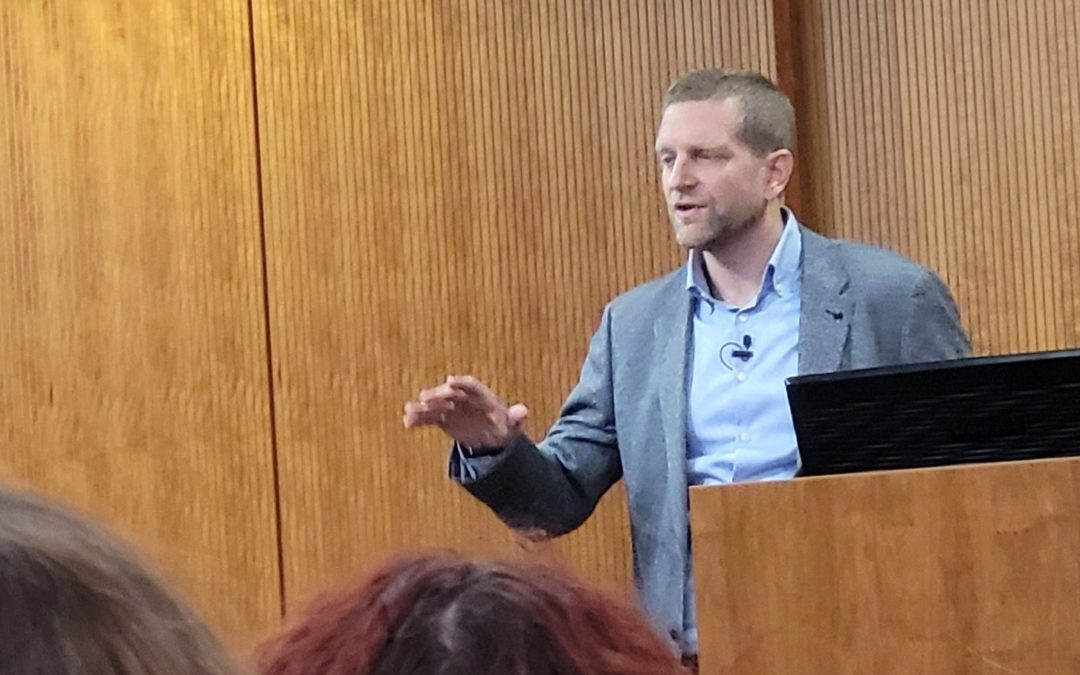
Last month I signed up to attend the Inspiring Change Event in London – the focus, creating a fair and inclusive environment in construction centred on respect.

It is vital subject on so many levels not least because we have a HUGE skills and labour shortage, but also because it is about creating a better working environment.  Long story short, a phone call about three weeks before the event and I found myself the other side of the microphone giving a keynote talk on why I had completed the training to become a FIR Ambassador!

I often find in construction that there is an abstract concept of the industry, how people think construction should work (or worse think it does work) and then there is the reality, how we get it done despite it all.  These two versions of our industry can seem miles apart.

This is what I chose to talk about at Inspiring Change, not great stuff that is done (others covered positive examples well and I highly recomend checking them out via the event link below), but the gritty reality of when and why we get it wrong, starting firmly with me, myself and I.  I focussed on all the times I have shied away, gotten it wrong and worse, knowingly watched others get it wrong.  The excuses I have used, how I have kidded myself that I was part of the solution rather than the problem.  Both preparing for and listening on the day reminded me again that this agenda is central to who we want to be as a sector.  It isn’t all about all about gender or disability or conscious and unconscious bias, it is simpler.  It is about being better and making sure we take the time to understand, that we help others to understand and that we don’t walk past or look the other way when there is a problem or an opportunity to be better.  This is what we aspire to do on construction sites when it comes to risk management and getting the job right – this is what we need to do in our communities.  This is ultimately how we will make this industry an attractive one that draws the best people in – an industry that demonstratively cares  about our people.

The biggest thing I learned in the FIR Ambassadors course was how ignorant I am in terms of disability and neural diversity.  This was further reinforced at the Inspiring Change event.  I don’t have a disability, I am lucky, but data from Kier suggested 10% of the workforce do (remembering 96% of disabilities are non visible).  A number that really jumped out at me was that the average age someone develops one is 53 – it could still be me.  The stats around diabetes in construction are particularly concerning, but to be honest I had never linked them to the work we do on competence.  If we don’t make the right allowances are people always competent to do the job?  There was some fascinating insights into flexible working on sites and the positive impact this had for Willmott Dixon (see Agile Working Toolkit below), sometimes it is easy to assume there isn’t a better way because we can’t imagine it working.  The early indicators are that at Willmott Dixon there have seen some real benefits, not just linked to happiness, but productivity too.

I always judge a conference by the take away.  It is not a cliché to say I left this one inspired, not just by the people and stories, but the opportunity.

As a sector we talk a lot about modern methods of construction, value led procurement, but they become buzz words, panacea fixes rather than genuine change processes.  At this event we stepped back and thought about the greater good we can do – the social value we can deliver.  It is mind-bogglingly enormous.  If we get it right, we are not just fishing in a wider pool when it comes to shortages of people, but we are rebuilding lives and starting to fish at the top of the pool – because who wouldn’t want to work in a sector that makes this much difference – delivers value with values?  We aren’t perfect, but if we slow down a bit and keep in mind the benefits to diversity in our workforce we can step beyond some of the adversarial behaviours and then we are perfectly poised to be much much better and to do an awful lot of good in the process!

So if you have a Section 106 to fulfil and/or a moral desire to do what you do in a better way, give me a buzz (07792 959 481).  I may not have all of the answers, but I can listen, learn, reflect.  FIS is a platform for action and we are blessed with ever expanding network of people who can help and are committed to making a difference.

You can access the slides from the event and learn more about the Inspiring Change Award winners announced at the event here

Key resources that were highlighted and are definitely worth looking at- Agile Working Toolkit, Supply Chain Sustainability School (Benchmarking Toolkit, Training Resources and more on becoming a FIR Ambassador), find out about becoming a STEM Ambassador, Disability Confident Employers Support, British Association of Supported Employers (promote the principles and delivery of high quality Supported Employment services and work to improve the employment rates of disabled people), Diabetes Safety Advice,,

You can access the full FIS FIR Toolkit here

Written by Iain McIlwee, CEO, Finishes and Interiors Sector
16th December 2021
What is responsible sourcing?

What is responsible sourcing?

Have you ever wondered where the products you buy come from?

For products made with wood (table, paper or construction products), labels such as FSC or PEFC for timber products have been in place for a long time. Those labels promote the responsible management of forests and provide the buyers with reassurance on the origin of the products.

BES6001 is a certification scheme, developed by BRE Global over 10 years ago, which provides a framework for the assessment of responsible sourcing and a route for the certification of construction products against a multi criteria approach. BRE is proposing a new version of the standard, version 4, which is now avaialble for public comments. CPA worked with BRE on the initial development of this standard over a decade ago and has commented on previous versions of the standard. FIS, unless otherwise challenged by its members, broadly support the approach as it provides a route for the demonstration of best practice.

The standard is available here and track changes highlight changes from version 3. If you have any comments please feed these in to Flavie Lowres via email (flavielowres@thefis.org) before 15 December 2021.