by Clair Mooney | 1 Jul, 2021 | Drylining, Labour, Skills
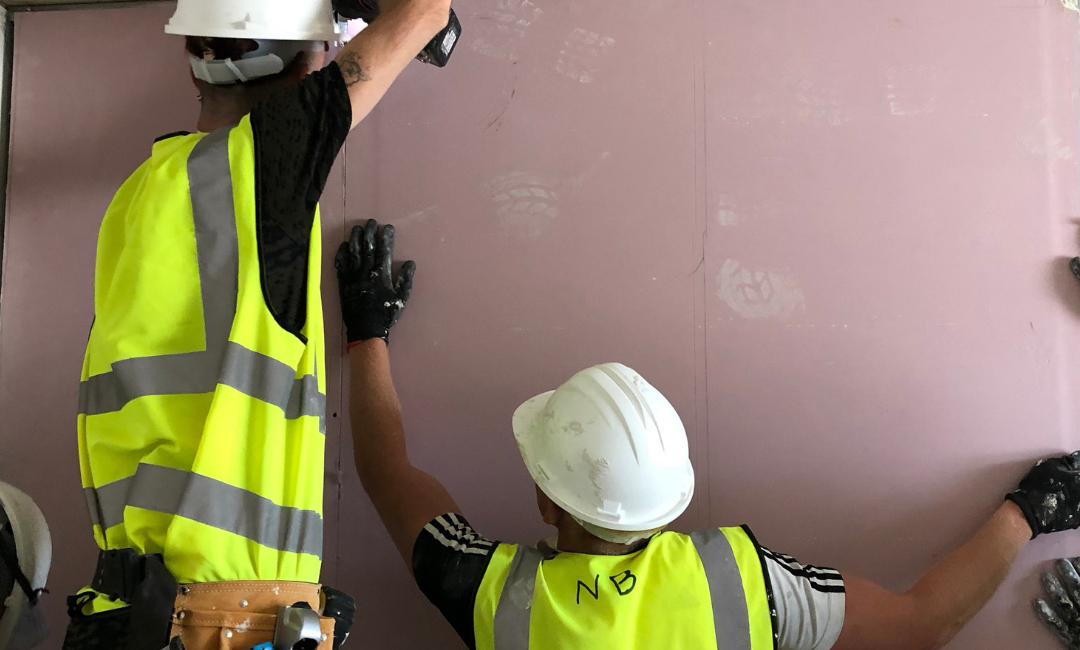
In light of severe shortages predicted in the drylining sector, FIS has been helping to train new talent serious about a career in drylining.
For every 5% of EU workers that leave the UK, we double our annual recruitment target for drylining. The Settlement Scheme is now officially closed.
Through the FIS BuildBack programme, we have scheduled a number of courses which will help to get candidates site-ready, have a grounding in the skills and competencies required for installing drylining and have undergone an assessment and robust training course and that includes mandatory HS&E training and the provision of a Provisional CSCS card, PPE and basic tools.
The next step is where we need YOU.
We are looking for employers to provide the candidates with two-weeks work experience. There is no cost involved, we make all the arrangements for you. You can meet and select the candidates you want to offer work experience in order to ensure they are the best fit for your business.
If you are interested in finding out more, or can offer a placement, email catherinebullough@thefis.org
by Clair Mooney | 29 Jun, 2021 | Labour, Skills
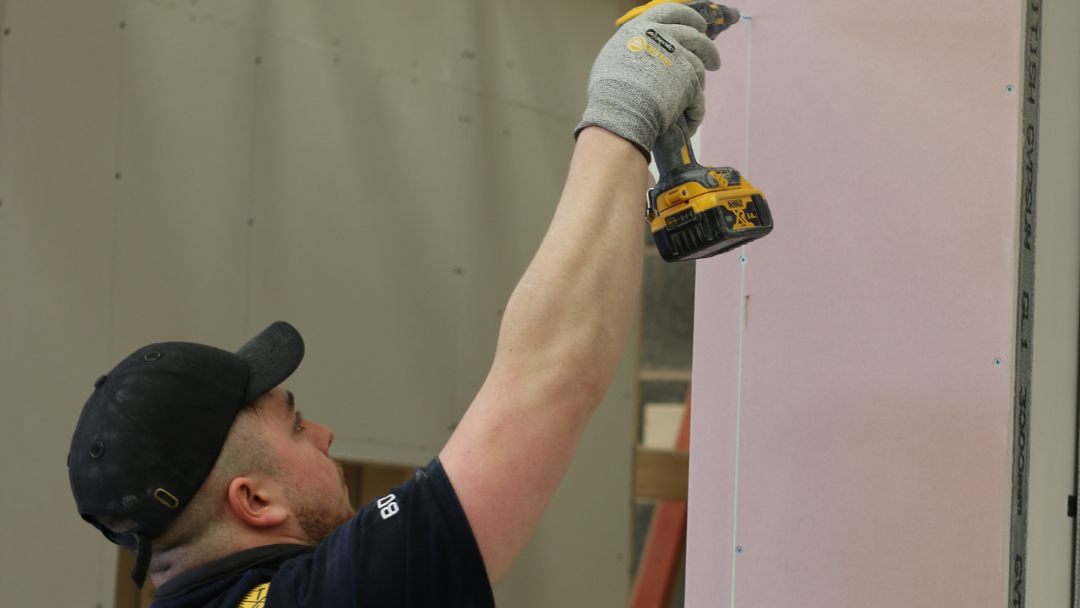
The West Midlands is set to benefit from a new scheme to assist residents looking for employment or change of career and fill a skills shortage in local construction.
FIS BuildBack 2021 will see people from the region take on training at Sandwell College and work experience with local construction companies to enable them to begin apprenticeships and jobs.
FIS has set up the initiative with funding from the Construction Industry Training Board (CITB).
Courses in drylining will start from June at the college, initially involving up to 28 places, with a view to progressing to an apprenticeship and ongoing NVQ professional development funded by the West Midlands Combined Authority (WMCA).
CITB-funded research for the WMCA showed that in the West Midlands the construction workers in highest demand are in the interior fit-out and wood trades, with more than 15,000 needed across the Black Country, Greater Birmingham and Solihull, and Coventry and Warwickshire Local Enterprise Partnership (LEP) areas.
The West Midlands region is also forecast to have the highest construction growth rate of anywhere in the country in the coming years, at 4.8%.
BuildBack 2021 is aimed at recruiting from local people who are out of work, or looking for a change of career, or underrepresented groups in construction such as women or those from diverse backgrounds.
Lorraine Gregory, CITB Senior Customer Engagement Manager for the Midlands, said:
“We know there’s a skills shortage in the West Midlands for interior fit-out, and with the construction sector playing such a key role in the recovery BuildBack 2021 will help people enter a varied and exciting new career path.”
Catherine Bullough, FIS Skills and Training Coordinator, said:
“There’s real demand for finishes and interiors professionals in the West Midlands, and a strong pipeline of work including the Commonwealth Games in Birmingham next year makes this an exciting time to train up in a new trade.”
Andy Street, the Mayor of the West Midlands, said:
“Retraining and upskilling hold the key to getting people back into work following the impact of the Covid pandemic, and that is why they are a cornerstone of my ambitious but practical plan to create 100,000 jobs in just two years.
“By controlling the region’s training agenda, we can ensure local people are getting access to the skills they need to match employers’ needs. We know construction for example is going to continue to be a huge employer in the coming years, creating tens of thousands of new jobs in the West Midlands. So through schemes like BuildBack 2021 we can use our adult education budget to get people trained in the construction techniques that we know will get them into work.”
Further partners include and the Department for Work and Pensions. BuildBack 2021 in the West Midlands is part of a national scheme by FIS to attract hundreds more people into the trade.
Find out more about BuildBack 2021
by Clair Mooney | 24 Jun, 2021 | Skills
The FIS Skills Board met to discuss all matters related to training and qualifications last week on Thursday 17 June 2021. The board comprises volunteers from membership and meets four times a year to:
- Guide FIS in support of the sector for all types of training and qualification outcomes.
- Guide the activities of the Training Group (FISTG).
- Support innovation and promote best practice in Training Delivery.
- Support the sector to ensure sufficient skills and knowledge for a competent workforce.
- Comment on and contribute to the content of qualifications and standards for the sector.
To provide information to members the associated documents and minutes of these meeting are available to view at www.thefis.org/about-us/skills-board/
There are some vacancies for employer members, if you would like to get involved or need more information please contact George Swann, FIS Skills and training Lead via email georgeswann@thefis.org or call 07553 874838.
by Clair Mooney | 24 Jun, 2021 | Skills
Calling all apprentices, employers, ambassadors and individuals who champion apprenticeships… the National Apprenticeship Awards 2021 will be open for entries from 5 July to 28 July 2021. It is free to enter the awards, and all entries must be made through the application website.
Back for their 18th year, the National Apprenticeship Awards are a fantastic opportunity to showcase the apprentices, employers and champions who have gone above and beyond, in spite of the challenges faced during the last year.
There are nine categories to recognise exceptional employers, apprentices and apprenticeship champions:
Employer of the Year categories
• SME Employer of the Year (for organisations with 1 to 249 employees)
• Large Employer of the Year (for organisations with 250 to 4,999 employees)
• Macro Employer of the Year (for organisations with 5,000+ employees)
• Recruitment Excellence (Selected from Employer of the Year award entries, and awarded to an organisation that has recruited a diverse and high quality apprenticeship workforce).
Apprentice of the Year and Apprenticeship Champion categories
• Intermediate Apprentice of the Year (level 2)
• Advanced Apprentice of the Year (level 3)
• Higher or Degree Apprentice of the Year (level 4 or higher)
• Rising Star of the Year* (Apprentices that have made impressive progress in their career to date, and have the potential to go even further. Nominations are made by their employer).
• Apprenticeship Champion of the Year (Individuals who go ‘above and beyond’ to champion apprenticeships. Nominations are made by a colleague or contact who recognises an individual’s ‘champion’ credentials).
*The Rising Star category will not include a public vote this year due to the condensed format of the awards.
Webinars to explain the awards process in more detail, including hints and tips on completing your application, will be made available on appawards.co.uk later in June.
Dates for your diary
Regional ceremonies will take place in October 2021, with the national ceremony taking place on Wednesday 1 December.
All regional winners will be recognised via virtual ceremonies, and national finalists will be invited to a ceremony in London.
Click here to find out more about the National Apprenticeship Awards 2021. In the meantime you can join the conversation on Twitter using @Apprenticeships and #AppAwards21

by Clair Mooney | 18 Jun, 2021 | Labour, Skills
The Financial Times this week reported on an exodus of EU workers from the UK that has left the British construction industry facing an acute shortage of labourers in some specialist trades. The article, which includes a quote from FIS CEO Iain McIlwee refers to a looming crisis for the government’s “build back better” strategy.
FIS and others have advised that unless urgent steps were taken, work on some projects could slow this summer. The article talks of a sector already under pressure because of an ageing workforce, a shortage of key building materials such as timber and steel as well as Covid-19 restrictions. Commenting on the situation Suzannah Nichol, chief executive of Build UK, called for a “more nuanced approach to immigration”. “There are already lots of pockets of shortages in specific trades and across particular spots in the UK,” she said. Employment in the construction sector fell from 2.3m in 2017 to 2.1m at the end of 2020, representing a 4% fall in UK-born workers and a 42% fall in EU workers, according to the Office for National Statistics. More than 500,000 UK-born construction workers are expected to retire in the next 10 to 15 years.
Iain McIlwee, Chief Executive of the Finishes and Interiors Sector trade body, went on to say that by the end of March, almost half of FIS members were reporting labour shortages. “It’s not so much that we can’t or won’t change and train or retrain UK workers but that the timescale is unrealistic,” he said. “There simply isn’t enough flex in the new immigration system.”
This issue was also discussed on Politics Today on the BBC, with Suzannah Nichol urging Government again to look at how we can manage evolution to a new normal and warning that there are still a number of unknowns surrounding summer travel and long-term settlement issues. Iain McIlwee of the FIS noted that whilst it was good to see the issue getting coverage, the response from the Home Office and ability to flex the immigration system was still disappointing. “My fear is that the debate about labour shortages that is impacting hospitality and other sectors is getting confused with the skills shortage that we are talking about in construction. There may be enough bodies in the domestic workforce, but there is more to delivering a skilled construction workforce than handing a former Debenhams worker a hard hat and calling them a dryliner – it takes time to adjust. In our sector we have an employment footprint of around 250,000 and around 40% (at the start of 2020) were from the EU. To make up for churn we need to recruit somewhere north of 3,000 new trade operatives a year. In terms of domestic workers we need to make up for the shortfall of 1,200 workers that we would historically have attracted from the EU and for every 5% that don’t lock in through the settlement scheme by the end of June, we need to find that number again. We need time to change the culture, build the training capacity and manage change. We lost last year to COVID, what we don’t need now is lectures on what we should have done (whilst adapting to COVID and trying to keep the economy going), but support and time to manage change.
FIS is keeping track of shortage issues and providing guidance to businesses via the FIS website here.
Catch-up on the recent FIS webinar on managing your business in a time of shortage here.

by Clair Mooney | 18 Jun, 2021 | Labour, Skills
FIS has been working with CITB and the devolved nations regulators to make changes to qualifications available for the interiors and finishes sector. The requests included:
- New qualification development Drylining – Fire Resistant Walls, VR355 v3 Erect fire resisting walls and wall linings.
- New National Occupational Standard (NOS) for Operable Partition Walls ‘Service, maintain and repair operable partition wall systems’.
- Additional knowledge requirement, ‘how fire spreads through a building and how to impede it and protect the structure’
All of these changes have now been accepted in principle and should start appearing as amendment to qualification in late September 2021. Further evidence of consultation with employers is need for the new NOS Service, maintain and repair operable partition wall systems. Details of this work are available at Interior systems – CITB under ‘Reviews’. If you would like to contribute, please contact George, georgeswann@thefis.org or telephone 07553 874838.