0121 707 0077

Transfer unused apprenticeship funds to other employers

Transfer unused apprenticeship funds to other employers

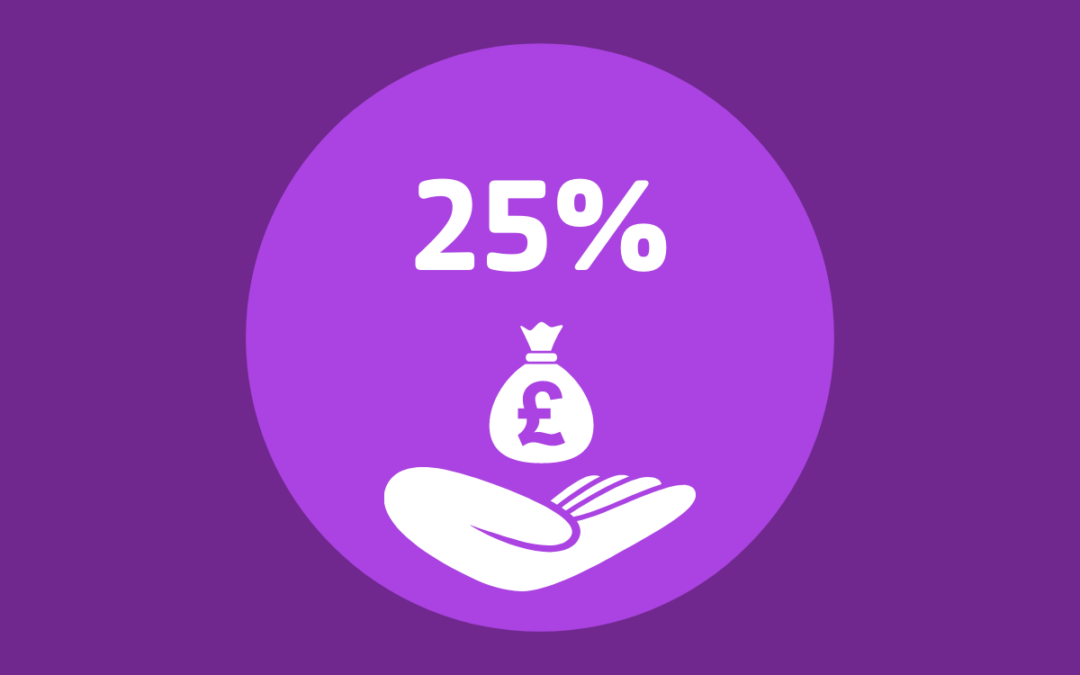
Employers in England who pay the apprenticeship levy (those with an annual pay bill of more than £3 million) will be able to pledge unspent levy funds (up to their 25% transfer allowance) to support apprenticeships in other businesses.  All businesses will be able to see these pledges on a public website and apply for funding to pay for 100% of their apprenticeship training and assessment costs (up to the funding band maximum).

If you wish to re-appraise yourself on the existing arrangements for transfers please take a look here: Transferring unused apprenticeship funds to other employers – GOV.UK (www.gov.uk)

Transferred funds will be used to pay for the training and assessment cost of the apprenticeships agreed with the receiving employer.

Sending and receiving employers need to know that:

  • funds are paid monthly for the duration of the apprenticeship
  • only levy-paying employers can make a transfer
  • any employer can receive, and use transferred funds
  • sending and receiving employers have to be registered on the apprenticeship service: https://www.gov.uk/guidance/manage-apprenticeship-funds
  • a transfer can only be used to pay for training and assessment for apprenticeship standards
  • transfers can only be used for new starts, except where the apprentice is changing employer and an agreement to continue their apprenticeship with their new employer is through a transfer of levy funds

The latest document on Apprenticeship funding (not the funding rules) can be found here and on page 4 there is mention of the new pledge functionality Apprenticeship funding – GOV.UK (www.gov.uk)

You can catch up with Education and Skills Funding Agency apprenticeship related webinars you can find a recording here on the ‘you tube’ site in the apprenticeship service – webinar recordings playlist: esfagovuk – YouTube

George Swann FIS Skills and Training Lead said:

“This allows large apprenticeship levy paying organisations to give direct support to micro and small businesses and provides an opportunity to keep the apprenticeship funding in the finishes and interiors sector.  As young people consider their future options now is a great time to investigate taking on an apprentice or pledge unspent apprenticeship levy funds for smaller organisations to utilise”.

Skills Hub

The Skills Hub brings together details of courses specific to the finishes and interiors sector, making accessing and booking training quick and easy. In addition, it provides information on sector careers, apprenticeships and funding, as well as access to e-learning, CPD and other training.

Can you help promote a career in construction?

Can you help promote a career in construction?

In order to show more young people the wide range of opportunities available in construction, the industry needs STEM Ambassadors STEM Construction and Built Environment Ambassadors play an essential role in inspiring young people to think about a career in construction through a range of activities, including school presentations, careers talks and mentoring.

The CLC’s Industry Skills Plan includes a commitment to recruit 7,000 Construction STEM Ambassadors, and with the new school year approaching it is the perfect time for FIS members to register by email as a STEM Employer and encourage your teams to sign up online to become STEM Ambassadors.  Further information on how to get involved can be found in this short film.  If you like to have a chat about what is involved before committing please call FIS on 0121 707 0077 or email info@thefis.org we will be happy to help.

Help to inspire the next generation with Open Doors

Help to inspire the next generation with Open Doors

Recruiting the next generation is vital if we are to maintain the pipeline of talent coming into the industry and one of the best ways to show young people the fantastic work we do is through Open Doors!

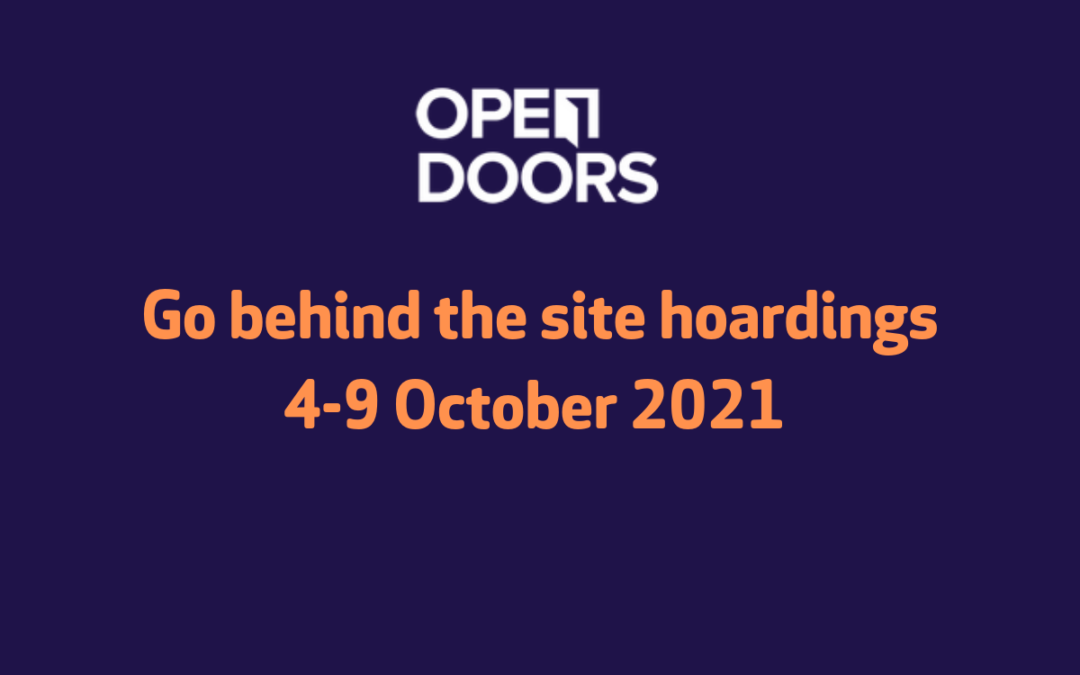
This year’s event will run from Monday 4 ‐ Saturday 9 October and there will be a combination of site visits and ‘live’ virtual events on offer. Bookings open to the public on Monday 23 August.

Build UK Chief Executive Suzannah Nichol has highlighted the unique appeal of Open Doors in Building Magazine saying: “The words ‘Fancy a site visit?’ ‐ whether it is to a major infrastructure project or a local housing development covered in scaffolding ‐ almost always ignites a positive response.”

A huge thank you to those members that have already signed up. If the last 18 months have taught us anything, it is that we are so much more effective when we work together, and we would encourage all of you to upload as many events as possible to help us showcase the diverse range of opportunities that our sector has to offer.

FIS vote “No” to CITB’s Levy collection proposals for 2022 to 2025

FIS vote “No” to CITB’s Levy collection proposals for 2022 to 2025

Following a vote of the FIS membership on the level of money proposed to be collected for the construction industry levy by the Construction Industry Training Board (CITB), FIS has voted against the CITB proposal.

The Construction Industry Levy is collected and distributed by CITB in a process governed by the Industrial Training Act.  FIS, as a CITB Prescribed Organisation according to the Act, are required to consult with Levy paying members of FIS through the defined process and respond collectively on their behalf.

The future collection levels proposed by CITB were:

  • 0.35% on PAYE staff
  • 1.25% on Net paid (taxable) CIS sub-contractors

Commenting on the vote FIS CEO Iain McIlwee stated:

“The vote in 2021 was closer than in the 2017 FIS consensus vote, which will be related to the significant increase of FIS members engagement in training and qualifications.  However, we still cannot give our support to the CITB proposal as the response shows that there remains widespread frustration with the performance of CITB.  The sector received grants for approximately 53% of levy paid between April 2019 and April 2020, which is a rise of approximately 20% on previous years, but it still means that a significant proportion of the levy collected is not utilised by or supporting those that are paying it.

We will await the final verdict in October and in the meantime will continue focus all of our efforts on working to support members in utilising levy paid through our one to one clinics and working collectively to address the profound skills shortage that is impacting our sector.”

Paul Leach Chair of the FIS Skills Board said:

“FIS has pulled out the stops to give everyone eligible a chance to have their say on this years consensus vote.  It was a close vote, within single figures and the views of members have been reported as stated.  It is testament to the support provided by FIS that there is a clear increase in the engagement of all members in skills, training and qualifications.”

Across the wider sector, Build UK has confirmed that after surveying its members, a majority confirmed their support for the continuation of the CITB Levy.

Build UK acknowledged that the level of support during this Consensus process was significantly lower than in previous years and added that it is clear that construction needs an Industry Training Board that is fit for purpose, responsive and effective at delivering the services and support required to meet the industry’s skills needs, and that members are not prepared to wait another three years to see fundamental changes in CITB’s delivery in order to fulfil this role.

The overall outcome of the consensus process is expected to be communicated by CITB to the industry after consultation with government by October 2021.

For further information on how FIS is supporting the sector in skills, click here.

NEBOSH qualification now accepted for CSCS Academically Qualified Person registration

NEBOSH qualification now accepted for CSCS Academically Qualified Person registration

The Construction Skills Certification Scheme (CSCS) is to formally recognise the NEBOSH Health & Safety Management for Construction (UK) qualification for its Academically Qualified Person (AQP) card, effective immediately.  CSCS, the UK’s leading skills certification scheme within the construction industry, will accept the qualification alongside a range of already recognised NEBOSH courses, with applicants required to supply a copy of their qualification while also passing the CITB Managers and Professionals Health, Safety and Environment Test.

The course will replace the NEBOSH Construction Certificate, although both will run in tandem until 21 July 2023 to allow existing learners to complete their final assessment.  The new course is primarily intended for construction site managers, contract managers, site workers with health and safety responsibilities and construction health and safety advisors.  It centres on areas including workplace injuries and illness, Construction (Design and Management) Regulations, employee wellbeing and demonstrating, as well as strengthening, health and safety culture.

Applicants can apply for their AQP card online via CSCS’s online service, with the card valid for five years from issue.  The National Examination Board in Occupational Safety and Health (NEBOSH) is a leading global organisation, which provides health, safety and environmental qualifications.  Their internationally recognised qualifications help to raise the competence of safety and environmental professionals as well as individuals at all levels in the workplace.

Consultation on plans for degree apprenticeships

Consultation on plans for degree apprenticeships

A consultation has launched (16 July) on proposals to improve how degree apprenticeships are developed, approved, and work in practice for employers and apprentices.  A key aim is to better capitalise on the prestige that degrees and graduate status carry with employers and the wider labour market, to ensure that level 6 and 7 apprenticeships better meet employers’ skills needs and support apprentices to progress in their careers.  The proposals would create more opportunities for degrees to be included in level 6 and 7 apprenticeships, where employers can demonstrate that graduate status is generally required for an individual to be employed in a particular occupation or sector.  Additionally, degree apprenticeships would only be approved where the end-point assessment (EPA) integrates with the final assessment of the degree. EPA would need to involve people with appropriate industry expertise.

The Institute for Apprenticeships and Technical Education (IfATE) would also ensure that degree apprenticeships are distinct from other higher education programmes and support further integration of on and off the job training, which is a key principle of all apprenticeships. The idea is to rule out degree apprenticeships that amount to no more than rebadging of existing full-time or part-time degree programmes.

You can visit the Institute’s website to take part in the consultation that will close at midnight on 16 September.

IfATE will be running a series of stakeholder events to provide an opportunity for people to discuss the proposals in more detail on:

5 August 2021:

  • Employers: 09:30-10:30, sign up here
  • Higher education institutions and training providers: 10:30-11:30, sign up here
  • Professional, statutory, and regulatory bodies and end-point assessment organisations: 15:30-16:30, sign up here

2 September 2021:

  • Employers: 09:30-10:30, sign up here
  • Higher education institutions and training providers: 11:00-12:00, sign up here
  • Professional, statutory, and regulatory bodies and end-point assessment organisations: 15:30-16:30, sign up here

If you have any further questions please email: Enquiries.IFA@education.gov.uk