
0121 707 0077

Changes to Occupational Work Supervision NVQ structure and CSCS cards

Changes to Occupational Work Supervision NVQ structure and CSCS cards

Following consultation with industry the National Working Group (NWG) for Occupational Work Supervision (OWS) has confirmed the removal of the endorsement list and redefined the pre-entry requirements for the OWS N/SVQ.

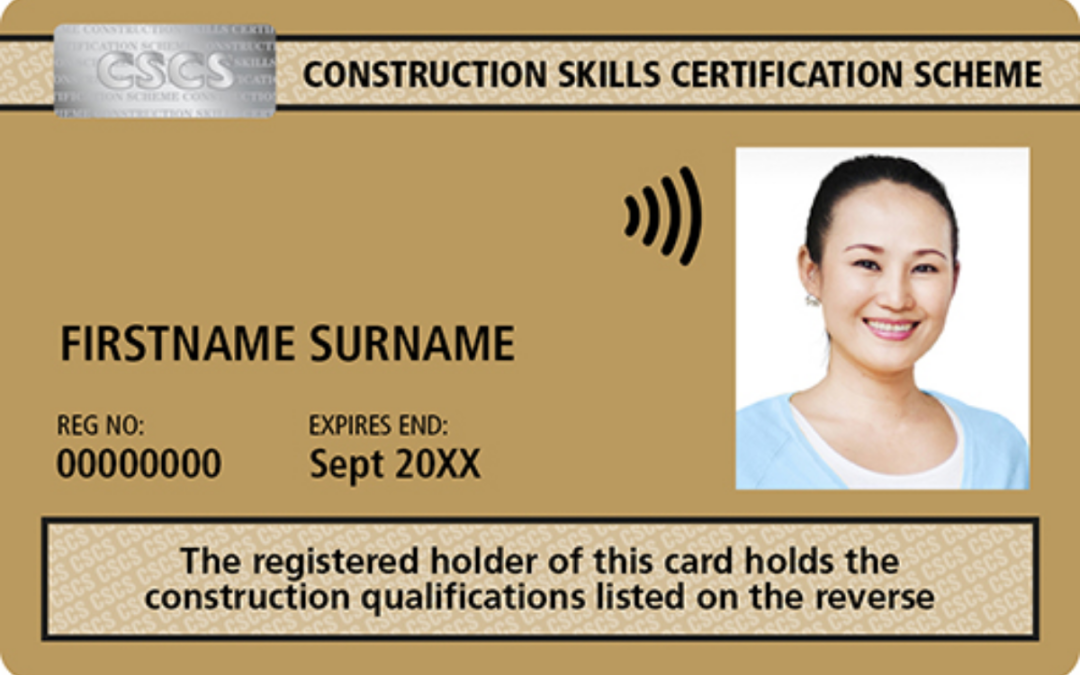
This means that CSCS no longer require applicants applying for the Supervisory Gold card with an OWS N/SVQ to submit additional evidence demonstrating competence in their occupation.

Applicants need only to provide evidence of their OWS N/SVQ and to have passed the Specialist Supervisor level CITB Health, Safety and Environment test within the last two years.

The announcement from the National Working Group also means that CSCS will stop printing the occupational endorsement on the reverse of the card for any new card applications received from 1 October 2021.

Garry Mortimer, Operations Manager at CSCS said:

“CSCS supports the findings of the National Working Group. The removal of the endorsement will simplify the card application process for our applicants.”

The NWG accepts that it is the responsibility of all employers to ensure that their supervisors are competent to carry out their duties. The NWG for OWS has approved any of the following entry requirements for those taking the OWS NVQ or SVQ:

  1. the individual’s occupational industry experience prior to being registered for the Occupational Work Supervision qualification
  2. the individual’s ability and experience in supervising teams
  3. the individual is occupationally competent to at least level 2 or SCQF level 5 in construction

Awarding Organisations must ensure that candidates provide evidence to demonstrate relevant verifiable experience. This evidence must be verified prior to being registered for the OWS N/SVQ and should meet the following criteria:

  1. The candidate provides evidence to demonstrate relevant verifiable experience and competence in their occupational area for example: qualification to N/SVQ Level 2 or SCQF Level 5, or
  2. A letter from the employer confirming the candidate’s suitability and a professional discussion or portfolio evidence of previous experience.

Garry Mortimer continued:

“To ensure safety on site, it is vital that the Awarding Organisations verify candidates’ evidence before approving their entry onto the N/SVQ.

“Similarly, employers have a duty to not only check the CSCS card thoroughly to ensure the holder has achieved the OWS NVQ, but to ensure that their supervisors are competent to carry out their duties.”

You can find out more about applying for a CSCS card with the Occupational Work Supervision NVQ here or via the OWS FAQ section.

BuildBack in action

BuildBack in action

Watch to see how BuildBack can benefit your business and the progamme in action

FIS went behind the scenes at Sandwell College to film candidates in action on its BuildBack training programme, which covers the skills and competencies required for installing drylining.

The programme aims to get individuals site ready and aware of the health and safety requirements of being on site, before being placed on two-weeks work experience.

FIS also hosted a webinar to explain how BuildBack offers support for employers who are experiencing labour shortages. The emphasis is on this being of no direct financial cost to employers. You can watch this here and find out how BuildBack can benefit your business.

BuildBack has candidates ready for work placement, so if you have any opportunities to help them get started in our sector, email info@thefis.org and FIS can do the rest.

Background on BuildBack

BuildBack is an standardised recruitment and induction programme for those looking to start a career in drylining. Run by FIS and funded by CITB – it has been developed to help find the next generation of dryliners. The programme recruits and assesses candidates before putting them through two weeks of introduction training in the skills and competencies required for installing drylining, followed by a two-week work placement on-site with a local employer.

To register as an employer and offer BuildBack candidates work placements, or are interested in starting a career in drylining email info@thefis.org or telephone 0121 707 0077.

Join the conversation at #attackthegap

Industry placements – supporting your workforce development (Webinar Recording)

Industry placements – supporting your workforce development (Webinar Recording)

The webinar was delivered on 29 July 2021.

An industry placement is an extended period of structured time that a student spends in your workplace, developing real skills and making a meaningful contribution to your organisation.

What might this look like in the current circumstances?

Many employers have already been offering industry placements, which will be a fundamental part of T Levels – a new course designed by employers that follows GCSEs, which combines classroom learning with a substantial placement (at least 315 hours).

In this 1-hour online session, we gave an overview of what industry placements are, how they might contribute to your workforce development in the coming months, and the government support now available to help you.

The webinar recording and slides can be found below.

Download webinar slides here

CITB secures construction industry support for Levy proposals

CITB secures construction industry support for Levy proposals

Construction employers have backed CITB’s Levy Proposals to support skills and training across England, Scotland and Wales, by way of the Consensus process.

The provisional result will now be taken to the Secretary of State for Education to make the final decision on the issue of a new, three-year Levy Order which, if approved, would be issued for 2022-2025. This will see the Levy continue at the following rates at 0.35% for PAYE and 1.25% for Net paid (Taxable) CIS Sub-contractors.

CITB will now get on with delivering this year’s Business Plan and working with industry to agree its forward plan. In doing so, it will listen to the feedback it received on how it can communicate its plans and impact more clearly and ensure its support is relevant, accessible and easily understood.

Overall, 66% or two thirds of the total number of Levy-paying employers agreed to the proposals, with 63% agreeing when measured by the total amount of Levy paid. This result was based on submissions from the 14 Prescribed Organisations (trade bodies representing employers across the industry) and an independent survey of 4,000 employers who were not members of POs. Eleven of the 14 Prescribed Organisations supported the Levy Proposals.

Apprenticeships and Skills Minister Gillian Keegan said:

“My thanks go out to both the staff at the CITB for facilitating a complex process and to the employers, other members and reps for your active participation.

“This last 18 months have been unusually challenging for the construction sector and that is why the CITB decided to delay the consensus process from 2020 to 2021. I recognise that Covid-19, one of the key factors for the postponement, has not gone away. Therefore the sector’s willingness to engage with the CITB is even more valuable.

“The next step in the process to progress the Levy Proposals towards a Levy Order now rests with me, before doing so I will be considering the Proposals in detail.

“I know that the CITB will relish returning its entire focus to delivering skills provision for the construction sector at a time when it is more crucial than ever. I also want to welcome Tim Balcon in his new role as CITB CEO from 1 October and thank Sarah Beale for the great work she has done for many years in leading the CITB.”

Peter Lauener, CITB Chair, said:

“Construction has been through a tremendously difficult couple of years. CITB moved quickly to support employers by freezing Levy collection last year, cutting bills by half this year, and putting the right support in place.

“We will carry on with delivering our current plans and get started with shaping our future ones. I want to thank everyone who participated in the Consensus process this year – your input is invaluable and will help shape CITB’s support for you in future.”

Sarah Beale, outgoing CITB Chief Executive, said:

“At an extremely tough time, construction employers have demonstrated that they still believe that the Levy and grant system is critical in addressing the industry’s skill needs and their support for the Levy Proposals. In developing our future plans, we will listen hard to what employers told us in how we can ensure that the Levy works for them and provides support that is relevant, easy to understand and accessible.”

Tim Balcon, new CITB Chief Executive, said:

“It’s good that so much of what employers are asking for is already in the Business Plan, so we need to make support easier to access and understand and to keep the sector better informed.

“CITB is committed to maximising the value of the Levy for employers, providing practical and financial support for everyday training needs as well as tackling long-term skills needs.”

Commenting on the announcement, FIS CEO Iain McIlwee said:

“This is clearly not what the majority of our members voted for, but we now need to focus on the positives and start looking at how we work better with CITB as a sector to increase our levy utilisation. Whilst the FIS was one of the three prescribed organisations to vote “No”, we did see a higher proportion of members claiming levy in this return and supporting concensus and there is recognition in CITB that there are clear priorities to mobilise resources more effectively to support the growing skills shortages that we face in the finishes and interiors sector. We will continue to offer our free one to one skills clinics to members that focus on reviewing your levy return and ensuring that you are getting all you are entitled through the process and focussing all our efforts on how we can better utilise our levy to attack the shortages that are emerging in key areas.”

Details of the FIS vote are available here

To access the FIS Skills Hubs click here

 View the official letter from CITB

For a summary on all FIS Campaign to Attack Skills Shortages click here

Industry Placement card set to launch ahead of new academic year

Industry Placement card set to launch ahead of new academic year

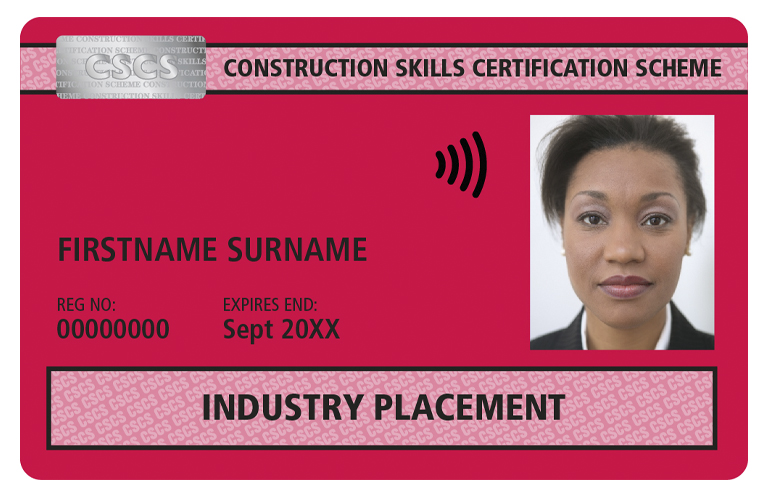
The Industry Placement card is to be made available by the Construction Skills Certification Scheme and a number of other partner schemes on 1 September 2021, in time for the new academic year.

Initially announced back in June, the card is for learners aged sixteen or above on qualification or training programmes requiring a minimum of 30 days’ work placement, which is intended to ultimately lead to a job in construction and the built environment.

The card is designed to support learners transitioning from the classroom to the workplace and mirrors changes to educational policy in the UK, which have seen an increased focus on vocational education.

This includes the introduction of the Traineeship Skills Development Programme and T Level qualifications, with these new pathways into construction involving a mixture of classroom learning and extensive on-the-job experience.

Initially the following four card schemes will make the card available from 1 September 2021:

All card schemes are keen to highlight the importance of applying to the card scheme relevant to the learner’s chosen construction pathway. For example, a learner undertaking a T Level in Building Services Engineering with a specialist pathway in Protection Systems Engineering should apply to the Electrotechnical Certification Scheme.

The introduction of the Industry Placement card follows extensive engagement with the industry including engagement with the Construction Leadership Council and the Department for Education, alongside feedback from an industry-wide consultation carried out in early 2021.

Visit the Industry Placement card page for further information and application requirements.

Recruiting and retaining the next generation

Recruiting and retaining the next generation

To drive the economic recovery post‐COVID‐19, the industry will need to overcome its longstanding skills gaps. Whilst we continue to discuss the new Points‐Based Immigration System with the Home Office, employers should look at what they can do to recruit the next generation of UK workers as well as retain the existing workforce. One of the best ways to show how fantastic it is to work in construction is to open up our sites, offices and other workplaces or host an online event during Open Doors from Monday 4 ‐ Saturday 9 October. There have already been 100 events registered to take people behind the hoardings and if your organisation is yet to get involved what are you waiting for!

You have until 24 September to upload the details on the Open Doors website.

Following on from Build UK’s project with Timewise it was identifed that that flexible working is key to retaining a more diverse workforce, and Build UK Chief Executive Suzannah Nichol recently joined a Construction News roundtable on this issue saying:“We keep talking about more diversity in construction but we’ve actually got to do things differently to make a difference”. To find out how to implement flexible working across your business, download Build UK’s industry‐wide toolkit which includes a 10‐point action plan that companies of all sizes can use.