
by Clair Mooney | 8 Aug, 2023 | Membership
Entry is now open for the 2024 FIS Innovation Awards.
Now in their second year, the Innovation Awards are open to all companies operating in the finishes and interiors sector and focus on ideas that help support improvements in efficiency, productivity, performance, quality or perception of the finishes and interiors sector.
The Award categories are:
- Product Innovation – Fit-Out
- Product Innovation – FF&E
- Digital Innovation
- Sustainable Innovation
There will also be an overall Innovation of the Year. This will be chosen live by the audience during the awards ceremoney from the winners of the above four categories.
The awards will be judged by a panel of experts and winners will be announced at the FIS Conference, which is taking place during the Workspace Design Show in February 2024.
Entry will close on 31 October 2023. For more information and to enter click here.
FIS Chief Executive Iain McIlwee said:
“There remains a perception that construction is not an innovative sector, our aim with these awards is to debunk this myth and celebrate innovation in our sector across a number of categories. We are looking for innovation that meets a need in the sector and has evidence of adoption or planned use in a commercial environment. So, the successful exploitation of new ideas and bringing creative ideas to life.”
Joe Cilia, FIS Technical Director, added:
“I can think of at least four products which I have seen in the last few years that have been developed by both large and small
organisations based on need to improve quality, address sustainability or save time and I am looking forward to these awards
to be the showcase they need to get to a wider audience.”
The FIS Conference will be a two-day programme on 27-28 February at the Business Design Centre in London. There will be several 1-hour workshops each day, with the winners of the Innovation Awards announced at the Awards Ceremony on 27 February.
More information on the Conference will be available shortly.

by Clair Mooney | 24 Jul, 2023 | Main News Feed
Construction output is forecast to fall by 7.0% in 2023, primarily due to sharp falls in activity in the two largest construction sectors, private new housing and private housing repair, maintenance and improvement (rm&i). Output in the third largest construction sector, infrastructure, has also been revised down again due to government delays to roads and rail projects that will only add further cost to the projects when they return. Construction output is forecast to increase in 2024, by 0.7%, as wider economic growth boosts demand for both new build housing and rm&i activity.
FIS Members can download their copy of the CPA’s Summer Forecast here.

by Clair Mooney | 21 Jul, 2023 | Main News Feed
To help keep tabs on wage rate inflation, FIS launched in 2021 The FIS Wage Rate Index. The aim of this work is to support contract negotiations and to help track the impact of labour shortage on the cost breakdown of projects.
The survey is conducted every six months and FIS is asking all contractor members to take part. Data is published as a price index to allow for regional rate variations and all company specific data is managed in the strictest of confidence. The survey covers core trade roles, labourers, apprentices and construction and site managers.
THE DETAILED RESULTS OF THE SURVEY WILL BE MADE AVAILABLE EXCLUSIVELY TO CONTRBUTORS.
You can complete the survey via the link here. The survey will close on 21 August 2023. If you cannot complete, please share the link with the person in your business who can.
Your support is, as ever, appreciated.
by Clair Mooney | 20 Jul, 2023 | Main News Feed
The CPA has produced its response to the Independent Review of the Construction Products Testing Regime by Paul Morrell OBE and Anneliese Day KC. This latest briefing paper outlines how the CPA intends to respond to this report, as well as working with the government moving forward.
The DLUHC-commissioned report sets out recommendations for industry and government alike to improve and strengthen the testing regime for construction products. The uptake of its recommendations will be hugely consequential for safety and improved performance outcomes in construction.
The CPA is asking the government to help address some of the complex challenges facing the construction products industry currently. There are many interrelated issues that we hope can be addressed off the back of this report.
Asks include:
- That government should respond and support the recommendations listed in the Paul Morrell OBE and Anneliese Day KC Independent Review of the Construction Product Testing Regime, including uptake across industry of the Code for Construction Product Information
- That government should work with industry to action its recommendations and create a shared roadmap for practical progress, including what constitutes a ‘safety-critical’ product
- That government move to address and give clarity to the CA Mark issue, ahead of the June 2025 deadline.
by Clair Mooney | 20 Jul, 2023 | Labour
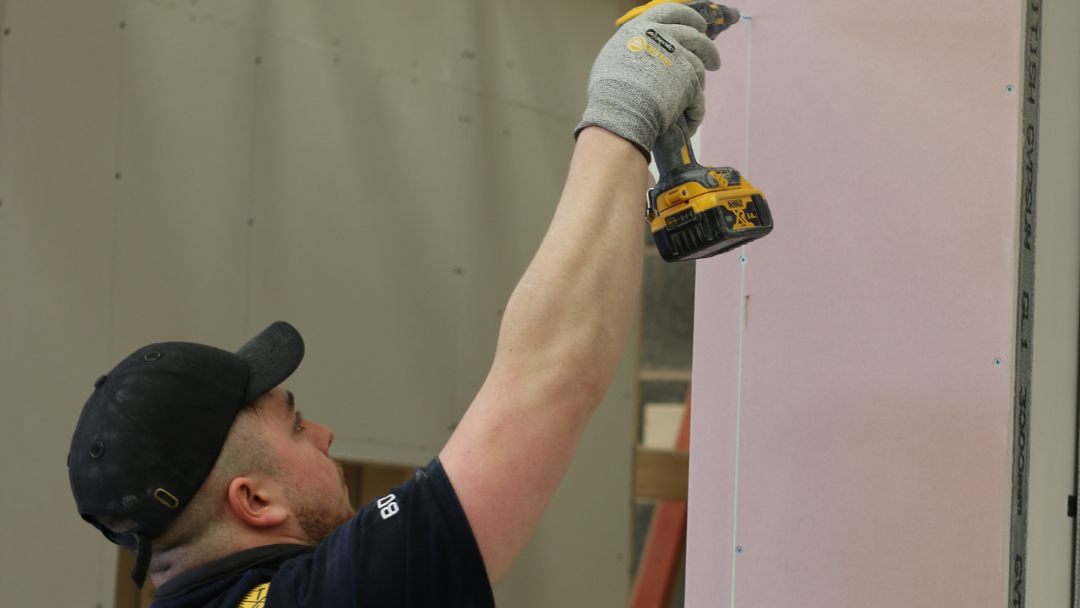
As announced in the Spring Budget 2023, five trades will be added to the Shortage Occupations List (SOL) from Monday 7 August ‐ bricklayers, carpenters, plasterers, roofers, and construction and building trades not elsewhere classified (NEC).
This move is significant as it potentially provides access to a controlled immigration process that will support the sector in managing any existing or upcoming shortages in our workforce.
By moving Dry Lining into the Standard Occupation Classification area 5321 (as per FIS recommendation and lobbying work on the SOC), Dry Lining is now also shares skilled worker status with Plastering for the purposes of being a Skilled Worker.
Commenting on the changes, FIS CEO Iain McIlwee stated:
“It is a relief to finally see Dry Lining recognised as both a skilled occupation and also the shortages that we face as a sector. This is something FIS has been campaigning on for a number of years and I am grateful to colleagues from across the Construction Leadership Council for their efforts in helping to effect this exceptional change and thankful that we now have some movement. We now need to respond to the detailed review taking place to identify other areas of concern and revisit the sponsor and visa process to better understand any further blockers and issues”.

by Clair Mooney | 19 Jul, 2023 | Building Safety Act, Main News Feed
Following recent changes to the Building Safety Act, FIS has updated its Product Process People Risk Register to support members with compliance.
The FIS PPP Risk Register gives people a structured framework to interrogate project risk based on a assessment of severity and probability of a risk occurring. The standard scoring system helps members to identify any unacceptable high risks and ensure management strategies are put in place to address. The tool also helps a management team to assign risk correctly and contains a range of links to additional tools and information that will help support specific risk management.
FIS CEO Iain McIlwee said: “A large part of our work centres on interrogating and helping members to manage day to day problems they may encounter, risks. This is a moving and evolving space. Our tool helps us to ensure that we are learning lessons and that members are alert to where problems may appear,
Risk is unescapable in any construction project, but at times we can feel so beset by risk that we become indifferent to it. It is vital that as an industry we get better at measuring, managing and mitigating. This simple tool is built on the premise that if you can’t measure it or didn’t think about it, you can’t manage it. It aims to help people to score risks. The underlying principle is that is that we can all learn from our own mistakes, but it is better learn together and avoid learning the hard way wherever possible.”
The FIS PPP Risk Register is available for members to download here
by Clair Mooney | 13 Jul, 2023 | Building Safety Act
The Building Safety Act states that those working in constructing our homes, offices, hospitals and care homes should provide evidence of their competence to the client to submit as part of the applications to build and before occupation of the buildings.
FIS Technical Director Joe Cilia was the Deputy Chair of the group (WG12) that developed the Built Environment – Proposed construction product competence standard – white paper, who alongside the joint Chairs, Hanna Clarke of the CPA and Douglas Masterson at the GAI developed the white paper alongside a dedicated group of industry experts.
The Standard will help organisations and individuals define people’s functions and introduce levels of competence against the function to track an individuals progression.

by Clair Mooney | 13 Jul, 2023 | Main News Feed
The Cabinet Office is consulting on the secondary legislation required to implement the new public procurement regime set out in the Procurement Bill, including the financial thresholds that will mean contracts need to comply with the regime. The deadline for responses is Friday 28 July.
This is a technical consultation, split into two parts. This first part of the consultation refers predominantly to areas of the Bill which require lists, calculations or further definitions to be used in practice. Questions seek to understand to what extent the draft secondary legislation provisions implement the policy intent as established in the Bill.
The closing date for Part 1 of the consultation is 28 July 2023.
Part 2 of the consultation is expected to launch in July 2023.

by Clair Mooney | 13 Jul, 2023 | Main News Feed
The FIS team have been hard at work and achieved some brilliant results across out Technical, Business Development, Skills and Training, and Lobbying efforts. Here’s a short look back at Q2 of 2023
Key technical work
- Update to workmanship on construction site standards – design and installation of drylining systems (the working group for BS8000 Part 8 was chaired by Technical Director)
- Working with Imperial college and the Steel Construction Institute testing the impact of building
- FIS announces updated vetting process aligned to Common Assessment standard
- Surveyed drylining and ceiling market for Autumn report
Business support and guidance
Lobbying and representation
- FIS invited to join the new Home Building Skills Partnership Sector Panel (chaired by Matthew Pratt, CEO Redrow)
- FIS responds to consultation on measuring embodied carbon and carbon leakage
- FIS met with senior members of Build UK and the Bank of England on a roundtable discussion on prospects and forecasts for UK construction (with input from the FIS Q1 State of Trade survey)
- FIS joins the RICS Conflict Avoidance Coalition Steering Group
- FIS responds to Government consultation on payment and retention overhaul
- FIS responds to RICS consultation on Whole Life Carbon Assessment for the Built Environment
- FIS takes a lead role in the new HSE campaign about the hidden dangers associated with asbestos
Skills and training
Key Events
- Contractors Awards Lunch – record attendance
- Industry Days – Commercial Fit-Out and D&B and Housebuilding
- Scottish regional event
- FIS Technical team active at a number of workshops / events at Clerkenwell Design Week
- FIS supported the Construction Industry’s ‘Inspiring Change’ Conference and Awards
- FIS Technical Director delivered a speech at the Fire Safety Event at the NEC
Download this document Q2 2023

by Clair Mooney | 12 Jul, 2023 | Building Safety Act, Main News Feed
Ahead of the next phase of the building safety regime coming into effect from 1 October, Build UK has updated its guide and timeline to reflect the regulations and supporting guidance that have recently been published. Changes in the July 2023 version of the guide, which is supported by the CLC, include:
- Clarifying the definition of a Higher‐Risk Building
- A link to the guidance on Key Building Information (KBI), which can now be submitted as part of the registration process for High‐Rise Residential Buildings
- Updated information on the new building control framework
- New guidance on Planning Gateway One and confirmation that hospitals and care homes are excluded from the requirements
- An updated link to guidance on the Regulatory Reform (Fire Safety) Order.
To ensure businesses across the supply chain are aware of their responsibilities under the new regime, Build UK is sharing its guide through Building Magazine. In an article published yesterday, Build UK Chief Executive Suzannah Nichol explained: “We believe that helping the whole supply chain to see the bigger picture will make it easier for everyone to understand where they fit in and what their responsibilities are…No one company or organisation can do this alone. We talk a lot about collaboration and this really does need a combined effort from Team Construction.”
by Clair Mooney | 7 Jul, 2023 | Health and Safety
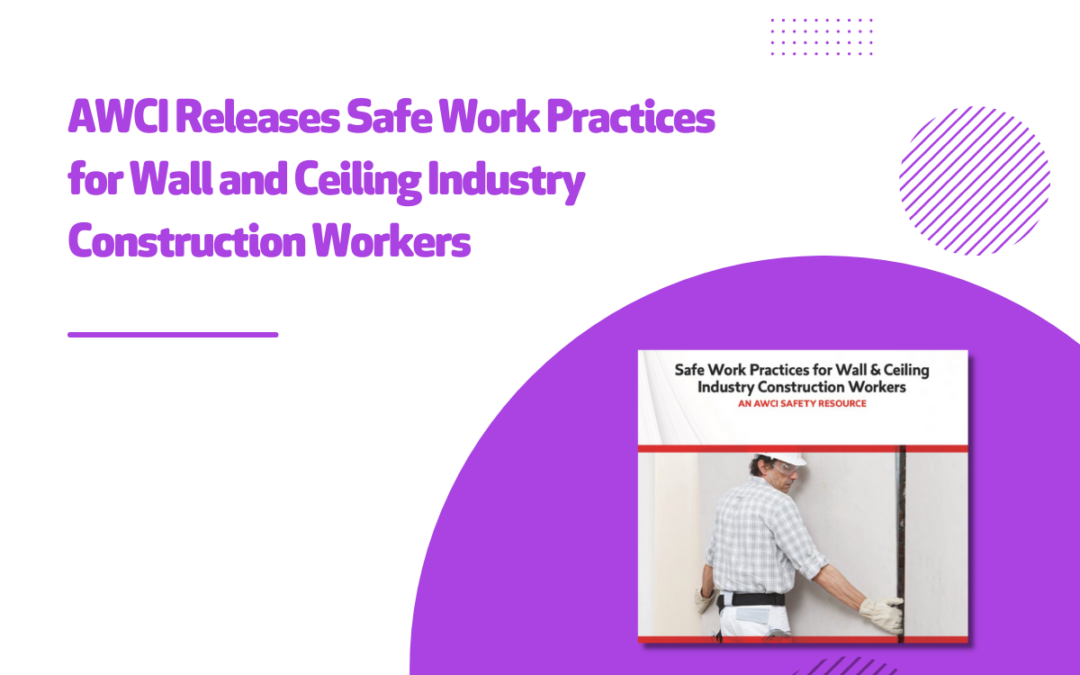
AWCI has released “Safe Work Practices for Wall & Ceiling Industry Construction Workers, an AWCI Safety Resource,” a publication on best practices for construction site safety.
Targeted to construction professionals in the wall and ceiling industry, the 28-page document provides summaries of safety best practices and principles on 41 potential hazards in the drywall and plastering fields. The subject matter ranges from aerial lifts to welding and includes several topics specific to drywall construction, such as drywall carts and stilts.
FIS Chief Executive Iain McIlwee said:
“We enjoy a great relationship with the AWCI built on shared values and collaboration. We are grateful that we can bring this fabulous resource, developed in the US, to support safety in the UK”.
The information provided is a quick read and easy to understand, and is useful for toolbox-talk presentations as well as a year-round resource.

by Clair Mooney | 4 Jul, 2023 | Market data, Material Shortages
The Department for Business and Trade is asking FIS Product Supplier members to respond to a short survey which is being conducted by their Global Supply Chains and Economic Security Directorate to identify businesses’ experiences of managing their critical supply chains and protecting against disruption.
The pandemic, as well as changes in the global economy, geopolitical environment and climate, have recently increased the frequency and magnitude of both demand and supply shocks to industry globally. Government and industry have worked closely on responding to this challenge over the past few years. Supply chain disruption continues to be a Government priority.
Through this survey, government is seeking to reach those who are responsible for trade and supply chain decisions within your business. All responses to the survey will be anonymised and any report produced will ensure that no individual respondents can be identified.
Click here to access the survey. It will be open until 17 July 2023.

by Clair Mooney | 29 Jun, 2023 | Skills
The deadline for employers registered with CITB to submit their completed 2023 Levy Return is tomorrow (Friday 30 June). Failure to submit it on time will result in grant claims being withheld until it is received, and employers who do not submit a completed Levy Return by 30 November 2023 will lose eligibility for all grant claims.
More information is available at https://www.citb.co.uk/levy-grants-and-funding/citb-levy/levy-return/
by Clair Mooney | 29 Jun, 2023 | Main News Feed
The CIJC has agreed new pay rates effective from Monday 10 July. There is a 6% increase in pay (8% for general operatives), as well as increases in travel and subsistence allowances and sick pay. There will be further increases from 1 January 2024 and the rates should be read in conjunction with the Working Rule Agreement and Holiday Entitlement 2023.

by Clair Mooney | 29 Jun, 2023 | Main News Feed
Earlier this month, JCT announced that the next update to its suite of contracts will be the JCT 2024 Edition.
Digital working will continue to be a main feature of the JCT suite with JCT 2024, which will be published exclusively via JCT’s Construct subscription service, as well as On Demand digital and traditional hardcopy.
The main features of JCT 2024 include updates and changes corresponding with the following workstreams:
- Modernising and streamlining – including adoption of gender neutral language, and increased flexibility around the use of electronic notices.
- New for JCT 2024 – the introduction of a new contract family, JCT Target Cost Contract (TCC), comprising main contract, sub-contract, and guide.
- Legislative changes – major updates in relation to the Building Safety Act, Termination accounting and payment provisions reflecting the Construction Act, new insolvency grounds reflecting the Corporate Insolvency and Governance Act 2020.
- Future proofing – including changes to reflect the objectives of the Construction Playbook, and the incorporation of previously optional supplemental provisions relating to Collaborative Working, and Sustainable Development and Environmental Considerations, into the main document.
More information is available here

by Clair Mooney | 29 Jun, 2023 | Building Safety Act
The Department for Levelling Up, Housing and Communities has issued guidance which relates to the legal criteria for determining whether a building is considered a higher-risk building under the Building Safety Act 2022 and the Higher-Risk Buildings (Descriptions and Supplementary Provisions) Regulations 2023. It relates to the definition of higher-risk building during the occupation phase of the higher-risk regime only.
This guidance sets out the criteria for a building to be a higher-risk building during the occupation phase of the higher-risk regime. Higher-risk buildings are subject to the requirements of the new higher-risk regime directly overseen by the Building Safety Regulator (the Regulator).
Higher-risk buildings, for the in-occupation requirements under Part 4 of the Building Safety Act 2022 (the Act), are defined in section 65 of the Act and the Higher-Risk Buildings (Descriptions and Supplementary Provisions) Regulations 2023 (the Regulations).
The obligations in Part 4 of the Act largely apply to occupied buildings and this is, therefore, referred to as the ‘in-occupation’ part of the regime. To understand whether a building is a higher-risk building, the Act and the Regulations need to be considered together.
For the in-occupation part of the regime, higher-risk buildings are defined as buildings with at least two residential units which are at least 18 metres in height or have at least seven storeys. The definition of “higher-risk building” is only for the purpose of the new higher-risk regime. The definitions in the Act and Regulations do not amend definitions in other legislation or definitions of building in other parts of the Act, such as the definition of “relevant building” under section 117 of the Act which defines a ‘relevant building’ for the purpose of the leaseholder protections under sections 119 to 125 and Schedule 8 of the Act.
This guidance document includes the relevant text from the Act and Regulations with explanations and diagrams. It is a tool to help potential principal accountable persons and accountable persons determine if the building they are responsible for is a higher-risk building. This guidance and the specifics and circumstances of your building need to be considered by you when discharging your duties under the Act and the Regulations. Diagrams in this guidance document show examples of potential buildings and are for illustrative purposes only. You will need to consider the legislation carefully to understand whether you are responsible for a higher-risk building in scope of the higher-risk regime. You may wish to seek legal advice on this.
In addition to becoming a higher-risk building under the Act and the Regulations, your building may also be subject to other legislation and statutory duties, such as the Regulatory Reform (Fire Safety) Order 2005. You will need to work with the relevant dutyholders in the building to ensure it is safe.

by Clair Mooney | 28 Jun, 2023 | Main News Feed
Television presenter and award-winning designer Anna Campbell-Jones will be the star guest at this year’s Green Home Festival, which is again being organised by the Construction Industry Collective Voice (CICV), of which FIS is a key member.
The co-host and judge of hit BBC Scotland show Scotland’s Home of the Year will be a guest speaker at the second week-long event, which starts in 50 days as part of the official Edinburgh Festival Fringe.
Anna will discuss low-carbon living as part of the Ingredients for a Greener Kitchen show on the first day of the free festival, which will host 11 in-person and virtual sessions from 14-18 August to help consumers on the journey to net zero.
The interior designer – who won Scottish Influencer of the Year last October – said:
“I am delighted to be taking part in this year’s Green Home Festival and to be able to help raise the profile of eco-friendly living for consumers across Scotland.
“Finding greener ways of designing, decorating and renewing our homes will be vital for us all going forward and creating more low-carbon kitchens will be a key part of that.
“In particular, I feel passionately that the era of ‘fast fashion’ for interiors must come to an end. Kitchens are a significant contributor to unrecyclable landfill and I’m going to talk about alternative approaches to the concept of what we mean by ‘getting a new kitchen’.”
Anna starred in the grand finale of Scotland’s Home of the Year on Monday night (26 June), and also won the interiors and design award at the inaugural Scottish Influencer Awards in Glasgow in October 2022.
She will now star alongside experts from Scottish Water, plumbing body SNIPEF, electrical trade association SELECT and James Alan Construction, who will all share their first-hand knowledge and advise on what to consider when planning and renovating a kitchen.
Festival co-organiser Gordon Nelson, Scotland Director of the Federation of Master Builders (FMB) said:
“We are delighted to welcome Anna to this year’s Green Home Festival and look forward to hearing her invaluable input and expertise on greener living.
“Like all our shows, Ingredients for a Greener Kitchen will deliver a wealth of practical advice, focusing on the vital areas that can make kitchens eco-friendly – water efficiency, electrical efficiency and sustainably sourced materials and units.”
Other Green Home Festival shows to be delivered during the week include green garden rooms and offices, making retrofit projects eco-friendly, the potential of microwave heating, converting churches, and how the home of the future will be powered.
The event will also include a dedicated heat pump day, with experts hosting two separate shows to advise on how to reduce bills, access grants and install the new technology, as well as the options for hybrid heating.
Plus the experts from Built Environment – Smarter Transformation will host an in-person show on the advantages of community heat networks and an online webinar that will advise what consumers can do to reduce both their energy consumption and energy bills.
Mr Nelson added: “With 50 days to go, and with all the events now confirmed, the second Green Home Festival is shaping up to be as big a success as last year’s inaugural event.
“With a strong focus on accessing funding and saving money, our experts will offer practical demonstrations of low-carbon technology that consumers can put into action as we move towards becoming a net zero nation.”
The Green Home Festival is the latest in a string of practical and constructive initiatives launched by the CICV since its creation as the Construction Industry Coronavirus (CICV) Forum in March 2020.
Made up of 28 trade associations, professional services bodies and companies, including FIS, it has maintained a steady supply of information and practical advice to the sector as well as carrying out surveys, producing animations and posters, hosting webinars and maintaining close dialogue with Scottish Government ministers.
- Tickets for all Green Home Festival events are free and can be reserved here. The series finale of Scotland’s Home of the Year can be viewed again here.

by Clair Mooney | 27 Jun, 2023 | Skills
Low levels of awareness and engagement with the Points-Based System (PBS) post-Brexit continue to exacerbate existing skills shortages within the sector, according to the latest Migration and Construction report by the Construction Industry Training Board (CITB).
Only half of employers surveyed indicated that they were aware of the PBS. Only 7% of employers reported that they have signed up as a licensed sponsor.
But there are plans to work closely with industry to make employers more aware of the benefits and how to navigate the system.
Addressing any barriers preventing employers, particularly small and medium-sized enterprises (SMEs) accessing the scheme and benefitting from recent changes to the Shortage Occupation List would help enable employers to more easily recruit migrant workers in high-demand occupations.
This is the sixth report and the first since the end of the pandemic and the introduction of the Points-Based System in January 2021 when the UK formally left the EU.
The report’s other key findings include:
- The share of migrant workers in the construction workforce fell to 9.8% in 2021 (latest year data is available for) from 10.2% in 2020 and 10.7% in 2018.
- Even in the early stages of recovery from the pandemic, and despite modest growth in output, over half (55%) of employers indicated that they have faced recruitment difficulties over the past two years.
- Almost a quarter (23%) of firms reported that recruitment had been very difficult. These problems have been greatest for larger firms employing more than 100 people (76% of employers) and in London, South-East and East of England (62%).
- The industry needs to deliver on its commitment to grow and invest in its domestic workforce by tackling long-standing weaknesses in how it attracts, retains and develops its workers skills and capability by raising the levels, quality and relevance of training.
- However, the Government, Construction Leadership Council (CLC) and industry need to work together to raise employer understanding and awareness of the PBS and to make the system work better for construction to address some of the critical short-term skills needs that industry now faces.
The government has responded to evidence from CITB and CLC of the recruitment pressures on construction employers by widening the range of occupations covered by the Shortage of Occupation List (SOL) in the Spring Budget.
The Shortage Occupation List (SOL) points out which jobs are facing shortages and aims to make it easier to hire migrant workers in these occupations. An ongoing consultation into the SOL was launched by the Migration Advisory Committee (an independent body advising on immigration) in March.
CITB’s migration and construction research has been critical in helping industry and government understand the skills and migration challenge industry faces.
Partnership work between industry and government aims to create a dynamic migration solution post-Brexit.
To help relieve pressures on employers, the CLC, industry groups and CITB have developed an Industry Skills Plan and are working with the government to put a range of support in place.
But the CLC has called for more to be done.
James Butcher, Director of Policy at the National Federation of Master Builders (NFB) and Chair of the CLC’s Movement of People Working Group, said:
“It’s important that awareness issues and barriers to how employers use the PBS are overcome to access the Skilled Visa Route and benefits for occupations on SOL, as shown in the report.
“The recent Construction Skills Network report from CITB highlights a need to invest in and train the domestic workforce to meet skills gaps and futureproof the industry.
“But that will take time – and the pandemic has already worsened the recruitment challenges faced by employers, from SMEs to major firms.
“So, in order to respond to critical needs in the short to medium term, we need to have a dynamic migration system in place.
“This report lays that bare and identifies areas we can make meaningful improvements.”
“We will work closely with our partners in government and industry to make the changes that will open up opportunities for employers and help them to become more agile in their recruitment processes so they can meet demand.”
Marcus Bennett, Head of Industry Analysis and Forecasting at CITB said:
“At CITB our focus is on supporting employers to recruit, train and retain the workers needed to meet levels of demand both now and in the future.
“We need to make construction an attractive place for a greater diversity of people to work, by improving employment practices, flexibility and the way we recruit. We will continue to encourage new entrants into the industry through training and support, including our apprenticeship schemes and grants, to bolster our domestic workforce.”

by Clair Mooney | 23 Jun, 2023 | Sustainability
Members of the FIS sustainability group have come together to respond to the Government consultation on addressing carbon leakage risk to support decarbonisation – see: Addressing carbon leakage risk to support decarbonisation
As part of its plan to measure and reduce carbon emissions, the Government is considering a range of potential policy measures which include a carbon border adjustment mechanism (CBAM), mandatory product standards (MPS) amongst other policy measures to help grow the market for low carbon products. They are also considering emissions reporting.
The main points raised by the FIS group is that the construction industry has been measuring embodied carbon emissions from products for decades. EPD are well established and recognised as a mean to measure the environmental impact of construction products. In addition, the industry has recognised for a long time that measuring the environmental impact of products should not be done on a per tonne basis, first because it is not an appropriate measure for all construction products, but also because construction products are part of a larger system to fulfil a performance, eg: strength, acoustic or thermal. Comparison of the impact of products should be done in the context of their use, at building or product system, and could be done against a functional unit.
The other aspect that has been covered in the consultation is that the system the Government puts in place should be in line with the EU approach since most products imported come from the EU and the EU is a major market for the export of construction products.
To find out more details of the FIS response to the consultation, contact Flavie Lowres at flavielowres@thefis.org

by Clair Mooney | 23 Jun, 2023 | Health and Safety
in response to calls for a consistent framework for drug and alcohol testing across the industry, the CLC has shared Build UK’s template Drugs and Alcohol Policy.
Recognising that there are different legal limits across the nations and workplace environments, along with various ways of testing, the policy can be adopted by the whole construction supply chain to provide a consistent approach to the issue of drugs and alcohol, which will help the industry to eliminate unnecessary duplication and waste.
The template policy has been drafted so that companies can adopt it in its entirety or incorporate elements of it into their own policy to suit their business, and the June 2023 version has been updated with additional information on the consumption of alcohol as part of corporate hospitality for those companies that permit it