by Clair Mooney | 14 Jun, 2023 | Main News Feed
FIS has compiled a questionnaire to support a consolidated construction response to the latest HMRC consultation on the Construction Industry Scheme (CIS).
It considers whether it would be appropriate to add VAT to the list of taxes HMRC must consider when undertaking the statutory compliance test for receiving or keeping Gross Payment Status (GPS). It seeks views on how adding VAT could be given effect and the consequences for those affected.
In addition, the consultation sets out two areas where stakeholders have told HMRC that the operation of the CIS is causing unnecessary administrative burdens: landlord/tenant payments; and multiple reporting requirements by some groups. It seeks views on the scope and impact of those burdens, and the government’s proposals for removing or reducing them.

by Clair Mooney | 9 Jun, 2023 | Main News Feed
FIS today celebrated the finishes and interiors sector with the announcement of the winners of the FIS 2023 Contractors Awards.
Members and their guests packed out the Nine Kings Suite at the Royal Lancaster Hotel in London to see the winners in the 14 categories receive their prestigious awards.
Independent Awards Judges Tony Pieri and Colin Hunter, who visited all project entered said:
“As judges, we take our responsibilities very seriously as we fully understand the hard work and endeavour everyone has applied to the project they have entered for the awards process. We recognise the pride you feel in your work as that is fundamentally why you have entered your project in the first place.
“FIS contractor members continue to produce excellent work against the increasing pressure of tight budgets and challenging time constraints. That characterises the spirit of FIS members, who consistently demonstrate the resolve to do a good job on time and within budget. It has been a real pleasure for Colin and me to witness such outstanding and varied work.”
A final award was given for the Project of the Year, which was judged by guest architect Robert Fry, International and
Executive Director of Aukett Swanke Group plc. Robert selected the overall Project of the Year from the winning contracts across all categories.
Robert said:
“The very high quality of the award category winners made the selection of a single project for the ‘Best of the Best’ award a very challenging proposition given the excellence demonstrated by so many varied trades and skillsets brought to bear for clients in such a collaborative endeavour”.
About the FIS Contractors Awards
The FIS Contractors Awards are held annually to encourage and promote high levels of craftsmanship and design. Not only does the FIS member who installed the contract win an award, but so does the architect or interior designer of an award-winning project.

by Clair Mooney | 9 Jun, 2023 | Sustainability
The next in the series of newsletters from the Link Consortium is available here.
FIS taking a lead on driving product re-use and standardising deconstruction processes. The Link project is a key part of this work, looking at streamlining the strip-out process and using Artificial Intelligence to identify and prepare products for potential re-use and re-sale. This is a fundamental part of seamlessly aligning construction, building management and deconstruction/demolition to support better asset management and reduce the waste and carbon associated with our vital work.
The Link Consortium brings together experts in building materials reuse (including FIS) looking at how the sector can adopt latest artificial intelligence and object recognition technology to provide rapid listing software to help increase reuse of used construction materials and significantly reduce carbon emissions.
by Clair Mooney | 9 Jun, 2023 | Skills
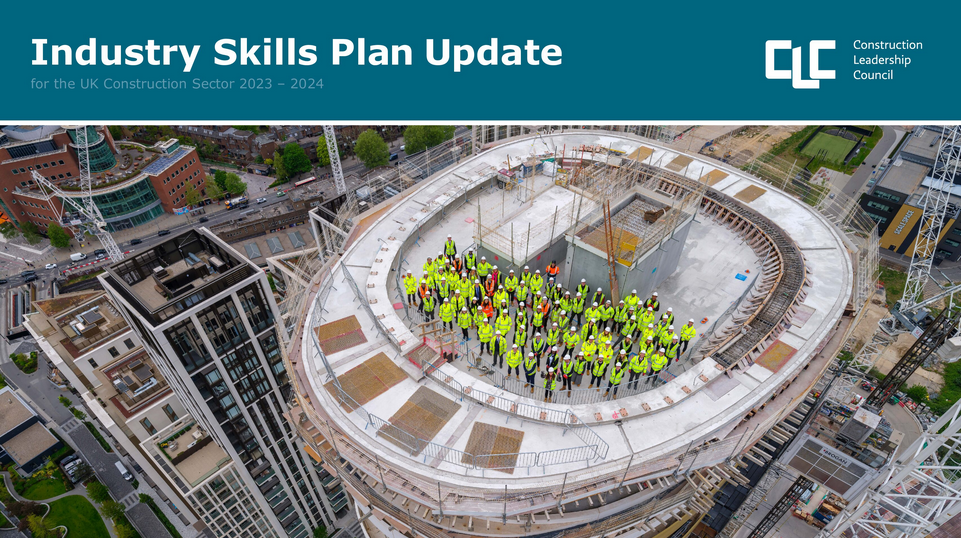
Opportunity – for young people, employers and society – is central to the new Construction Leadership Council’s skills plan.
The plan shows how much Construction and built environment has to offer society and provides solutions to short and long-term challenges. Construction is a major engine of the UK economy employing 2.7m people, contributing 8% output to the economy. The plan recognises the great potential industry has on themes including:
- Innovation and creativity. Construction will be at the forefront of arguably the biggest challenge facing humankind – climate change – which makes our industry a career of meaning and value.
- Jobs. Industry offers high-skilled, well-paid jobs, the chance for workers to take modern, green skills across the globe.
- New entrants. Construction gives people a chance in life. As CITB Chief Executive Tim Balcon wrote recently: “Industry loves to see fresh talent which is why new entrants with a great attitude are welcomed with open arms.”
- Of course, our work on the plan did not blind us to the pressing issues construction and built environment faces.
Yes, there is a skills challenge.
Yes, the pace of diversity and modernising needs to increase.
And, yes, the record on mental health needs to improve rapidly. Industry is working on these issues day in, day out.
But it’s important to recognise the genuine change and opportunity our industry is undergoing and has to offer.
There’s a lot on the agenda, much to look forward to, here’s what we’re planning.
Aims
The aim of the plan is to offer solutions to short and long-term construction skills challenges in England.
These include how to:
- Meet employers’ demand for skilled workers.
- Train and retain people.
- Ensure the workforce is competent.
- Expand construction and built environment’s career appeal.
- Train experienced workers to become teachers.
The plan outlines how industry can deliver the workers industry needs through shared, aligned priorities. These priorities are: culture change; routes into construction and built environment; competence and future skills.
Working on those priorities won’t be easy, particularly in the short-term, given the economic outlook for the rest of the year.
However, the long term forecast for construction and built environment output is positive.
Recent headlines have been promising, too. CITB estimates an extra 225,000 workers will be required across the UK from 2023 – 2027.
Culture
The aims of last year’s plan were focussed on culture change and diversity. These themes will be important part of our work during in the year ahead.
CLC projects for 2023-24 include:
- A pilot to give schoolchildren a chance to learn about a career in construction
- The launch of a new competence approach to ensure there is an accepted, accredited definition of competence for all construction and built environment occupations.
- Expanding the new entrant apprenticeship brokerage service and introducing a new apprenticeship mentoring standard to increase apprenticeship starts, continuation and completions.
- The launch of Phase 1 of the Career Pathway Hub, an online portal aimed at defining high value career pathways for net zero, digitalisation, smart construction and repair maintenance and improvement.
To deliver this plan, partnering for skills is paramount. This means employers of all sizes investing in people, improving industry’s working culture and attracting new talent for future skills demand.
Multiplier
There are a variety of practical ways people across industry can support the plan.
These include:
We want to involve more small businesses in our work, to get a real multiplier effect on what we’re trying to achieve. For that to happen, collaboration is essential.

by Clair Mooney | 9 Jun, 2023 | Main News Feed, Sustainability
Minister for Industry and Economic Security Nusrat Ghani MP joins industry leaders today to launch a plan to eliminate the use of diesel from most UK construction sites.
Over the last year, representatives from across the industry have collaborated on the development of Zero Diesel Sites Route Map, a key element of the Construction Leadership Council’s CO2nstruct Zero programme to decarbonise the industry.
The launch took place on HS2’s Old Oak Common Station construction site, which is progressing towards cleaner construction as part of HS2’s target for all its sites to be diesel-free by 2029.
Following consultation on a draft plan late last year, today’s Route Map confirms the industry will:
• Put in place support to roll out hydrogen, electricity and other cleaner power sources;
• Promote early wins by boosting efficiency and cutting diesel use by existing plant, and asking companies to reduce the use of diesel generators;
• Helping businesses to develop their own company’s diesel reduction plans;
• Engaging with clients to secure commitments that ban diesel use and
• Tracking data on industry diesel consumption to confirm progress over time.
There are currently an estimated 300,000 items of Non-Road Mobile Machinery (NRMM) used by the UK construction sector. Typically, such plant is powered by diesel consuming 2.5 million tonnes of oil equivalent (Mtoe), generating significant carbon emissions.
The Zero Diesel Sites Route Map sets out practical measures to reduce this volume by 78 per cent by 2035, in line with the UK’s Sixth Carbon Budget published in 2021.
Minister for Industry and Economic Security Nusrat Ghani said:
“Cutting carbon emissions in construction is vital to achieving our net zero ambitions by 2050. That’s why I’m pleased to see the leadership the sector is showing by publishing this new Route Map, helping us move forward towards a cleaner, greener industrial future.”
Neil Wait, Head of Environmental Delivery at HS2 Ltd and Chair of the Zero Diesel Route Map Working Group, said:
“The carbon challenge we face is significant and can only be overcome if we show real determination in a push for change. HS2 Ltd has played a key role in the development of the Route Map and is already making great progress with 19 diesel-free construction sites on the project. Today’s launch is a tangible demonstration of the industry’s shared commitment to radically cut our reliance on diesel. I would encourage companies to get involved and support the move towards cleaner, greener construction.”
Matt Palmer, CO2nstruct Zero Programme Sponsor and Executive Director, Lower Thames Crossing said:
“One of the strengths of the Construction Leadership Council is its ability to bring the industry together to identify and commit to actions that will change our sector for the better. The Zero Diesel Route Map is a perfect example of this, setting a clear mission that everyone can sign up to support.

by Clair Mooney | 26 May, 2023 | Skills
Funding is available to support individuals achieving a Level 2 NVQ in Drylining (London based) and a Level 3 NVQ in Occupational Working Supervision (London and Birmingham based only).
Candidates must be 19+ years old and if the employer is CITB registered and up to date with its levy return, there are substantial grants available to cover the cost of the training. Full details below.
London ONLY
Level 2 NVQ in Drylining – heavily discounted and if you are CITB registered and up to date with your levy you may receive £600 grant cover plus cash back.
200 places remaining.
Level 3 NVQs in Occupational Working Supervision – FREE and you will be able to claim back £600pp if you are CITB registered and up to date with your levy return.
70 places remaining.
Birmingham – ONLY
Level 3 NVQs in Occupational Working Supervision – FREE and you will be able to claim back £600pp if you are CITB registered and up to date with your levy return.
10 spaces remaining.
Don’t miss out on accessing this valuable funding. For more information contact Marie Flinter at FIS on 0121 707 0077 or email marieflinter@thefis.org

by Clair Mooney | 26 May, 2023 | Building Safety Act
Build UK has updated its comprehensive guide to the building safety regime to reflect the latest secondary legislation and guidance that has been published. Changes in the May 2023 version include:
- Updated guidance on the Safety Case which must be prepared by the Principal Accountable Person
- The latest information on the new building control system, including the Operational Standards Rules for Building Control Bodies and competence framework for Building Inspectors
- A link to the Independent Review of the Construction Products Testing Regime led by Paul Morrell OBE, Testing for a Safer Future
- A link to the guide on safety‐critical elements published by the CIOB in partnership with RIBA.
Build UK has also published a timeline showing when key changes are taking effect to support the implementation of the Building Safety Act. There will be further changes over the next 12 months, including the introduction of new regulations, and the timeline will be regularly updated alongside the guide to help provide clarity for members.
by Iain McIlwee | 25 May, 2023 | Market data
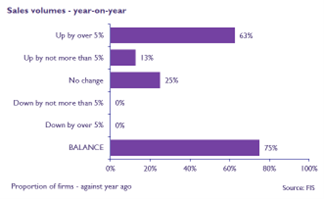
Uncertainty surrounded the start of 2023 in the finishes and interiors sector with concerns (particularly in the housing sector) resulting in 32% of respondents seeing a reduction in workloads. Whilst there remain underlying concerns related to ongoing inflation and a rising cost of capital impacting viability and delaying starts, 37% did experience increases and confidence has built through the quarter.
Commenting on the release, FIS CEO Iain McIlwee said:
“The data here was timely as we met wiith Bank of England representatives this week along with a small delgation of construction organisatons led by BuildUK. The overall situation remains that things are more positive for most than many had anticipated. There remain some clear risks and uncertainty that will mean growth overall in the economy is likely to remain subdued and this will have an impact on construction. Interest rates will be key, with inflation reports this week slightly higher than anticipated and consequently the 5.0% peak anticipated rates is already being talked up and we have seen a reaction from certain high street banks increasing mortage rates. The cost of mortgages and finance for large commercial projects will remain a key risk.
The election will also have a distorting effect, with Autumn 2024 a probable date. How policy adapts to drive home ownership and construction and encourages investment from business will again be key. The long term need to get building homes and hospitals as well as redeveloping commercial space to meet modern requirements and sustainable goals is all positive, but how policy drives this may be limited by political motivations.
Resiliance in the supply chain too remains a concern with higher levels of insolvency in construction driven by aggressive procurement and cash/credit issues that are being cascaded through the supply chain and leaving SMEs vulnerable. The full impact of the Building Safety Act and legacy are still to be fully understood.”
Read the full state of FIS State of Trade Survey Here – FIS State of Trade Survey Q1 2023
See Also – CPA survey reveals a cautious improvement in Q1
After the uncertainty-filled end to 2022, conditions have become more settled in Q1 with product manufacturers’ sales and contractors’ workloads indicating an improvement in conditions for construction.

by Clair Mooney | 25 May, 2023 | Sustainability
The Carbon Reduction Code for the Built Environment has been updated to Issue 3.0 May 2023. The Code provides a mechanism that enables individual organisations to publicise their annual decarbonisation progress, and thereby collaborate and share best practice on their journey to Net Zero with the intention of accelerating progress across the industry.
Part of the Construction Leadership Council’s Construct Zero initiative, the Code brings together and aligns the plethora of sector wide initiatives. It is referenced in key documents such as the UK Construction Playbook, September 2022, the UKGBC Roadmap, and the UK Government Guidance Note Promoting Net Zero Carbon and Sustainability in Construction, September 2022. The new version of the Code and the sign-up process are available on the CSIC website.
Who is the Code for, and what makes it different?
The Code is designed for clients, contractors and supply chain members working in the built environment. In order to enable wide participation, organisations may join at a global, national or regional level as well as at a major project level.
The Code is also not prescriptive, but instead asks organisations to report their progress year on year, to keep their accreditation, setting it apart from standards. It is also designed to be collaborative, with the ability to influence the onward supply chain.
What do organisations need to do to comply with the Code?
The Code offers three levels of commitment:
- Core commitments for all organisations;
- Core commitments for client organisations and further commitments to facilitate the transition to Net Zero;
- Core commitments for supply chain organisations and further commitments to facilitate the transition to Net Zero.
All organisations must be in accordance with the minimum entry level of compliance to attain Pledger status. This means agreeing to the core commitments of setting out plans to meet net zero by 2045, including annual targets, and publishing these and the progress made against them every year. Pledger levels also requires setting an interim target to reduce net direct and indirect carbon emissions for 2030, which aligns with or exceeds government strategy. Signatory level requires signing up to additional core commitments relevant to the organisation – be it client or supply chain, and Champion level sees commitments to more ambitious collaborative progress.
What has changed since the last issue?
A complete list of changes from the last issue of the Code are listed in the Code FAQs. A key addition is that of a third core commitment – Commitment 1.3 – which requires organisations to provide clarity on which carbon-offsetting schemes they are using if any. Current Code compliant organisations should also consult the Code FAQs, which explain the version of the Code with which organisations would need to comply at renewal.
How do organisations sign up to the Code?
The Code signup form is available on the on the CSIC website. The form is accompanied by a downloadable Excel spreadsheet listing all the information required to make the sign-up process easy to complete. There is no cost to signing up to the Code.
Dr Jennifer Schooling OBE, Director of CSIC, states:
“The Code recognises that we must start making meaningful change, and we have to start making it today. Not tomorrow, not next week and certainly not next year. I urge you to visit the CSIC website to read this new issue of the Code to understand what is required and sign up. By working together towards a greater good we all make progress. Collaboration and commitment will be key to success, and with alignment of ambition across all parties we can progress towards net-zero carbon at the pace required. The Code provides an encouraging, supportive and collaborative approach to reducing carbon. It is essential that our industry reduces carbon emissions and the more organisations that sign up to the Code, the more we will achieve.”