0121 707 0077

Exclusive Benefits for FIS Members from TradePoint and B&Q

Exclusive Benefits for FIS Members from TradePoint and B&Q

FIS members enjoy a wide range of benefits specially curated by our membership team in collaboration with our associate members. One such valued partnership is with TradePoint, who provide exclusive tailored services to meet the specific needs of our members.

As part of this collaboration, FIS members, their employees, and LOSC’s can avail a fantastic 10% discount on all eligible products both in-store and online at TradePoint. We highly recommend all our members to make the most of this incredible offer and stay updated on the latest products and deals released by TradePoint and B&Q.

Check out the latest flyer for a sneak peek at some of the newest product releases and exciting deals on offer.

What other benefits does FIS offer?

See the full list of FIS Member Benefits and find the one that best suit you.

Cashflow Helpline for FIS Members

Cashflow Helpline for FIS Members

FIS partner and finance experts BABR have a dedicated free helpline exclusively for FIS members. This helpline is designed to provide members with expert advice and guidance across various areas including credit control, debt recovery, and commercial finance. Rest assured that all calls are handled with the utmost confidentiality.

If you are looking to gain insights and support in managing your finances effectively, reach out to BABR. They can be contacted on 03332 419 014. Alternatively, click here to explore the wide range of support services available to you.

Take advantage of this valuable resource and empower yourself with the knowledge needed to make informed financial decisions. Your success is our priority, and we are here to support you every step of the way.

Best Practice Guide to Heritage Plastering launched by FIS

Best Practice Guide to Heritage Plastering launched by FIS

FIS has today launched its Best Practice Guide – Repair of Historic Ceilings to help promote best practice in the repair and restoration of historic plaster ceilings.

Produced by the FIS Heritage Plaster Group which includes representatives from the plastering trade and building conversation, and written by Sarah Mayfield, a building conservator, sculptor and ornamental plasterer, the guide is an invaluable aid to building owners, managers, architects or surveyors, plaster contractors or conservation officers. This publication will guide them through the specification of traditional ceilings, the multiple varying scenarios and the advantages and disadvantages of each repair technique in accordance with its historic value.

Split into sections, the guide covers everything from the principles of building conversation to understanding the history of the ceiling and its materials, along with the assessment process. It offers a series of points to consider when carrying out repairs in terms of the appropriate materials and techniques, and suspension methods, and includes:

  • Guidance for inspection procedures, scope and site considerations
  • Assessing the historic value and significant features
  • Understanding past interventions, historic maintenance work to the ceiling and its value
  • Future inspection regimes
  • Competence of plaster inspectors and craftspeople

‘It’s a document written for the trade by the trade, and I think that gives it some strength and relevance,” said Roger Curtis MRICS, Head of Technical Resources, Operations Directorate at Historic Environment Scotland.

Commenting on the Guide, FIS Technical Director Joe Cilia said this guide is the culmination o almost three years work to ensure that the content was relevant, informative and importantly peer reviewed by the sectors conservators, craft experts and other associate bodies who work to ensure our heritage is maintained and recorded for others to see, enjoy, and study for years to come.

By increasing a level of understanding of the technical issues among key stakeholders, the guide will play a part in raising the standard of repairs so that the significance and authenticity of the ceiling can be assured.

FIS can trace its roots back in the plastering trade through the Worshipful Company of Plaisterers.  FIS represents suppliers and contractors in the finishes and interior sector. Its members are vetted when they join and then every three years. They abide by a code of conduct and agree to carry out work in accordance with the FIS best practice guides.

A valuable resource for improving works package delivery, these guides work well when they are included in proposals and project plans to demonstrate how to best approach a project.

A searchable list of members can be found here

FIS Best Practice Guide - Repair of Historic Ceilings

Elevating Construction Standards through the Code for Construction Product Information (CCPI)

Elevating Construction Standards through the Code for Construction Product Information (CCPI)

In the construction industry, the Code for Construction Product Information (CCPI) stands as a beacon of integrity and excellence. Its primary objective is to elevate the standards of construction product information, guiding the sector towards a future where information is transparent, precise, readily available, current, and free from ambiguity.


The foundation of CCPI rests on five fundamental ‘acid tests’ that define the criteria for product information:

  1. Clarity: Information provided should be easy to understand and interpret.
  2. Accuracy: Details must be correct and verifiable.
  3. Up-to-date: Product information should be current and reflective of the latest developments.
  4. Accessibility: Information needs to be easily accessible to all stakeholders.
  5. Unambiguous: There should be no room for confusion or uncertainty in the information presented.


Of particular importance within the CCPI framework are sustainability claims. Such claims must not fall prey to being vague, misleading, or lacking a factual basis. It is imperative that any assertions regarding sustainability are well-founded, transparent, and backed by evidence.


By adhering to the principles outlined by CCPI, the construction industry can ensure that product information is not only reliable but also contributes to a more informed and responsible built environment.

Access the FIS Guidance Note for Marketing Exectutives

Recap of FIS Health and Safety Working Group Meeting

Recap of FIS Health and Safety Working Group Meeting

On Tuesday this week, FIS hosted its Health and Safety working group meeting. We would like to extend our thanks to all those who attended and supported discussions around Health and Safety Statistics, Pallet Movement, CPR, Defibrillator Training, Dust and Muscular Skeletal Issues, and HAVS.

Safety Alerts and Actions: BDL shared a safety alert regarding a fatality associated with Intermediate Bulk Containers (IBC). Various actions and agreed items were highlighted, such as the need for volunteers to review existing FIS guidance on manual handling and load handling, completion of the FIS H&S and Accident Survey, and the trial of Pallet Loop trucks.

Future Focus: There was a consensus on the importance of updating guidance on HAVS and manual handling. Discussions also took place regarding specific training for handling boards and the development of more H&S specific training using the FIS e-learning platform.

Feedback and Suggestions

This contributions of this group are invaluable in promoting a safe and healthy working environment.

If you are interested in attending the next H&S working group, email info@thefis.org  We welcome topics for future discussions, or areas for improvement in the FIS H&S Toolkit.

Access the Health and Safety Working Group

Notes and presentations can be downloaded from there

Help prison leavers to break free and begin a sustainable career in construction

Help prison leavers to break free and begin a sustainable career in construction

FIS is continuing its work with No Going Back, an initiative to support prison leavers, and an opportunity has come up to visit HMP Brixton.

The visit will take place on Tuesday 25 June from 9am and we are looking for employers to join us to explain the pathways into the sector and how they can build a lasting career.

This visit will provide an opportunity to observe the Drylining training programme in action. Employers will witness the skills and dedication of the trainees firsthand. Additionally, there will be a chance to interact with the trainees, many of whom have shown a strong interest in pursuing careers in construction.

Employer involvement would not only bolster our rehabilitation efforts but also potentially address some of the skills gaps within the industry.

It would be valuable for employers with ongoing job openings to meet these men, as well as for those who are hesitant about hiring them. This interaction can help change perceptions and demonstrate the potential these men have to contribute positively in the workplace.

Instructors at HMP Brixton will provide details on the training individuals have undertaken during their sentence. Additionally, No Going Back and Employers can deliver an overall presentation (a talk on the company and pathways to roles in the industry) and men could showcase different drylining tasks.

There will then be dedicated time for one-on-one sessions between employers and the prison leavers.

If you can support this event, email beenanana@thefis.org by Wednesday 19 June.

Celebrating the industry’s best

Celebrating the industry’s best

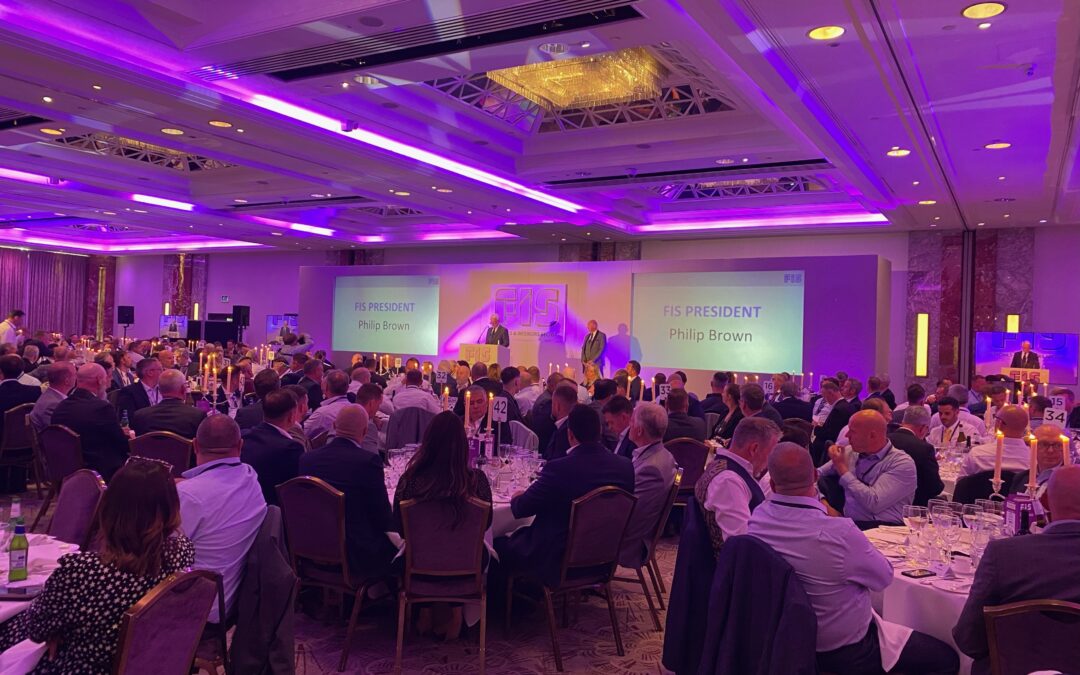
FIS today celebrated the finishes and interiors sector with the announcement of the winners of the FIS 2024 Contractors Awards.

Members and their guests packed out the Nine Kings Suite at the Royal Lancaster Hotel in London to see the winners in the 10 categories receive their prestigious awards.

Independent Awards Judges Tony Pieri and Colin Hunter, who visited all project entered said:

“As judges, we take our responsibilities very seriously as we fully understand the hard work and endeavour everyone has applied to the project they have entered for the awards process. We recognise the pride you feel in your work as that is fundamentally why you have entered your project in the first place.

“This year the competition between entries has been extremely high, with most scores achieving the same benchmark for quality of workmanship. We then decide what percentage points to apply to each entry. Our in-depth assessment of the work covers a range of factors: sustainability, design input, problem-solving, logistics, value-added initiatives and integration.

“As ever, the final judging evaluation comes down to minimal decimal point differences between those achieving or not achieving the winning standards.

“We take our responsibilities seriously – we fully understand the hard work and endeavour undertaken on every project. Once again, you
all demonstrated the incredible ability of FIS members to achieve exceptionally high standards of workmanship.

“We congratulate all of you on your professionalism and expertise. And we thank you all for the time and courtesy extended to us.”

A final award was given for the Project of the Year, which was judged by guest architect Alain Speed of PRP Architects. Alain selected the overall Project of the Year from the winning contracts across all categories.

Alain said:

“Looking through the exceptionally high standards of installation in the category winners has been a pleasure. Space Interior
Systems’s wellness spa for HVN stood out for the beautifully crafted biomorphic shapes, seamlessly blending ceilings and walls and integrating sophisticated interior planting. The project met all the challenges of setting out, achieving a high quality finish, acoustic separation, a tight programme and working within a listed building. This required close collaboration with client ISG and architect zynk Design. All the hard work is now done, and people can enjoy sensory relaxation within these luxuriant interiors.”

Want to see who won?

See photos from the day

About the FIS Contractors Awards

The FIS Contractors Awards are held annually to encourage and promote high levels of craftsmanship and design. 

Are you one of next year's Award winners?

Only one way to find out!

Entry into the 2025 Awards will open on 1 July!
We’re looking for projects completed between 1 November 2023 – 31 October 2024 – our judges look forward to visiting the spectacular projects that our members complete, and meet the teams that make it happen!

Not a member, but interested in entering? Contact us today to discuss membership on 0121 707 0077 or email info@thefis.org

Lens Blog – Contractually Speaking: Views from the front line

Lens Blog – Contractually Speaking: Views from the front line

During the course of the last few weeks, Len has received significant communication from FIS members. Here he higglights various challenges and potential solutions. A key resource recommended is the CICV Best Practice Guide (BPG), which offers valuable insights for addressing payment and cash flow issues. Implementing the Guide’s recommendations, including incorporating Payment Schedules into contracts, can greatly mitigate potential disputes.

These schedules clearly outline submission and payment deadlines, ensuring adherence is crucial to avoid complications later on. Detailed applications for payment, supported by comprehensive documentation, are also stressed in the BPG to facilitate smooth processes.

Regular engagement with contractors and clients post-submission is advised to address any concerns promptly. By following these guidelines diligently, businesses can safeguard their commercial interests effectively.

Members can access the full blog

Navigating Professional Indemnity Insurance in the UK Construction Industry

Navigating Professional Indemnity Insurance in the UK Construction Industry

In the realm of UK construction, the Design and Build contractual arrangement has emerged as the predominant method, with Specialist Contractors taking on more design responsibilities. This integration of design elements into the overall construction process necessitates Professional Indemnity (PI) insurance for a significant portion of businesses within the construction supply chain. Many contracts now mandate a minimum level of PI cover to mitigate risks effectively.

Following the tragic fire at Grenfell Tower in 2017, the procurement of suitable and cost-effective PI insurance has posed challenges for companies involved in construction activities. Issues such as high excess payments, exclusion clauses related to cladding and fire safety, and the overall expensive nature of policies have rendered obtaining PI cover a daunting task for many businesses. Consequently, certain construction projects have become financially un-feasible due to the unavailability or unaffordability of PI insurance.

Fortunately, the construction PI insurance market has shown signs of improvement in recent years, with the introduction of new capacity leading to increased competition and wider availability of coverage. This positive trend has resulted in reduced insurance rates and the reinstatement of coverage for aspects that were previously excluded.

This comprehensive guide, crafted by Build UK, aims to offer insights into PI insurance within the construction industry. It covers essential topics such as the purpose of PI insurance, the evolving market landscape, and strategies for securing optimal terms in collaboration with your insurance broker.

Stay informed, stay protected, and navigate the complexities of PI insurance effectively with the guidance provided in this informative resource.

To help manage risk and provide additional support to members on insurance matters, FIS has partnered with specialist insurance consultants Construction Shield and AWL Homeproof Ltd. 


Access the guide here