
by Clair Mooney | 22 Apr, 2021 | Labour, Skills
There have been reports of up to 60% labour not being available by some FIS members. With this in mind, FIS has two projects specifically designed to attract people into the sector. In addition, the Governments Plan for Jobs has four initiatives that rely on employers’ willingness to provide work placements and/or for T-Level students industrial placements.
Critical to the success of these two projects is the commitment from employers to give individuals a chance by offering work placements.
FIS Build Back Programme
This programme accepts individuals from a range of backgrounds including HM Forces Career Progression candidates and clients put forward by the Department for Work & Pensions (DWP). To help prepare the candidates for work, each learner receives training in drylining finxing and boarding and are supplied with personal protective equipment, a set of tools and a CSCS Provisional Card. The candidates just need an opportunity to show employers what they can do during a work placement. This may ultimately lead to a full-time work opportunity and will also add new talent to the workforce.
There are currently 43 HM Force Career Progression candidates that have received Fixer Boarder training available for work placement now. Please contact Catherine Bullough by email: catherinebullough@thefis.org for details.
FIS Kickstart Programme
This is part of the Government’s Plan for Jobs; we help employers fill their new vacancies. By working with the DWP, FIS can help to source suitable candidates for a six-month job placement within the business. Once successful candidates are placed with the company, the employer is entitled to claim a support grant of £1500 plus the national minimum wage salary payments based on 25 hours per week.
For more details on these projects and to register your interest in offering work placements please contact Catherine Bullough, Skills and Training Coordinator on 07900 083325 or email catherinebullough@thefis.org

by Clair Mooney | 21 Apr, 2021 | Main News Feed
Residents across England will be better protected as the government takes the next step to ensure materials used to build the nation’s homes are safe and tested properly.
Housing Secretary Robert Jenrick has today (20 April 2021) appointed two experts to lead an independent review of the system for testing construction products. Former government adviser and construction expert Paul Morrell OBE will be the chair of the independent panel, along with legal expert Anneliese Day QC.
The review, announced earlier this year, will examine how to strengthen the current system for testing construction products to provide confidence that these materials are safe and perform as marketed.
The review forms part of the government’s ongoing programme of work to reform and strengthen building safety regulation and comes after testimony to the Grenfell Tower Inquiry exposed evidence of testing irregularities and potential gaming of the system by some manufacturers.
Housing Secretary Rt Hon Robert Jenrick MP said:
The Grenfell Tower Inquiry has heard deeply concerning suggestions that some construction product manufacturers may have gamed the system for testing these materials and compromised the safety of residents.
We are taking these allegations very seriously and will await the Inquiry’s final recommendations – but it is clear that action is needed now to ensure products used on buildings always meet the highest safety standards.
I am pleased to appoint Paul Morrell OBE and Anneliese Day QC to lead this independent review of the system for testing construction products that will build on the significant progress we have already made to make buildings safer.
The panel will engage with a wide range of stakeholders to seek their views on how the system of safety testing of construction products could be improved and will report later this year with recommendations.
The government has already announced that a new National Regulator for Construction Products will be established within the Office of Product Safety and Standards and be given powers to remove any product from the market that presents a significant safety risk; and prosecute and fine any company that breaks the rules.
These measures form part of the government’s wider, ambitious reform of the sector, which includes the draft Building Safety Bill, that will bring the biggest improvements to building safety standards in 40 years and strengthen the regulation of construction products.

by Clair Mooney | 21 Apr, 2021 | Main News Feed, Transformation
The role of the Industry Safety Steering Group (ISSG) is to report on the progress of the construction industry in delivering culture change to support greater building safety; and to challenge and hold industry to account on behalf of the Secretary of State for the Ministry of Housing, Communities and Local Government.
Andy Mitchell (Co-Chair of the CLC), Graham Watts and Peter Caplehorn (Co-chairs of the CLC Building Safety workstream) attended an ISSG meeting in late 2020 to report on progress of developing the CLC Building Safety workstream. Following on from this meeting, correspondence has been exchanged between Dame Judith Hackitt and Andy Mitchell.
The letters can be read here: ISSG to CLC – December 2020, CLC to ISSG – April 2021

by Clair Mooney | 20 Apr, 2021 | Skills
The apprenticeship service is hosting a series of support webinars, the next one is taking place on Wednesday 28 April between 12pm to 1pm.
Since 1 April 2021, all new apprenticeships are managed and funded using the apprenticeship service. All employers hiring apprentices need to have an apprenticeship service account. This webinar is aimed at employers, to enhance your understanding of the apprenticeship service and its features. The webinar will include information on:
- what the apprenticeship service is and how to use it
- updates on recent and new developments in the apprenticeship service
- how to set permissions in your apprenticeship service account
Attendees will have the opportunity to take part in a live question and answer session. The webinar will be recorded and made available afterwards via the Education and Skills Funding Agency National Apprenticeship Service webinar portal and YouTube channel. To register please go to Apprenticeship Service | GoToStage.com

by Clair Mooney | 20 Apr, 2021 | Main News Feed
Information has been added to guidance with information about when to use an ‘XI’ prefix in UK VAT numbers in the ‘paying VAT’ section. For more information, visit https://www.gov.uk/guidance/trading-and-moving-goods-in-and-out-of-northern-ireland

by Clair Mooney | 20 Apr, 2021 | Main News Feed
Apply for a grant to help small and medium-sized businesses new to importing or exporting.
You can now apply for the SME Brexit Support Fund. Smaller businesses can get up to £2,000 to pay for practical support, including training or professional advice to adjust to new customs, rules of origin and VAT rules when trading with the EU.
You can apply and find more information on eligibility here.
by Clair Mooney | 19 Apr, 2021 | Main News Feed
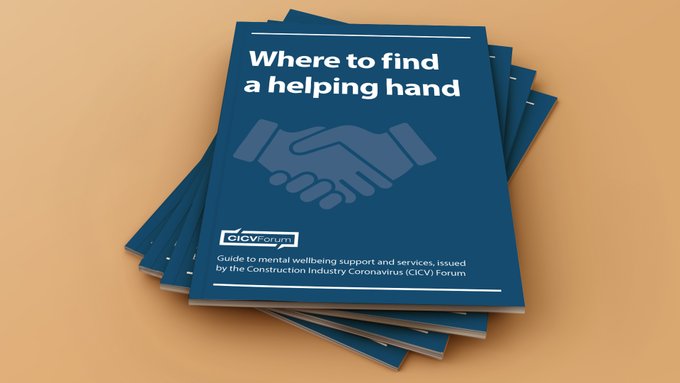
As part of #StressAwarenessMonth the CICV Forum has produced a guide to mental wellbeing, with a comprehensive overview of leading charities and support networks and advice on where to find essential services. #COVID19 #InThisTogether
A copy of the guide, Where to find a helping hand, can be downloaded at https://t.co/JkakMFBe9c https://t.co/NWA8Mp7dqN

by Clair Mooney | 19 Apr, 2021 | Market data
The recovery in construction product manufacturing continued in the first quarter of 2021, according to the Construction Product Association’s (CPA) State of Trade Survey.
So far, the pick-up in construction activity has been led by private housing, infrastructure and the repair and maintenance sectors. Nevertheless, a constrained global supply of raw materials and components, as well as the associated increases in prices, is weighing on the outlook for the year ahead.
FIS members can access the full report here.

by Oscar Venus | 19 Apr, 2021 | Skills
On 1 April nearly
400 qualifications are available at Level 3 qualifications became free to access for over-24s without A-levels, an advanced technical diploma or equivalent. This is part of the Government’s Lifetime Skills Guarantee and includes over
60 construction‐related courses for qualifications in occupations like Occupational Work Supervision, Site Carpenter, painting and decorating and several others.
Around 11 million adults are eligible for the scheme, which is backed by £95 million in Government funding, and individuals can train part‐time, full time or online for up to 12 weeks depending on the course (or up to 16 weeks on a full‐time skills bootcamp) while continuing to receive Universal Credit.
You can find out more about free courses here.
George Swann, FIS Skills and Training Lead says, “If your workforce do not have qualifications with the introduction of the Building Safety Bill later this year this is definitely worth a look, to see if there is anything applicable to the roles you employ”.