
by Clair Mooney | 10 Nov, 2021 | Sustainability
Legislation that will protect and enhance the environment for future generations has now passed into UK law. Through the Act, we will clean up the country’s air, restore natural habitats, increase biodiversity, reduce waste and make better use of resources.
It will halt the decline in species by 2030, require new developments to improve or create habitats for nature, and tackle deforestation overseas.
It will help transition to a more circular economy, incentivising people to recycle more, encouraging businesses to create sustainable packaging, making household recycling easier and stopping the export of polluting plastic waste to developing countries.
These changes will be driven by new legally binding environmental targets, and enforced by a new, independent Office for Environmental Protection (OEP) which will hold government and public bodies to account on their environmental obligations.
Environment Secretary George Eustice said:
The Environment Act will deliver the most ambitious environmental programme of any country on earth.
It will halt the decline of species by 2030, clean up our air and protect the health of our rivers, reform the way in which we deal with waste and tackle deforestation overseas.
We are setting an example for the rest of the world to follow.
The Environment Act includes a new legally binding target on species abundance for 2030, which will help to reverse declines of iconic British species like the hedgehog, red squirrel and water vole.
The UK will now be able to go further than ever before to clamp down on illegal deforestation and protect rainforests, through a package of measures will ensure that greater resilience, traceability and sustainability are built into the UK’s supply chains.
The Act will crack down on water companies that discharge sewage into rivers, waterways and coastlines. It will see a duty enshrined in law to ensure water companies secure a progressive reduction in the adverse impacts of discharges from storm overflows. New duties will also require the government to publish a plan to reduce sewage discharges from storm overflows by September 2022 and report to Parliament on the progress towards implementing the plan.
Emma Howard Boyd CBE, Chair of the Environment Agency, said:
We need strong laws, investment by the private sector and clear, well-funded regulation to protect the environment. Without this, we will not see the progress we all want.
The new legal targets for water in the Environment Act today will help wider efforts to tackle pollution, reduce demand for water and secure clean and plentiful water for all.
It is good to see these laws pass as we work to protect the natural world, help people to stay safe from flooding and support communities, businesses and government to make the country more resilient to climate shocks.
Work on implementing Environment Act policies is well underway. Work has begun on developing legally binding environmental targets, and consultations on the deposit return schemes for drinks containers, extended producer responsibility for packaging and consistent recycling collections have been launched, which will transform the way rubbish is dealt with.
A draft Principles Policy Statement has been published which will put protecting the environment at the heart of future policy.
The Office for Environmental Protection was set up in an interim, non-statutory form in July, providing independent oversight of the Government’s environmental progress and accelerating the foundation of the full body. The OEP will formally commence its statutory functions shortly.
The Environment Act has become law during the UK’s hosting of the COP26 summit in Glasgow, during which the UK has brought the world together to secure ambitious commitments to tackle climate change.

by Clair Mooney | 10 Nov, 2021 | Skills
Help to Grow is a £520 million scheme to help owners of small and medium-sized business take their business to the next level. There are two Government backed programmes designed to help business leaders:
Help to Grow: Management offers senior business leaders management and leadership training, delivered by Business Schools across the UK
Sign up to the 12-week Help to Grow: Management course and get 1:1 support from a business mentor and access to an alumni network. Delivered in partnership with Small Business Charter, courses are running at leading business schools across the UK. The programme is 90% funded by the government so you only pay £750. Find our more here.
Help to Grow: Digital offers businesses free, impartial advice on how technology can boost business, delivered through a new online platform.
Access free, impartial online support about how digital technology can boost your business’s performance. From December 2021, if your business is eligible, you can also get a discount of up to 50% towards the costs of buying approved software, worth up to £5,000. Register here.
by Iain McIlwee | 9 Nov, 2021 | Main News Feed, Sustainability
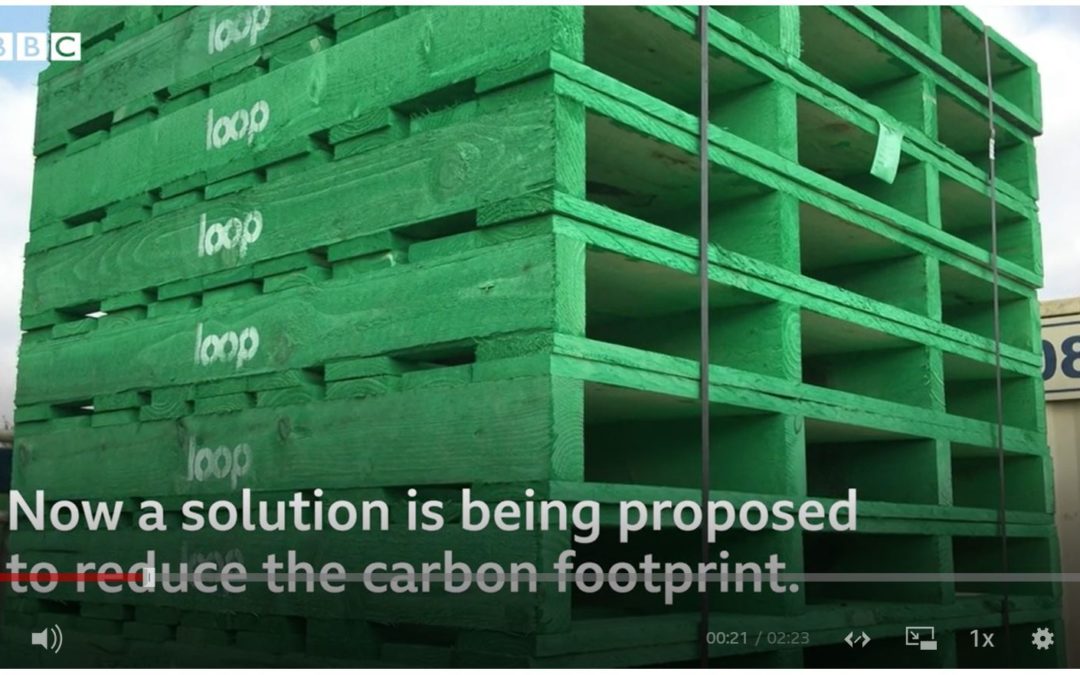
Through the FIS Sustainability Leadership Group, the trade body representing the £10 billion fit-out, finishes and interiors sector became the first trade body to sign the Pallet LOOP Charter. The charter is focussed on delivering a simple way of actively eliminating avoidable pallet waste.
The Pallet LOOP is a new venture designed to deliver a tangible step-change in the transportation of building materials throughout the UK. Through its deposit-based scheme, The Pallet LOOP will remove the need to harvest 4,500 acres of trees every year to feed current linear pallet practices. This in turn will reduce related industry CO2 emissions by up to 70% and cut construction waste by around 10%.
By signing The Pallet LOOP Charter, FIS acknowledge that now is the time for change. Currently, UK construction consumes 18 million pallets each year, achieving a reuse rate of less than 10% – significantly less than FMCG retail, where pallet reuse is now the standard. This practice is clearly unsustainable – economically and environmentally. In the finishes and interiors sector alone it is estimated that there is around 25 pallets used per £100,000 of turnover.
Supporters of the Charter commit to:
- A comprehensive evaluation of how The Pallet LOOP could be integrated within our sector.
- Championing the adoption of a circular economy pallet solution that reduces associated CO2 emissions, delivers improved safety, and increases supply chain resilience through standardisation.
- Cooperating with other industry stakeholders to accelerate sector wide implementation – conscious that there is no Planet B and that that we must act now and adopt more sustainable supply chain and distribution solutions
On signing the charter FIS CEO Iain McIlwee stated:
“The shift in gear needed to help us get where we need to be as a sector isn’t going to happen by waiting for change or trying to find a magic formula, it is about looking at what we can each individually and collectively do to make a difference now. Logistics is key to enabling change and within this a focus on eradicating single use pallets makes perfect sense. We very much hope that finding a formula here will be a catalyst for change that can accelerate collaboration and focus the supply chain on practical steps to a practical, circular economy”.
Members of the FIS community that have also signed the charter include Meronden, Willmott Dixon, BDL and Platt and Reilly.
You can find out more about Pallet LOOP via their website here or via the BBC Short featuring Pallet LOOP linked below.

Visit the FIS Sustainability Hub here

by Oscar Venus | 9 Nov, 2021 | Main News Feed
On Friday 5 November, FIS members and their guests, our community finally came together in person for the first time since the pandemic hit. This created a real buzz in the air as old friends reunited and online relationships were solidified with real handshakes. Thanks to everyone who came and made it a special occasion, but particuarly our headline sponsor Saint-Gobain Ecophon, our Award sponsors Minster, SIG, British Gypsum, CCF, Nevill Long, Protektor, Troax and Zentia and our event sponsors Go Interiors, Forza, QIC Trims, Drywall Procut and SPIT.
As for the awards themselves the quality was at an all time high and saw the competition really showcasing what the sector can do even in such testing times as the past 18 months. You can see all of the winners here.
Here is a quick snapshot the highlights the day.
Watch this space for our photo gallery, but in the meantime you can tag yourselves in photos on our Facebook gallery here.
Enter the 2022 Awards here – deadline Friday 12th November.

by Clair Mooney | 9 Nov, 2021 | Main News Feed, Skills
FIS has secured a discount for its members on the Foundation in Hardware online course which concentrates on ensuring those working with or selling architectural ironmongery or door hardware are aware of the range of hardware, its uses and responsibilities if specifying or offering alternatives.
Foundation in Hardware
The GAI education programme starts with the Foundation in Hardware module, an online introductory course designed to raise knowledge and standards among those who need to understand the basics but don’t need to live and breathe ironmongery in their day-to-day jobs.
- Covers all the basics of hardware and access control
- Online course featuring 12 modules with 6 months to complete upon enrolment
- Learn at your own pace
- Self-assessment tests and examination with a printed certificate upon passing
The Foundation in Hardware is suitable for:
Those who aren’t involved in the detail of architectural ironmongery but want to gain a basic understanding of the industry
- Locksmiths
- Builders merchants
- Staff on sales or trade counters
To find out more please follow this link and to register and enjoy a 20% discount. Quote OFFER20GAI when registering at www.gai.org.uk/FiH

by Clair Mooney | 5 Nov, 2021 | Main News Feed
FIS today announced the winners of its 2021 Contractors Awards to members and guests who packed out the Nine Kings Suite at the Royal Lancaster Hotel in London.
The long-awaited ceremony celebrated the fantastic projects completed by FIS members in nine categories.
Guest architect Darren Ross-Dreher of architectural practice Gensler, announced the winner of the 2021 Project of the Year, which he selected from the Gold award winning projects.
Independent FIS Award Judges, Tony Pieri and Clive Perry said: “The quality of all the entries we have seen has been excellent, making our task of selecting overall winners in the various categories very difficult. The differences in quality are minimal – decimal points separate those who have and have not won an award.
“To all entrants, we would like to say thank you for making this year’s awards so difficult – but so enjoyable. Our industry is producing truly excellent work and you should all be proud of your achievements.”
The FIS Contractors Awards are held annually to encourage and promote high levels of craftsmanship and design. Not only does the FIS member who installed the contract win an award, but so does the architect or interior designer of a Gold award-winning project.

by Clair Mooney | 28 Oct, 2021 | Main News Feed
The Cabinet Office has published an updated Procurement Policy Note (PPN) confirming that the prompt payment threshold is going to be increased for suppliers bidding for Government contracts above £5 million per annum.
From 1 April 2022, suppliers will be required to show that they pay 90% of invoices within 60 days and have an action plan in place to achieve the required standard of 95% in future, otherwise they risk being prevented from bidding. Currently a company can still pass if they pay 85% of invoices within 60 days and submit an action plan, and the Cabinet Office is continuing to take a phased approach with the threshold being “ratcheted up over time until it reaches 95%”.
On average, Build UK Contractor members now pay 94% of their invoices within 60 days, and the payment performance table shows the percentage of invoices paid within 60 days for more than 100 of the industry’s largest companies.

by Clair Mooney | 28 Oct, 2021 | Main News Feed
Build UK has published an executive summary of the National Infrastructure and Construction Pipeline 2021/22 to help the industry understand recent Government announcements on the delivery of £31 billion of economic and social infrastructure procurements in this financial year.
With the Government aiming to build confidence in the industry to invest in innovation and develop capability, the summary provides a breakdown of the 418 public sector projects by sector, together with when they are anticipated to be awarded. It also includes an overview of planned and projected spend of up to £650 billion over the next 10 years to 2030/31.
by Clair Mooney | 28 Oct, 2021 | Main News Feed, Skills
Chancellor, the Rt Hon Rishi Sunak MP, spoke about the absolute critical role of skills throughout his Budget speech on Wednesday afternoon. He stated: “Strengthening the skills of our people, the country’s greatest asset. That’s a real plan for growth. Higher skills lead to higher regional productivity and higher productivity leads to higher wages. With 80% of the UK’s 2030 workforce already in work, our future success depends not just on the schooling we give our children but the lifelong learning we offer to adults. We’ve already done a lot. Our Plan for Jobs invested in apprenticeships, traineeships, and the Kickstart scheme. But we need to go further. Today’s Budget invests in the most wide-ranging skills agenda this country has seen in decades. We’re increasing skills spending, over the Parliament by £3.8bn – an increase of 42%. We’re expanding T Levels, Building Institutes of Technology, Rolling out the Prime Minister’s lifetime skills guarantee, upgrading our FE college estate, quadrupling the number of places on our Skills Bootcamps and significantly increasing funding for apprenticeships.”
On Departmental spending, Sunak declared: “Today’s Budget increases total Departmental spending over this Parliament by £150bn. That’s the largest increase this century, with spending growing by 3.8% a year in real terms. As a result of this Spending Review, and contrary to speculation…there will be a real terms rise in overall spending for every single Department.”
The Treasury subsequently published its Autumn Budget and Spending Review 2021. This reveals that: To boost wages and prospects for all, total spending on skills will increase over the Parliament; by £3.8 billion by 2024-25. This funding will quadruple the number of places on Skills Bootcamps, expand the Lifetime Skills Guarantee on free Level 3 qualifications, and improve numeracy skills through a new Multiply programme. There will be extra classroom hours for up to 100,000 T Level students.
Spending Review 2021 also confirms funding to open 20 Institutes of Technology and investment for improvements to the condition of post 16 estates; including more specialist equipment and facilities for T Levels. This will be funded through a £2.8 billion capital investment in skills. Apprenticeship’s funding will increase to £2.7 billion by 2024-25 – the first increase since 2019-20. The document cites the delivery of “apprenticeship system improvements for all employers”. These include:
- an enhanced recruitment service by May 2022 for SMEs helping them hire new apprentices.
- supporting flexible apprenticeship training models to ensure that apprenticeship training continues to meet the needs of employers.
By April 2022, the Government will consider changes to the provider payment profiles aimed at giving employers more choice over how the apprenticeship training is delivered and explore the streamlining of existing additional employer support payments so that they go directly to employers. Introducing a return on investment tool in October 2022 to ensure employers can see the benefits apprentices create in their business. Extending the 3k apprentice hiring incentive for employers until 31 January 2022.
Investing approximately £10 million a year over the Spending Review in the Sector Based Work Academy Programme. Funding for the Help to Grow schemes will help SMEs improve their productivity through world-class management, skills training, and support for digital adoption.
Sunak also announced funding to extend the Kickstart scheme to March 2022. The KickStart Gateway support programme will close in December 2021.
George Swann Skills and Training Lead said,
“This budget speech clearly indicates the governments drive to encourage investment in home grown talent when it’s known the sector needs competent workers now. The first qualified Interior Systems Installer apprentices will trickle through at the end of this year, but it will not be enough to fill the current vacancies as the apprenticeship training is an 18 month programme. Although individuals will be able to fast track if they complete a T-Level or Traineeship prior to finding employment. To have an impact the government are relying on employers taking on new entrants. It’s still a complicated system, but FIS can provide information, advise and guidance on all things skills, training, qualifications and funding”.
If you need help or just want to talk something through please call George on 07552 874838, Catherine on 07900 083325 or Marie on 07799 903103.