0121 707 0077

CPA publishes Code for Construction Product Information

CPA publishes Code for Construction Product Information

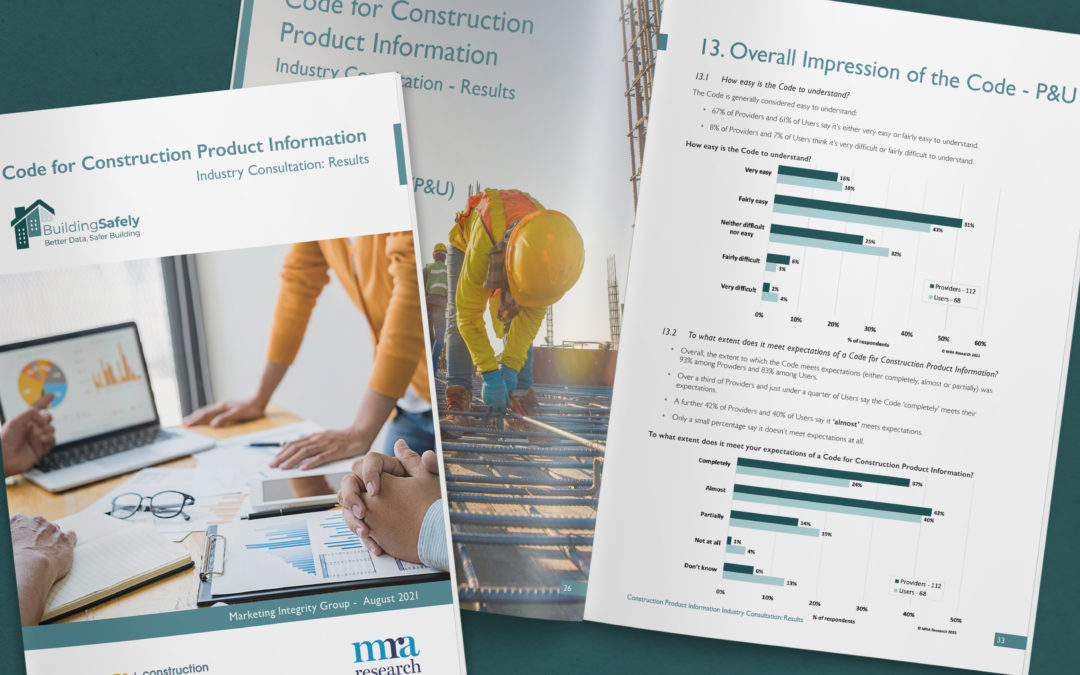
The Construction Products Association (CPA) has published the Code for Construction Product Information to ensure that reliable and consistent product information is provided by manufacturers.

Developed in response to the recommendations made in Dame Judith Hackitt’s Building a Safer Future report, the code sets the industry benchmark for how product information is presented and marketed so that it is clear, accurate, up‐to‐date, accessible and unambiguous. It contains 11 clauses including transparency of information on performance and proof of stated claims, and manufacturers can now register their interest in being verified against the code later this year. Guidance has been published to assist with the verification process.
Code for Construction Product Information

Building Safety Bill progress

Building Safety Bill progress

The Building Safety Bill is being debated in Parliament after MPs tabled dozens of amendments, including one which would ensure that all owners of residential units in higher‐risk buildings are classed as ‘relevant persons’ and therefore required to be supported by the regulator. The original definition of ‘relevant persons’ proposed in Part 4 of the Bill included only residents, building safety managers and duty holders. Other amendments would allow the recovery of VAT on building safety remedial works paid since 14 June 2017 and extend the period for claims under both the Defective Premises Act and the Building Act from 15 to 25 years.

FIS has prepared a summary of the Building Safety Bill here.

The Government has published a series of factsheets to help stakeholders understand the new requirements set out in the Bill. Of particular interest to members will be those covering Dutyholders and Industry Competence which outline the responsibilities of dutyholders under the new regime.

Proposed revision of BS8000-8 Workmanship on construction sites

Proposed revision of BS8000-8 Workmanship on construction sites

Proposed revision of BS8000-8 Workmanship on construction sites – Part 8: Design and installation of dry lining systems – Code of Practice

You are invited to comment on the proposed changes to this British Standard which was last published in 1994, which along with BS8212:1995 Code of practice for dry lining and partitioning using gypsum plasterboard they provide guidance and tolerance used in the specification and inspection of drylining.

The purpose of BS 8000-8 is to encourage good design and workmanship by providing:

  • guidance for designers on the selection of systems;
  • guidance for installers on the correct sequence and method of installation; and
  • updated tolerances reflecting use and material installation and methods of measurement.

This is a full revision of the standard, and introduces the following principal changes:

  • clarification of tolerances;
  • advice when installing dry lining to SFS frames;
  • testing of dry lining systems; and
  • expansion of relevant performance requirements.

You are welcome to review the draft and to comment upon it if you wish. The draft can be accessed at  https://standardsdevelopment.bsigroup.com/projects/2018-01823#/section

The document is available for review until 27 October.

FIS held an online meeting on 7 September to discuss the proposed changes – a recording is available here.

Cracking noises from residential timber floor structures constructed with engineered ‘I’ joists

Cracking noises from residential timber floor structures constructed with engineered ‘I’ joists

The Gypsum Products Development Association (GPDA) has been investigating the noise phenomena of cracking noises from residential timber floor structures constructed with engineered ‘I’ joists spanning between solid masonry walls lined with plasterboard on gypsum adhesive.

Guidance has now been updated with this version. GPDA-Guidance-cracking-noises-from-residential-timber-floor-structures.pdf

Government launches consultation on Building Safety Levy

Government launches consultation on Building Safety Levy

The Government has launched a consultation on proposals for the new Building Safety Levy, which is expected to come into force in 2023. The levy will apply to new high‐rise residential buildings, care homes, and hospitals which are 18 metres or more in height or at least seven storeys, where building control approval is sought. It will sit alongside the Residential Property Developer Tax meaning some developers will pay both the levy on specific developments and the tax on their profits from these developments. The consultation closes on 15 October.

The BSI has published a consultation on the draft of PAS 8673 which sets out a framework for the competence of Building Safety Managers. It describes different levels of competence based on knowledge, experience and responsibility and provides guidance on how to assess the competency of individuals. The consultation closes on 15 September and responses can be submitted by logging into the BSI Standards Development website.

Consultation: spread of fire onto external wall cladding systems

Consultation: spread of fire onto external wall cladding systems

The Scottish Government has issued a consultation “Building Standards (Fire Safety) – A consultation on external wall systems”.  They are looking to address issues in relation to the design and construction of buildings and the safety of persons in and around buildings in the event of fire spread onto external wall cladding systems.

The consultation papers can be viewed here. Members are invited to send their comments by Friday 1 October 2021 to iainmcilwee@thefis.org so that we can respond collectively to the consultation.

The issues under consideration are covered in seven questions relating to:

  • The wording in the Building Technical Handbooks for domestic and non-domestic buildings of mandatory clause 2.7 relating to fire spread on external walls
  • Consideration on a definition and ban of the highest risk metal composite material cladding panels
  • Options to improving standards and guidance on cladding systems, including the role of the large scale fire test, BS 8414
  • Consequential matters such as exemptions for certain penetrations and openings
  • Impact assessment.

These proposed changes aim to improve fire safety for the design and construction stages of all buildings in relation to external wall cladding systems making them safe for those in and around buildings in the event of a fire.