
0121 707 0077

FIS responds to HSE issues warnings ahead of Building Safety Bill

FIS responds to HSE issues warnings ahead of Building Safety Bill

As part of work underway to establish a new Building Safety Regulator and reform the building safety system, HSE is urging those who design high-rise buildings to act now to prepare for the changes coming when the Building Safety Bill becomes law.

The Building Safety Bill, currently making its way through Parliament, aims to implement all of the recommendations set out in Dame Judith Hackitt’s “Building a Safer Future” report, and in places goes further. The reforms include a more stringent approach to the design and construction of high-rise buildings, clearer responsibilities on designers to ensure these buildings are safe, and new measures so that everyone doing design or building work is competent to carry out that work in line with building regulations.

People working on the design of a high-rise building, from the development of a planning application through to building regulations approval will need to understand the building’s intended use, correctly identify the risks, and own and manage those risks to determine the safety of a building.

There will be a requirement to record and provide evidence of decision-making during the design process, and a need to be engaged throughout a building project to handover to the end client. Prepare now for these changes.

Peter Baker, Chief Inspector of Buildings at the Health and Safety Executive, said:

“Designers have a strong influence on safety and standards, particularly during the very early planning and design stages of a building project. Their decisions not only affect the safety of those carrying out the building work, but also those maintaining, using, or living in a building after it is built.

“I encourage designers to act now and prepare for the more stringent regulatory regime. HSE will continue to work with the building design industry and related businesses to support them to deliver safe and high-performing buildings and ensure that residents of high-rise buildings are safe, and feel safe, in their homes now and in the future.”

Colin Blatchford, Operational Policy Lead for Gateways and Building Control at HSE, said:

“Everyone involved in the design of high-rise buildings must take a proactive approach to managing building safety from the earliest stages of the design process. These changes are coming. Those involved need to plan ahead through correctly identifying, taking ownership and managing the risks – ensuring key decisions are recorded throughout the process.

“Once the Building Safety Bill becomes law, there will be a requirement for a safety case report when a building is completed and occupied. It is important to consider this at the early design stage for your clients and future residents’ safety.

“Building safety changes are coming and will affect everyone involved in a high-rise building project beyond its design. We urge that you act now.”


Responding to this statement, FIS CEO Iain McIlwee said:

“The Building Safety Bill offers a huge lever for change, but it needs to start with a recognition that design is detailed through the construction process and for the detailing to be effective we need the specialist contractors and manufacturers involved (and contracted) at a far earlier stage.  Even with tighter regs, we will still see problems being resolved on the fly in difficult circumstances and under severe time pressure on site rather than designed out of the process at an earlier stage.  This has to be about changing not just the way we design and build, but vitally how we procure the services, respect specialist knowledge and collaborate far more effectively through the project.”

You can find out more about the implementation of the Building Safety Bill here

BSI launches new technology to provide digital identification of products

BSI launches new technology to provide digital identification of products

BSI has launched BSI Identify to allow permanent structured product data to be found at any stage in the design, installation, maintenance and deconstruction of the product or system.

The Construction Product Association (CPA) said ‘This unique initiative aims to improve safety across the built environment through digital product identification’

BSI Identify has been in development with CPA and its members since 2024 and was supported with Innovate funding

How does it work?

  • Manufacturers are issued a unique digital identifier called a BSI UPIN for every product
  • The manufacturer can mark or tag their products via QR codes, NFC or RFID tags
  • The BSI UPIN, once scanned, directs users to an open-access permanent page that holds all relevant and up to date product information
  • All product queries can be routed back to the manufacturer

By using this revolutionary technology, manufacturers can support the Golden Thread of Information and improve industry safety. It’s good for business and good for your customers.

FIS Technical Director Joe Cilia sai:

‘Being able to access product information at the point of installation or even years after its been integrated in the fabric of a building is vitally important if we  are to maintain buildings for the safety of all occupants in future. BSI identify will allow this to happen using a data base that will be available in perpetuity even if the company is no longer in business, and that’s a  game changer.’

Peter Caplehorn CEO at the CPA said

‘By moving everything into a fully joined-up digital process, we can improve overall efficiency, product performance, safety, customer satisfaction, environmental performance and profit margins, which is a good thing because some money can be put back into R&D. BSI Identify is a unique digital identification service that looks to improve industry safety by solving the challenge of product identification.’

Watch this video to see how BSI Identify helps manufacturers

Find out more about BSI Identify on the BSI Identify website or CPA website.

Consultation on Building Standards compliance and enforcement

Consultation on Building Standards compliance and enforcement

Building Standards Division (BSD), is developing a national Compliance Plan approach to provide greater assurance that compliance with building regulations is achieved from design to completion.

This consultation seeks to obtain the views on the development of a new Compliance Plan Manager role within the building standards system which will apply to specific High Risk Building (HRB) types, the definition of these HRBs and the level of fines where work is not carried out in accordance with the regulations.

This consultation forms part of the work undertaken by the Compliance Plan Working Group, which is one of seven work streams, being directed by the Building Standards Futures Board.  The consultation will gather opinions from stakeholders on a review of the building standards system relating to the way in which compliance with the building regulations is assured and enforced to help ensure the health, safety and welfare of people in and around Scotland’s buildings and to further the conservation of fuel and power and further the achievement of sustainable development.

The consultation covers four main areas, as follows:

    • Creation of a new Compliance Plan Manager (CPM) oversight role on High Risk Building types on behalf of the Relevant Person (normally the owner or developer);
    • The definition of High Risk Buildings requiring a CPM;
    • Fines and penalties; and
    • Impact assessments.

The proposed changes outlined in the consultation aim to:

Require applicants (building owners and developers) to evidence and document how compliance with the building regulations has been approached from a ‘pre-application meeting’ (initial) stage through to completion of the building project.  The intention is to strengthen compliance across all building types with the new Compliance Plan approach and also to introduce a requirement for independent professional oversight – a Compliance Plan Manager – on high risk buildings to manage the compliance process from start to finish.  Initial considerations have concentrated on application to High Risk Buildings (high rise residential, high public value – schools, healthcare facilities) and also housing sites.  But this may be extended, in the future, to apply to a wider range of buildings types if there is evidence to support this.  The consultation also seeks views on the definition of buildings classed as ‘High Risk Building Types’ (HRBs).

You can read the consultation paper here.

Members are encouraged to read the consultation and feed back their comments to FIS Technical Director Joe Cilia via email joecilia@thefis.org

Leaseholder loan scheme paused

Leaseholder loan scheme paused

Michael Gove, Secretary of State for Levelling Up, Housing and Communities, attended his first meeting of the Housing, Communities and Local Government Committee this week, where he confirmed that the development of the leaseholder loan scheme to fund remediation work on buildings outside the scope of the Building Safety Fund has been ‘paused’. The Government is now considering alternative ways to fund cladding remediation work that do not pose an ‘excessive burden’ on leaseholders, although the scheme will not be cancelled outright until an alternative has been identified.

Gove also confirmed that, following the Written Ministerial Statement which clarified that EWS1 forms should not be required on buildings below 18 metres, the Government will remove the consolidated advice note before Christmas.

Code for Construction Product Information and guidance published

Code for Construction Product Information and guidance published

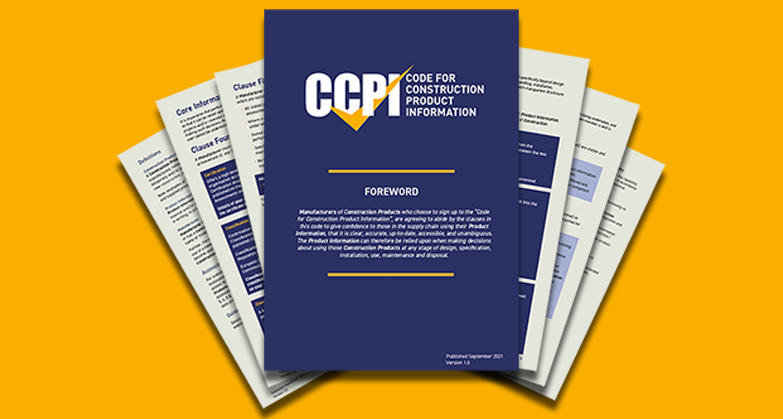
The Code for Construction Product Information (CCPI), Code guidance and a manufacturer information pack have been launched today to drive higher standards in the presentation of construction product information in the manufacturing industry.

The Code has been developed as a direct response to Dame Judith Hackitt’s independent review of Building Regulations and Fire Safety in the wake of the Grenfell Tower disaster. The Code promotes urgent positive culture and behaviour change in the approach and management of product information by the construction product manufacturing industry.

The Code offers manufacturers the opportunity to demonstrate a progressive approach through their willingness to provide assurance for their product information, and recognition for their efforts to prioritise product safety.

It aims to ensure that disingenuous marketing practices and the provision of misleading product information becomes a thing of the past, so that those using products in the construction and maintenance of buildings – including specifiers, architects, consultants and contractors, as well as the ultimate end users of the building – can trust the information provided by manufacturers when making design decisions, installing and using and maintaining verified products.

A robust eleven point code published

The Code – developed by the Construction Products Association’s Marketing Integrity Group following industry-wide consultation – has been built on the principle that product information must be Clear, Accurate, Up-to-date, Accessible and Unambiguous. The Code has eleven clauses covering critical aspects from responsibility for product information to transparency of information regarding performance, proof of stated claims and general information and competency.

An independent and robust validation process is being put in place to underpin the Code that will rebuild trust in the provision and management of product information by all stakeholders, setting the market for UK construction products ahead of others.

Support for manufacturers preparing for the verification process

Alongside Code guidance, a ‘Preparing for the Code’ information pack has been published today to help manufacturers gain an understanding of the Code and prepare for the verification journey.

Registration for verification will open towards the end of 2021, supported by detailed guidance. Organisations can register their interest now to receive updates ahead of the launch of verification.

Independently managed Code and verification

Management of the published Code and its verification has been formally handed over from the Construction Products Association to Construction Product Information Ltd (CPI Ltd) – a not-for-profit organisation with independent governance and management being set-up to administer the CCPI by the Considerate Constructors Scheme.

Amanda Long, Chief Executive of the Considerate Constructors Scheme and Construction Product Information Ltd, said:

“The Code should be a priority for all involved with construction product manufacturing. By focusing on culture, leadership and ethics the Code for Construction Product Information will build trust and is a progressive step towards ensuring that building safety is a priority for those responsible for the provision of construction product information.”

Enabling responsible manufacturers to assure their product information and be recognised for their efforts, the Code will support urgent and positive culture and behaviour change in the industry ahead of regulation.”

Click here to download the Code for Construction Product Information (CCPI)

Click here to download the ‘Preparing for the Code’ information pack

Click here to download the Code guidance

Competences required by principal contractors

Competences required by principal contractors

The BSI has launched a consultation on Publicly Available Specification (PAS) 8672, which aims to establish the competences required by Principal Contractors, and individuals designated by them, to meet their responsibilities under new building safety legislation. It builds on recommendations in the Setting the Bar report that individuals undertaking the three roles with oversight of building safety at each stage of a building’s lifecycle ‐ Principal Designer, Principal Contractor and Building Safety Manager ‐ must have the necessary skills, knowledge, experience and behaviours. FIS members are asked to submit comments on the PAS to Iain McIlwee by Friday 29 October.