
by Iain McIlwee | 27 Jul, 2023 | Building Safety Act
Cladding Safety Scheme opens to give thousands more buildings access to government funding to fix dangerous cladding for the first time.
The government has announced its biggest building safety intervention to date as part of a wider package of measures to help end the building safety crisis across England.
The full opening of the Cladding Safety Scheme (CSS), announced in a speech by Housing Secretary Michael Gove, means that costs associated with removing unsafe cladding in mid-rise buildings will now be covered by government funding, protecting leaseholders from costs where the responsible developer cannot be made to pay. It is estimated that thousands more mid-rise buildings will qualify, giving tens of thousands of residents across England a pathway to a safe home, with no cost whatsoever to leaseholders in the building.
The CSS will be funded by both the £5.1 billion allocated by government to fix the most dangerous buildings and through revenue from the Building Safety Levy on new development.
The scheme will be available to all medium-rise buildings between 11 and 18 metres across England and high-rise buildings over 18 metres outside of London where fire safety professionals have recommended that works must take place. The scheme will also be available to the social housing sector.
All building owners who believe they are eligible for funding need to apply through Homes England Cladding Safety Scheme application portal.
Any leaseholders or residents living in a building they think is eligible for funding will be able to provide further information about their building using Homes England’s ‘Tell Us tool’.
Peter Denton, Chief Executive of Homes England, said:
The Cladding Safety Scheme pilot was an important step in removing the cost burden on leaseholders trapped in unsafe homes and built on the progress made on building safety.
The full rollout of the programme allows us to go even further. Our team is ready to go, and we expect thousands of buildings to benefit over the next decade.
We will continue to work with DLUHC to ensure the pace we’re working at is maintained, so we can bring peace of mind and protection to the millions of people whose lives have been affected by unsafe cladding.
The opening of the CSS means that costs of fixing dangerous cladding for all buildings in England over 11 metres will now be covered either by government funding or by developers who built them.
Earlier this year, the Secretary of State secured the signatures of 49 of the country’s biggest housebuilders on his developer remediation contract – a major step toward ending the building safety crisis.
The developers all put pen to paper on the legally binding document and committed themselves to fix unsafe buildings they developed or refurbished in England over the 30 years to 5 April 2022. The government has now written to eligible developers to invite them to join the Responsible Actors Scheme giving them 60 days to respond. Eligible developers who choose not to join, or who join the Scheme but then renege on their commitments, will be prohibited from carrying out major development or obtaining building control approvals.
While funding is a major part of solving the crisis, it is also important that residents see swift progress once work has been deemed necessary. The government has been clear that there is no excuse for unsafe cladding to be left unmanaged. Building owners must meet their legal obligations to fix fire safety defects in their buildings and make homes safe quickly.
The Department for Levelling Up, Housing and Communities, the Building Safety Regulator, the Local Government Association, and the National Fire Chiefs Council have today published a joint statement committing to work together to enforce the remediation of fire safety defects, underlining their commitment to see buildings made safe faster. Building owners who continue to stall can expect to face robust enforcement action from regulators, with the full support of government behind them.
The Greater London Authority will continue to deliver remediation to London-based 18m+ buildings through the Building Safety Fund.
Buildings in England already progressing through the Building Safety Fund will not be transferred into the new CSS but their progress will remain unaffected.
by Iain McIlwee | 27 Jul, 2023 | Market data
Workloads reported by members in the FIS Q2 State of Trade Survey have continued to trend positively with a higher balance (18% up from 5% in Q1) reporting Growth. Within this, 35% of members have experienced growth greater than 5% and just 29% reported a decline for the quarter. The balance (-7%) of respondents did, however, report a decline in sales in Q2 2023 with those reporting a growth in sales dropping from 75% to 43% quarter on quarter. This is the first time the net balance has been negative since Q3 2020.
This trend is consistent with data from Barbour ABI which has highlighted that most sectors have seen falls in terms of contract awards compared to Q1, with notably industrial reducing by 45% and healthcare by 50%. Conversely, awards over Q2 in education continued on a positive trend and the commercial sector remained relatively positive albeit volatile. NHBC has reported that Q2 new house building registrations fell in the UK by 42% compared with a year ago according. It should, however, be noted that was from a base almost double the long-term average. The numbers in 2022 were distorted as house builders worked to get ahead of the new building regulations.
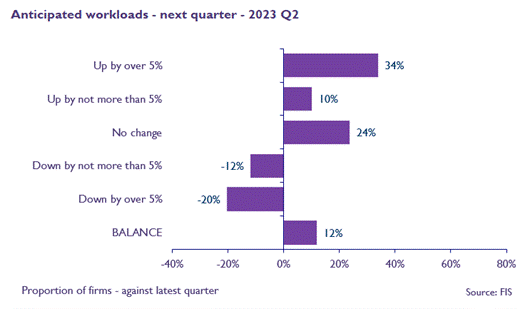
Looking ahead to the next quarter, both sales and workload for the next quarter are trending positively, but the balance is lower than the past couple of quarters. There are still reports of work slipping with rising interest rates and concerns over compliance (particularly linked to staircases) impacting viability of projects. It is also worth noting that, whilst overall trend remains positive, 20% of members are expecting workload to slip by in excess of 5% in Q3.
Members can access the full FIS State of Trade Survey Q2 2023 here

by Oscar Venus | 27 Jul, 2023 | Main News Feed
The Building Safety Regulator (BSR) is set to oversee the building control approval process for all higher-risk buildings from 1st October 2023. In order to ensure the ongoing safety of residents, the BSR will also manage the safety of these buildings while they are occupied. To provide a clear overview of the new building control regime and the BSR’s role as the Building Control Authority, a free one-hour lunchtime webinar will be hosted on Wednesday 9th August from 12pm-1pm. The webinar will be hosted by Colin Blatchford-Brown, Operational Policy lead for Gateways and Building Control, and Jenny Hagan, Senior Policy Advisor for Gateways and Building Control.
The engaging and informative webinar is open to all those interested in the new building control regime, including designers, architects, local planning and building control authorities, building control professionals, private and public sector contractors, clients, principal accountable persons/accountable persons, developers, and industry organisations. Attendees will gain a deeper understanding of the new building control regime, the importance of duty holder roles, and the gateways. The webinar will also provide the opportunity to ask questions to the experts and receive a post-event copy of the presentation and a recording of the webinar.
Register for the webinar here

by Clair Mooney | 24 Jul, 2023 | Main News Feed
Construction output is forecast to fall by 7.0% in 2023, primarily due to sharp falls in activity in the two largest construction sectors, private new housing and private housing repair, maintenance and improvement (rm&i). Output in the third largest construction sector, infrastructure, has also been revised down again due to government delays to roads and rail projects that will only add further cost to the projects when they return. Construction output is forecast to increase in 2024, by 0.7%, as wider economic growth boosts demand for both new build housing and rm&i activity.
FIS Members can download their copy of the CPA’s Summer Forecast here.

by Clair Mooney | 21 Jul, 2023 | Main News Feed
To help keep tabs on wage rate inflation, FIS launched in 2021 The FIS Wage Rate Index. The aim of this work is to support contract negotiations and to help track the impact of labour shortage on the cost breakdown of projects.
The survey is conducted every six months and FIS is asking all contractor members to take part. Data is published as a price index to allow for regional rate variations and all company specific data is managed in the strictest of confidence. The survey covers core trade roles, labourers, apprentices and construction and site managers.
THE DETAILED RESULTS OF THE SURVEY WILL BE MADE AVAILABLE EXCLUSIVELY TO CONTRBUTORS.
You can complete the survey via the link here. The survey will close on 21 August 2023. If you cannot complete, please share the link with the person in your business who can.
Your support is, as ever, appreciated.

by Clair Mooney | 20 Jul, 2023 | Main News Feed
The CPA has produced its response to the Independent Review of the Construction Products Testing Regime by Paul Morrell OBE and Anneliese Day KC. This latest briefing paper outlines how the CPA intends to respond to this report, as well as working with the government moving forward.
The DLUHC-commissioned report sets out recommendations for industry and government alike to improve and strengthen the testing regime for construction products. The uptake of its recommendations will be hugely consequential for safety and improved performance outcomes in construction.
The CPA is asking the government to help address some of the complex challenges facing the construction products industry currently. There are many interrelated issues that we hope can be addressed off the back of this report.
Asks include:
- That government should respond and support the recommendations listed in the Paul Morrell OBE and Anneliese Day KC Independent Review of the Construction Product Testing Regime, including uptake across industry of the Code for Construction Product Information
- That government should work with industry to action its recommendations and create a shared roadmap for practical progress, including what constitutes a ‘safety-critical’ product
- That government move to address and give clarity to the CA Mark issue, ahead of the June 2025 deadline.
by Clair Mooney | 20 Jul, 2023 | Labour
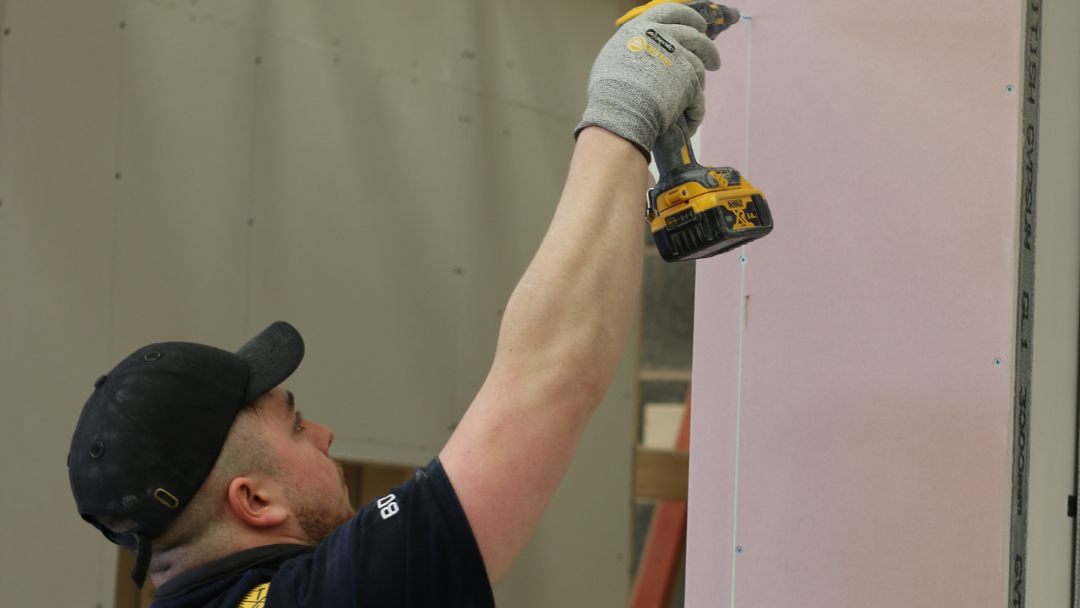
As announced in the Spring Budget 2023, five trades will be added to the Shortage Occupations List (SOL) from Monday 7 August ‐ bricklayers, carpenters, plasterers, roofers, and construction and building trades not elsewhere classified (NEC).
This move is significant as it potentially provides access to a controlled immigration process that will support the sector in managing any existing or upcoming shortages in our workforce.
By moving Dry Lining into the Standard Occupation Classification area 5321 (as per FIS recommendation and lobbying work on the SOC), Dry Lining is now also shares skilled worker status with Plastering for the purposes of being a Skilled Worker.
Commenting on the changes, FIS CEO Iain McIlwee stated:
“It is a relief to finally see Dry Lining recognised as both a skilled occupation and also the shortages that we face as a sector. This is something FIS has been campaigning on for a number of years and I am grateful to colleagues from across the Construction Leadership Council for their efforts in helping to effect this exceptional change and thankful that we now have some movement. We now need to respond to the detailed review taking place to identify other areas of concern and revisit the sponsor and visa process to better understand any further blockers and issues”.

by Clair Mooney | 19 Jul, 2023 | Building Safety Act, Main News Feed
Following recent changes to the Building Safety Act, FIS has updated its Product Process People Risk Register to support members with compliance.
The FIS PPP Risk Register gives people a structured framework to interrogate project risk based on a assessment of severity and probability of a risk occurring. The standard scoring system helps members to identify any unacceptable high risks and ensure management strategies are put in place to address. The tool also helps a management team to assign risk correctly and contains a range of links to additional tools and information that will help support specific risk management.
FIS CEO Iain McIlwee said: “A large part of our work centres on interrogating and helping members to manage day to day problems they may encounter, risks. This is a moving and evolving space. Our tool helps us to ensure that we are learning lessons and that members are alert to where problems may appear,
Risk is unescapable in any construction project, but at times we can feel so beset by risk that we become indifferent to it. It is vital that as an industry we get better at measuring, managing and mitigating. This simple tool is built on the premise that if you can’t measure it or didn’t think about it, you can’t manage it. It aims to help people to score risks. The underlying principle is that is that we can all learn from our own mistakes, but it is better learn together and avoid learning the hard way wherever possible.”
The FIS PPP Risk Register is available for members to download here
by Clair Mooney | 13 Jul, 2023 | Building Safety Act
The Building Safety Act states that those working in constructing our homes, offices, hospitals and care homes should provide evidence of their competence to the client to submit as part of the applications to build and before occupation of the buildings.
FIS Technical Director Joe Cilia was the Deputy Chair of the group (WG12) that developed the Built Environment – Proposed construction product competence standard – white paper, who alongside the joint Chairs, Hanna Clarke of the CPA and Douglas Masterson at the GAI developed the white paper alongside a dedicated group of industry experts.
The Standard will help organisations and individuals define people’s functions and introduce levels of competence against the function to track an individuals progression.