
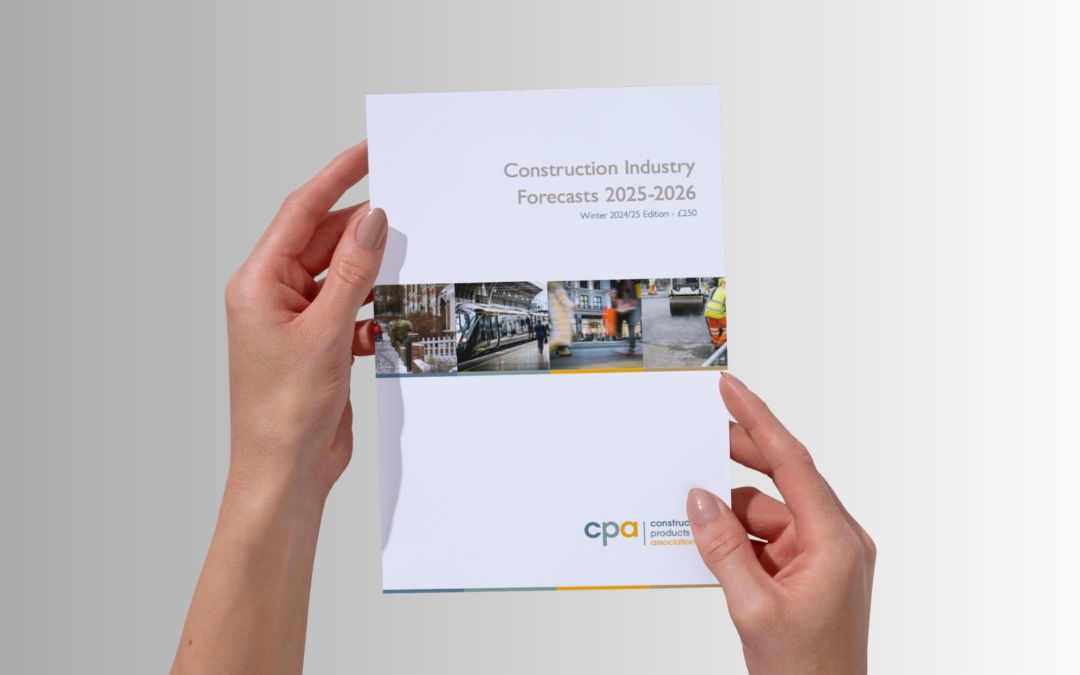
CPA highlights what to expect from construction in 2025 and 2026

CPA highlights what to expect from construction in 2025 and 2026

Looking to the future, construction is set to bounce back from the obstacles of 2023 and 2024. While recovery is in sight, it’s crucial to grasp the dynamics influencing its speed and shape.

Forecasts suggest a slow but steady rise in construction output, particularly in private housing and repair and maintenance initiatives. Yet, this recovery will be a marathon, not a sprint, due to slower economic growth and less frequent interest rate reductions following the last Autumn Budget. Thus, while the future looks brighter, patience is key.

Notably, the construction sector stands to gain from an influx of infrastructure projects and public non-housing developments. These sectors are set to fuel industry growth in the coming years. A healthy mix of private housing initiatives and public investment will be the engine driving construction forward.

Despite these positive signals, potential risks that could shake these forecasts should not be overlooked. If things go well, sustained wage growth and consumer spending could potentially spur private housing activity. Meanwhile, the Autumn Budget’s government funding could boost affordable housing, educational facilities, and healthcare infrastructure projects.

Nevertheless, caution is advised. The main threats to this optimistic view come from worries about government debt. Any cuts in public sector spending could stunt construction activity. Persistent inflation and high interest rates might also stick around longer than anticipated, dampening the growth outlook.

In summary, although an upswing for the construction industry in 2025 and 2026 is on the cards, the road to recovery is complex. It’s essential for stakeholders to stay alert and flexible, closely monitoring economic indicators and government policy shifts. Armed with a clear understanding of the opportunities and challenges that lie ahead, we can better navigate the changing terrain of the construction sector.

Want to see the full the forecast?

FIS members can access the CPA Construction Forecast – 2025/2026 by signing in using the link below.

37% of Building Control applications for HRB’s invalid, rejected or withdrawn

37% of Building Control applications for HRB’s invalid, rejected or withdrawn

Following a Freedom of Information request by a Build UK member, the HSE has confirmed that the Building Safety Regulator has received 1,427 applications for Building Control Approval for Higher‐Risk Buildings (HRBs), of which 214 have been approved (15%), 683 are pending approval (48%), and 530 were invalid, rejected or withdrawn (37%).

86% of the applications received were for existing HRBs, with 16% approved and 40% invalid, rejected or withdrawn. Only 9% of the applications received were for new HRBs and just 7% of these have been approved, with 70% still pending approval. It was also confirmed that the applications which were approved took an average of 17 weeks for existing HRBs and 14 weeks for new HRBs.

FIS Building Safety Act Toolkit

FIS has produced a Toolkit to help members navigate this new legislative landscape. We have produced guides, a Building Safety Act Training Module and reviewed the FIS PPP Qualifty Framework Toolkit to align to the new landscape. We have also strengthened our Legal Support Services to assist members with some of the contractual issues that have arisen.

Crown Commercial Service calls for suppliers to be certified to the Common Assessment Standard

Crown Commercial Service calls for suppliers to be certified to the Common Assessment Standard

Crown Commercial Service has confirmed that suppliers applying to its new Construction Works and Associated Services Framework, worth up to £80 billion, must be certified to the Common Assessment Standard developed by Build UK. The framework will run from October 2026 until October 2034, and the contract notice is now available.

With a growing list of organisations across both the public and private sectors using the Common Assessment Standard, members of the supply chain only need to obtain certification once from any of the Recognised Assessment Bodies. Companies keen to see a reduction in the bureaucracy of pre‐qualification should review the different certifications they hold to see if they have the Common Assessment Standard from more than one Recognised Assessment Body and whether that is required for any reason.

Help eliminate waste in Duplication of Pre Qualification Questionnaires
As part of the FIS Responsible No Campaign, FIS is also looking at the current failure for wholesale adoption of the Common Assessment Standard.

FIS is encouraging members to advertise their support for the Common Assessment Standard and adopt a Responsible No when they are confronted with behaviours and processes that undermine productivity, safety or responsible commercial practice.  To this end we are encouraging members to use a Responsible No when asked to complete multiple PQQs.  We accept that this is difficult in a commercial tender situation and time is often too tight, but we have prepared a short email that we suggest our members send to their client to help raise awareness of the efficiencies that the Common Assessment Standard brings.  This email template is available here Common Assessment Standard Template Email.

If companies are failing to adopt the Common Assessment Standard, please email info@thefis.org and we will follow-up independently (all information will be treated in the strictest confidence ensuring no member is named or disadvantaged in any way by our follow-up).

FIS supports National Apprenticeship Week to promote skill development

FIS supports National Apprenticeship Week to promote skill development

National Apprenticeship Week will take place between 10 – 16 February 2025 and the theme for this year has been unveiled as Skills for Life, reflecting on how apprenticeships can help individuals to develop the skills and knowledge required for a rewarding career, and businesses to develop a talented workforce that is equipped with future-ready skills.

FIS is proud to show its support this campaign that highlights the boundless possibilities that can stem from apprenticeships. We are committed to promoting the week and assisting all FIS members in their efforts to do the same. This year’s theme, “Skills for Life,” is a perfect opportunity to showcase the exceptional work done by our sector in training the next generation.

The week will focus on the benefits apprenticeships can have on individuals, businesses, and local communities. We are calling on employers, training providers, individuals and communities to get involved by encouraging everyone to consider how apprenticeships can help to provide #SkillsForLife.

From virtual career fairs, myth busting talks, graduation ceremonies through to factory tours, the week has something for everyone. You will hear personal stories from apprentices and employers about their own journeys and experiences and why apprenticeships provide #SkillsForLife. We are keen to celebrate the diversity and value that apprenticeships bring to employers, apprentices and communities across England.

To support National Apprenticeship Week 2025 individuals, employers, training providers and communities can get involved by encouraging everyone to consider how apprenticeships can help build #SkillsforLife. A toolkit is available to support the apprenticeship community with planning their activity for the week.

You can keep up to date with National Apprenticeship Week updates by following Apprenticeships on LinkedIn and use the hashtags #NAW2025 and #SkillsForLife on social media activity.

To find out more about apprenticeships, visit: www.apprenticeships.gov.uk.

FIS updated resource: Collateral Warranties

FIS updated resource: Collateral Warranties

FIS has updated its guidance on Collateral Warranties, which members can access for free here..

A collateral warranty is a contract, that is associated with another contract (such as a construction contract, a sub-contract, or design consultant appointment), and is entered into between the person employed under the contract to provide works or services (the contractor, subcontractor or design consultant) and a third party who either has or acquires an interest in the project to which the contract relates.

A collateral warranty is therefore a form of security against the risk that any of the party(ies) between the beneficiary and the specialist contractor becomes insolvent.

FIS Contractual and Legal Toolkit

FIS members can access an extensive range of support services to help manage the complexities of contracting and supplying products into the construction market.

Trends in sustainable solutions for the built environment

Trends in sustainable solutions for the built environment

FIS is pleased to be featured as one of the innovative solutions providers in the UK Green Builing Council’s (UKGBC) Trends in Sustainable Solutions Report.

Buildings are a crucial area of opportunity when it comes to environmental and social sustainability, as reflected at COP29 with the launch of the Intergovernmental Council for Buildings and Climate. 

In 2024, the new Government accelerated green reforms demonstrating a strong narrative around climate ambitions, particularly in relation to new build and retrofit. Going forward the hope is this narrative crystalises into tangible and robust policies, importantly as the UK’s Climate Change Committee’s new Progress Report saw buildings emerge as a priority item on the agenda putting them in the focus for decarbonisation efforts.

However, this is a steep challenge as the industry needs to almost halve its emissions by 2030 (compared to a 2018 baseline) and decarbonise fully by 2050, while addressing other areas of sustainability, including enhancing resilience, social value, health & wellbeing, nature & biodiversity and reducing resource use. Meeting this challenge not only requires innovation in technologies, business models and ways of operating, but also increased and more strategic implementation of existing sustainable solutions.  

FIS Sustainability Lead, Flavie Lowres said:

Sustainability is finally moving at pace, but it is still hard to define what needs to be done. This UKGBC report turns theory into practical applications by providing a list of example solutions/initiatives. It is great that UKGBC has picked up on our FIS Reuse Initiative – it shows we are moving in the right direction and asking the right questions.

This report summarises a range of sustainable solution trends that UKGBC has seen over the course of 2024, provides context on their use, and comments on the relevant driving forces in the UK market. The solutions discussed range from innovative new platforms and materials to transformative business models and processes. The analysis is based on engagement with innovation-focused UKGBC members (including input from UKGBC’s Solutions & Innovation Advisory Group), interviews with UKGBC topic leads, and desktop research.

Trends in Sustainable Solutions 2024


Building Safety Update

Building Safety Update

The publication of BS 9991:2024 ‐ Fire safety in the design, management and use of residential buildings ‐ at the end of last year has created some confusion for those preparing and submitting applications for Building Control Approval because it does not reference the transitional arrangements for amendments to Approved Document B.

Applications for Building Control Approval are assessed against the functional requirements of the Building Regulations, which have not changed, and the previous BS 9991:2015 is still included in the list of relevant standards in Approved Document B. The Building Safety Regulator (BSR) has confirmed to Build UK that until further notice applications for Higher‐Risk Buildings can refer to BS 9991:2015 and/or 2024 as the guidance or standard used to support designs, and more information can be found in this Build UK statement.

The BSR has published criteria for assessing applications for a Building Assessment Certificate (BAC). The criteria are designed to ensure consistency when reviewing applications and cover all the information that a Principal Accountable Person needs to provide for the building, including the Safety Case Report, Resident Engagement Strategy, and Mandatory Occurrence Reporting system.

Take our Building Safety Act Training Course

FIS created an online training course to help members understand compliance with the Building Safety Act, specifically for those in the finishes and interiors sector.

Increased Payment Requirements

Increased Payment Requirements

The Government has published PPN 018 which enhances the requirements for prompt payment on public sector contracts. From 1 October 2025, businesses bidding for Government work above £5 million per annum must demonstrate that they pay their suppliers within an average of 45 days, down from the current requirement of 55 days.

New reporting requirements on value of invoices paid and disputed invoices have now come into effect under the Reporting on Payment Practices and Performance Regulations. To ensure consistency with the existing requirement for number of invoices paid, Build UK understands that the data on value of invoices paid will be displayed as percentages, rather than ‘sums’, in the Government portal. For companies with a financial year starting on 1 January, their first reports containing the new metrics will need to be submitted by 30 July 2025 and Build UK’s payment performance table will be updated accordingly.

Open Doors 2025 – Promote Your Events

Open Doors 2025 – Promote Your Events

Recruiting the next generation is a priority if we are to maintain the pipeline of talent coming into the industry, and one of the best ways to showcase what construction has to offer is to get involved with Open Doors. Booking for visitors is now open, and there are already more than 180 events registered to take place across the UK from Monday 17 ‐ Saturday 22 March. With major projects like the expansion of the North Stand at Manchester City’s Etihad Stadium, the refurbishment of the Prince Charles Hospital in Merthyr Tydfil, and the development of the Hamilton Dock Hotel within the Titanic Quarter in Belfast opening their doors, we are seeing huge interest from potential visitors, so if you or your organisation is yet to get involved, what are you waiting for!

It’s not too late to register your remaining sites, offices, and manufacturing and training facilities and start promoting them in the local area. Please reach out to schools and colleges, who can book group visits for their students, as well as local community groups supporting new entrants into the industry, to help us show there is a career in construction for everyone.