0121 707 0077

Philip Brown steps up to Vice President at FIS

Philip Brown steps up to Vice President at FIS

FIS is pleased to announce that Philip Brown has been elected as Vice President of its executive board.

A member of the FIS board of directors for six years, Philip has more than 45 years’ experience in the construction industry. He started out as an electrical apprentice before going on to project manage numerous interior works, gaining in depth knowledge and experience within the industry before joining Meronden Ltd in 1997 as director.

“I am looking to build upon the good work that the board has achieved by actively encouraging the increase of new members whilst maintaining the high standards achieved within the membership,” said Philip. “I am also keen to increase the profile of the association within the industry, ensuring it is associated with quality, commitment and prestige.”

Philip continued: “I believe that as a specialist industry, by working in association with one another we are able to share information, ideas, trends and best practice which will enable each member to succeed in today’s challenging and ever-changing market.”

Commenting on the new appointment, FIS CEO Iain McIlwee said:

“Philip has already made a huge contribution whilst on the board and has been instrumental in the development of a number of key projects.  Add this to his exceptional track record across the finishes and interiors sector, and we have the ideal Vice President.  Philip will play a crucial role in taking FIS onto its next chapter of growth and success.”

For further information or for any questions please contact the FIS at info@thefis.org or call 0121 707 0077.

Apprenticeship guidance for employers

Apprenticeship guidance for employers

Apprentices are a vital investment in the future. A well managed programme can help enhance productivity, improve business performance and develop a committed and competent workforce.

To help support businesses in taking on an apprentice, FIS has created a useful guide detailing the support and funding available to help you to make your apprenticeship programme a success. It provides employers with the information needed to recruit, register and secure funding for apprentices.  The guide includes information on the apprenticeship funding pledge and receive system and details on the CITB Grant ‘Travel to Train’.

The guide also includes access to the CITB Apprenticeship Recruitment Toolkit, which provides further guidance for recruiting and supporting apprenticeships.  The toolkit details the various routes to hiring an apprentice across England, Scotland, and Wales.  There is also, a choice of four other sections to explore, including support available from CITB.  This includes assisting employers with completing paperwork, or financial support, with a breakdown on how to claim funding and CITB grants for apprentices.  

If you would like to talk through the options for employing apprentices give us a call, 0121 707 0077 or email info@thefis.org we will be happy to help.

Let’s celebrate all that apprenticeships have to offer

Let’s celebrate all that apprenticeships have to offer

National Apprenticeship Week 2022 is well underway and this year’s theme ‘Build the Future’ provides an opportunity for organisations to inform young people in England and Wales how they can pursue a rewarding career in construction and showcase the contribution they are making to the future finishes and interiors workforce.

It also ensures as a sector, we come together and celebrate apprenticeship journeys and successes as well as to say ‘Thank You’ to everyone who makes them possible.

We are thrilled to have seen so many members get involved showcasing their apprentices. If you haven’t already done so, it’s not too late to get involved!

• Celebrate your apprentices ‐ Put your apprentices front and centre of your business and on social media using the hashtag #NAW2022
• Use your Apprenticeship Levy ‐ make sure you are using your Apprenticeship Levy or pledging it to other employers in your supply chain via the Apprenticeship Levy Transfer to help them deliver their apprenticeships.
• Promote your apprenticeship vacancies ‐ Ensure all your apprenticeship opportunities are registered on the FIS JobSpot and let us know about work placement opportunities.

Support and advice

The FIS website has a range of tips and advice on how you can look at taking on apprentices, including our FIS Apprentice – Guidance for Employers.

We can also support you in taking on an apprentice and accessing the appropriate funding. Contact the FIS team on 0121 707 0077 or email info@thefis.org to start the conversation.

For updates during the week follow FIS on Twitter or FIS on Linkedin and if you are sharing an apprenticeship story, please tag us in so we can help amplify on behalf of our community.

Construction employers receive suite of apprenticeship support resources as industry is urged to rethink recruitment methods

To mark National Apprenticeship Week, a series of apprenticeship toolkits have launched to support construction employers with hiring an apprentice.

Acting as a one-stop shop for support and guidance, the website toolkits simplify access to information and reduce the obstacles that often deter employers from looking into the process. Starting at the beginning of the journey, they will detail the various routes to hiring an apprentice across England, Scotland, and Wales. From there, there’s a choice of four other sections to explore, including support available from CITB. This could be practical support, assisting employers with completing paperwork, or financial support, with a breakdown on how to claim funding for an apprentice.

How to adopt the Common Assessment Standard and eliminate the completion of multiple PQQs

How to adopt the Common Assessment Standard and eliminate the completion of multiple PQQs

On Wednesday, FIS hosted a webinar explaining the Common Assessment Standard (CAS), which was introduced in 2019 to address concerns of multiple Pre-Qualification Questionnaires (PQQ), multiple subscriptions and duplication of effort.

CAS is now gaining traction, and there are clear benefits of adopting this standard.

On this webinar we were joined by Jo Fautley, Build UK Deputy Chief Executive who gave an introduction to the Common Assessment Standard and Neil Mant, Supply Chain and Procurement Director at Vinci Construction who has implemented the CAS and sees the efficiency this has throughout the supply chain.

You can access the recording via Listen Again Hub at https://www.thefis.org/webinar-recordings/

Transfer and receive apprenticeship levy

Transfer and receive apprenticeship levy

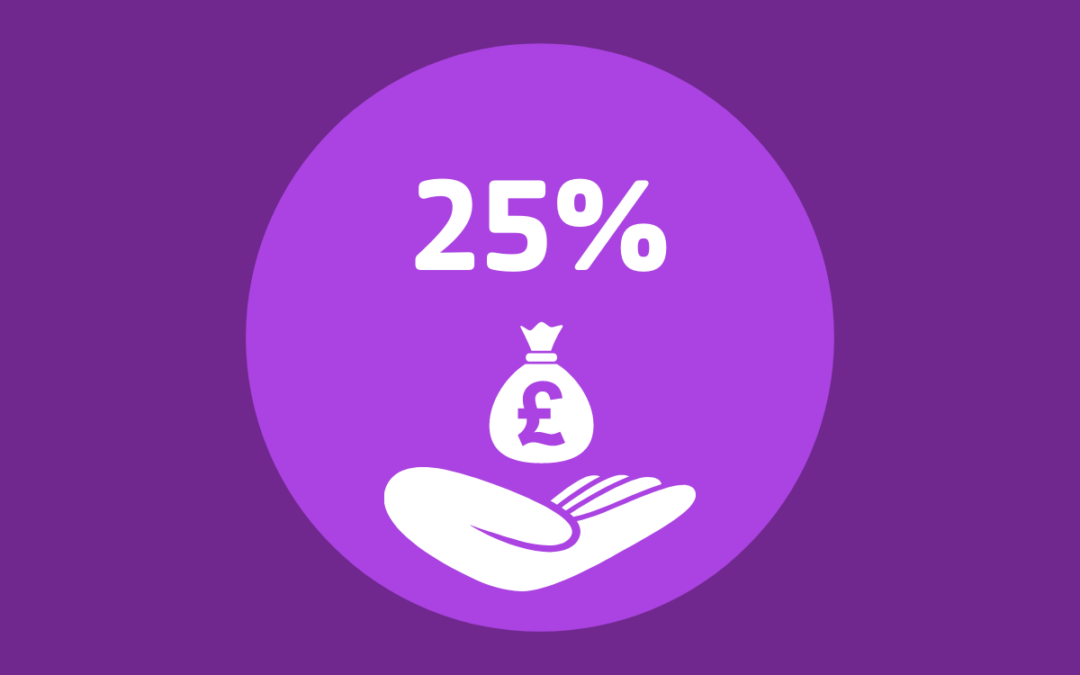
Employers in England that pay the apprenticeship levy can transfer their unused apprenticeship funds to help other organisations pay for apprenticeship training. The employer that receives the funds can only use them to pay for apprenticeship training and assessment. You can transfer up to 25% of your apprenticeship funds.

Prior to sign up you will need an apprenticeship service account

Create an account to manage apprenticeships – Manage apprentices (manage-apprenticeships.service.gov.uk)

Transferring Your Apprenticeship Levy to Another Business

Transferring your apprenticeship levy to another business – GOV.UK (www.gov.uk)

An apprenticeship levy paying employer can transfer up to 25% of their annual levy funds to another employer to pay for the training and assessment costs for apprenticeship standards. Transfers can support new apprenticeship starts, this includes existing staff starting an apprenticeship or where the apprentice’s employer has changed. Transfers may be used to support the skills gaps and shortages within locations or sectors.

Receive a Levy Transfer from another Business to Fund an Apprenticeship

Receive a levy transfer from another business to fund an apprenticeship – GOV.UK (www.gov.uk)

Transfers is one way of receiving funding to support the costs of apprenticeship training and assessment. By receiving a transfer, if you do not pay the levy then you will save the 5% employer co-investment. Also, transfers do not count towards reservation of funds. Apprenticeships are not just for new employees; they are available to upskill existing employees too.

Apprenticeships and Qualifications

For advice on process or funding for getting yourself or your workforce qualified view our Skills and Funding page or call us on 0121 707 0077 or email info@thefis.org

Way to Work: helping 500,000 people into work

Way to Work: helping 500,000 people into work

Way to Work is a new partnership between government and employers to get 500,000 jobseekers into work by the end of June 2022.

This partnership will help fill the large number of vacancies and help job-ready people into the labour market. If you are looking to fill a vacancy, Jobcentre Plus can offer you a named employer adviser in your local jobcentre, or a dedicated national account manager if you are a national employer.

For more information-  Way to Work – JobHelp (campaign.gov.uk)

Embodied Carbon of Construction Industry Makes it to Parliament

Embodied Carbon of Construction Industry Makes it to Parliament

The UK Government has committed to reduce carbon emissions by 100% by 2050 compared to 1990. Buildings are responsible for approximately 40% of CO2eq emissions in the UK in relation to the energy they use during their use. The impact of construction, which includes the manufacturing of products, transport to site, installation, maintenance, replacement and disposal is responsible for an estimated additional 11% of global CO2eq emissions. In the UK, those emissions are estimated to be 3 times the combined UK footprint for aviation and shipping. However, those emissions have to date not been unregulated.

On 2nd February 2022, Duncan Baker, MP for North Norfolk, successfully presented a bill to regulate embodied carbon emissions to Parliament. This follows from the industry initiative around the creation of Part Z. A second hearing will take place mid-March. This is an important step for the UK Government to recognize the importance of embodied carbon in construction and encouraging reduction.

Watch the video of the hearing here: Parliamentlive.tv – House of Commons at 16.27

CLC sets out its plans for construction in 2022

CLC sets out its plans for construction in 2022

The Construction Leadership Council has set out four priorities to deliver a better UK construction sector in 2022.

The Council has picked issues where there is the greatest need for collaborative industry action, and the greatest opportunity to deliver positive change. The four priorities for 2022 are:

  • Net Zero Carbon
  • Building Safety
  • Meeting the Skills Challenge
  • Implementing the Construction Playbook

The announcement of the four priority areas comes as the CLC published its Annual Review for 2021.

Having established itself as the leading force for the industry in 2020 with its response to Covid-19, in 2021 the CLC built on this success. It led UK construction’s work ahead of the COP26 climate change summit with CO2nstructZero, while also responding promptly to the emerging threat of materials shortages to improve product availability nationwide. It launched a single hub for all new entrant jobs – TalentView Construction – while setting out the first ever Skills Plan for the whole UK construction industry.

Among its objectives this year it is targeting apprenticeships, aiming to return numbers to pre-Covid levels to meet future skills needs. It will publish quarterly data to show the sector’s journey to zero carbon. On Building Safety, it will work with partners to roll out frameworks to ensure that those working on buildings have the competence to build and maintain them safely. And it will continue its work to promote the Government’s Construction Playbook, boosting awareness and implementation among clients and suppliers.

CLC co-chair Andy Mitchell CBE said:

“Having lit the spark in 2020, and watched it grow last year, the CLC can deliver transformational change for UK construction in 2022. We know that some of the threats facing our sector are daunting, but we are now working together as a sector, talking on challenges with a united approach. I hope that when we come to write our Annual Review for 2022 the whole sector will be able to judge us by our successes in delivering real change”
CLC co-chair and Construction Minister Lee Rowley MP said: During 2021, the industry demonstrated its ability to adapt to manage the ongoing challenge of COVID-19, and also its willingness to improve, and to start to tackle the need to transform the sector so it can consistently deliver better-performing, safer and more sustainable buildings and infrastructure.

However, we can’t rest on our laurels. We will continue to face challenges during 2022. Only by working together collectively, will we continue to meet these challenges, and truly build back better, faster and greener for future generations.

FIS encourages members to take the Pledge to change the training culture

FIS encourages members to take the Pledge to change the training culture

Pledge to #BuildTheFuture

To support the new Interior Systems Installer Apprenticeship Standard, with its pathways for Drylining and Ceiling Fixing and Partitions and to grow support for the existing framework in Wales and the Scottish Modern Apprenticeship, FIS is encouraging members to sign a new Interior Systems Installer Apprenticeship Pledge.

The sector is being hard hit by a skills shortage, with a recent survey highlighting that over 60% of FIS Members are now impacted.  Problems are expected to worsen over the summer and, with new data from the ONS suggesting that the net migration of labour could be worse than many feared, a collective effort from the sector is essential.  In Q1 2019, the finishes and interiors sector was reliant on EU workers for 40% of its workforce – the latest ONS data, indicates that, by the end of Q1 2021, the number of EU construction workers available has fallen by a worrying 46%.

“The sector has relied on a flow of new skilled workers from the EU, but the new immigration rules have well and truly turned this tap off.  Before you factor in those EU workers that have left and may or may not come back, we need to fill the void left by those that would, in the past have come.  This means doubling our numbers for domestic training programmes.  For every 5% of EU Workers that do not return, this number doubles again!  We need to adjust our approach now and ensure that we are doing all we can to attract and train a new army of workers.  The Pledge is very much a rally call to our sector – we need to work together on this one.”

Commenting on the work so far, Damian Treanor of Errigal stated:  “We need to get acknowledgement that Drylining is fully recognised as a professional trade within our industry.  It is time for all contractors within the finishes and interiors sector to take a united approach in the recruiting, training and development of our young people to secure a stable growth for the future.

No matter what size of business, if you are developing your culture with a view to a long term approach we would encourage all to consider taking the pledge.

Like others, we have established a successful 2 year apprenticeship with an additional 2 years CPD programme to further develop skills and knowledge. The Drywall trade is at the forefront of all internal works within the industry and we need all major clients and contractors to recognise the importance of a collective training approach for the future of the trade.”

So far the initiative is off to an encouraging start with signed Pledges received from Errigal Contracts, Measom, Tapper Interiors, Veitchi Group, ATJ Group, Horbury Group, CG Reynolds, SCL Interiors and Platt and Reilly.  Already this collectively amounts to a commitment of over 150 new apprenticeships per year over the next 5 years.

The pledge is based on a focus on culture, commitment, collaboration and quality.  As part of its own commitment to the Pledge, FIS is working to build a network of Approved Providers, develop resources to support consistent delivery and working closely with individual employers to help align support, funding and structure their apprenticeship programmes.  FIS is also working to support recruitment through the FIS BuildBack programme and through the Government’s Kickstart scheme.  The work is being led by a dedicated Employers Group which is helping to support a collaborative and focussed approach.

Early adopter, Andrew Measom who has played an active role in the employers group leading this work added “Apprenticeships are essential in addressing the labour and skills gap in our industry.  They are a productive and effective way to bring in and grow young talent and develop a motivated, skilled, and qualified workforce. If a fixer has come through the apprenticeship, we can be confident they have been trained to a consistent standard”.

FIS Skills and Training Lead George Swann said, “by taking on an apprentice your organisation is investing in its own future, its own succession plan. There are numerous well documented benefits to investing in apprenticeships including a positive impact on productivity.  There is now no age limit for an apprentice and at this time there are a number of attractive financial incentives for employers.  If you need more information give us a call, FIS can help with recruitment, selection and finding a reliable Training Provider”.


Skills Hub

The Skills Hub brings together details of courses specific to the finishes and interiors sector, making accessing and booking training quick and easy. In addition, it provides information on sector careers, apprenticeships and funding, as well as access to e-learning, CPD and other training.