by Iain McIlwee | 21 Apr, 2022 | Main News Feed, Market data
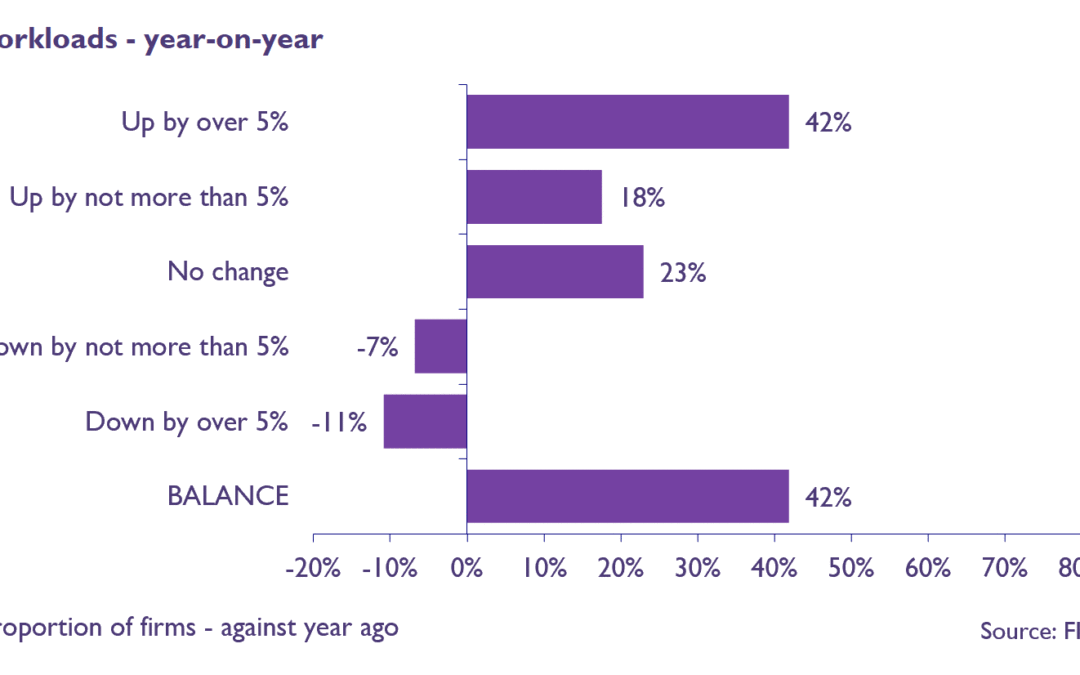
In 2022 62% of FIS Members are anticipating growth in workload, but have advised caution that labour shortages could constrain demand.
In the Q1 2022 State of Trade Survey, run in partnership with the Construction Products Association, overall volume is encouraging with the majority of members reporting growth in both sales and workload and predicting this will continue through the year.
Concern comes when we look at the costs and with inflation across the board biting hard and a number of members expressing concern about the impact of this in a fixed price environment. Labour Availability is likely to be the biggest constraint on growth, however the added uncertainty these record levels of inflation are undermining confidence with nearly 40% of members suggesting a combination of demand side challenges and material price increases could impact forecasts.
Commenting on the report FIS CEO Iain McIlwee stated:
“It is so difficult to look ahead in the world as it is, as one crisis ends there seems to be another waiting just around the corner, but despite this there is optimism in the survey and once more I find myself in awe at the amazing resilience and flexibility that I see through our supply chain . Certainly, in the near term, inflation is a huge challenge and it will not only put pressure on the viability of projects, but unless pragmatism is applied to the lump sum, fixed priced project approach it will undermine the viability of some in the supply chain. Structurally too the labour market challenge is significant – we have included some of the headline numbers in this report to emphasise that action is needed to join up the education and work market and support this industry in finding new people or we simply won’t be able to get the work done and construction’s ability to drive growth in the economy will be limited”.
You can download a copy of the FIS State of Trade Survey Q1 2022 here.
by Iain McIlwee | 21 Apr, 2022 | Main News Feed, Material Shortages
Statement from John Newcomb, CEO of the Builders Merchants Federation and Peter Caplehorn, CEO of the Construction Products Association, co-chairs of the Construction Leadership Council’s Product Availability working group
There has been little change in respect of overall product availability since our last report with a good supply of most products and materials across the UK. That said, previously reported challenges remain for bricks, aircrete blocks, some roofing products, some sanitaryware imported from Asia and gas boilers, all of which are experiencing longer lead times.
The impact of the war in Ukraine is only beginning to be felt by UK construction. There are reports of nickel prices doubling since the conflict began (Russia was a major supplier before sanctions hit), which affects the price of stainless steel. The prices of copper, steel, and aluminium have increased. Taken together with a shortage of supply from major neon producers in Odessa and Mariupol and existing Covid-related bottlenecks for microchips and semiconductors from Asia, the electrotechnical sector is now experiencing inflation on products above 20% as well as price rises between 10-20%. Recent increases in the price of oil will likely affect both fuel and plastics. Although there are no issues expected for structural timber, birch plywood (widely used as a finishing product) and Russian redwood (a predominant source for mouldings) will be affected.
Otherwise, the biggest concern is the rate at which increased energy and raw material costs are driving up prices, particularly for steel, cement, glass and other energy-intensive products. The last three months have seen price inflation of 10-15%, on top of price increases introduced at the end of last year.
While this is challenging for UK construction firms, the impact is greatest for small and medium sized enterprises (SME), which account for most of the industry’s businesses and nearly all of the builders and contractors. While the first quarter was busy for those completing existing projects, there were signs of a dip in demand in home improvement work in March compared to a considerable uplift at the same time last year.
Without price continuity, it is harder for trades to quote for projects on fixed price contracts, and then seek to pass onto their customers any price increases for materials that would otherwise erode their profit margin. Furthermore, as manufacturers reprice materials and SME contractors continue to be required to sign up to fixed price contracts in advance of project delivery periods, considerable pressure is mounting on SMEs at delivery level.
Discussions are taking place within CLC to identify ways and means to manage and mitigate price inflation. We will only achieve a solution that works for industry and clients if everyone collaborates and shares responsibility.
Read the latest FIS statement and resources produced by FIS to support members working at a time of high inflation

by Iain McIlwee | 21 Apr, 2022 | Main News Feed, Material Shortages
Off the back of the latest wave of inflation and the most recent statement by the Construction Leadership Council, FIS has produced two new resources to support contractor members.
The first, is a new factsheet that includes recommendations on standard terms to include on quotations that better protect contractors. The factsheet also provides some basic advice around managing and reviewing contracts in a time of high inflation.
The second resource is a template letter that can be used as a guide for members who find themselves stuck in a fixed price contract and price changes are now impacting on the viability of the project, the two resources can be downloaded by members below and have been added to the growing array of resources available in the FIS Contractual and Legal Toolkit.
Commenting on the production of the new resources FIS CEO, Iain McIlwee stated:
“These really are unprecedented times and, whilst there is little we can do to stem the tide of price rises, we can ensure that we do all we can to ensure members that have access to the best advice available. These resources will be discussed at our up and coming webinar on how to review a contract on the 4th May.”
You can read the latest FIS and CLC Statements on Inflation here

by Oscar Venus | 21 Apr, 2022 | Main News Feed
The Employment Allowance has risen from £4,000 to £5,000, meaning businesses can now employ four full‐time workers on the National Living Wage without paying employer National Insurance Contributions (NICs). This is expected to benefit around 52,000 businesses in construction.

by Oscar Venus | 21 Apr, 2022 | Main News Feed, Sustainability
Duty to report
Organisations with more than 500 employees and a turnover over £500 million are now required to report climate‐related financial information on an annual basis. The Department for Business, Energy & Industrial Strategy (BEIS) has published guidance to help organisations understand how to meet the new requirement.
This is likely to impact many companies in the finishes and interiors sector supply chain. Whilst most won’t be reporting, they will likely be under greater pressure to supply information and data to their larger clients.
Plastic Packaging Tax
The UK Government has introduced the Plastic Packaging Tax. This Tax came into force on 1st April 2022 and will be charged at a rate of £200 per tonne. The tax applies to ’packaging that contains more plastic by weight than any other single material’. However, packaging that contains at least 30% recycled plastic is exempt. For more details see the paper written by CPA here.
Need help complying, you can talk to the FIS Sustainability Champion on 0121 707 0077
Visit the FIS Sustainability Hub

by Oscar Venus | 21 Apr, 2022 | Main News Feed, Sustainability
The New Hospital Programme (NHP), which is developing 48 hospitals by 2030, has published the NHP Supplier Guide. The guide is aligned to the Construction Playbook and sets out what is important to the NHP ‐ better, faster and greener procurement ‐ and what it requires from its supply chain to realise the opportunities available. The guide, which will be updated regularly, follows publication of the first NHP commercial pipeline, which gives suppliers visibility of current and future contract opportunities on proposed projects up to 2024.
Commenting on the launch of the new Guide NHP Commercial Director, Emma-Jane Houghton stated:
“Traditionally each time we build a new hospital today, it’s effectively treated as a standalone scheme that fails to fully capture the opportunities to standardise design, leverage scale or foster long term sustainable growth within the UK supply chain.
The NHP represents a dramatic shift from traditional ways of hospital building. We have a unique opportunity to create an infrastructure ecosystem that transforms the way hospitals are designed, procured and constructed.
The scale of the New Hospital Programme will call upon the skills and expertise of companies of all sizes, across a broad range of sectors.
This is an opportunity for businesses to make long-term investments in their capabilities, create jobs, drive growth and help in delivering world-leading experiences for patients and staff. We need to bring the right people and the right teams together to foster innovation and deliver hospitals of the future That’s why we’re calling upon the knowledge and experience of the widest breadth of suppliers from construction components, medical equipment and beyond.”
You can download the NHP Supplier Guide here