0121 707 0077

Mental Health: Get Construction Talking

Mental Health: Get Construction Talking

This week I attended the Mental Health Summit run by Get Construction Talking.

The stats are stark; we lose two people to suicide every day in construction. The industry is, when at its best, an amazing place to work, but not for everyone and not all the time.  We all know that relentless programmes, poor payment practices, the race to the bottom, erratic work patterns, location dependence, and travel all contribute.  It doesn’t help that we are a male dominated workforce that tends to the “just keep going” mindset.  But it isn’t just a construction problem – industry specific challenges blend with societal issues, neural diversity, addiction, the cost-of-living crisis and the pressure that social media puts on people to feel like they are failing if life isn’t Insta perfect.  We can’t always change the world, we can’t solve every problem, but we can be more alert.

As I sat there, I was thinking back to the presentation from Liam Colebrook at our Northern Regional Event the week prior and reminded of the consistency in the message.  In a brave and challenging presentation, Liam opened up about his addictions and  struggles with mental health and suicide.  During the presentation you could have heard a pin drop, after there were some really powerful questions and discussion, but my mind was mostly turning to a moment when we were packing up.  A former colleague of Liam’s, someone who worked with him at the time, came forward as we were unplugging the laptop and said … “mate I’m so sorry… I didn’t know”.   I regularly caught up with Liam at events, throughout his darkest days and I didn’t see the signs either.  Liam was one of our own, he went through hell, alone.  Thankfully he is still here, staying strong and sharing so that we can all learn from our failures.  But others aren’t and sadly some won’t be in the future – we do need to do more.

Get Construction Talking wasn’t just another conversation and a load of virtue signalling, it was an opportunity to share ideas, interrogate the causes, find out what others are doing and vitally to reflect.  Collaboration is critical – as well as a “just crack on culture”, construction tends to foster a solutions mindset.  We put ourselves on the hook to “fix it” rather than find the right help.   As a result we get initiative overload – we are not the sum of our parts.  This issue is one where we absolutely have to work on together.   To this end it was encouraging to hear from Mark Reynolds, Chair of Mace and Chair of the Construction Leadership Council on the work they are doing to step up and lead a more collaborative effort.  CLC has established a Mental Health Steering Group. You can find out more and support their research by sharing your insights here.

I’ve certainly come away thinking about how we can better join the dots to support individuals and businesses in our community more effectively.  This starts with promoting the excellent and very practical Action Plan that B1M and Procore have developed through the Get Construction Talking Campaign (which is now uploaded on the Mental Health Toolkit on our website).  The plan looks at the impact that individuals and Team Leaders can have and actions that they can take.   I also want to do more to emphasise the links between mental  health and other work we are doing.  We can’t talk about mental health without talking about risk dumping in contracts and poor contractual management.  FIS is encouraging all members to support the Conflict Avoidance Coalition which is doing great work to change this.  Details available through our Responsible No campaign which is all about changing the culture in construction.   We also can’t ignore unfair payment practices and retention and how they are a cancer at the core of our market, so again I encourage all to feed in to the Government consultation on late payment and retention that closes towards the end of August.  We need to make sure Government have no excuse not to regulate better.

Perhaps the most important reminder on the day was that it isn’t just about getting construction talking, but making sure I am listening.  To this end, please do bring always feel free to call FIS and unload – we can’t solve every problem, but perhaps we can help you appreciate that you aren’t the only one facing it and direct you to someone who can.  Our office number is 0121 707 0077, but my mobile is 07792 959 481 and it is always on.

FIS CEO, Iain McIlwee
FIS Mental Health Toolkit

FIS is a community and a good community cares. Our mental health toolkit is here to support individuals in our community, but also to help companies adopt a more proactive approach to managing mental health and wellbeing in their workforce.

FIS pledges support for Future Skyline Skills Commitment

FIS pledges support for Future Skyline Skills Commitment

FIS is supporting The Future Skyline Skills Commitment to encourage built environment employers to offer more inclusive workplaces and training, especially green skills training, to attract and retain new talent, including young people aged 16-18.

The construction industry is about people, progress, and possibility. This commitment, developed by the City of London Corporation and the Skills for a Sustainable Skyline (FSSC) Taskforce, empowers us to shape a
sector that is sustainable, inclusive and future-ready.

Iain McIlwee FIS CEO and Skills for a Sustainable Skyline Strategy Board Member said:

The Skills Shortage is a systemic problem that is impacting the market now and has the potential to choke expected future construction.  The City of London Corporation recognise that this in turn has the potential to impact the attractiveness of London as leading global business hub.

The scale of the problem is enormous and particularly acute in London that was more reliant on migrant workers than other parts of the UK.  The supply chain, from supplier and contractor through to client, needs to work together to create the right conditions to invest and work collectively to ensure we are finding the next cohort of workers now, have a stable pipeline of people wanting to join the industry in the future and the training infrastructure to deliver this.  It has been amazing to work on the Skills for a Sustainable Taskforce Leadership Taskforce, I have learned loads, made amazing connections and found new hope.  I applaud the City of London Corporation for creating this Taskforce and the collaborative ecosystem that is now working to support our common goal of fixing the skills crisis in London and look forward to being part of the next stage of the work – delivering it!”

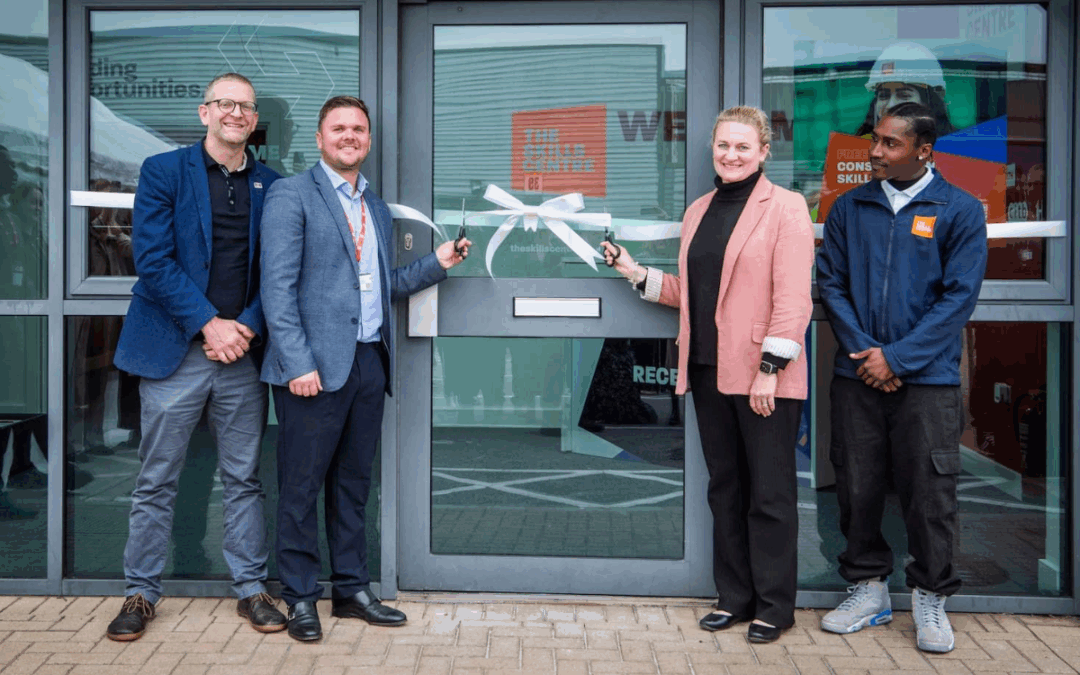
To launch the Future Skyline Skills Commitment, The Skyline Skills Hub is hosting an in-person launch reception on the evening of Wednesday 1 October from 18.30-19.15pm (with networking before and afterwards), hosted at NLA’s The London Centre (3 Aldermanbury, London EC2V 7HH. Iain McIlwee will be attending the launch event, and is encouraging members to join him and hear about the commitment and how it can drive change in the sector, promoting sustainability and inclusivity by inspiring companies to take practical actions to address the sector’s skills gap.

Construction Leadership Council launches the next step in addressing the mental health challenges faced by construction sector

Construction Leadership Council launches the next step in addressing the mental health challenges faced by construction sector

The Construction Leadership Council (CLC) has today published a consultation on its mental health project. The CLC’s Health Safety and Wellbeing Summit on 1 July set out mental health as one of its priority focus areas (as part of its wider Health, Safety and Wellbeing Strategy), with the aim to create an environment that fosters better mental health for the people that work in the UK construction industry.

The CLC held a series of focus groups across England, in partnership with Mates in Mind and the University of Warwick, to identify the primary root causes for poor mental health in construction. Today’s consultation which is open until 5 November 2025, details those causes and invites stakeholders across the industry for their views on what can be done to eliminate or reduce them.

The importance of this work is illustrated by the fact the suicide rate in UK construction is four times the national average which is unacceptable.

Whilst we know there are lots of factors that affect a person’s mental health, with some work related and some not, these are not numbers. They are husbands, wives, dads, mums, children and friends. The time for systemic change is now. We all have a responsibility to our workforce to improve the health and wellbeing of our people.

Today’s consultation focuses on the measures that the UK construction industry can take to reduce the future likelihood of poor mental health in the sector.

We want to hear your views and ambitions for how we can collectively come together to reduce or eliminate the challenges colleagues and friends are experiencing across the sector. Change is needed.

We will then analyse the consultation results, before agreeing and publishing, in Spring 2026, an action plan with supporting guidance with industry leaders, and key stakeholders on what we can jointly do to address the root causes.

 Mark Reynolds, Co-Chair of the Construction Leadership Council said:

“As leaders in the built environment and construction sector, we have a collective responsibility to our workforce to improve the health, safety and wellbeing of our people.

By working in partnership and being ambitious, we can drive improvements in mental health across the sector, ensuring a positive working environment for our current and future workforce.

Today’s consultation is a vital step in that journey, enabling us to bring together the views of industry in this space to inform our public Spring 2026 action plan. I would encourage you to respond and give us your views”.

Feed your response into the consultation here

Stay switched on to rising energy costs

Stay switched on to rising energy costs

The energy market has seen some big developments in recent weeks, with new charges and increased grid costs set to impact all businesses.

To help cut through the noise, FIS Associate Member Enexus Energy, has created a jargon-free guide that explains:

  • The new Nuclear RAB levy (what it is, how much it costs, and when it starts)
  • Why TNUoS transmission charges are rising much more than expected
  • The potential impact on standing charges and existing contracts
  • What options may be available to help mitigate the increases

These are complex changes that have a lot of different variables.  But broadly speaking, businesses will see an increase in standing charges for fixed contracts from 2026 onwards.

If you are interested in reviewing your energy, Enexus is offering FIS members a free energy health check to help save money, boost efficiency, and plan ahead with confidence. You can find out more about this offer at https://www.thefis.org/membership-hub/memberbenefits/enexus/

A jargon free guide to rising electricity charges

Share your experiences of working with councils (or why you don’t)

Share your experiences of working with councils (or why you don’t)

Local Government East (LGE) is seeking to understand micro / small businesses experiences of working with councils, or their reasons for choosing not to trade with them.

This short survey, which will only take two minutes of your time and is completely anonymous, will help LGE understand how they can remove barriers for small/ micro businesses accessing public sector business.

Over 95% of all registered UK companies are small or micro businesses.  These businesses make an essential contribution to the prosperity of local communities and we would urge everyone to make their voice heard

The survey link is here and responses are required by Friday 3 October 2025.

From Survival to Freedom: Build a Scalable, Saleable Business in 2026

From Survival to Freedom: Build a Scalable, Saleable Business in 2026

Running a contractor business has never been tougher. Every day, members tell us they’re facing: