Supporting your recruitment and getting ahead of labour shortages

Supporting your recruitment and getting ahead of labour shortages

 With new home building targets and a pent up pipeline of high rise residential and commercial projects, the respite from labour shortages in the sector are likely to be short lived.  FIS is exploring two interventions that can support members in finding work ready people.

 How can you get involved in Bootcamps?

FIS Bootcamps will initially target trade roles.  The programme involves an period of intense training to get people site wise and trade aware before letting them loose on site.  These are similar to the successful Build Back model that FIS ran several years ago, but funding is more flexible and can be tailored more effectively for the businesses offering work experience.

To get these off the ground FIS will be collaborating with training providers and the Department for Education.  The programme is zero cost to employers.  The funding provided through the Department of Work and Pensions (DWP) covers the initial training and induction of the candidates –  the employers involved need to offer work trials and/or employment.  The process identifies and recruits candidates from the local area and will include self-employed Green CSCS Cardholders, prison leavers and job seekers.   The Bootcamp presents an great opportunity to tap into the local labor market and support your recruitment as well as assist with delivery of Section 106 and equivalent social value requirements.  The training locations span across London, Essex, Suffolk, Greater Manchester Combined Authority, West Yorkshire Combined Authority, and North East Mayoral Combined Authority.  The aim is to onboard over 100 new Drylining candidates in England between September and January 2025 through these bootcamps based on cohorts of 12 candidates .

Your support for this initiative is crucial.  Whilst no commitment to employ candidates is required, we will not be starting cohorts without employer support and we would ideally like to involve you from the candidate assessment stage.  

If you are interested and can think you can support a drylining home building, taping and jointing or commercial drylining bootcamp let us know.  You can set up a dedicated cohort (if you can commit to 12 work placements) or you could commit to supporting a smaller number and we can look to collaborate with other employers.  To stress you will not be expected to fund the training or employ unsuitable candidates, but you will be required to offer work trials. 

If you want to find out how FIS Bootcamps can work for you please contact Beena Nana.


Making use of Sector Based Work Academies

Sector-based work academies (SWAP) are another DWP Funded programme that can support individuals transitioning into a new field of work.  They provide training and education for those currently receiving unemployment benefits. The goal is to equip them with the skills needed to apply for jobs in a different sector.  Academies are tailored to meet the immediate and future recruitment needs of employers, ensuring the workforce is prepared to support business growth.

 FIS are working with West London College and DWP to deliver SWAPs in the area.

A key component of the SWAP model is the provision of a guaranteed job interview, work experience, or employment, enabling members to efficiently recruit candidates

Recruiting through a SWAP has many benefits, such as:

  • Employers get access to candidates who have undergone relevant pre-employment training tailored to the specific needs of the job role.
  • Trial Period for Candidates
  • The work experience component of SWAP allows employers to assess candidates’ suitability and fit for the role in a real-world setting before making permanent hiring decisions.
  • By providing tailored training and work experience, SWAPs help ensure candidates are well-prepared for the job, which can lead to higher retention rates.
  • SWAPs often focus on helping unemployed individuals, including those from underrepresented groups, re-enter the workforce, enhancing workforce diversity.
  • Participation in SWAPs demonstrates a company’s commitment to supporting local employment initiatives, which can enhance its reputation within the community.

West London College have put together a short video detailing what the SWAP includes.

Please get in touch if you can support and are able to offer work experience or employment and keen to get involved in the SWAP.

FIS has a dynamic Skills Board that helps to drive our work in this space.  If you would like to join the Skills Board or have a colleague who could help target our collective effort, please do consider getting involved.  Find out more here.


Mental health awareness- Building a healthier happier team

Mental health awareness- Building a healthier happier team

Prioritising mental health can be hard and is often forgot about, but it not only impacts your team, your business can also suffer. Your employees deserve a safe working environment and learning how to take care of your people will make a significant difference to your business’ productivity and absenteeism.

To learn more about managing mental health in your business join our Associate Service Provider Member Citation’s upcoming webinar ‘Mental health awareness- Building a healthier happier team’ taking place on Tuesday 21 May from 11-12pm.

What’s included?

  • Everything you need to know about stress risk assessments
  • How to engage your employees and boost productivity
  • Practical tools to support wellbeing and manage stress in your business

Register now: https://tinyurl.com/jy2jw7b4

If you’d like to chat about how Citation can help with the HR and Health & Safety side of your business, just fill in their call-back form, and they’ll get right back to you. Remember to quote ‘The Finishes and Interiors Sector’ when enquiring to access preferential rates.

FIS Mental Health Hub

Where you can find all the information and resources you need to help you with your mental health and wellbeing.

Immigration rules: what has changed in April

Immigration rules: what has changed in April

For new workers the Government has announced a number of changes to the Points‐Based Immigration System (PBIS).  These seem to be designed to reduce overall net migration and do make it harder for FIS Members to engage overseas workers.  The key changes are outlined below.

Workers need to earn more than under the old system
The earning threshold for the Skilled Worker visa has risen from £26,200 to £38,700, as well as raise the Immigration Health Surcharge from £624 to £1,035. The Shortage Occupations List will also be replaced with a new ‘Immigration Salary List’, which retains a general salary discount but includes fewer occupations (plastering and drylining is not on the list, they culled most of the construction workers on the grounds they want to incentivise the industry to do more to recruit and train local people).

Under the PBIS, most workers from outside the UK in construction are required to be ‘skilled workers’ and require a Skilled Worker visa to work in an eligible occupation.

Build UK have produced a helpful flow chart here to show how it now works in terms of gaining sufficient points

Employers need to pay more than under the old system
The Home Office has increased the fees for most types of visas, including the ‘Skilled Worker’ visa used by most workers from outside the UK in construction.

  • For those applying for a visa from outside the UK, the fee is £719 for up to three years and £1,420 for more than three years.
  • For those already in the UK extending, switching or updating their visa, the fee is £827 for up to three years and £1,500 for more than three years.
  • For occupations on the Immigration Salary List (which has replaced the Shortage Occupation List), the fee is £551 for up to three years and £1,084 for more than three years, regardless of whether applying from in or outside the UK.

The fine for employing illegal workers has increase from £15,000 to £45,000 per illegal worker for a first offence and from £20,000 to £60,000 for repeated offences. More on the fees here.

Right to work checks are still important
Depending on the individual, employers have the following options for ensuring they have right to work in the UK: a digital check via a certified Identity Service Provider, an online check via the Home Office online service, or an in‐person manual document‐based check.

FIS is working with Migrate UK to help members navigate the changes.  Migrate has produced specialist guidance for FIS Members (including a great webinar hosted for FIS Members: “How to hire skilled workers from the Global Talent Pool”) and the free consultation and discounted services available exclusively to FIS Members through this relationship here.

National Minimum Wage and National Living Wage increases for April 2024

National Minimum Wage and National Living Wage increases for April 2024

The government has announced an increase to the National Minimum Wage and the National Living Wage, which will take effect from 1 April 2024.

These wage increases are significant because:

  • the Low Pay Commission has highlighted it as the largest-ever increase to the minimum wage in cash terms
  • the age that workers must receive the highest rate of the National Living Wage is being lowered, so it now applies to employees or workers aged 21 or over – it used to only apply to those aged 23 or over.

This effectively gets rid of the old ‘adult’ rate, which used to apply to those aged 21 or 22. The National Minimum Wage is the rate that applies to employees or workers aged under 21 or apprentices.

Those who are entitled to receive the apprentice rate must be aged under 19, or 19 and over and in the first year of their apprenticeship agreement. If an apprentice is 19 or over and has completed the first year of their current apprenticeship, they’re entitled to be paid at least the minimum wage for their age.

What are the new rates?

  • Age 21 or over (National Living Wage) – £11.44 an hour (increased from £10.42 an hour or from £10.18 an hour for those aged 21 or 22).
  • Age 18 to 20 – £8.60 an hour (increased from £7.49 an hour).
  • Age 16 and 17 – £6.40 an hour (increased from £5.28 an hour).
  • Apprentices – £6.40 an hour (increased from £5.28 an hour).

It’s important to make sure that pay is increased in line with any birthdays, or work anniversaries for apprentices moving into their second year.

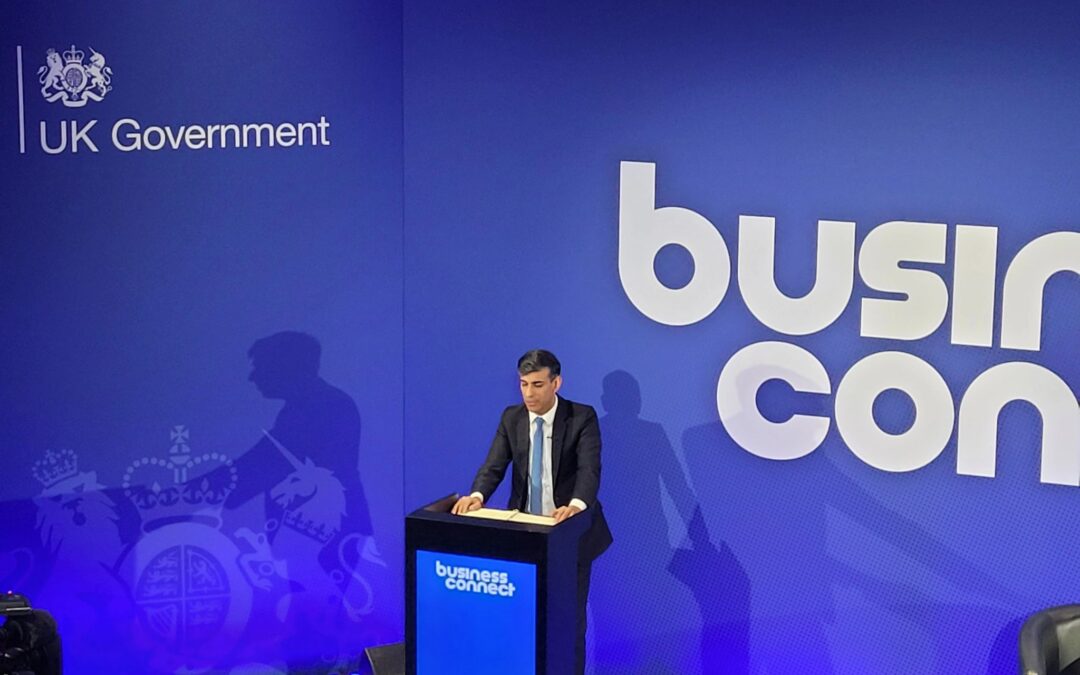
FIS attends SME Connect with Prime Minister

FIS attends SME Connect with Prime Minister

FIS CEO, Iain McIlwee was a guest at the Government’s Business Connect Conference this week where The Prime Minister announced a reform package to support small businesses.

Key announcements include: 

  • From 1 April, the Government will fully fund apprenticeships in small businesses by paying the full cost of training for anyone up to the age of 21.
  • The amount of Apprenticeship Levy funds that employers can transfer to other businesses will be increased from 25% to 50%.
  • The Government will increase the thresholds which determine whether a company qualifies as a small or medium‐sized company by 50% and remove a number of reporting requirements.
  • New taskforce to be established to boost private investment in women-led businesses and make the UK the best place in the world to be a female founder.

Prime Minister Rishi Sunak said:

“Whether it’s breaking down barriers and red tape for small businesses, helping businesses hire more young people into apprenticeships and skilled jobs or empowering women to start up their own businesses – this government is sticking to the plan and leaving no stone unturned to make the UK the best place to do business. Taken together, these measures will unlock a tidal wave of opportunity and make a real difference to businesses and entrepreneurs across the country.”

Education Secretary, Gillian Keegan said:

“This Government has built a world-leading apprenticeship system from the ground-up – with apprenticeships now available in around 70 per cent of all occupations. Apprenticeships are a fantastic way for businesses to develop the skills they need, and these new measures will help more businesses and young people benefit from them.  Our plan to deliver a high-growth, high-skilled economy is working, with more opportunities available to young people than ever before.”

Secretary of State for Business and Trade Kemi Badenoch said:

“Almost every job in the UK is owed to what is, or what previously was, an SME. They are the engines of economic growth for this country..   Whether it’s through cutting red tape, unlocking investment or lowering business costs, today’s announcements show that this government is committed to doing all it can to turbo-charge SMEs so that they can go further and faster than ever before.”

FIS CEO, Iain McIlwee responded:

“There were some positives to take away from Monday, but I am not convinced that the new apprenticeship fund is a game changer. It does, however, simplify the funding mechanism for apprenticeships – that is a good thing. The focus on women in business is important, but the discussion on finance was sadly quite remote for construction and I am not convinced will bring us anything tangible.

My underlying concern is that we are in election season now, we are getting sweeties and headline grabbing policies when we need vision and a clear plan. We have a failing housing strategy, we have dwindling numbers of trade apprenticeships and finance for construction is in short supply.

Construction is a key enabler and fundamental driver for economic growth. This was a good opportunity to raise questions and encouraging attempt by Government to engage with business discuss SME support, but came up a bit short for me. We need a clear long-term economic strategy that we can buy into and plan around. We also desperately need procurement reform to support SMEs in construction and free up investment”.

FIS CEO Iain McIlwee’s comments at the conference were covered in this Financial Times Article

See the FIS Manifesto for Construction Here

CIJC Promulgation Notice

CIJC Promulgation Notice

The Construction Industry Joint Council (CIJC) has released an updated Promulgation Notice to account for the rises in the National Minimum Wage and National Living Wage starting from April 1st. The General Operative rate will be raised to £11.44 per hour, and the Apprentice rate for 19 to 20-year-olds will be increased to £8.60 per hour.