0121 707 0077

The HSE has issued a safety alert regarding KN95 masks

The HSE has issued a safety alert regarding KN95 masks

A substantial number of face masks, claiming to be of KN95 standards, provide an inadequate level of protection and are likely to be poor quality products accompanied by fake or fraudulent paperwork. These face masks may also be known as filtering facepiece respirators.

KN95 is a performance rating under the Chinese standard GB2626:2006, the requirements of which are broadly the same as the European standard BSEN149:2001+A1:2009 for FFP2 facemasks. However, there is no independent certification or assurance of their quality and products manufactured to KN95 rating are declared as compliant by the manufacturer.

Personal protective equipment (PPE) cannot be sold or supplied as PPE unless it is CE marked. The only exception is for PPE that is organised by the UK Government for use by NHS or other healthcare workers where assessments have been undertaken by HSE as the Market Surveillance Authority.

Action required

KN95 must not be used as PPE at work as their effectiveness cannot be assured.

Masks that are not CE marked and cannot be shown to be compliant must be removed from supply immediately. If these masks have not been through the necessary safety assessments, their effectiveness in controlling risks to health cannot be assured for anyone buying or using them. They are unlikely to provide the protection expected or required.

If any are CE marked, suppliers must be able to demonstrate how they know the documentation and CE marking is genuine, supported by Notified Body documentation showing compliance with the essential health and safety requirements as required by the Personal Protective Equipment Regulations (EU) 2016/425.

Relevant legal documents

  • Personal Protective Equipment Regulations (EU) 2016/425
  • Personal Protective Equipment (Enforcement) Regulations 2018

Personal Protective Equipment (PPE)/Respiritory Protective Equipment (RPE)

FIS COVID-19 Guide to the Selection of Personal and Respiratory Protective Equipment
With PPE / RPE in short supply and a variety of often conflicting information and advice, FIS has produced this guide to help companies to select the right PPE and manage common construction hazardous substances e.g. dust in an environment with the added complexities of protection against COVID-19.

What to do when an Employee has COVID-19 Symptoms or needs to Self-Isolate

What to do when an Employee has COVID-19 Symptoms or needs to Self-Isolate

In the case of a suspected case of COVID-19

Many business owners will in the coming weeks be confronted with a worker who is displaying symptoms of COVID-19.  Soldiering on is not an option and we must continue to re-enforce at every opportunity that an individual should not go to the workplace if they:

  • are unwell with coronavirus symptoms
  • are told to self-isolate by a government test and trace service, because they’ve been in close contact with someone who’s testing positive
  • need to self-isolate because someone in their household has symptoms

If they’re already at work and displaying symptoms, swift action and leadership is essential and they should be advised:

  • immediately to go home
  • avoid touching anything, and wash their hands regularly
  • cough or sneeze into a tissue and put it in a bin, or if they do not have tissues, cough and sneeze into the crook of their elbow
  • use a separate bathroom from others, if possible
  • avoid using public transport to travel home, if possible
  • The worker should be advised to arrange a test as soon as practicable

The workplace does not necessarily have to close and the Government has produced cleaning advice.

Remember this is likely to cause anxiety for the person in question, so it is important to be supportive and sensitive to this.

How to manage colleagues who have been in close proximity

You need to act quickly to minimize the risk of the disease spreading.  You will need to ask the worker who in the business they have been in “close contact” with within the prior two weeks (closer than 2m for longer than 15 mins).

Workers will be required to isolate if they:

  • have coronavirus symptoms and are awaiting a test result
  • have tested positive for coronavirus
  • are a member of the same household as someone who has symptoms or has tested positive for coronavirus
  • have been in close recent contact with someone who has tested positive and received a notification to self-isolate from NHS test and trace.

If they are working in a “bubble” then you may decide to limit the risk of further spread to ask the entire bubble to self-isolate whilst clarity is sought.  Further guidance on how to manage this situation moving forward is included in the section on Testing and Tracing.

You need to be mindful of the need to respect confidentiality and that you should not reveal the potentially effected worker’s identity.

When else might a member or staff be required to self-isolate?

If a government ‘test and trace’ service tells someone they’ve been in close recent contact with someone who has tested positive, they must self-isolate for 14 days. If they develop symptoms, everyone else in their household must self-isolate for 14 days.

If someone lives in a household and is the first to have symptoms, they must self-isolate for 7 days. Everyone else in their household must self-isolate for 14 days.

If during this time your are tested and the result is negative, the individual and other household members no longer need to self-isolate.

What if a staff member is reluctant to be tested?

An implied term within an employment contract is that an employee has a duty to obey lawful and reasonable instructions given the employer.

Whilst there is no formal case law to confirm this, in the case of COVID-19, both the employer and employee also have a duty to safeguard the health and safety of co-workers.   As a consequence unreasonable refusal to take a test could be deemed to constitute a breach of their employment contract and be followed up as a disciplinary action.

In lieu of a test, any employee displaying symptoms should follow instructions to self isolate.

In the case of a subcontractor, you would need to refer to the terms of your contract.  It is advisable to remind them on the potential implication of their actions on colleagues who may have been exposed.

Information on Testing and Tracing

Details of the government test and trace services are available here:

We are advised at the time of writing (11th June) that testing can take up to 48 hours to arrange, but results are typically available within 12 hours.

Anyone who tests are positive will be contacted by the NHS test and trace service or local public health teams via a text, email or by phone. They will be asked for the contact details of anyone they’ve been in close proximity to and about places they have visited. Anyone considered at risk of catching the virus will then be contacted and told to self-isolate for 14 days whether they have symptoms or not. The rest of their household does not have to self-isolate unless someone in the house becomes ill.

Testing and tracing is a public health measure, intended to inhibit the spread of the virus as the country slowly comes out of lockdown. It could potentially reveal hotspots where the infection rate is higher and the government has said this information could lead to ‘local lockdowns’ to tackle flare-ups in towns, schools or workplaces.

An NHS Covid-19 contact-tracing app is currently being trialled that will also (anonymously) alert users when they have been in close contact with someone identified as having been infected by the virus.

Supporting staff who need to self-isolate

If someone needs to self-isolate, it’s good practice for employers to:

Depending on someone’s circumstances, they might have to self-isolate more than once during the coronavirus pandemic. Employers should support them in the same way each time.

In these situations, the employer should again look to see whether there are any options for working from home.  If this is not possible, it is advisable, in the case of an employee, to treat as a suspension and pay the employee as normal.

Supporting employers with a workplace outbreak

If multiple cases of coronavirus appear in a workplace, an outbreak control team from either the local authority or Public Health England will, if necessary, be assigned to help the employer manage the outbreak. Employers should seek advice from their local authority in the first instance.

How does Statutory Sick Pay (SSP) Work

Employees in self-isolation are entitled to Statutory Sick Pay for every day they are in isolation, as long as they meet the eligibility conditions.  Information for employers on reclaiming Statutory Sick Pay is available here.

The FIS is seeking clarification on whether SSP can be claimed if an employee is suspended due to contact as a cautionary measure, but is not displaying symptoms.  Currently the criteria on the HMRC website states:

You must keep the following records for 3 years after the date you receive the payment for your claim:

  • the dates the employee was off sick
  • which of those dates were qualifying days
  • the reason they said they were off work – if they had symptoms, someone they lived with had symptoms or they were shielding
  • the employee’s National Insurance number

You can choose how you keep records of your employees’ sickness absence. HMRC may need to see these records if there’s a dispute over payment of SSP.

If the worker is self-employed and hence not eligible for SSP through the “employer” and are advised to self-isolate, they would be eligible to make a claim for Universal Credit (UC) or new style Employment and Support Allowance.  More information on how to claim is available here.

RIDDOR reporting of COVID-19

You should only make a report under RIDDOR when when it is confirmed that a worker has been diagnosed as having COVID-19 attributed to an occupational exposure to coronavirus.  This should be reported as a case of disease.  It is recommended that you contact the HSE to advise of your particular circumstances to ensue that it falls under the RIDDOR requirements.

You can access the FIS COVID H&S Toolkit here

You can access the FIS COVID Employment Toolkit here

If you have any questions not answered in this article, please send them in to info@thefis.org or call our helpline on 0121 707 0077.


 

Green Light for Phase 2 of Return to Construction Works in Scotland

Green Light for Phase 2 of Return to Construction Works in Scotland

The First Minister has announced today that the construction sector will be now be allowed to move to Phase 2 in its restart plan from today provided that businesses follow guidance on the safety and welfare of the workforce and the public. This will include work carried out in domestic properties.  This announcement is in line with the industry-agreed six-step phased model for the return of the construction sector:

  • Phase 0: Planning
  • Phase 1: Covid-19 Pre-start Site prep
  • Phase 2: ‘Soft start’ to site works (only where physical distancing can be maintained)

This phase begins when the site preparations are complete and when it is safe to do so in line with public health advice. It will consist of a progressive return of a proportion of the original workforce to ensure that extended inductions, including site tours to explain the new arrangements for hygiene and physical distancing, are able to be carried out.

The health and safety of the workforce is of paramount interest to the sector and there will be a phased return of a proportion of the workforce, brought back in “batches” to allow a high supervisor to worker ratio. This will allow extended inductions and site tours to familiarise the workforce with the new arrangements and allow time for those to become “the new normal.”

As explained above, the number of workers able to return will depend upon the space available on site (both external areas and floorplates, if a building) and the welfare facilities that have been provided. Contractors will have to adjust their site facilities and work planning to ensure that physical distancing requirements are able to be met at each stage. During this phase, due to the shortage of medical style PPE supply, only work that can be carried out within physical distancing parameters or using protective barriers, will be carried out. Risk assessment approaches will still be used to control the hazard of Covid-19 but if this shows that close working is still required and that protective barriers would be ineffective, that work will not be carried out until supplies of medical style PPE are restored to normal. This means that some tasks will not be able to be carried out, although the industry will make strenuous efforts to develop innovative ways of completing critical tasks, working within the new parameters.

  • Phase 3: Steady state operation (only where physical distancing can be maintained)
  • Phase 4: Steady state operation (where physical distancing can be maintained and/or with PPE use)
  • Phase 5: Increasing density/productivity with experience

The latest announcement, moving to Phase 2 of the plan provides an opportunity for businesses to return to site work on a “soft-start” basis. It also allows businesses to undertake all forms of work in domestic properties.

Full details of the phased plan are available here.

Further details to support H&S are provided in the FIS H&S Toolkit Here.  This includes specific site operating procedures for Scotland and excellent additional advice developed through the CICV Forum and the FIS COVID 19 H&S Task Group.  FIS has also developed a Restart Risk Management Checklist for members here which has also been updated today in line with new advice available on what to do if a worker exhibits symptoms of COVID-19.

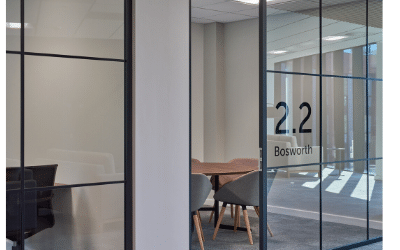
BACK TO WORK: FIS releases guide on how partitioning can help manage social distancing

BACK TO WORK: FIS releases guide on how partitioning can help manage social distancing

As more businesses prepare for staff to return to work in offices, addressing social distancing, hygiene and creating a safe and comfortable working environment will be of vital importance.

To ensure companies keep staff protected from the potential spread of COVID-19, we have produced an essential information guide on using partitions and screens to support social distancing guidelines.

The FIS Information sheet, ‘How partitioning can help manage social distancing’ provides comprehensive information on the steps required and what should be considered when specifying partitioning and screens in the workplace. It looks at addressing and evaluating the individual needs of the workplace based on staff occupancy, types of partitioning systems along with aesthetics and performance considerations, ventilation requirements, ironmongery and how to organise the installation.

The information sheet describing the ranges of partitioning systems is available from the FIS Knowledge Hub here.

Virtual opportunities with the Manchester Construction Skills Network

Virtual opportunities with the Manchester Construction Skills Network

The Work and Skills Team at Manchester City Council have been working on a number of different projects whilst continuing to support businesses and residents across Manchester.

The closure of schools and community groups, as well as the wider consequences of the lockdown, have meant that at least in the short term many organisation’s corporate social responsibilities may have been adapted or put on hold altogether; however with the construction industry slowly getting back up and running and the country exiting lockdown we hope that soon you and your colleagues will be able to pick up some semblance of normal and regular work.

The Work and Skills Team at Manchester City Council has a number of current opportunities and avenues of work for Manchester businesses to explore. Most of these opportunities are now virtual:

STEM Ambassador Training
This is an opportunity to sign up as a STEM (Science, Technology, Engineering, Maths) Ambassador, run through the Science & Industry Museum, Castlefield, where you can give as many hours over the year as you like. STEM Ambassadors are from a wide range of jobs and backgrounds and are there to enrich young people’s knowledge of the range of STEM roles through a variety of activities in and out of the classroom. This role will involve completing a DBS check and a 45 minute online induction. Further information is available here.

Brightside
If you want the chance to inspire a young person and offer them knowledge and guidance then becoming a Brightside mentor may just be the right thing for your organisation. Brightside online mentors come from a variety of sectors with varying degrees of experience, but they all have in common a willingness to promote social change through mentoring. To find our more visit Brightside’s website. Brightside also offers you the opportunity to give groups of young people online talks; you can read more about this here.

The Manchester College Virtual Work Experience
In response to COVID-19 and its impact on learners, The Manchester College have begun to offer virtual work experience to its students so as to ensure that learners are still gaining a valuable insight into the world of work whilst remaining safe in their own homes. If you would be interested in getting involved with this exciting and innovative new project, you can contact Faye Chilekwa at FChilekwa@tmc.ac.uk

Your Offer to Schools
If you have any particular offers that you would like to make to schools and colleges across Manchester, these can be included in the weekly CEIAG newsletter. If you have other ways in which you want to get involved, contact m.obrien1@manchester.gov.uk

FIS Supports launch of a major consultation on the future of construction in Scotland

FIS Supports launch of a major consultation on the future of construction in Scotland

The CICV Forum has launched a major consultation among its members to discover what stakeholders want for the Scottish construction industry after COVID-19 – and how to achieve it.

With companies beginning a phased return to work, the wide-ranging questionnaire addresses multiple issues which have not gone away during the pandemic and suggests that the sector cannot realistically go back to the way it was.

The consultation is the latest in a series of initiatives from the Forum, which has been at the forefront of information dissemination to the sector throughout the COVID-19 crisis, and which has become for many enterprises the first port of call for clarity of advice.

Forum chair and SELECT Managing Director Alan Wilson, said: ”All too often we are told that a body or organisation is the ‘voice’ of a sector but to be the voice, first of all you must listen to what members are saying.

“Being the ‘ears of the industry’ is a concept often sadly forgotten and this piece of work aims do just that – listening to what the industry wants before suggesting options for change.”

Led by Consultant Len Bunton, the consultation was compiled with the input of four leading quantity surveying firms, as well as Ian Honeyman, Commercial Director of the Scottish Building Federation, and Ken Lewandowski, former local chairman of Clydesdale Bank.

Mr Bunton said that, for everyone involved in construction, the ultimate objective for the post-pandemic future must be an industry which is not only fair and transparent but allows contractors and the supply chain to operate profitable businesses.

He said: “The questions in the consultation will be put to the many trade and professional bodies in the Forum, as well as their members. The aim is to focus on the step changes which are necessary, the main problems and the potential solutions.

“We want to look at the endemic problems of low tendering, no margins and the lack of regard for competency and experience. Serious cashflow and payment issues, poor quality and health and safety probelems are also consistent concerns for the industry.

“We also need to consult with public and private sector clients who are the lifeblood of the industry, as their investment creates employment for the construction sector in Scotland.”

Mr Bunton added: “The consultation makes the point that the CICV Forum, which was quickly and efficiently assembled to deal with the ongoing effects of the shutdown, has demonstrated the desirability of disparate parties coming together to work for the mutual benefit of the sector.”

The Forum, made up of trade associations (including FIS), professional services bodies, companies and individuals, stepped into the fray immediately in March with advice on how to operate safely while carrying out emergency or essential work.

It has since been drawing on the collective expertise of its members to maintain a steady supply of information and practical advice to the sector as well as carrying out surveys, producing animations and posters, hosting webinars and speaking regularly with Government ministers.

  • The consultation was initially issued to members of the Forum only. If you would like to submit your thoughts about the future of the Scottish construction sector, please download the questionnaire here and send initially to iainmcilwee@thefis.org by 19 June to enable collation of responses.
Post Covid-19 Revival Funding

Post Covid-19 Revival Funding

Launch of Edge Post Covid-19 Revival Fund – How to build back better

The Edge Foundation has announced the launch of the Edge Post Covid-19 Revival Fund. This is a one-off fund with up to £250,000 of grant funding available.  Applications are welcomed for grants of between £10,000 and £50,000.  The purpose of the fund is to address the educational challenges arising from the aftermath of the Covid-19 crisis.  The fund will be a responsive programme of grant funding, open to institutions and not-for-profit organisations working in the educational sector to support the development of projects and initiatives to revive education and support the sector to build back better.

For full details visit https://www.edge.co.uk/projects/covid-revival-fund

FIS Supports launch of a major consultation on the future of construction in Scotland

Get Scotland Building – Unlocking the construction market with information

As of last week, the Scottish Government has allowed the construction sector to start work on preparing its sites for a safe return to work – Phase 1 on the industry Re-Start Plan (see information here) – and that industry has been asked to “consult with government to ensure it is safe to do so in line with public health advice” before starting Phase 2 on that plan – the” Soft Start” return to work.

To provide confidence that Phase 2 can begin evidence of the advance preparation of sites, in line with the new Site Operating Guidance and their own (or sector specific) procedures (see details in the FIS COVID-19 H&S Toolkit), it is critical now that industry share material through the Construction Leadership Forum in Scotland. Evidence shared with the Construction Leadership Forum will help them and, more importantly, government, gain confidence that the industry is preparing to start work safely.

Examples of the potential activities being sought, dependent upon the nature of the site, could include:

  • Installing new, or expanding existing, site welfare and toilet facilities
  • Installing hand washing/sanitiser stations
  • Alterations to form “one way” systems
  • Installation of Covid-19 signage
  • Marking 2m distancing on access routes throughout the site
  • Re-modelling office and meeting rooms for physical distancing
  • Cleaning of all site facilities and the workspace
  • “Road testing” all new systems prior to supply chain returning to site

The “evidence” that could include photographs, videos, written reports (examples of RAMS), site plan changes management plans, completed checklists and customer testimonials. The Construction Leadership Forum will be seeking sample evidence across a wide range of project types and situations.

Any information should be sent initially to CICV Forum member and FIS CEO iainmcilwee@thefie.org who will arrange for it to sent to the Construction Leadership Forum to collate and provide as evidence.  Additionally, in the spirit of collaboration, if you are inclined to share more broadly as evidence of good practice through the Construction Leadership Forum members and/or included on the FIS Community H&S Best Practice Gallery please let us know when you submit the information.

Visit the FIS H&S COVID-19 Toolkit Here

What to do when an Employee has COVID-19 Symptoms or needs to Self-Isolate

Latest advice helps companies preparing to unfurlough staff

The complex question of how to bring workforce safely off furlough and back to work is examined in detail in the latest guidance to be issued by the CICV Forum in Scotland.

With the Scottish Government authorising a phased easing of the lockdown rules, the Forum’s comprehensive 22-page document, Returning from Furlough, provides a practical step-by-step overview of how employers should bring workers back to full employment.

It is the latest in a series of initiatives from the Forum, which has been at the forefront of construction advice throughout the pandemic, becoming the first port of call for many enterprises seeking clarity.

Fiona Harper, Director of Employment and Skills at Forum member SELECT, said: “The past few months have been a particularly stressful time for both employers and employees, but we are now approaching the stage where firms may be looking at the process of how to ‘unfurlough’ their staff.

“Our latest guidance, therefore, looks in detail at the options that all parties face now that the Coronavirus Job Retention Scheme has been extended until October and employers will be asked to begin to share the burden of paying salaries with the UK Government.”

The latest guidance covers a wide range of issues and examines subjects such as:

  • the timeline for bringing furlough to an end
  • when it can be ended
  • the steps to keep furloughed workers safe
  • measures to ‘unfurlough’ workers
  • ‘unfurloughing’ and ‘re-furloughing’
  • potential refusal to return
  • mental health of staff.
  • The document also supplies useful letter templates covering the long-anticipated restart, as well as any health and safety preparations and a questionnaire to help gather information about the process.

Iain McIlwee, CEO of Forum member of the Finishes and Interiors Sector, said: “This is an excellent guide that brings real clarity to an incredibly complex subject. Whilst it is targetted at Scotland, it is relevant for all in the UK. One thing we are learning in recent weeks is that restarting is more complex than stopping and it is simple and clear guidance like this that is essential to helping companies feel their way forward. The CICV has been one of the positives that I have drawn from recent weeks, it has been open and collaborative and drawn on the strengths of the group. Huge thanks to Vaughan of the SBF who chaired it, to Fiona and the other members of this sub group for a job well done.”

The Forum, made up of trade associations, professional services bodies, companies and individuals, stepped into the fray immediately in March with advice on how to operate safely while carrying out emergency or essential work. It has since then been drawing on the collective expertise of its members to maintain a steady supply of information and practical advice to the sector as well as carrying out surveys, producing animations and posters, hosting webinars and making appeals to Government Ministers.

You can download the Guide via the FIS COVID-19 Employment Toolkit (see section on Furloughing)