
by Clair Mooney | 26 May, 2022 | Skills
CITB has published its Business Plan 2022/23 setting out how it will invest over £233 million to support the industry to address its skills challenges. The plan is focussed on three key areas: responding to the skills demand, developing the capacity and capability of training provision, and addressing future skills needs.
This comes at the same time as the CITB Levy rates are announced to be returning to pre-pandemic levels. The Levy Order 2022 has been approved by Government, which means the CITB Levy rates will revert to 0.35% for PAYE and 1.25% for Net CIS.
FIS Chief Executive Iain McIlwee said:
“Whilst the FIS membership voted against concensus, the wider vote didn’t follow and the organisation now has the statutory support it needs to continue to collect the levy. It is important from here that we work with CITB to ensure, not that we all get our money back, but that our investment in levy is returned in spades to help us to address the profound skills and labour shortages that we have and that we address the challenges that are making recruitment a struggle. The three core pillars in here around attracting and retaining people, focussing on the capacity and capability of training provision and looking at the wider areas of construction management are all fundamental to success for the sector and so FIS will be working with CITB to translate these for our sector and ensure our members are aware of and able to access all the support available in an efficient and that it is better targeted to support the needs of the flexible workforce that is construction. One thing we learned from our recent recruitment interventions is that there is a lot of support out there, some of it excellent, but that we are not consistently using it as a community.”
This plan heralds a new era for CITB, not only through its simplified look and feel, but for how they will approach their role in supporting the construction industry to address the skills challenges it faces. First it addresses the skills demand at a local level by putting training infrastructure in place to meet the changing needs of industry. Second, it explores where the greatest value for the Construction Industry Levy will be placed. And third, it examines where CITB can pull the levers to transformation, so that training is directed at meeting short and long-term industry challenges.

by Clair Mooney | 26 May, 2022 | Main News Feed
ISG is the latest FIS member to adopt the Common Assessment Standard for its pre‐qualification (PQ) requirements.
ISG’s Head of Supply Chain Rob Scriven commented that “removing the burden of administration and eliminating inefficient practices is a win for us all”. ISG joins a growing list of organisations using the Common Assessment Standard, and members of the supply chain can now obtain just one certification from any of the four Recognised Assessment Bodies ‐ Achilles, CHAS, Constructionline and CQMS ‐ in order to tender for work with them.
The Common Assessment Standard has two levels of certification ‐ desktop and site‐based ‐ and companies should apply for the appropriate level depending on their trade, size and the requirements of their clients.
FIS CEO Iain McIlwee stated: “It is encouraging to see members getting behind the CAS. We talk about waste in construction all the time, but at the heart of our industry there is a pointless duplication of effort built around competing PQQ processes. Pre-qualification in principle should save us time and efforts to standardise and adopt a common approach are to be applauded”.
What this means for FIS Specialist Sub contractors:
When working for ISG they will not be specifying a specific PQQ process you will be able to use any of the four recognised CAS assessment tools in order to qualify for work.
FIS ran a webinar on the benefits of the Common Assessment Standard in February 2022
Linked news: May 2022
Common Assessment Standard updated to reflect UK sanctions list

by Clair Mooney | 25 May, 2022 | Main News Feed
The CICV is calling on the Scottish Government to intervene and help address concerns raised by Scottish construction businesses over the introduction of the new UK Conformity Assessed (UKCA) mark.
The unique alliance’s Post-Brexit and Trade Group has written to Business Minister Ivan McKee (pictured above) requesting assistance as CICV businesses grapple with new UKCA conformity assessment and certification arrangements that replace CE Marking after 31 December this year.
The UK Government is introducing a new “UK Conformity Assessed” mark for goods placed on the market in Great Britain from 1 January 2023. Ministers seek new powers to end the recognition of CE Marking in favour of UKCA Marking in the recently passed Building Safety Act.
CICV has highlighted the deep frustration among manufacturers and importers that there is at present no route to accept historic test data and reports from EU Notified Bodies for use in complying with UKCA Marking.
This poses a particular problem, it says, for goods in relation to the Assessment and Verification of Performance (AVCP) System 3. If manufacturers and distributors want to continue selling their goods in Great Britain, they have to be re-tested and certified by an accredited UK Approved Body.
The CICV is concerned at the lack of progress between the UK Government and individual companies, trade associations and certification and testing bodies to prepare properly.
It argues that there is insufficient testing capacity and capability for manufacturers to have their goods assessed and certified for the British market, using UK-based Approved Bodies, by the end of this calendar year.
The letter says: “There are simply not enough approved companies or qualified people to conduct the huge number of assessments and certifications required to gain UKCA Marking in time.
“For example: there are no UK Approved Bodies able to test:
- insulation: most types of pipe insulation and duct insulation;
- trench heating: most types for residential, commercial & municipal buildings;
- renders: several types of synthetic renders and render-based brick slips;
- glass: several types of coated and laminated glass inc. mirrors;
- plastic pipes: several types of thermoplastic pipes for underground drainage.
“For other goods, there are scant few UK Approved Bodies available:
- radiators: only one approved company whose entire annual capacity is fully booked;
- fire doors: only two approved companies for smoke leakage tests;
- sealants: only one approved company – most tests take up to 3 months to allow for curing.”
The CICV says that with continued uncertainty about as-yet-unknown future regulations, large capital costs for SMEs to invest in more or new equipment and facilities and next-to-no time available to find and train specialist staff, there is little appetite for businesses to take the plunge.
The letter says: “Whitehall has told businesses to prepare for the end of CE Marking on 31 December 2022. Legislation is required but the Department for Levelling Up, Housing and Communities (DLUHC) cannot give a firm date for this.
“The risk is that faced with ongoing difficulties – like higher raw material, energy, labour and transport costs and other inflationary pressures – businesses do not bother, hoping somebody will come up with answers in time.”
It continues: “CICV says the situation is fast becoming serious for British manufacturers who are already spending hundreds of thousands of pounds on testing to both UK and EU standards. With eight months to go, there are too many unresolved questions about post-2023 arrangements.
“The preferred solution is for ministers to pause now that the Building Safety Act is on the statute book and take heed of what industry is telling them. The CICV view is that deferring the 31 December 2022 date is obvious and necessary and UK ministers should move quickly to say so and dispel uncertainty.
“Drafting the statutory instruments to bring in new provisions is critical and must be done correctly to avoid unintended consequences that harm British businesses. It is sensible and pragmatic to delay the secondary legislation to allow business to prepare properly.
“If the situation described is not resolved (and soon), the logical conclusion is that goods cannot be sold after 1 January – and construction, housebuilding and property RMI will slow down or stop.”
The letter concludes with the CICV asking the Scottish Government to recognise the concerns expressed and to see if there is scope within devolved powers to assist. “Any representations you can make to the UK Government on our behalf would be gratefully appreciated”, it adds.
Alan Wilson, MD of SELECT, the representative trade body of Scotland’s electro-mechanical sector, and who chairs the CICV, said: “With this submission to Mr McKee we are hopeful that that the Scottish Government can bring its influence to bear on this matter and allay the well-founded fears of CICV members.”

by Clair Mooney | 23 May, 2022 | Main News Feed
In this landmark marketing report, NBS and Glenigan deliver the results of their first joint marketing survey, the ‘Construction Manufacturers’ Marketing Index’.
The report covers:
- Trends for using particular channels or tools
- Differences in approach within the industry and how it compares with other industries
- Experiences and methods used by different companies
- Marketing budgets – and how they are being applied across marketing channels
It also contains people’s perceptions of marketing in construction, and what the future marketing landscape could look like for the industry.
FIS Chief Executive Iain McIlwee said:
“It is ever more interesting to compare how communication is developing. Design and specification continues to evolve almost as fast as the channels and methods open to reach them – it isn’t getting any easier to target information in the right format in order to win and protect specifications. It is great to be collaborating with Glennigans, NBS and other leading trade bodies to deepen our understanding and help better target resources of our members”.
This report is incredibly valuable to those supplying products to the construction industry: a way of benchmarking your marketing against others and, perhaps, learning something new that you can apply in the year ahead.

by Clair Mooney | 20 May, 2022 | Membership
FIS has a suite of Specifiers Guide, and earlier this month we published the fourth in our series focussing on Partitioning. You can access this guide, along with others covering Ceilings and Absorbers, Drylining and SFS here. Two of these guides have now gained RIBA CPD accreditation, and we will be putting the others forward for accreditation in the coming months.
These guides work well when they are included in proposals and project plans to demonstrate how to best approach a project. They are also good differentiators when in competition with a non-member, and are an excellent introduction to new members of the team and any trainees and apprentices.
But our offering doesn’t stop there. We also have a dedicated Knowledge Hub packed full of resources for our sector. Our easy-to-use online library contains a wide variety of material, covering contractual and legal, technical guidance and quality standards, drawn from a broad range of sources. The Knowledge Hub is constantly expanding, with up-to-date and topical material added on a regular basis.
In addition a member of our in-house technical team is only a phone call away to offer support to help you navigate the complexity of contracting and supplying products to the sector.
by Clair Mooney | 20 May, 2022 | Building Safety Act
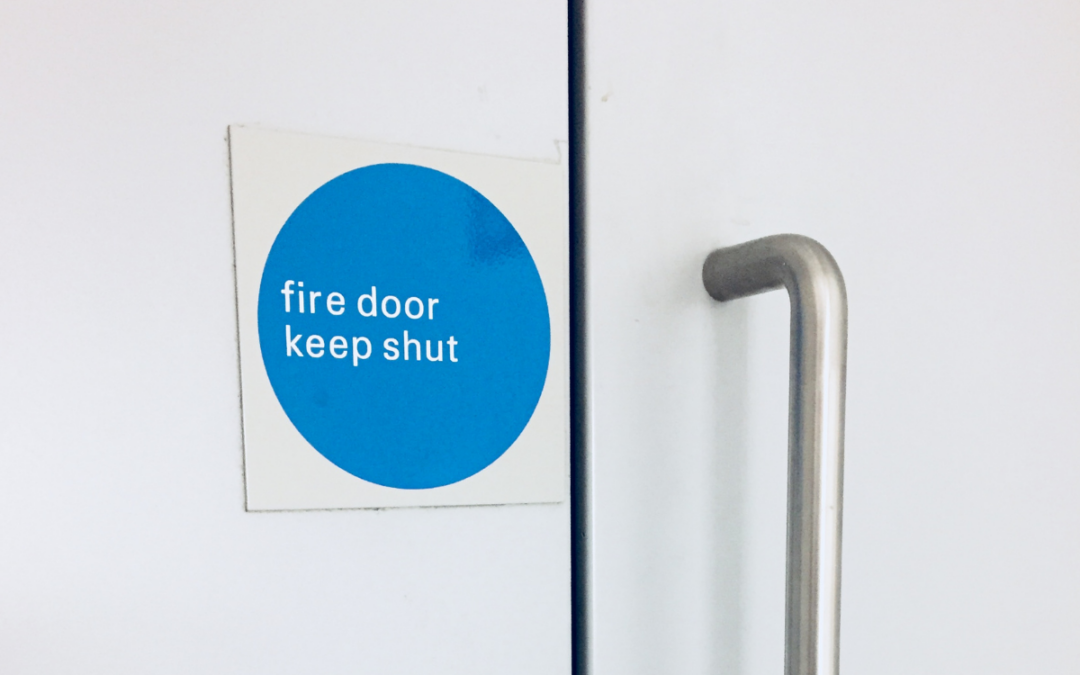
The Grenfell Tower Inquiry in the Phase 1 report noted that “Fire doors play an essential role in preventing or inhibiting the spread of smoke and toxic gases and in preserving the effective compartmentation of buildings.” The Inquiry noted that the fire doors in Grenfell Tower did not, through damage and/or disrepair, act in the way that they should so that they prevent smoke and gases from spreading. The Inquiry recommended (Recommendations 33.29 (a) and (b)) that the owner and manager of every residential building containing separate dwellings carry out an urgent inspection of all fire doors to ensure compliance with current legislative standards and that regular (no less than every three months) checks be carried out to ensure all fire doors are fitted with an effective self-closing device which is in working order. In addition, the Inquiry recommended (Recommendation 33.30) that all those who have responsibility for the condition of the entrance doors to individual flats in high-rise residential buildings (with unsafe cladding) be required by law to ensure these doors comply with current standards.
Prior to the Fire Safety Act 2021, flat entrance doors in multi-occupied residential buildings may not have been routinely considered as part of the fire risk assessment process. The Fire Safety Act 2021 has removed the legal ambiguity and confirms that flat entrance doors are in scope of the Fire Safety Order.
The Fire Safety (England) Regulations 2022 will make it a legal requirement from 23 January 2023 for responsible persons for all multi-occupied residential buildings in England with storeys over 11 metres in height to:
- Undertake quarterly checks of all fire doors (including self-closing devices) in the common parts; and,
- Undertake – on a best endeavour basis – annual checks of all flat entrance doors (including self-closing devices) that lead onto a building’s common parts.
The regulations will also require responsible persons to provide to residents of all multi-occupied residential buildings with two or more sets of domestic premises (that have common parts) information on the importance of fire doors to a building’s fire safety.
by Oscar Venus | 20 May, 2022 | Main News Feed
As you will have no doubt seen in recent news, the Government has announced it will introduce legislation to fix the Northern Ireland Protocol, which will act as a safeguard should the UK be unable to agree proposals with the EU through negotiations.
The legislation being introduced would remove customs processes for goods moving within the United Kingdom. It will allow businesses to choose to follow either UK or EU regulations under a dual regulatory approach, removing barriers to goods made to UK standards from being sold in Northern Ireland and cutting the processes that drive up costs and disincentives businesses. The legislation will fix issues so that people in Northern Ireland can benefit from the same tax and spend policies as everyone else in the UK. The UK has also made clear that goods which are destined for the EU will continue to undergo full processes applied under EU law as they do now and apply safeguards to avoid non-compliant products entering the EU Single Market.
You do not need to take any action now as we will continue to operate within current “standstill” arrangements, meaning you can move goods in exactly the same way as you do today, including existing grace periods and easements. Furthermore, you can continue to trade frictionlessly across the island of Ireland. The UK Government will be working closely with businesses as the new arrangements are developed and will communicate how any changes will work well before any changes come into effect.
Office for Product Safety and Standards

by Clair Mooney | 19 May, 2022 | Skills
The recent FIS regional events identified the challenge of retaining people in apprenticeships and training to the point of successful completion, it is estimated approximately 30% of those who start construction apprenticeships do not complete. There are a number of reasons for this, but key is ensuring that we have the management processes and support mechanisms in place to support young people in our businesses. It is widely acknowledged that organisations that have dedicated coaches and mentors experience higher retention rates across all levels of the workforce, but this isn’t easy to implement and there hasn’t been enough support and training to help.
The Strategic Development Network (SDN), a team of leading specialists in apprenticeships, technical education and workforce development has been working with Government and Industry Bodies to address this concern. SDN are hosting a one hour webinar on the role of the line manager and mentor on the 31 May. The focus will be on hosting young people in the workplace who are engaged on government backed schemes that prepare them for work, T-Levels and Traineeships, potentially the finishes and interiors sectors future workforce.
Here are the details:
The role of the line manager and mentor – hosting young people in the workplace – 31 May 2022, 2-3pm
In this 1-hour webinar, SDN will cover:
- The role of line managers throughout the placement
- Creating a mentoring culture and identifying suitable mentors
- Setting up an effective mentoring scheme – supporting young people to succeed in the workplace
- Staff development – mentoring, coaching and interpersonal skills
- Case study insights from those already offering industry placements
- The government support available to help you
There is no charge for this session. You can register your place here
FIS look forward to seeing you online.
by Clair Mooney | 19 May, 2022 | Building Safety Act
Building Safety – First stage complete in journey towards fully competent installer workforce
The construction and built environment sector must maintain momentum to ensure the competence of installation organisations and employees as a key report highlights ‘red flags’ amid wider progress on Building Safety.
A report has been published setting out the current state of competence arrangements for those installing products and systems in buildings. Prepared by members of Working Group 2, which was set up as part of the post-Grenfell Competence Steering Group, volunteers from Working Group 2 have worked with six pilot installer sectors – Dry Lining, Domestic Plumbing and Heating, Fire Detection and Alarms, Fire Stopping Specialist, Rainscreen Cladding, and Roofing – to benchmark existing competence arrangements.
This Pilot – Phase One stage sets a baseline to identify shortfalls and considers the changes needed to create competence frameworks that comply with the recommendations of Setting the Bar. In 2020, Setting the Bar outlined how industry must improve the competence of those procuring, designing, constructing, inspecting, assessing, managing, installing and maintaining higher risk residential buildings.
The report recognises that good practice exists in each of the six sectors that allows them to demonstrate elements of competence. Yet there are elements of each sectors’ arrangements that the working group has red rated, showing that significant work is required to meet the requirements of Setting the Bar.
Each sector will now move to develop sector-specific competence frameworks that play to existing strengths and close off any red flag issues raised in the report. This process – which will also develop a timeline and implementation plan for each sector – is expected to take six to nine months.
The report also calls on other installer sectors to begin their own competence journey now, offering guidance to help them do so which Working Group 2 has developed during the pilots.
Iain McIlwee, FIS Chief Executive who was a participant in the Dry Lining pilot, said:
“FIS has taken an active role in this work and will continue to work with our members and the wider sector to ensure that competency is understood, the support mechanisms needed to deliver a competent workforce are in place and that we are able to track, manage and reward competence effectively. We have championed and led the Dry Lining work because it is an important part of most building operations, it is a labour intensive process and frankly has been hugely undervalued in the construction process. This work is the building block, a fresh start not only to delivering a better competency framework, but helping to raise the profile and change expectations about the vital work that dry liners do. We do not underestimate the enormity of this task given the current socioeconomic backdrop, but do recognise that it is essential work that we must take on together.”
Mark Reynolds, Sponsor for the CLC’s People and Skills Network, said:
“Publication of Working Group 2’s latest report marks an important milestone in progress towards improved standards of installer competence in the built environment. The CLC will continue to do all we can to assist with the pilots and I would urge other installer sectors now to embark on their own competence journeys, drawing on the resources which Working Group 2 has provided.”
Nick Jarman, Chair of Working Group 2, said:
“There has been much collaboration since the formation of Working Group 2, focussed on how we can learn from the lessons of the past and forge a new pathway of improvement for the future with the objective of providing a safer built environment overall. I would like to thank sector representatives and my Working Group 2 colleagues for getting the pilot process to the point this report can be published. Working Group 2 looks forward to further engagement and collaboration with the wider installer sector to continue progress on this crucial workstream.”