
0121 707 0077

Long term uncertainty holding back investment for construction

Long term uncertainty holding back investment for construction

Total construction output in Great Britain is forecast to experience a slight decline of 0.3% in 2020, before a rise of 1.2% in 2021 according to the CPA Construction Forecasts January 2020. Political uncertainty and bad weather led to a slowdown in construction activity towards the end of last year, but the forecasts show little evidence to suggest that the General Election result will benefit the construction industry for the year ahead.

Whilst last year’s general election cleared up Brexit uncertainty for the near-term, certainty beyond the end of the implementation period from January 2021 continues to make large, up-front investments difficult to justify in areas such as prime residential, commercial offices and industrial factories. These high value sectors have seen falls in new orders since the 2016 referendum result, which has now started hitting activity on the ground. With the pipeline of work diminishing, there’s little in the form of new orders to replace projects completing in 2020.

The lack of clarity on the UK’s long term trading relationship with Europe explains why commercial offices and factories output is forecast to fall 4.0% and 10.0% respectively, following two years of decline in both sub-sectors. In addition, falling house prices in the south and softer growth in the north is affecting private house builder appetite to start new developments. Changes to the Help to Buy scheme from April 2021, which include restricting the scheme to first-time buyers and introducing regional price caps, are also expected to shift new builds away from higher value houses towards flats.

Despite an overall decline for construction output, the CPA’s Forecasts also show continued growth rates for the infrastructure sector, with major projects such as Crossrail, HS2, Hinkley Point C and Thames Tideway driving activity. Despite the review into HS2, work is already underway on initial contracts and the forecasts assume it will not stop. Although significant cost savings are likely to be needed on the project, the political importance of infrastructure in the North since the election result should not be underestimated. The construction of higher-value, automated warehouses continues to grow as well largely due to the wider structural shift towards e-commerce. With the associated decline of the high street, mixed-use developments led by a hotel or leisure facility with flats, shops and offices are emerging as a focus for future developments in town centres.

Commenting on the Winter Forecasts, CPA’s Economics Director, Noble Francis, said: “Construction activity has tailed off since last Summer with persistent rain affecting external construction. The main issue, however, was uncertainty, which hindered decision making, the signing of new contracts and new project starts on site.

“Looking at the year ahead, growth prospects for construction are fragile. Whilst the short-term certainty provided by a majority in the General Election does mean that day-to-day consumer spending will continue and a few more projects are likely to go ahead, further political and economic uncertainty beyond 31 December remains problematic for investment and activity. This is a particular issue in high value sectors such prime residential, office towers and factories, which require certainty to justify investment and where new contracts often take 12-18 months to feed into activity down on the ground.

“Prospects remain bright in areas such as warehouses and infrastructure. As ever though, government delivery of major infrastructure projects will be key to the fortunes of both the sector and the industry. Without this certainty, infrastructure activity is expected to remain flat and total construction output would be expected to fall by 0.9% this year.”

Download the CPA Construction Forecasts January 2020


For more market analysis visit www.thefis.org/membership-hub/memberbenefits/marketanalysis/

Fire stopping – Compatibility between pipes and fire and acoustic seals

Fire stopping – Compatibility between pipes and fire and acoustic seals

It has come to our attention that there is a potential issue where fire stopping is being installed around cPVC pipes.

Some fire stopping mastics have been found to react with the cPVC pipes leading to costly remedial work and disputes.

Our recommendation is where two or more systems come into direct contact, ensure that the system owners have been informed and that written evidence is supplied confirming their compatibility and long-term suitability.

This Compatibility between pipes and fire and acoustic seals will provide you with more details about this issue and guidance to avoid other issues when working with reactive (intumescent) seals.

Please contact FIS Technical Director Joe Cilia if you have any questions at joecilia@thefis.org

FIS maintains a technical team who work with the industry to set standards and to support members, specifiers and clients and works to raise quality in the sector. Full details and content can be found at www.thefis.org/knowledge-hub/technical/

Change is coming for non-government apprentice levy paying FIS members

Since the introduction of the Government Apprenticeship Levy in England, FIS has been listening to those affected and measuring the impact on a large part of its membership who are not required to pay the levy. It will come as no surprise to some of you, that access to local apprenticeship training provision was one of the major issues faced by a large proportion of members.

Part of the problem – sector training providers who would have normally educated your apprentices were put into two categories, levy paying and non-levy paying funded. The balance was heavily weighted towards levy paying access and it left many of our membership unable to access local provision.

As an intermediary organisation we have been reporting our sector finding to the National Apprenticeship Service and change is coming.

The Education Skills and Funding Agency (ESFA) is expanding access to the apprenticeship service to employers who are not one of the existing 22,000 apprenticeship levy-payers using the service. This will be of enormous benefit to 80% of the FIS membership.

FIS Skills Engagement Manager Amanda Scott said: “What this means to our members is non-levy payers will now have greater ownership, visibility and involvement with apprenticeships funding and access to a wider range of high-quality training providers. Funds will be open allowing for three apprentices per company during the testing phase. This will mean that SMEs will be in greater control of the apprenticeships that they engage with and will be of enormous benefit to 80% of the FIS membership in England.”

We will continue to update you regularly but here is the latest from the National Apprenticeship Service.

The early transition – from now until March – will be an initial test phase, during which time we will undertake large scale testing, seeking feedback from smaller employers and training providers. During the transition in 2020 we will continue to run contracts with training providers so smaller employers have a choice around how they access apprenticeship funding, joining the apprenticeship service when they feel they are ready.

During the test phase, additional funding will be made available for up to 15,000 new starts through the service.

As we enable smaller employers to use the apprenticeship service, we are introducing the ability for them to reserve funds for training. This will allow us to forecast, monitor and manage apprenticeships funding within the overall budget for apprenticeships. To manage a gradual transition from contracted training provision to employers arranging their own apprenticeships through the apprenticeship service, employers will initially be able to reserve funding for up to three apprenticeships.

For more information and how to access the service visit https://www.gov.uk/government/publications/skills-funding-agency-business-update/business-update-issue-51-january-2020 and see item 4

For further details please contact FIS Sector Skills Engagement Manager Amanda Scott amandascott@thefis.org

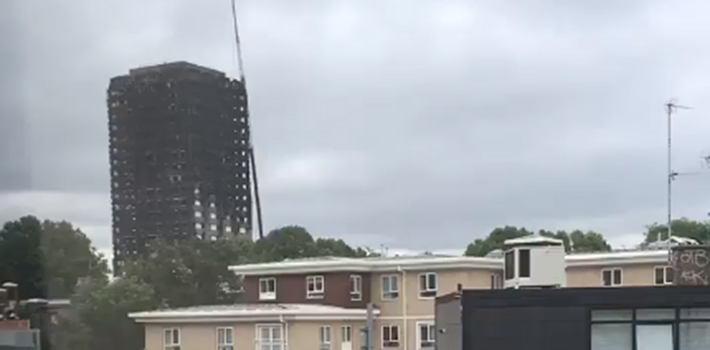
Government response to the Grenfell Tower Inquiry Phase 1

Government response to the Grenfell Tower Inquiry Phase 1

The Government’s response to the Grenfell Tower Inquiry Phase 1 Report sets out the steps it is taking to implement the report’s recommendations as well as the wider work it is doing to make building safer.

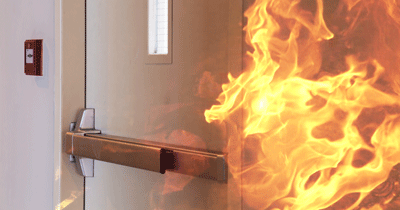
Key areas covered in this document relevant to FIS Members are an update on Fire Doors and the use of composite doors, a brief update on progress on the review of Building Regulations and the Fire Safety Order and, further highlighting of the need for tested and certificated options.  It is also interesting to note that sprinkler systems have been highlighted and that work is already underway to establish a new  immediate work will begin to establish the new Building Safety Regulator.  Overall it is a useful summary of where and how policy is and is likely to progress in the sector although there does not appear to be anything new in the report which has not already been actioned by Government.

A copy of this report can be viewed here.

This week a review of the impact of the ban on combustible cladding was also initiated.  You can find out more about this here.  FIS will be represented at a Round Table on this subject hosted by MHCLG next week looking at the impact on cavity trays in SFS systems. 

Fire Safety:  New and Consolidated Guidance on Fire Doors, Risk Assessments, External Cladding and Smoke

Fire Safety: New and Consolidated Guidance on Fire Doors, Risk Assessments, External Cladding and Smoke

Under the Government’s Building Safety Programme, MHCLG have issued a consolidating note bringing together all previously published Advice Notes No. 1 – 22 issued by The Expert Panel. This note is directed at building owners of multi-storey, multi-occupied residential buildings, but is likely to resonate across the wider market.

Much of the focus is on the external structure (including Advice Note 14 – assessment of non-ACM external wall systems, which has implications on SFS systems and has now been superseded by this revised advice). This note also covers smoke control and carrying out of fire risk assessments for residential buildings below 18m.  Another important element to draw out for members of the FIS is that the Guidance has an annex especially dedicated to fire doors that consolidates a range of best practice advice and looks at what to do when confronted with a nominal fire door in an existing building.

FIS Technical Director, Joe Cilia added “Since Grenfell there has been somewhat of piecemeal approach to guidance and advice and so pulling together in one place is helpful and will help.  Whilst this is a welcome body of work, there remains confusion, that is leading at times to conflict, and delays to projects and even examples where completed work is not being signed off. Our advisory service continues to be on hand to help members and where we can feedback these pinch points and areas of clarity back to MHCLG through our involvement with the Working Groups.

At FIS we recognise absolutely that this is the number one issue in construction and continue to support the dedicated Working Groups looking at competence in the supply chain.  We are also focussed on developing specialist best practice guidance wherever possible (including our soon to be published Service Penetrations Guide that we are developing with industry) because we work in a community where the need to raise standards based on shared values is understood.  We are keen, however, to see work on updating the Building Regulations themselves accelerated to ensure that risk is managed in all cases, not merely contractualised.  Until Regulation catches us up we are in danger of seeing the good getting better, but may not be addressing that part of the market that where clients and contractors look at cost first and are willing to cut corners at the expense of quality and safety”.

A full copy of the guidance document and relevant annexes is available here

 This week a review of the impact of the ban on combustible cladding was also initiated.  You can find out more about this here.  FIS will be represented at a Round Table on this subject hosted by MHCLG next week looking at the impact on cavity trays in SFS systems. 

UPDATE: Ceiling collapse at the Piccadilly Theatre

UPDATE: Ceiling collapse at the Piccadilly Theatre

It’s easy to make comparisons between a ceiling collapse in a historic building especially when they both occur in a theatre during a performance, but the collapse at the Piccadilly Theatre in November and the Apollo theatre in 2013 are markedly different.

The failure of the fibrous ceiling at the Apollo Theatre galvanised the theatre owners and managers to look again the condition of all the ceilings and worked with the FIS Heritage and Fibrous Plastering Working Group to develop methodologies to carry out structured inspections and reports following robust competency checks.

It appears that ‘The Piccadilly Theatre incident was caused by a sudden very large influx of water from ventilation contractors working on the exterior roof in the morning’, according to Mark White, Communications and Publication Committee Chairman of the Association of British Theatre Technicians. He added  ‘This water flooded the inside of the building, running down the stairs etc and the staff embarked on a massive cleanup operation to get the theatre more or less dry to admit the public that evening to a very popular show. They did not realise that some of the water had escaped into the ceiling void as none was visible during the day. Audience members reported the drips starting just before the show and the plasterboard came in about 40 minutes after curtain up.’

FIS Heritage and Fibrous Plastering Working Group Chair Jon Riley added: ‘Whilst not knowing anything about this particular theatre or ceiling, it does underline the importance of the recent Historic England Guidance, endorsed by FIS, ABTT, Theatres Trust, Historic Environment Scotland, Department of Communities & Cadw. A copy of this can be found on https://historicengland.org.uk/advice/technical-advice/buildings/inspection-and-maintenance-of-fibrous-plaster-ceilings/

Theatre managers and owners wishing to have an inspection carried out are encouraged to use a vetted FIS member and commission the report in accordance with these process notes.

£1.9 million support package for apprenticeships

£1.9 million support package for apprenticeships

A £1.9m support package for apprenticeships has been introduced in the Greater Manchester Combined Authority. 186 small businesses have received grants of £3,000 to help create new apprenticeship opportunities via Greater Manchester’s #SeeDifferent Small-to-Medium Enterprise Apprentice Support package, offering additional incentives to smaller employers and helping to remove barriers that may prevent them from creating apprenticeship opportunities.

Mayor of Greater Manchester Andy Burnham said: “This support package has already created a substantial number of opportunities for residents in the city-region and we hope to create even more as we move forward.

“Apprenticeships are crucial in bridging the skills gap and creating good quality employment opportunities which boost productivity. It’s vital that we continue to remove the barriers and make job opportunities in the city-region feel accessible to Greater Manchester residents, both young and old.”

Greater Manchester Combined Authority (GMCA) commissioned the Growth Company to develop and deliver an online apprenticeship Levy Matchmaking Service that ensures as many levy payers as possible transfer unspent funds to non-levy payers – negating the need for them to pay 5% co-investment costs. Since the launch, in August 2019, over £2 million has been committed by Greater Manchester’s apprenticeship levy payers which could support over 300 apprenticeships.

Large businesses are encouraged to pledge their unspent levy to the matchmaking service and can do so by visiting the Levy Matchmaking Service website.

Councillor Sean Fielding, Leader of Oldham Council and GMCA lead for Education and Skills said: “These results show just how important apprenticeships are to the city-region and that we are doing everything we can to help businesses make the most of them.”

“Improving the quality and growth of apprenticeships is a fantastic way to get people into work, allowing them to have the support they need to enter and sustain employment and with the chance to up-skill and progress in their careers. Apprenticeships are an excellent route for anyone looking to start, change or develop their careers.”

Work has been carried out to deliver the Stimulating Employer Demand for Apprenticeships (SEDA) project which has provided 515 workforce development plans that have been implemented across the city-region. The plans aim to highlight any skills gaps or need for upskilling across businesses, then decide how to access training for existing staff or recruit new staff using the apprenticeship model and taking advantage to the funding available to them.

GMCA is continuously working to improve the quality and grow the numbers of apprenticeships in Greater Manchester with approximately 22,250 apprenticeships started in 2018/19.

Regulation 38 Fire Safety

Regulation 38 Fire Safety

Guidance and links that you need to ensure that you are complying with the building regulations.

Regulation 38 is a requirement under Building Regulations to provide critical fire safety information to the ‘responsible person’ at the point of first occupation or completion of the project in buildings other than dwelling houses yet is often forgotten. It applies where building work consists of a building where the Regulatory Reform (Fire Safety) Order 2005 applies, which covers most if not all the work in the fit-out sector.

This technical note will provide you with the guidance and links that you need to ensure that you are complying with the building regulations.

Please email FIS Technical Director joecilia@thefis.org  if you have any questions.

How to improve the quality of internal finishes

How to improve the quality of internal finishes

To address the largest number of questions we receive about the quality finish of plastering and drylining, we have produced the a technical note titled: How to improve the quality of internal finishes.

 The key points to remember are

  • Start with the specification
  • Produce an achievable benchmark that is agreed by everyone and kept available for the duration of the project.
  • Ensure that the task lighting replicates the lighting including natural lighting that will be apparent in the finished work
  • Inspect the work from the centre of a room or minimum of 2mm from the wall without washing the wall with lights.

Please email FIS Technical Director JoeCilia@thefis.org if you have any questions.