
0121 707 0077

CPA responds to Autumn Budget and Spending Review 2021

There have been mixed reviews to yesterday’s Autumn budget and spending review, with Construction News referring to it as ‘something of a soggy souffle’. Responding Jeff May, Director of Government Relations and Business Development at the Construction Products Association (CPA) said:

“We think it is understandable that the focus of the Chancellor’s Budget today was on encouraging economic growth, fiscal discipline and resisting demands from the private sector for further expenditure, and rising inflation in all its forms triggering a vulnerability to interest rate rises. 

“We were disappointed to see little help for major industrial users with energy costs, or any further financial details on net zero strategies.  That said, we welcome a handful of relevant items in particular:  the announcements of a 12-month relief on businesses rate hikes arising from premises investment, the cancellation of the planned increase to the business rates multiplier, and the extension of the uplift to the Annual Investment Allowance will go some way to supporting manufacturers while we seek to exit the pandemic in the short-term.

“Given the pre-Budget announcements around various net zero and related sustainability strategies, along with the release in September of the National Infrastructure and Construction Pipeline, the major elements of spending for our sector appear set.  The key then, as always, will be delivery.  If industry and government can work together and address the supply side risks in particular – labour and skills shortages, energy prices, logistics bottlenecks, for example – then the economic stimulus from our sector in support of this Budget will be considerable.”

FIS members can read the full CPA response here.

Code for Construction Product Information and guidance published

Code for Construction Product Information and guidance published

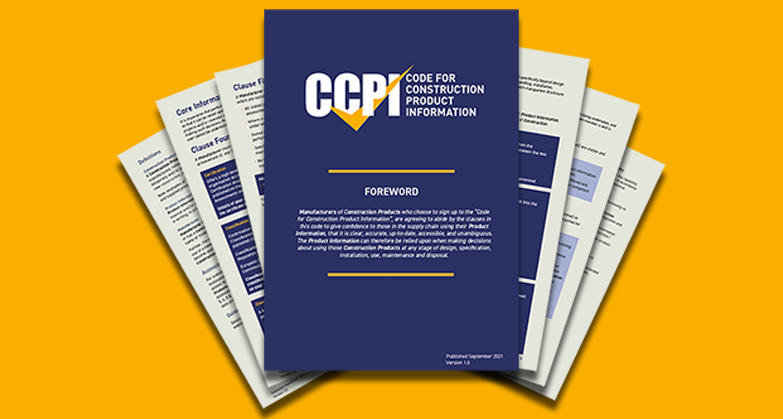
The Code for Construction Product Information (CCPI), Code guidance and a manufacturer information pack have been launched today to drive higher standards in the presentation of construction product information in the manufacturing industry.

The Code has been developed as a direct response to Dame Judith Hackitt’s independent review of Building Regulations and Fire Safety in the wake of the Grenfell Tower disaster. The Code promotes urgent positive culture and behaviour change in the approach and management of product information by the construction product manufacturing industry.

The Code offers manufacturers the opportunity to demonstrate a progressive approach through their willingness to provide assurance for their product information, and recognition for their efforts to prioritise product safety.

It aims to ensure that disingenuous marketing practices and the provision of misleading product information becomes a thing of the past, so that those using products in the construction and maintenance of buildings – including specifiers, architects, consultants and contractors, as well as the ultimate end users of the building – can trust the information provided by manufacturers when making design decisions, installing and using and maintaining verified products.

A robust eleven point code published

The Code – developed by the Construction Products Association’s Marketing Integrity Group following industry-wide consultation – has been built on the principle that product information must be Clear, Accurate, Up-to-date, Accessible and Unambiguous. The Code has eleven clauses covering critical aspects from responsibility for product information to transparency of information regarding performance, proof of stated claims and general information and competency.

An independent and robust validation process is being put in place to underpin the Code that will rebuild trust in the provision and management of product information by all stakeholders, setting the market for UK construction products ahead of others.

Support for manufacturers preparing for the verification process

Alongside Code guidance, a ‘Preparing for the Code’ information pack has been published today to help manufacturers gain an understanding of the Code and prepare for the verification journey.

Registration for verification will open towards the end of 2021, supported by detailed guidance. Organisations can register their interest now to receive updates ahead of the launch of verification.

Independently managed Code and verification

Management of the published Code and its verification has been formally handed over from the Construction Products Association to Construction Product Information Ltd (CPI Ltd) – a not-for-profit organisation with independent governance and management being set-up to administer the CCPI by the Considerate Constructors Scheme.

Amanda Long, Chief Executive of the Considerate Constructors Scheme and Construction Product Information Ltd, said:

“The Code should be a priority for all involved with construction product manufacturing. By focusing on culture, leadership and ethics the Code for Construction Product Information will build trust and is a progressive step towards ensuring that building safety is a priority for those responsible for the provision of construction product information.”

Enabling responsible manufacturers to assure their product information and be recognised for their efforts, the Code will support urgent and positive culture and behaviour change in the industry ahead of regulation.”

Click here to download the Code for Construction Product Information (CCPI)

Click here to download the ‘Preparing for the Code’ information pack

Click here to download the Code guidance

Strong construction demand but supply hit by perfect storm

Strong construction demand but supply hit by perfect storm

The Construction Products Association (CPA) has revised construction output growth up for 2021 from 13.7% to 14.3% since its previous forecasts, but also revised down growth for 2022 from 6.3% to 4.8% in 2022. With more buoyant demand so far in 2021, supply chain constraints are expected to hinder growth over the remainder of the year and into 2022. There is real doubt as to whether there is sufficient capacity in the whole construction supply chain to enable demand. Skills shortages, product availability and cost inflation, HGV driver shortages, the impacts of energy cost rises, and delays at ports are all expected to make up an unprecedented number of constraints on growth for the months ahead.

The CPA’s Autumn Forecasts show the infrastructure sector to be the key driver of construction growth for the year ahead. Less affected by supply-side issues than other areas of construction, the main activity in the sector is due to work on five-year spending plans within the regulated sectors of rail, water, roads and energy. Growth above general activity levels will be driven by major projects such as the Thames Tideway Tunnel, Hinkley Point C and HS2. Infrastructure output is forecast to rise by 23.9% in 2021 and by 9.7% in 2022 as the sector reaches record levels due to main works on HS2.

Output in private housing, the largest construction sector, is forecast to rise by 17.0% in 2021 and by 6.0% in 2022 with house builders confident regarding demand at the end of this year and in the first half of 2022. However, the private housing forecast for next year is a downward revision from 8.0% forecast in the Summer to reflect concerns about affordability and the sustainability of double-digit house price growth, particularly in the light of rising inflation concerns and the impact on consumer confidence and spending in the second half of 2022.

In the private housing rm&i sector, the ‘race for space’ continues unabated. Output here is forecast to rise by 20.0% this year but remain flat, at a historically high level, in 2022. According to the Bank of England, households have accumulated £200 billion of savings over the past 18 months since the initial lockdown began. Most small contractors have renovation projects lined up for the next six months, but the capacity of small contractors is already being tested from skills and products shortages. In addition, the impacts of rising costs over the next six months across the economy may lead to more subdued consumer confidence and spending on renovation projects later next year.

In the commercial sector, activity on the fit-out and finishing of new and existing offices, retail and leisure buildings, plus changes in use of existing commercial developments into residential and warehouses, remains strong. Again, however, firms in these areas report that skills shortages remain key constraints. While demand for new high-profile, grade A office space appears to be robust as corporate clients move into new, quality office space aimed at fewer employees and increased space per worker, new investment is lacking in mid-range office space and in retail. There remain relatively few new office towers projects in the pipeline owing to an excess supply of floor space in urban centres given only a partial return to offices. Existing retail space demand remains lower than pre-Covid-19 despite retail sales having recovered to pre-pandemic levels. The issue being the long-term shift away from in-store retail and towards online shopping over the last 15 years, which has accelerated sharply due to the impacts of the lockdowns.

Commenting on the supply chain issues, CPA Economics Director, Noble Francis, said: “Demand continues to be remarkably strong across the construction industry but supply issues are hindering growth and will continue to do so in the medium-term. The biggest impacts of the supply constraints are on the small construction firms. Large contractors and major house builders have a greater certainty of demand over the 12-18 month horizon and are better able to plan and purchase in advance as well as adjust to changing economic situations. Small firms, however, are more focused on flexibility and have less visibility over demand going forward. Plus, they have less ability and resource to plan and purchase in advance. They often turn up at builders merchants on the day to purchase what they need for that day or the next few days. As a result, it leaves their business more exposed to availability issues and their cash flow exposed to sharp rises in costs.”

Download the latest forecast report here

FIS members can access the latest CPA Forecast.

CLC to use COP26 to broker agreement to deliver net zero in the built environment

CLC to use COP26 to broker agreement to deliver net zero in the built environment

As the world prepares for COP26, the time for action and concrete agreement to reduce carbon emissions and invest in our future is now. Government and industry have a crucial opportunity to agree tangible commitments, benefitting future generations across the world.

Our role as part of the Built Environment and Construction Sector (which accounts for 38% of global carbon emissions) is vital. The Construction Leadership Council’s Construct Zero programme is leading the industry’s drive to net zero and has announced its confirmed line-up for ‘Construction: The Built Environment’ at COP26 on 11 November.

The role of our industry young professionals, working in partnership with industry leaders is fundamental to delivering on Net Zero. They have passion, and some fantastic ideas were heard through the youth COP summit in Milan and CLC’s young people’s summit. To facilitate the voice of young professionals, 50% of tickets will be allocated to young professionals.

The session will be co-chaired by Sarah Linnell (Cundall). Sarah brings with her an exciting array of relevant knowledge and experience as a structural engineer turned sustainability engineer. This will provide a great opportunity for young people to engage at this session and work with our industry leaders.

Attendees will also hear from Actuate UK, Saint Gobain and the Construction Industry Council on how they, as Construct Zero partners, are already advancing the importance of retrofit, materials, and design/professional services in delivering Net Zero.

There will be debate on some of Construct Zero’s priorities with four current Business Champions (Keltbray, Costain, Atkins and Travis Perkins), identifying some of the challenges they face, and opportunities to share best practice.

Also beign r eleased is ‘Building a Greener Britain’. This exciting film reaches out into local communities, demonstrating some of the great work taking place across the sector. Streamed online through COP26’s YouTube channel, CLC will be bringing the challenges and opportunities of Net Zero to industry, leaders, SMEs, young industry professionals and the general public. If you want to make a difference to our growing sector, understand in detail how colleagues have overcome similar barriers to what you are experiencing, or have a group of interested young emerging professionals, please sign up and register for the event!

Andy Mitchell, co-chair of the CLC said:

“The world will be watching as the Construction Leadership Council takes the stage as part of events at COP26. I am delighted with our line-up of industry experts who can speak about the role that construction can play in delivering net zero carbon. We hope that they can lead change not just in the UK but promote better outcomes for construction worldwide”.

Hannah Vickers, CLC CO2nstructZero and Chief of staff at Mace said:

“COP26 has the potential to be a landmark moment for the planet, and it’s outcome will have a great impact on the construction sector in the UK. The Construction Leadership Council has a huge role to play as our sector transforms itself over the coming years, and we’re very pleased to able to announce the line up for our event on Cities and the Built Environment Day at the conference. I would encourage everyone in the industry to get involved in anyway you can – our industry is changing quickly, and we must work together current and future leaders to ensure success”.

It’s free to attend, a great learning opportunity live in the COP Green Zone and an opportunity for you to put your questions to our speakers. It promises to be a fascinating series of debates as the construction sector engages at COP26!

Only by working together, in partnership, and building on COP26, will we collectively build back better, faster and greener.

FIS Sustainability Hub

FIS is committed to taking a pro-active lead, not just in supporting the UK ambition to net zero carbon by 2050, but delivering profound transformation within our supply chain on all aspects of ethical and environmental sustainability. We have created this hub to bring together resources and information that will support your journey to net zero.

Construction Leadership Council future proofs COVID-19 contracts guide

Construction Leadership Council future proofs COVID-19 contracts guide

A refreshed suite of guidance on managing COVID-19 within construction contracts has been published by the Business Model workstream of the Construction Leadership Council.

The updated documents now include revised information on future-proofing JCT / NEC amendments for new contracts to ensure that if circumstances change parties take a collaborative approach. The suite also provides templates to allow parties to formally record how they can avoid disputes.

The pandemic continues to have a significant impact on the construction sector. Industry has collaborated to address the challenges that have arisen, but concern remains that businesses and their clients could still be bogged down by expensive and lengthy disputes on the impact of the virus on projects.

The publication:
• Updates and brings all guidance and corresponding templates into one place, in an easy-to-use navigable format for reference.
• Provides additional templates to allow parties to conclude their collaboration as a formal adjustment to their contracts.
• Provides a range of templates to support those at different stages of their contracts.

Commenting, Steve Bratt, Chair of the CLC’s Business Models Workstream said:

“Over the last eighteen months, the CLC has advocated for responsible and fair behaviour in both existing and future contractual arrangements to secure the long-term health of the construction industry.

“We supported companies and their clients by publishing extensive contractual guidance for COVID-19 which has been positively received.
“As our industry continues to recover, the CLC has reviewed, updated and added to the suite of contractual guidance helping those on the front line to Build Back Better.”

The guidance documents are available here


£3000 incentive payment for hiring a new apprentice extended

£3000 incentive payment for hiring a new apprentice extended

Earlier this month, Chancellor Rishi Sunak, announced that the £3000 incentive payment for hiring a new apprentice will be extended until the end January 2022.

For apprentices with an employment start date from 1 April 2021 to 30 September 2021
Employers must apply by 30 November 2021. Apprentices must have an employment start date from 1 April 2021 to 30 September 2021. They must also have an apprenticeship start date from 1 April 2021 to 30 November 2021.

For apprentices with an employment start date from 1 October 2021 to 31 January 2022
Employers can recruit now and apply later! Applications will open in January 2022. Apprentices must have an employment start date from 1 October 2021 to 31 January 2022.

How to apply
To receive the payment, employers must submit an application for each eligible apprentice using their apprenticeship service account. This how to video provides a step-by-step guide.

Are you aware of the Flexible Workforce Development Fund? 

Are you aware of the Flexible Workforce Development Fund? 

The Flexible Workforce Development Fund (FWDF) is a Scottish Government initiative that enables employers to address priority skills and skills gaps in their organisation by accessing funding to create training programmes that meet their needs. These programmes can be delivered in partnership with their local college, The Open University in Scotland (OUiS) or an independent training provider.

The FWDF is open both to UK Apprenticeship Levy paying employers and small and medium enterprises (SMEs) in Scotland. Apprenticeship Levy payers have access to a £13 million fund in 2020-21 through the college sector and can access training up to the value of £15,000, where specific training needs cannot be provided via a local college.  For more information please see: Flexible Workforce Development Fund

Competences required by principal contractors

Competences required by principal contractors

The BSI has launched a consultation on Publicly Available Specification (PAS) 8672, which aims to establish the competences required by Principal Contractors, and individuals designated by them, to meet their responsibilities under new building safety legislation. It builds on recommendations in the Setting the Bar report that individuals undertaking the three roles with oversight of building safety at each stage of a building’s lifecycle ‐ Principal Designer, Principal Contractor and Building Safety Manager ‐ must have the necessary skills, knowledge, experience and behaviours. FIS members are asked to submit comments on the PAS to Iain McIlwee by Friday 29 October.

Government not moving to ‘Plan B’ but public urged to remain vigilant

Government not moving to ‘Plan B’ but public urged to remain vigilant

In light of rising COVID‐19 case numbers, Health Secretary Sajid Javid gave a press conference on Wednesday and urged people to get vaccinated and take precautions against the virus, including meeting outdoors, wearing masks in crowded enclosed spaces, and taking regular lateral flow tests. Whilst acknowledging that the pandemic is not over and the virus will be with us for the long term, he confirmed that the Government would not be moving to ‘Plan B‘ at this stage but would remain vigilant.

Construction sites should continue to minimise the risk of COVID‐19 and the Site Operating Procedures remain available as a reference document. There is also the Use of Face Coverings in Construction and sites may wish to maintain workplace testing programmes. The Build UK COVID‐19 flowchart is regularly updated on the actions to take if a worker has the virus or needs to self‐isolate, and FIS Associate Member Citation has published guidance for employers on the key questions to think about when developing and implementing a vaccination policy for staff.