
by Clair Mooney | 13 Mar, 2019 | Main News Feed
Before Brexit day, most non-harmonised construction products circulate on the EU market under the mutual recognition principle. This principle prevents EU countries from prohibiting the sale of products that have already been legally sold in another EU country, even where countries have different national requirements covering the same products. The only exception to this principle is where an EU country has restrictions based on public safety, public policy or public morality.
You can read the government’s information on “Trading under the mutual recognition principle if there’s no Brexit deal”, here.
However in the event of the UK leaving the EU, the UK will no longer fall within the scope of the mutual recognition principle because we have become a ‘third country’. UK companies exporting non-harmonised products will need to consider the national requirements of the first EU country they export to. They will not need to consider the national requirements of any EU countries the products travel through before reaching their intended market.
UK companies which have already exported non-harmonised products to an EU country by meeting the relevant national requirements will still be able to make use of the mutual recognition principle and market their products in other EU countries.
UK companies importing non-harmonised products into the UK will need to ensure they meet UK national requirements, even if their products were previously lawfully marketed in another EU country. Non-UK companies exporting non-harmonised products to the UK will need to ensure that the products meet UK national requirements, regardless of whether they were previously lawfully marketed in another EU country or in the UK.
For further information about national regulations for non-harmonised products for different EU countries is available from the country’s Product Contact Point. A list of these national product contact points is available here.
With regards to cross-border trade between the Republic of Ireland and Northern Ireland, the Irish government has indicated that they would need to discuss arrangements with the European Commission and other EU countries in the event of a no deal Brexit. In this instance the UK government is ready to engage in these talks.

by Clair Mooney | 13 Mar, 2019 | Main News Feed
Since the publication of the Hackitt Review in spring 2018, the construction industry has been working hard to meet the various challenges set for it.
The CPA has established its own Marketing Integrity Group (MIG) to specifically address Chapter 7 of the report, which challenges how product information is made available to the wider supply chain. In order to inform its work further, the group is issuing a Call For Evidence. FIS will be providing a direct response to the MIG. If members have any key points that they would like included, please email details to iainmcilwee@thefis.org
Areas of interest covered are:
- Ease of finding information
- Product substitution
- Completeness and correctness of information
- Products as part of a system, or use in a variety of applications
If members also wish to respond directly, the Call For Evidence survey is available online. It should take approximately 15 minutes to complete. The survey will close on Friday 5 April.
by Clair Mooney | 12 Mar, 2019 | Main News Feed
The Department for Education (DfE) is launching a Call for Evidence on Building Bulletin 100: Design for Fire Safety in Schools, (BB100).
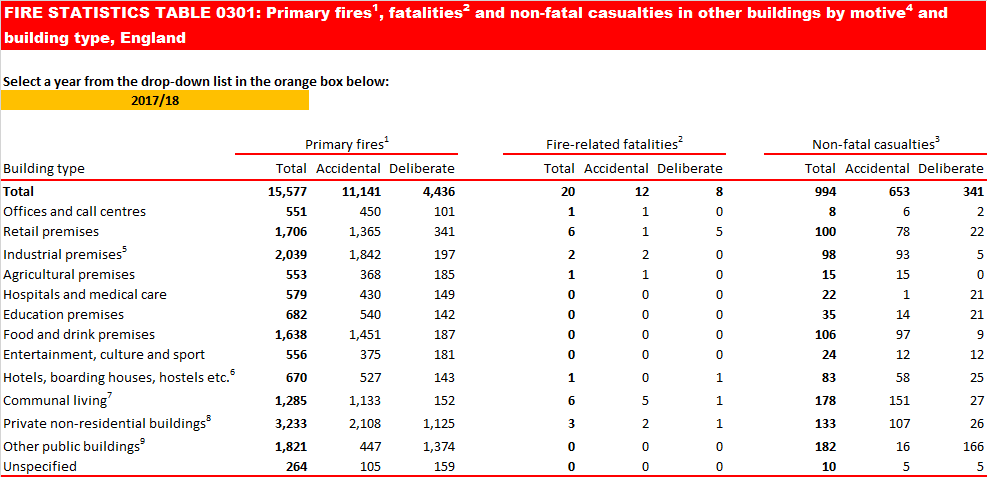
The aim of the consultation is to ensure the Department for Education’s guidance to those who build schools is fit for purpose and aligns with the Ministry of Housing Communities and Local Government’s (MHCLG) wider review of fire safety, we are launching a call for evidence on BB100 ahead of a consultation and thorough review. Fire in schools remains a concern in the UK with 682 instances recorded in educational premises in 2017/2018. Whilst there have been no fatalities in school fires since the 1940’s, the cost to the local community can be significant. Please send any information or views that you feel you would like to see included in the FIS response to joecilia@thefis.org by 24 May, so that we can include in our final submission by 31 May 2019.
https://www.gov.uk/government/consultations/review-of-building-bulletin-100-design-for-fire-safety-in-schools

by Clair Mooney | 12 Mar, 2019 | Main News Feed
Osborne chief executive Andy Steele has said the industry “can’t afford” to tackle late payment under the current market climate.
In an interview with Construction News, Mr Steele said a “perfect storm” had formed for many contractors due to the current financial squeeze and pressure from government to improve payment practices. Mr Steele stated that the financial sector has had a “change in appetite” towards construction, pulling away from its exposure to the sector, making access to finance tougher for contractors.
Amid this financial squeeze, government has cracked down on late payment practices. All companies with turnover greater than £36m and 250 employees or more are required to submit their payment practice data to government.
But Mr Steele says that the industry “can’t afford” to improve its payment practices while banks are pulling away from financing construction companies. This is because in order to pay your supply chain earlier would require companies to take out loans to fund this, as historically, contractors have “held the cash to get their business models to work”, he said. This has created an “impossible situation” for a lot of the industry: “Those two dynamics do not work together,” he said.
Although the Osborne boss doesn’t doubt that companies want to pay their supply chain quicker – “and quite rightly, they should be paid quicker” he said – it is not possible to do so at present.
“You can’t just dictate down to companies that you have to suddenly comply with these changes in your payment practices, because the industry can’t afford it,” he said. “It can’t do it in one go.”
Mr Steele said the business model “can’t change overnight” and that there must be “a realistic understanding from government over the state of the construction industry today”.
He added both public and private sector clients need to start paying main contractors earlier.
“If best payment practice is 30 days, then money from the customer has to come earlier than 30 days,” the Osborne chief said. He added large tier ones with big borrowing requirements who have historic poor payment performance are under a “huge amount of pressure” and could face difficulties. He added it is in “nobody’s benefit” if these big companies “get into trouble”.
FIS CEO Iain McIlwee responded: “Whilst I don’t like the message, I am glad that Andy put his position out there. If we break down problems and draw issues out in the open, we can start to make genuine changes – we need more transparency in our supply chain. We have wrongly used payment as a blunt instrument to manage quality. Whilst we are now accepting that this cannot and does not work we find ourselves in a position that we are addicted to this extra line of credit and in an uncertain climate finding it difficult to raise alternative funding. I agree with Andy that it is “nobody’s benefit” if these big companies “get into trouble”, but is also unacceptable for them to limp along on the backs of hardworking subbies – it is also “nobody’s benefit” if these companies fail. He also makes a good point in that, if payment to the supply chain is to be enacted 30 days, then there needs to be some fat built into this to enable money to flow and be available to pay – i.e. clients need to pay earlier, this warrants more attention. I am also convinced more can and should be done to underwrite construction, it remains the third largest sector in the UK economy – we could do with more support from the biggest (the finance and banking sector) to manage change and support investment in innovation – this is surely in the national interest!”
Source: CN News

by Clair Mooney | 11 Mar, 2019 | Main News Feed
The Department for Business, Energy and Industrial Strategy (BEIS) is putting on a series of Preparing for Brexit webinars which are designed to help businesses to ready themselves in the event of the UK leaving the EU on Friday 29 March 2019 without a deal. They will cover many of the most important changes that you should be aware of and actions that you can take now, where appropriate. Each of them will be an hour long, including Q&A at the end.
Tue 12 Mar 2019, 10:00 – 11:00: Regulations and Standards, covering using the CE and UK Mark, labelling and notified bodies
https://www.bl.uk/events/webinar-preparing-for-brexit-regulations-and-standards-mar19
Mon 18 Mar 2019, 13:00 – 14:00: Importing and Exporting, covering customs procedures, VAT and excise
https://www.bl.uk/events/webinar-preparing-for-brexit-importing-and-exporting-mar19
Tue 19 Mar 2019, 12:00 – 13:00: Business Legal Requirements, covering operating legally in the EU, cross-border mergers and accounting/auditing requirements
https://www.bl.uk/events/webinar-preparing-for-brexit-business-legal-requirements-mar19
Wed 20 Mar 2019, 11:00 – 12:00: Intellectual Property, covering registered and unregistered design rights, trade marks, copyrights, patents and exhaustion
https://www.bl.uk/events/webinar-preparing-for-brexit-intellectual-property-mar19

by Clair Mooney | 8 Mar, 2019 | Main News Feed
FIS is proud to be a part of the Inspiring Change Awards Conference 2019 which will bring together a range of inspirational industry-wide speakers from diverse backgrounds, including politicians, industry stakeholders, and representatives from a wide range of sectors. The Inspiring Change Awards, highlight and reward organisations within the construction and infrastructure sector that have created more inclusive cultures in their workplaces, education, and the community.
The conference will take place on Tuesday 21 May 2019 from 10.00-16.30 at No 11 Cavendish Square, London, W1G 0AN.
The event is free to attend and will share client expectations and good practice from within the construction industry and beyond to advance the understanding of the business and societal benefits of developing a culture of Fairness, Inclusion and Respect within the workplace. Attendees will be able to network with 300 like-minded professionals.
For more information about the conference, how to enter the awards and take advantage of award sponsorship opportunities visit the website at: www.inspiringchangeawards.com or email Brionywickenden@ceca.co.uk