by Oscar Venus | 25 Aug, 2022 | Health and Safety, Technical
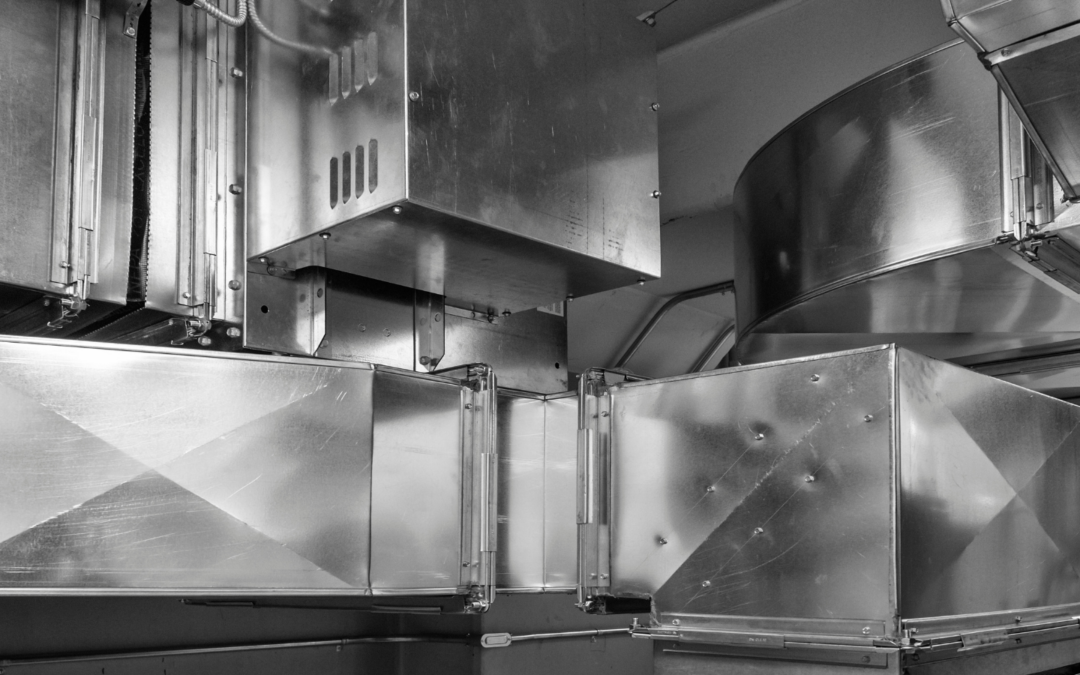
The Building Engineering Services Association (BESA) has issued an urgent warning to all contractors over the safety of fire dampers.
Inspections by maintenance contractors found that a “huge number of dampers” had been incorrectly installed and would fail to work during a building fire.
BESA’s head of technical Graeme Fox has urged contractors to “alert their clients immediately” so that rectification works can begin.
The issue revolves around the use of self-drilling “tek” screws which have been used to install an unknown number of dampers in projects. The screws have a higher melting temperature and do not melt if a building is on fire.
“This means that spring-loaded dampers will not be released to contain the spread of fire within the zone and ensure the integrity of the fire stopping measure,” Fox explained.
“Dampers must be secured by fusible fixings that allow the duct to break away, otherwise the collapsing duct could pull the damper out of place and break the seal between the fire zones,” he added.
BESA published a special announcement on the subject. It includes updated guidance and statutory requirements covering installation, testing and maintenance of fire dampers and smoke dampers.
The document also highlights clients’ legal obligations to ensure their fire safety systems remain fit for purpose in line with the Regulatory Reform (Fire Safety) Order 2005 for England and Wales and the Fire Safety (Scotland) Regulations 2006.
Fox said: “While this is clearly a very worrying situation, we can take some reassurance from the fact that this problem is being brought to our attention by the increasing frequency of fire damper inspections and tests as awareness grows of this extremely important issue.”
The latest BESA technical advice can be found here.
by Clair Mooney | 27 May, 2022 | Health and Safety
Every week, workers in the construction industry develop serious lung diseases that can have a devastating impact on them and their families. During June, HSE will be carrying out a health inspection initiative focusing on the respiratory risks to construction workers from exposure to dust. The initiative aims to support industry by
raising awareness of health issues in relation to dust exposure to improve the long-term health of those working in construction. It is part of HSE’s wider-phased, strategic plan developed to improve health within the construction industry.
Rights and responsibilities when working on a construction site
Employers: Regardless of the size of your business, you have a legal responsibility to protect workers’ health.
Plan jobs to eliminate the risks from dust where you can. Otherwise, use measures to control dust and minimise the risk.
Construction workers: Don’t gamble with your future health by taking unnecessary risks today. Talk to your employer about the risks from dust and how to avoid them.

by Clair Mooney | 11 Apr, 2022 | Health and Safety
HSE is currently inspecting woodworking businesses to ensure dutyholders know the established health risks associated with the industry.
Each year, around 12,000 people die from work-related lung diseases linked to past exposure to hazardous substances at work. This includes inhalation of wood dust that can cause occupational asthma and, in the case of hardwoods, sinonasal cancer. These deaths are preventable if exposure to the risks is effectively controlled.
Inspectors will check that:
- woodwork is planned correctly to minimise risk
- adequate control measures are in place to protect workers’ health
Ventilation, protective equipment and appropriate guarding are some of the measures businesses should consider as Britain’s workplace regulator is carrying out inspections to protect the respiratory health of workers.
From April, health and safety inspectors across Great Britain will be visiting business within woodworking industries such as sawmilling, manufacture of composite boards, and carpentry, as well as other industries where wood dust exposure can occur.
Woodworking industries have the potential for high incidence rates of occupational asthma and work-aggravated asthma caused by worker exposure to inadequately controlled wood dust in the workplace.
Inspectors will be looking for evidence that employers have considered the control measures required to reduce workers exposure to wood dust, that workers understand the risks of exposure to wood dust, and effective control measures have been put in place to protect workers from harm. Inspectors will take enforcement action when necessary to make sure workers are protected.
HSE’s head of manufacturing David Butter said: “Around 12,000 workers died last year from lung diseases linked to past exposure from work, with thousands more cases of ill-health and working days lost. Wood dust can cause serious health problems. It can cause asthma, which carpenters and joiners are four times more likely to get compared with other UK workers, as well as nasal cancer. Our campaign aims to help businesses whose workers cut and shape wood to take action now to protect their workers’ respiratory health.
“Through visiting wood working businesses, our inspectors are able to speak to a range of dutyholders and look at the measures they have in place to comply with the guidance and protect workers from respiratory diseases such as occupational asthma and nasal cancer.
“Businesses can act now to ensure they are complying with the law by ensuring the control of wood dust at source by fitting and using extraction on machines. Ensuring they fit and use guards on machines to protect fingers and hands and ensure those that use the machine to understand the risks and how to control them. Checking that guards are well adjusted will minimise danger and ensure that dust capture remains effective.
“Our inspection initiative aims to ensure employers and workers are aware of the risks associated with the activities they do. They must recognise these dangers and manage these risks through reducing exposure. Dutyholders need to do the right thing, for example, through completing a risk assessment, ensuring workers are trained, appropriate guarding is fitted and adjusted correctly, and reducing exposure using local exhaust ventilation (LEV) and using suitable respiratory protective equipment (RPE) to protect workers, where required.”
For the latest advice and guidance visit www.hse.gov.uk/woodworking/; for more information on the programme of inspections follow the campaign on Twitter at @H_S_E or on Facebook @hsegovuk. You can also join the conversation at #WorkRight and sign up for HSE’s e-bulletin here.

by Clair Mooney | 31 Mar, 2022 | Health and Safety
Personal Protective Equipment at Work Regulations will be amended from 6 April 2022 to ensure that agency and temporary workers ‐ so called limb (b) workers ‐ are provided with the same PPE protections as employees. Those who have self‐employed status are not included and the HSE has published interim guidance to help employers prepare.
The definition of self-employed here has created some confusion, with the guidance stating:
Generally, workers who come under limb (b):
- carry out casual or irregular work for one or more organisation
- after 1 month of continuous service, receive holiday pay but not other employment rights such as the minimum period of statutory notice
only carry out work if they choose to
- have a contract or other arrangement to do work or services personally for a reward (the contract doesn’t have to be written) and only have a limited right to send someone else to do the work, for example swapping shifts with someone on a pre-approved list (subcontracting)
are not in business for themselves (they do not advertise services directly to customers who can then also book their services directly)
Many in the sector may be unfamiliar with the definition of a limb (b) worker. Commenting on the guidance Ian Cole-Wilkins, CEO of Indigo, who have 15 years’ experience of providing subcontractor contracting services to the construction sector, advised that
“In the first place it is important to recognise that anything that improves workplace health and safety should be welcomed. FIS members may be unclear on the technical elements of the guidance published by the HSE and for good reason as the HSE appear to have merged [albeit with good intentions] the legal status of limb [b] workers and added to the mix S44 ITEPA esque considerations with their position of “those that are self-employed for legal and tax purposes”. They appear to have omitted the word “just” or “only” and not fully understood that you simply cannot invent a new class of “worker” without much wider consideration.
Despite the clumsiness, the intention is to be welcomed and I believe that they are primarily trying to ensure that the lower paid, predominantly agency workers who are engaged on hybrid models, don’t pay for PPE. Those that are truly self-employed, that can display there is no requirement for personal service, or there is lack of mutuality of obligation or there is no significant control will not fall within the PPER 2022 provisions. It is therefore important for FIS members to ensure they and their suppliers have assessed the status of their subcontractors and wider labour force in the correct manner. We would be glad to assist any FIS member with a free, no-obligation assessment of their workforce status to provide reassurance around compliance with the 6 April PPE requirements.”
FIS has provided additional guidance to support members in implementing this change here: https://www.thefis.org/2022/03/11/ppe-regulations-to-be-extended-to-all-workers/
by Iain McIlwee | 25 Mar, 2022 | Health and Safety
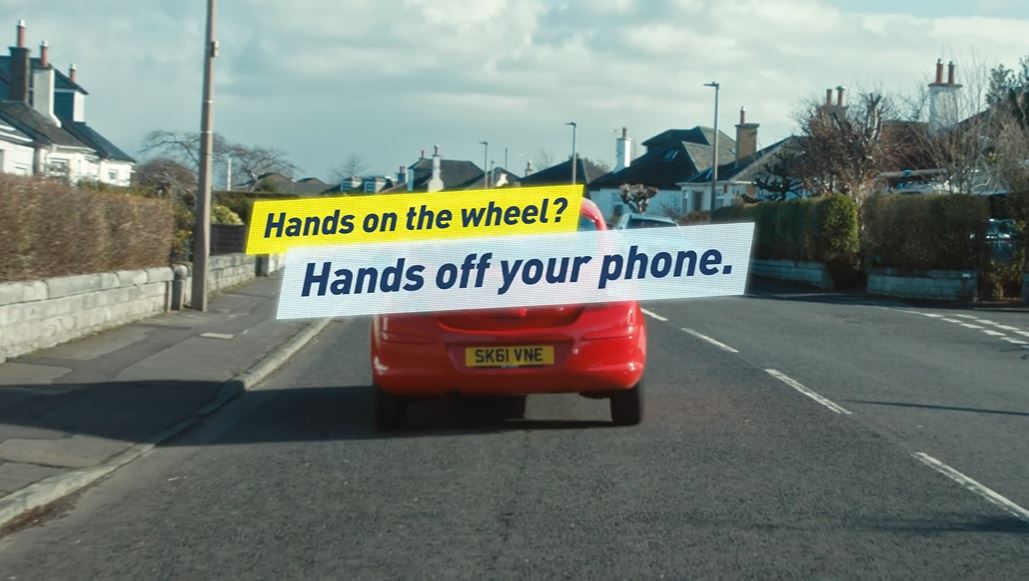
From today (25 March), rules in The Highway Code are coming into force to make any hand-held use of a mobile phone while driving illegal, except in limited circumstances.
This means you must not use a device in your hand for any reason, whether online or offline. The law applies to you if you’re:
- supervising a learner driver
- stopped at traffic lights
- queuing in traffic
- driving a car that turns the engine off when you stop moving
- holding and using a device that’s offline or in flight mode
There are exceptions, such as if you need to call 999 or 112 in an emergency or making a contactless payment in a vehicle that is not moving.
You can find the full rules on using a phone, sat nav or another device when driving on GOV.UK
FIS members are advised to review policies and advise employees who drive whilst on work duty.
To help re-enforce, the government’s award-winning THINK! team has launched an awareness campaign today to remind drivers not to use a hand-held phone at the wheel and the penalties of choosing to ignore this new law. This includes the infomercial below that can be circulated with the updated guidance to employees:
To visit the FIS Health and Safety Toolkit, click here

by Clair Mooney | 16 Mar, 2022 | Health and Safety
A COVID-secure titled risk assessment is no longer legally requiredk however COVID-19 still presents a risk to the workplace which employers are required to manage in line with the Management of Health and Safety at Work Regulations 1992.
If FIS members already have a risk assessment in place, they’ll need to review the content and controls, as it is now over to employers to formulate a policy on employee self-isolation.
With the responsibility of keeping workplaces safe and COVID-secure now sitting even more heavily on the shoulders of employers, FIS Associate Member Citation has seen an increase in enquiries on how to manage COVID-risk. To help address this, they have created a free checklist covering everything employers need to know.
The free guide can be downloaded from https://tinyurl.com/fislearningtolive2022