

With new homes and infrastructure at the heart of the Government’s plan to drive economic growth, construction is firmly in the spotlight, and we need to ensure the industry is delivering high quality buildings that are safe to occupy and perform as expected. There is significant focus on the new building safety regime, which has strengthened existing legislation and introduced a raft of new requirements, and it can feel quite overwhelming as more information is published while everyone is getting up to speed.
Build UK, of which FIS is a member, is regularly meeting with the Building Safety Regulator (BSR) as well as the Ministry of Housing, Communities and Local Government (MHCLG), enabling them to respond to issues quickly and effectively.
There is still a long way to go, particularly with further changes likely as a result of the final report from the Grenfell Tower Inquiry, and through our links with Build UK we will continue to work closely with the BSR and MHCLG to ensure the new regime is implemented as effectively as possible. The prize is a more organised and productive industry, with earlier engagement of the contracting supply chain and more advanced design before construction work begins, and it is clear from the improved success rate at Planning Gateway One that the industry is adapting and fire safety measures have been integrated into the design process.
We understand that Gateway Two is proving to be a real challenge, and Build UK is developing guidance to support members through the process and have published a guide to Mandatory Occurrence Reporting, which includes a template MOR system for use during the construction of Higher‐Risk Buildings (HRBs) to help ensure a consistent approach across the supply chain. This guide is for Build UK members (which includes FIS members).
This guidance summarises the requirement under the Building Safety Act to notify and report certain types of building safety incidents and risks in HRBs to the BSR. Mandatory Occurrences are incidents and risks during the construction and occupation phases of an HRB that have caused, or if not remedied are likely to cause, the death or serious injury of a significant number of people and involve structural failure and/or the spread of fire or smoke in the building.
The BSR has provided additional information on why applications are being rejected. Applications must clearly demonstrate how the design and construction of the building complies with Building Regulations by identifying every single element that needs to demonstrate compliance, clarifying how compliance will be demonstrated using the appropriate standard or code, and justifying how compliance has been achieved with a narrative. Further details can be found on the BSR microsite and the BSR recommends that professional advice is taken before submitting an application.
There is also a new FAQ explaining the difference between Category A work, which involves significant alternations to the structure, safety or design of an HRB, and Category B work, which is much simpler in scope and includes all work that does not fall under Category A. Both categories of work are required to go through the Gateways with the BSR as the Building Control Body. Work carried out under a Competent Person Scheme and work that is exempt as defined in schedule 2 or emergency repairs as specified in Regulation 10 of The Building (Higher‐Risk Buildings Procedures) (England) Regulations 2023 do not fall under Category A or Category B.
Take our Building Safety Act Training Course
FIS created an online training course to help members understand compliance with the Building Safety Act, specifically for those in the finishes and interiors sector.
See more news likes this

Barbour ABI: UK economy disappoints as Covid-19 cases rise
Unemployment starts its anticipated upwards trajectory. The ONS’ publication of August GDP all but confirmed a “square root” shaped recovery for Great Britain as the economy started to plateau. Growth was 2.1% in August, a sharp fall from 6.4% in July and 9.1% in...
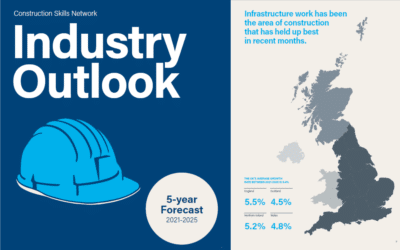
Invest to save skills from being lost – CITB forecast
CITB has today published a new construction industry forecast in which it states that Government investment is needed to support skills in the coming year to prevent a generation of talent being lost. The CITB Construction Skills Network (CSN) report for 2021-25...

Furlough extended in light of new National Lockdown
The PM has announced that, in line with the new National Lockdown announced on the 31st October, Furlough arrangements through the Coronavirus Job Retention Scheme will be extended "until December". Under the extended scheme, workers in any part of the UK who will be...